
Lower Zambezi NP
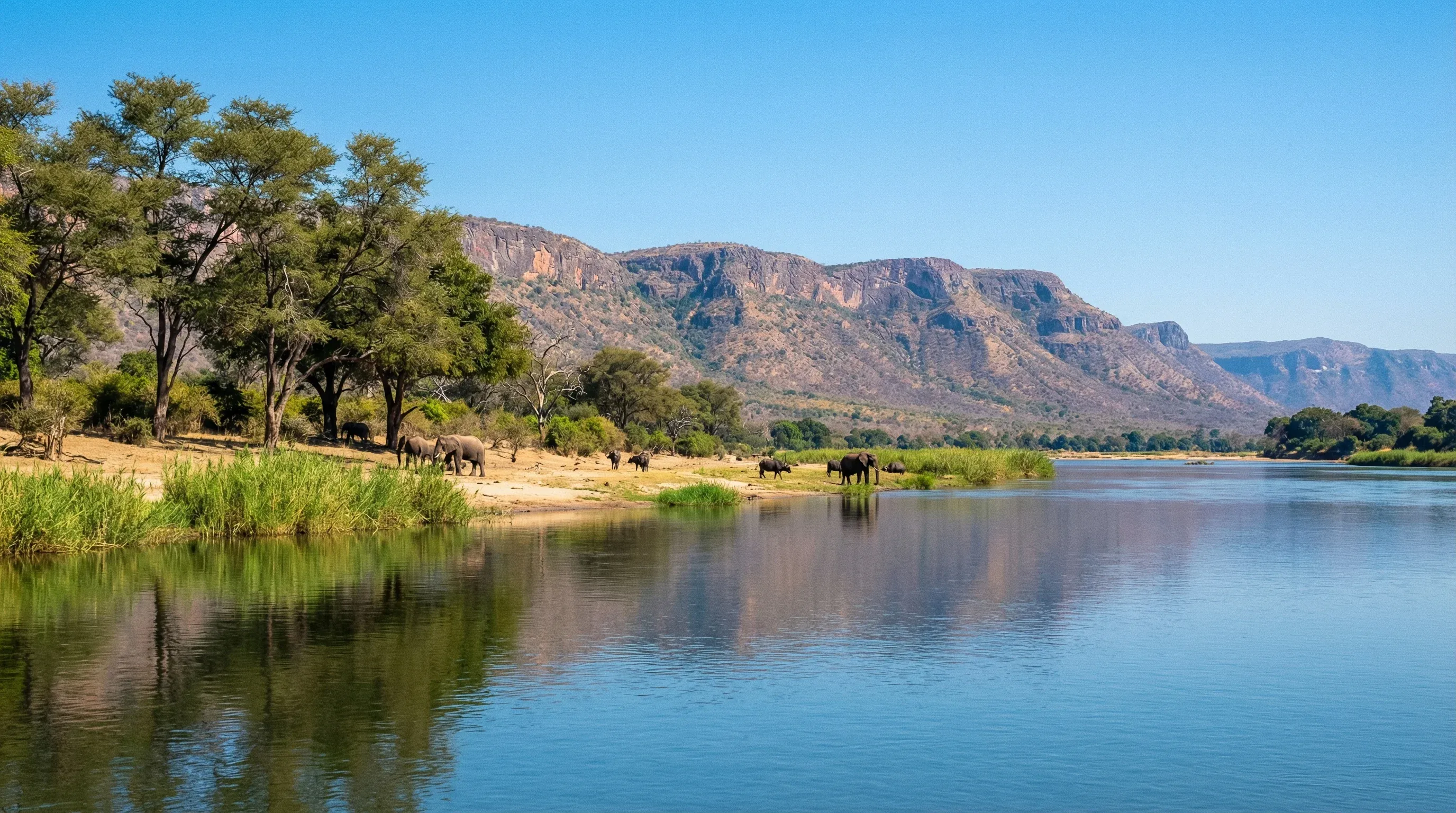
River adventures and elephants swimming in the sunset 🐘🛶
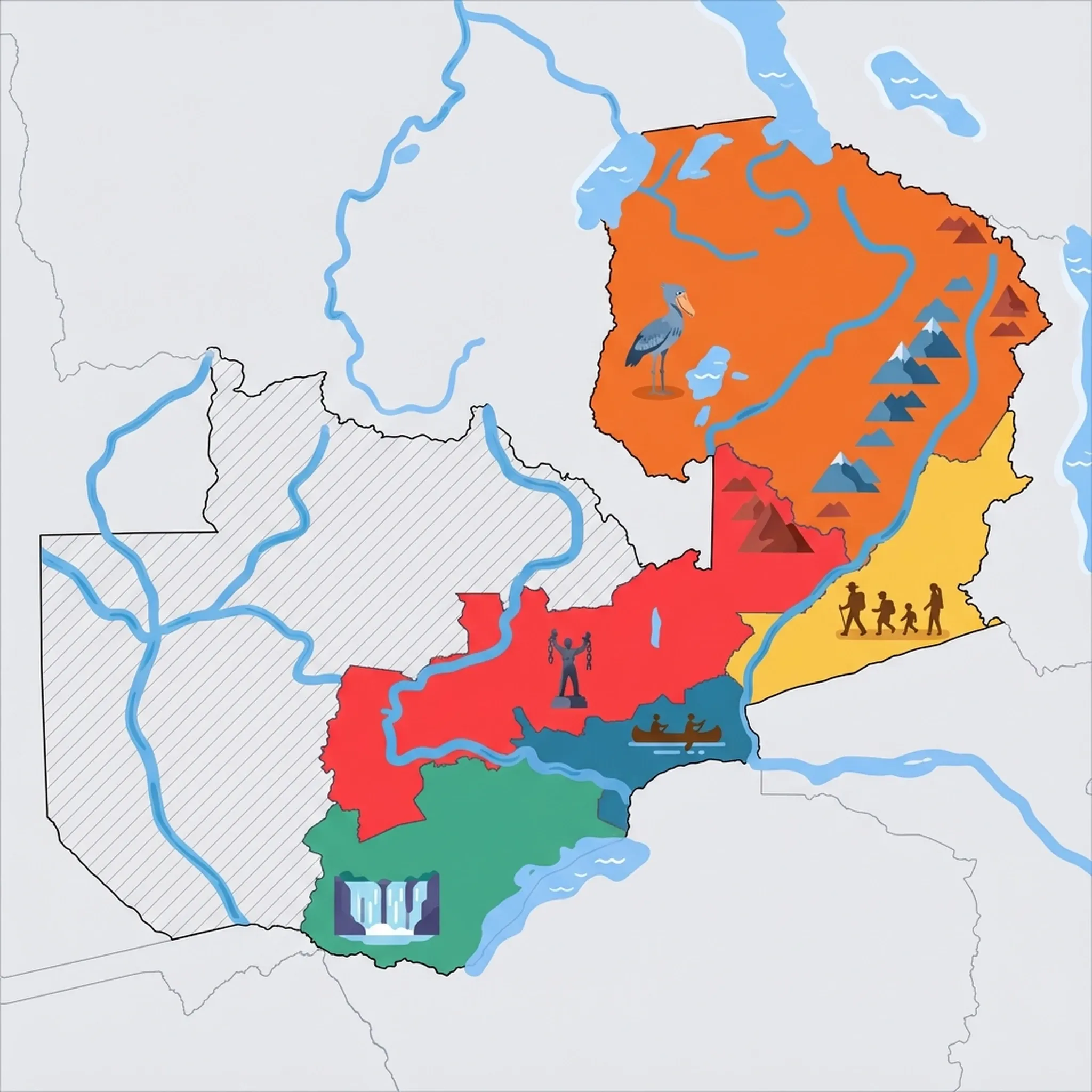
Click a region to explore
Overview
The Lower Zambezi is one of Africa's most pristine wilderness areas, defined by the mighty river that forms the border between Zambia and Zimbabwe. For families, this region offers a change of pace from the dusty game drives of other parks. Here, the safari experience is amphibious. The Lower Zambezi National Park is flanked by a dramatic escarpment on one side and the wide, languid river on the other, creating a natural funnel that concentrates wildlife near the water. It is a place of quiet grandeur, where the days are marked by the call of the fish eagle and the grunting of hippos.
What makes this region special for families is the variety of activities. Unlike parks where you are confined to a vehicle, the Lower Zambezi specializes in boat safaris and canoeing (often restricted to children over 12 for safety, though motorboats accommodate all ages). Seeing an elephant swim across the river with its trunk acting as a snorkel is a memory that children will cherish forever. The lodges here are adept at balancing luxury with the wild environment, often unfenced, meaning wildlife can wander through the camp—a thrilling education in nature for supervised children. The fishing is also world-class, giving kids the chance to try catch-and-release angling for the ferocious Tiger Fish.
Key Attractions
The primary attraction is undoubtedly the Lower Zambezi National Park itself. The park's diverse landscape includes baobab forests and winterthorn groves that look like cathedral arches. Families can enjoy 'sundowner' boat cruises which are essentially floating game drives; you can approach crocodile-infested banks and watch buffalo herds safely from the water. The Chiawa Game Management Area, bordering the park, offers night drives which are thrilling for spotting nocturnal creatures like civets, genets, and the elusive leopard. Fishing excursions are fantastic for family bonding, with expert guides teaching children how to cast for Bream or Tiger Fish in the safety of sturdy pontoon boats.
Practical Advice
The season runs from April to November, with many lodges closing during the rainy season (December–March) due to impassable roads. September and October are the hottest months, often reaching 40°C (104°F), which can be draining for young children. Tsetse flies can be prevalent in certain belts of the park; wearing light-coloured clothing and using specialized insect repellent is essential.
Food & Drink
Typical meal times: Breakfast is early (5:30 am – 6:30 am) before activities. Lunch is served 12:30 pm to 2:00 pm, and Dinner is typically 7:30 pm to 9:00 pm.
Typical meal costs: Most lodges operate on an all-inclusive basis. For self-caterers in the GMA, fresh supplies are scarce. A meal at a transit lodge might cost ZMW 250–400 (approx. $10–15 USD / €9–14 EUR).
Dietary requirements: Luxury lodges can cater to almost any dietary need (vegan, gluten-free, allergies) if notified in advance. Halal and Kosher meals may require significant lead time.
Signature dishes:
- Fresh Bream – Often caught locally and grilled over an open fire, served with lemon butter sauce.
- Game Meat – Some lodges serve farm-raised impala or kudu venison, which is lean and flavorful.
- Bush Brunch – A full English breakfast cooked on a gas skottel in the middle of the bush during a morning break.
Why this score?
The park offers a rugged experience where water-based safaris bring visitors into close proximity with hippos and crocodiles in an unfenced wilderness. The terrain is wild, with the Zambezi Escarpment providing a dramatic and remote backdrop accessible only by boat or light aircraft. Activities like canoeing safaris and bush camping represent a significant level of physical adventure.
Why this score?
Medical facilities within the park are virtually non-existent, consisting only of basic first aid kits at lodges and camps. The region is remote, and any serious medical emergency requires a costly and time-consuming air evacuation to Lusaka. Communication and transport logistics in the thick bush can complicate rapid emergency responses.
Why this score?
This is a premier, high-end safari destination that attracts a dedicated but relatively small number of international visitors annually. Its popularity is limited by its seasonal nature and the high cost of luxury lodge stays, which keeps it a niche choice compared to Victoria Falls. Most visitors are international wildlife enthusiasts seeking a more exclusive and less crowded experience.

This is an exclusive safari destination. There are very few budget options. High-end all-inclusive lodges range from ZMW 15,000–30,000+ (approx. $570–1,150+ USD / €520–1,050+ EUR) per person per night. Park fees for international adults are approx. ZMW 790 ($30 USD) per day. Self-driving campers can find spots for ZMW 530–800 (approx. $20–30 USD / €18–27 EUR) per night, but logistics are challenging.

Getting Here & Around
Getting Here
- Airports – The region is best accessed via light aircraft to the Jeki or Royal airstrips (30–40 mins from Lusaka). These flights offer stunning aerial views of the Lower Zambezi National Park.
- Driving – A 4x4 is essential. The drive from Lusaka via Chirundu takes 4–5 hours to the Chiawa GMA. The road can be rough and dusty.
- Boat – Transfers from Chirundu or lodges further upstream are possible by speedboat, a scenic way to arrive.
Getting Around
- Boat – The primary mode of transport for many lodges. Transfers between camps and activities are often done via the river.
- Game Viewer – Open-sided 4x4 vehicles are used for land-based safaris within the Lower Zambezi National Park.
- Canoe – Guided canoe trails are available, usually restricted to older children (12+) for safety reasons.
Nearby Airports (3 airports)
Jeki Airstrip
JEKJeki
Lusaka International
LUNLusaka
Royal Airport
RYLLower Zambezi National Park
View full flight map for Zambia →

Packing List
It can be windy on the boats, and you need sun protection that won't blow away into the river.
Versatile for sun protection on legs in a canoe, a light towel, or a scarf against evening chill.
Essential for cutting the glare off the water when fishing or game viewing by boat.
Standard DEET doesn't always work on Tsetse flies; look for specialized sprays (e.g. Dettol or Avon).
Older dollar bills are frequently rejected by banks and lodges; bring only crisp, new notes with 'big heads'.
Bright white lights attract millions of bugs in the bush; amber/red settings keep the insects away at camp.
Strict luggage restrictions on small internal flights (Proflight) often ban hard-shell suitcases.
Power cuts (load shedding) are common; a solar backup ensures phones and cameras stay charged.
Open game drive vehicles are incredibly dusty in the dry season; protect your nose and mouth.

Activities & Best Times

Hiking, wildlife, outdoor exploration, ecotourism
A world-class destination for water-based safaris and wilderness immersion, specifically renowned for its high-quality guiding and unique canoeing opportunities along the Zambezi River. Peak game viewing occurs in the late dry season when wildlife congregates on the floodplains, while heavy summer rains from December to April cause seasonal closures of many luxury lodges.

Scenic drives, countryside tours, route-based travel
Features spectacular and rugged scenic routes such as the Leopards Hill Escarpment Drive, providing authentic African landscapes for adventurous families. Travel is restricted to the dry months when unpaved valley roads are navigable, as the monsoon-like summer rains render tracks impassable for standard international tourism.

Urban tourism, museums, historical sites, architecture
While primarily a wilderness area, the region offers limited but authentic cultural engagement through the iconic Zambezi Escarpment landmarks and local community visits near the park boundaries. These experiences are highly seasonal, dictated by the accessibility of the valley floor during the dry winter and spring months.




Public Holidays & Calendar Next 12 months
Public holidays, festivals, cultural celebrations, and seasonal natural phenomena coming up in Lower Zambezi NP over the next 12 months.
Loading holidays and events...

Travel Advisory
The majority of major international agencies classify Zambia as a destination requiring standard safety awareness. While specific risks like crime in cities and landmines near borders exist, they do not currently warrant an elevated nationwide risk rating for most travellers.
Safety Topics
Traveller Advice (4 groups)

Be cautious in social settings like bars and nightclubs where reports of drink spiking have occurred. Avoid travelling solo after dark.
When travelling in rural or border areas, use a 4x4 vehicle and strictly remain on paved or well-marked roads to avoid the risk of landmines and unexploded explosives.

Homosexual activity is illegal and punishable by significant prison time, including life sentences. Travellers should exercise extreme discretion and avoid public displays of affection as social tolerance is low.

Maintain standard security awareness, avoid walking alone at night in urban centers, and stay clear of any political gatherings or demonstrations.
Agency Summaries
Australia advises a baseline of normal safety measures across the country. A higher level of vigilance is necessary near the border with the Democratic Republic of the Congo due to criminal activity and the threat of undetected landmines. Public demonstrations should be avoided as they can escalate quickly.
The United States suggests travellers follow standard safety procedures. While the security environment is generally stable, visitors are encouraged to stay away from political rallies and large crowds, which can occasionally lead to civil unrest or minor violence, particularly during election cycles.
New Zealand recommends a higher level of awareness than one would use at home due to the prevalence of violent crime in major cities and the risk of landmines in frontier zones. Moving through urban areas alone or after dark is discouraged.
Most visits to Zambia are trouble-free. Travellers should remain alert to common street crimes like pickpocketing in busy urban areas. There are specific health warnings regarding contaminated water in mining regions and periodic outbreaks of infectious diseases that require vigilance.
Ireland advises its citizens to maintain typical personal security awareness while visiting Zambia. It is important to confirm entry requirements and ensure travel documents meet the necessary validity standards before departure.
Zambia is considered a safe destination for travel using standard precautions. However, travellers should exercise a high degree of caution in border regions near Angola, Mozambique, and the DRC because of the residual risk of landmines and unexploded ordnance. Compliance with strict laws on mineral exports and the possession of precious stones is essential.
Information is provided for general guidance only and does not constitute travel, safety, medical, or legal advice. Conditions may change. Users are responsible for independently verifying information before travel.