
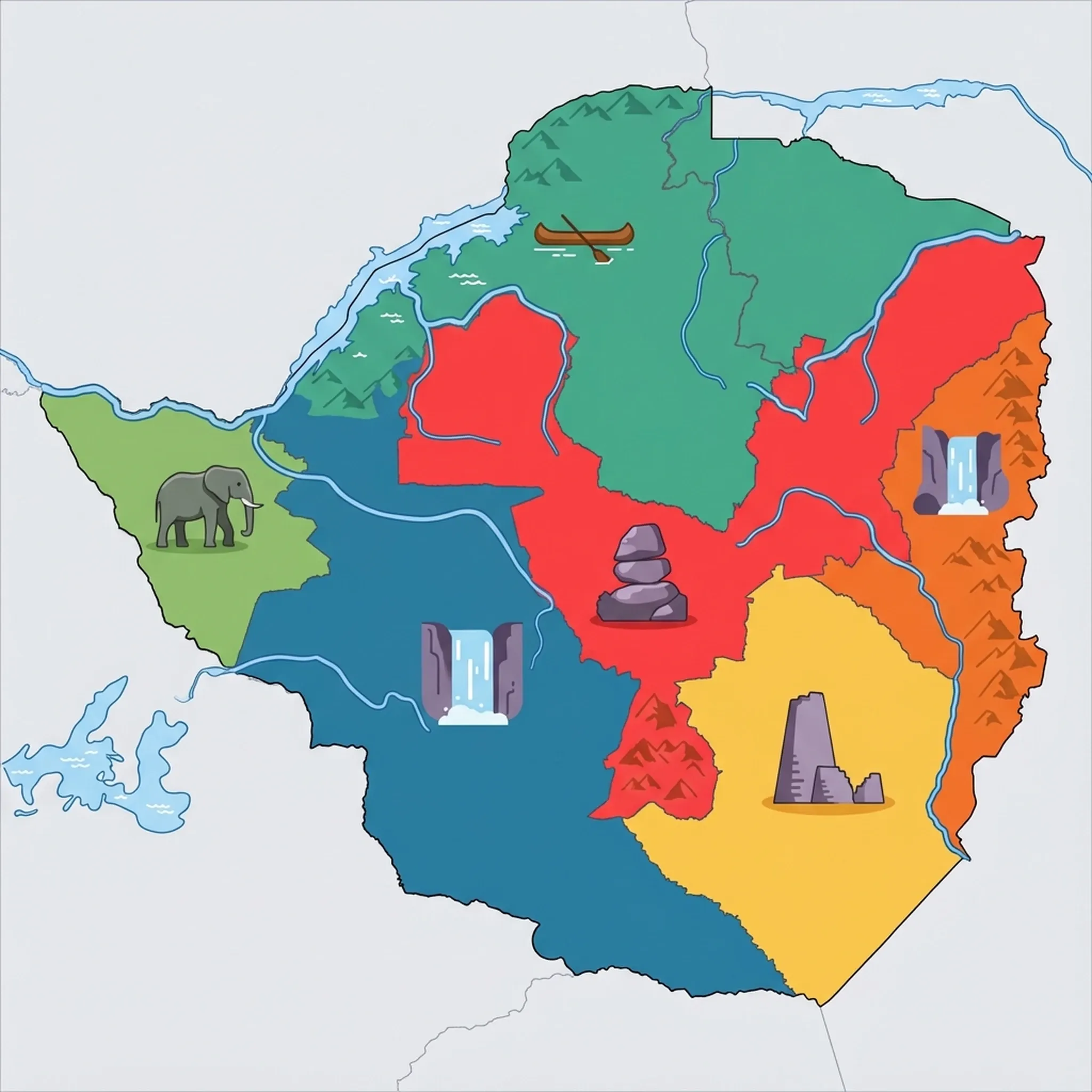
Click a region to explore
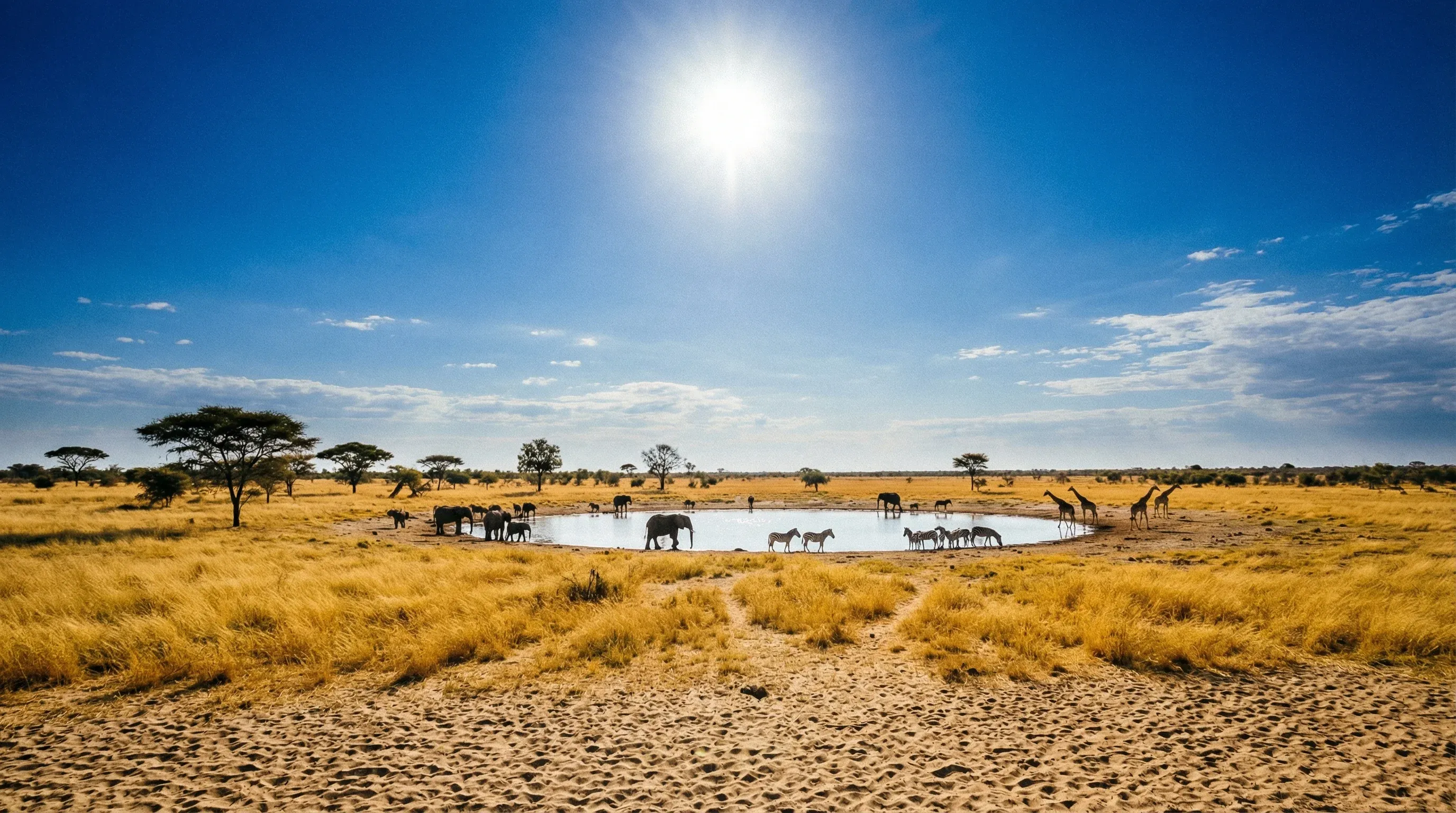
Hwange is the heavyweight of Zimbabwean wildlife destinations. Covering an area roughly the size of Belgium, it offers a safari experience that rivals any on the continent. The park is defined by its lack of permanent surface water, meaning animals congregate in massive numbers around pumped waterholes. For families, this makes game viewing exceptionally rewarding and relatively easy—you can simply park at a waterhole and watch the "National Geographic" documentary unfold in front of you. Hwange is particularly famous for its elephants; seeing a herd of 40 or 50 giants silently emerge from the teak forests to drink is a life-changing experience for children.
The park caters well to families, with accommodation options ranging from luxury lodges with pools and kids' clubs to self-catering chalets run by the National Parks. The terrain is flat and sandy (Kalahari sands), making for smooth game drives that are less jarring for little ones. The Main Camp area is very accessible, while private concessions offer night drives and walking safaris for families with older children. Hwange feels wild and vast, yet it is one of the most accessible parks in the country, located just a couple of hours south of Victoria Falls. The "Presidential Elephants" on the edge of the park are known for being habituated and calm, allowing for up-close encounters.
Key Attractions
The primary attraction is, of course, Hwange National Park (Main Camp Sector). The Main Camp area is the most family-friendly entry point. Here, the Nyamandhlovu Pan viewing platform is a highlight. It is a raised wooden deck overlooking a busy waterhole. Families can safely get out of their vehicle, stretch their legs, and watch elephants, kudus, and hippos right below them. It is one of the best spots for sunset photography.
Another key activity is a visit to the Wild Dog Paint Dog Conservation Centre, located near the park entrance. African Wild Dogs are endangered, and this center does incredible work to protect them. The interpretive hall is excellent for kids, teaching them about conservation, and there is a walkway where you can often see rescued dogs that cannot be released back into the wild. It is educational and inspiring for young animal lovers.
Practical Advice
The best time for game viewing is the dry season (July to October) when animals crowd the waterholes. However, October is extremely hot (often called "Suicide Month"). For families, August/September offers a balance of great sightings and manageable heat. Malaria prophylaxis is highly recommended. Nights in winter (June/July) are freezing—bring hats and gloves for morning game drives.
Food & Drink
Typical meal times: Safari schedules dictate meals. Light breakfast at 5:30 am, brunch at 11:00 am, afternoon tea at 3:30 pm, and dinner at 7:30 pm.
Typical meal costs: Most lodges are all-inclusive. At self-catering camps, you must bring all your own food. The restaurant at Main Camp offers basic meals for $10–15 USD (approx. €9–14 EUR / £8–12 GBP).
Dietary requirements: Private lodges are excellent at handling allergies. If self-catering at Main Camp, bring everything special you need from a city supermarket.
Signature dishes:
- Game Meat Venison – Lodges often serve sustainably sourced impala or kudu steaks, lean and dark meat.
- Potjie – A slow-cooked stew made in a three-legged cast-iron pot over an open fire, a safari classic.
- Biltong – Dried, cured meat (beef or game), the ultimate safari snack for long drives.
Why this score?
This is a significant adventure destination where families can experience the raw wilderness of the African bush and encounter 'the Big Five' in an unfenced environment. The park's vast size and remote camps require a degree of self-sufficiency and awareness of the local wildlife risks.
Why this score?
Medical infrastructure within the park is virtually non-existent, with most camps relying on basic first-aid kits and radio links for emergencies. Any serious medical issue requires a costly and time-consuming air evacuation to Victoria Falls or Bulawayo.
Why this score?
As Zimbabwe's flagship safari destination, Hwange attracts a steady stream of international wildlife enthusiasts and is a staple on most multi-day itineraries. It benefits from its proximity to Victoria Falls, allowing for a mix of luxury fly-in guests and adventurous self-drive tourists.

Hwange has options for every budget but leans towards high-end. National Parks chalets are affordable at $40–80 USD (approx. €37–75 EUR / £32–65 GBP) per night. Private lodges inside or bordering the park range from $400 to over $1,500 USD (approx. €370–1380 EUR / £315–1180 GBP) per person per night, usually all-inclusive.

Getting Here & Around
Getting Here
- Driving – Hwange Main Camp is an easy 2-hour drive from Victoria Falls on a tarred road. The road is good, though watch for wildlife crossing.
- Airports – You can fly into Victoria Falls (VFA) and transfer by road, or charter a small plane directly to airstrips within Hwange National Park (Main Camp Sector).
- Train – The historic "Stimela Star" or regular rail runs along the park border, a romantic but slower way to arrive.
Getting Around
- Car – You can self-drive in Hwange. A high-clearance vehicle is recommended for the park roads, and 4x4 is essential for the deep sands in the interior.
- Game Drive Vehicles – Most families opt for guided game drives provided by lodges, which use open 4x4s for better viewing.
Nearby Airports (1 airport)
Victoria Falls International
VFAVictoria Falls
View full flight map for Zimbabwe →
Official Links

Packing List
Prevents arguments and keeps kids engaged during game drives.
Bright colors can scare animals; stick to khaki, brown, and green.
Open game drive vehicles can get very dusty, especially in the dry season.
Essential for June-August; morning drives are freezing before the sun rises.
Change is almost never available; $1, $5, and $10 notes are essential for tips and small purchases.
Hotel sockets vary (Type G/D) and outlets are scarce; vital for charging multiple family devices.
Power cuts (load shedding) are frequent, and safari camps can be very dark at night.
Essential for protecting phones and cameras from the heavy spray at Victoria Falls.
Morning game drives and evenings are surprisingly cold, often dropping below 10°C (50°F).
Keeps children engaged on safari; sharing one pair among a family often leads to frustration.

Activities & Best Times

Hiking, wildlife, outdoor exploration, ecotourism
A premier African safari destination famous for massive elephant herds and predator sightings around vital waterholes. Peak season occurs during the dry winter months when wildlife concentrates at pumped pans; the wet summer (Emerald Season) offers lush scenery but dispersed wildlife and difficult navigation.

Scenic drives, countryside tours, route-based travel
Offers iconic scenic drives like the Ten Mile Drive and routes between camps that provide immersive wilderness views. Driving is optimal during the dry months when tracks are firm; heavy summer rains make many remote park roads impassable for standard safari vehicles.

Sport tourism, fitness activities, active recreation
Highly regarded for authentic walking safaris and professional guide-led wilderness treks on trails like the Zambezi and Chamabonda. The cooler, dry months provide safe conditions and clear visibility for tracking wildlife on foot, whereas summer months are too hot and overgrown.

Urban tourism, museums, historical sites, architecture
Contains unique historical sites like the Bumbusi National Monument ruins and Robins' Tower that offer a glimpse into regional history. Access to these heritage sites is best during the dry season to avoid road washouts and ensure visitor safety.

Learning experiences, scientific sites, historical education
The Painted Dog Conservation Visitor Centre is a world-class facility for families to learn about endangered species protection. While the center is open year-round, visitation is typically tied to the broader safari season when international travelers are in the park.




Public Holidays & Calendar Next 12 months
Public holidays, festivals, cultural celebrations, and seasonal natural phenomena coming up in Hwange National Park over the next 12 months.
Loading holidays and events...

Travel Advisory
The strong majority of international agencies recommend exercising elevated caution in Zimbabwe. This consensus is driven by significant concerns regarding street crime, the potential for political demonstrations to turn violent, and an unstable economic environment that impacts the reliability of basic services.
Safety Topics
Traveller Advice (3 groups)
Foreign media workers and journalists may face increased scrutiny or official harassment. Ensure all accreditation is properly obtained before attempting to report or film.

Female travellers should avoid walking alone at night and remain vigilant in isolated areas or when using public transport. Dressing conservatively is recommended to respect local norms.

Same-sex sexual activity is criminalised and can lead to imprisonment. Social intolerance is common, and public displays of affection may attract negative attention or legal consequences.
Agency Summaries
A high level of care is necessary due to the threat of crime and civil unrest. The economic situation is volatile, and protests can emerge quickly and become violent.
Irish citizens are urged to maintain high personal security awareness. The risk of muggings and pickpocketing is elevated in cities, especially after dark.
Visitors should increase their safety awareness because of frequent opportunistic crime and the possibility of official harassment of foreign nationals. Violent crimes like carjackings and home invasions also occur.
Travellers are advised to be extremely vigilant due to a high rate of crime and the potential for sudden civil disturbances. The security environment remains unpredictable.
While most visits are incident-free, there is a persistent risk of street crime and political demonstrations. Travellers should avoid any political activity and remain alert in urban areas.
Travelers should be cautious due to safety concerns that exceed standard levels. Political tension is common, and basic infrastructure like power and water can be unreliable.
Information is provided for general guidance only and does not constitute travel, safety, medical, or legal advice. Conditions may change. Users are responsible for independently verifying information before travel.