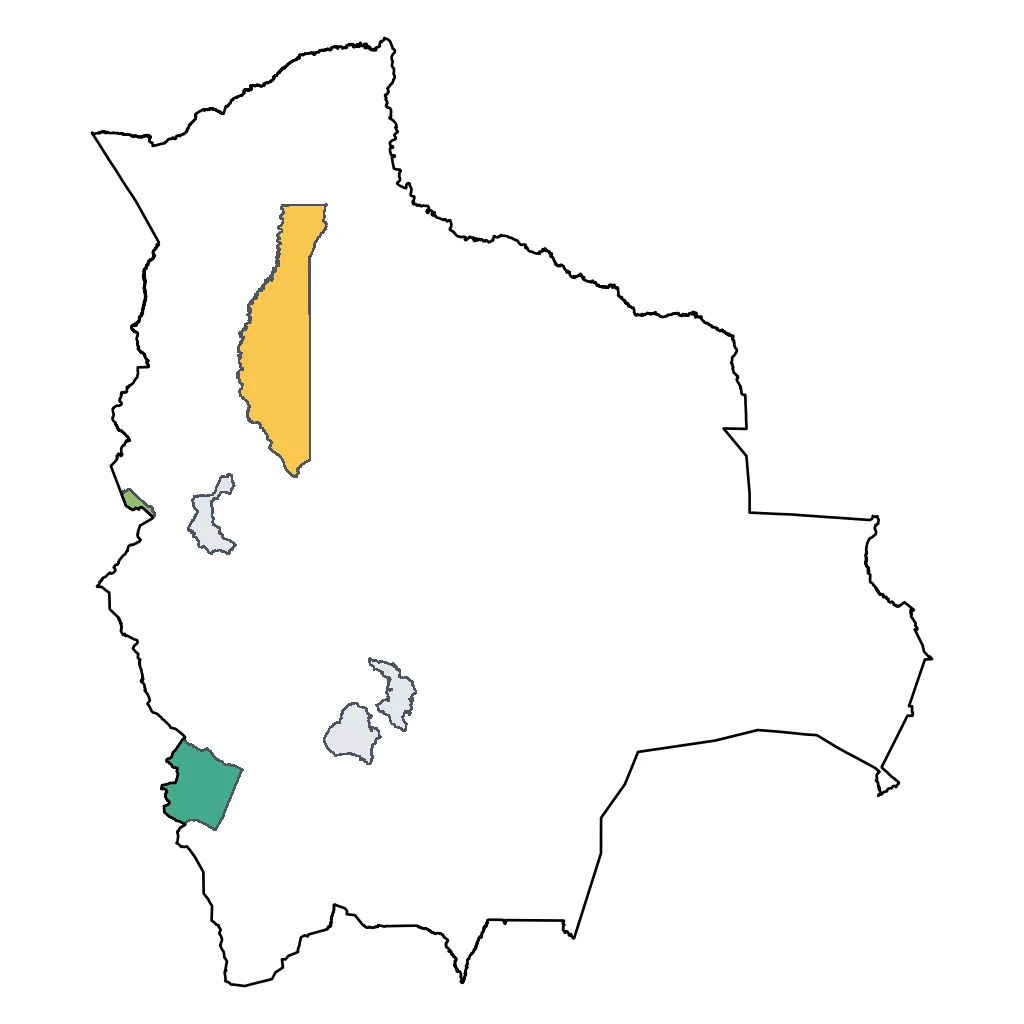

Potosí was once one of the wealthiest cities in the world, bankrolling the Spanish Empire with silver from the Cerro Rico mountain that towers over the town. Today, it stands as a UNESCO World Heritage site filled with ornate churches and colonial history. For families, the undisputed highlight is the Casa Nacional de la Moneda (National Mint). This massive building is one of the best museums in South America. Guided tours take visitors through the history of coin making, featuring giant wooden gear-systems that were once powered by mules. The scale of the machinery and the tangible history usually engage children better than typical art museums.
While Potosí is famous for its cooperative mines, touring the mines is generally not recommended for young children. The conditions inside are harsh, with dust, noxious gases, and tight spaces that can be frightening and unsafe for little ones. Instead, families can appreciate the mountain from the outside or visit the miners' market to see the equipment and dynamite sold openly, which provides a cultural insight without the physical risk of entering the tunnels.
At over 4,000 meters, Potosí is extremely high. The air is thin and cold. Families should ensure everyone is well-acclimatized before arriving; coming directly from sea level is dangerous. The city center is walkable but steep, so parents with toddlers might struggle with strollers on the cobblestones; a carrier is a better option. Food options include hearty local stews that are great for warming up, and there are several confectioneries selling traditional sweets that kids will enjoy. Visitors should dress in warm layers, as the temperature drops sharply as soon as the sun goes down or you step into the shade.
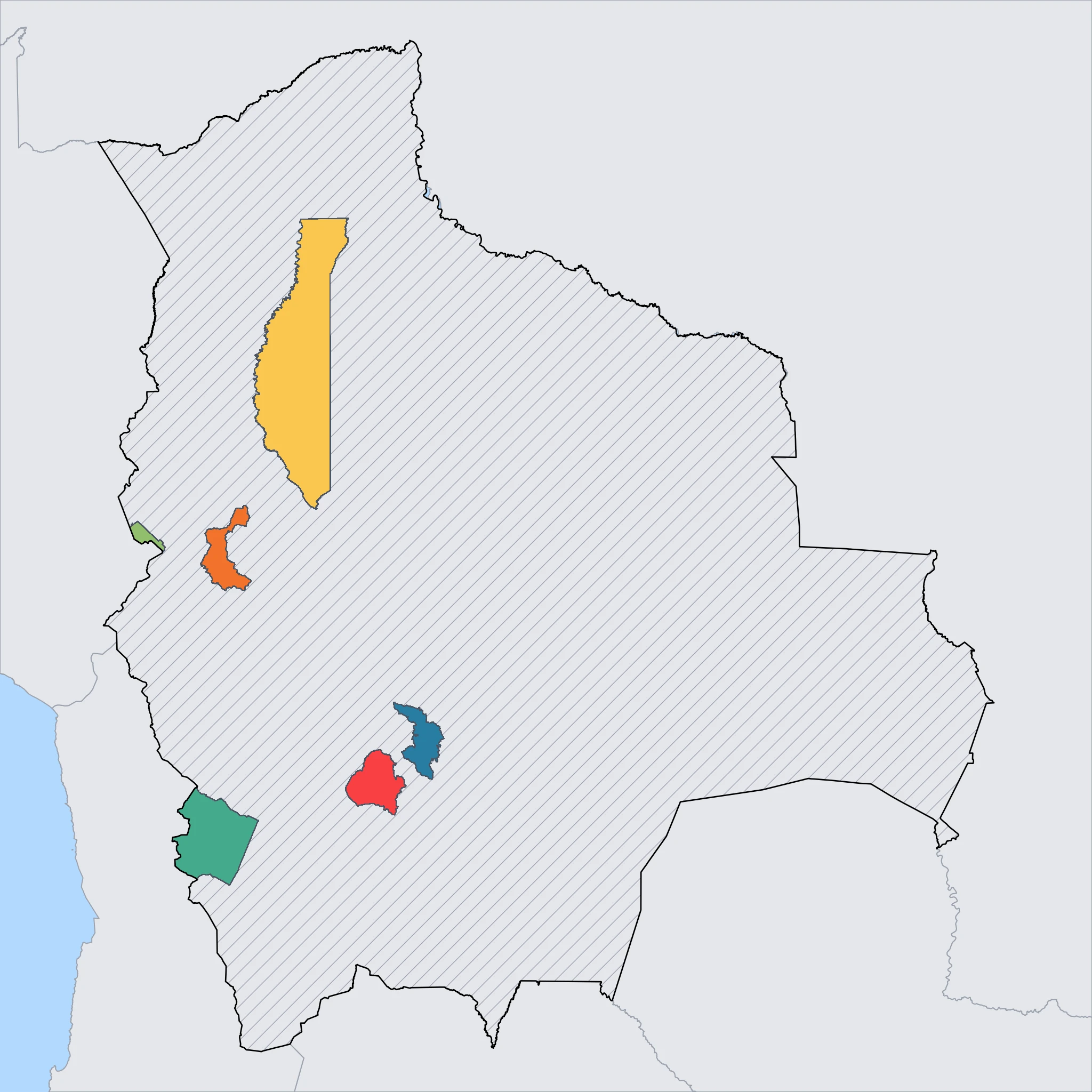
Click a region to explore

Activities & Best Times

Urban tourism, museums, historical sites, architecture
Potosí has immense historical significance as a UNESCO site, but the city itself has degraded infrastructure, limited tourist facilities, and is physically demanding at 4,090m altitude. The cultural heritage is outstanding but the visitor experience falls short of globally excellent cultural destinations. Only 1 editorial attraction in the database supports this classification.
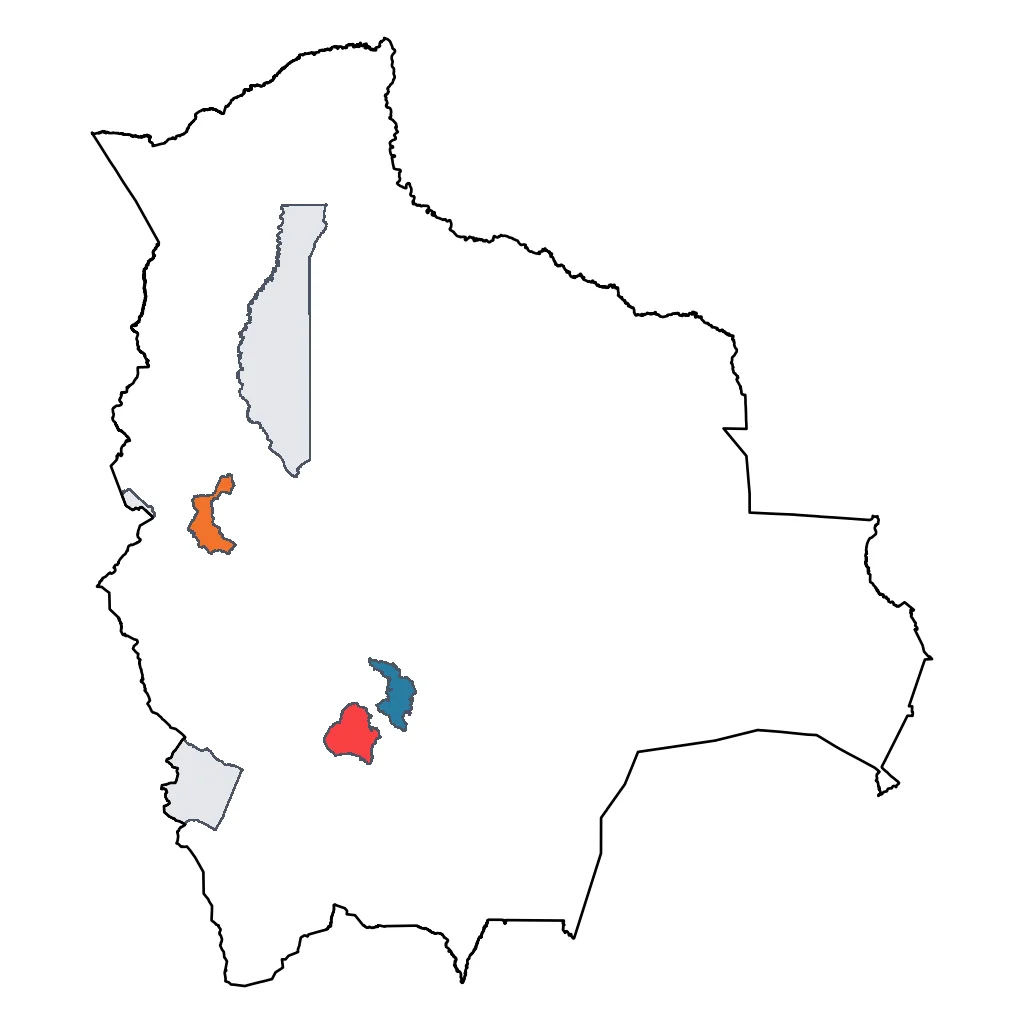

Learning experiences, scientific sites, historical education
The mine tours and colonial economic history are genuinely unique educational experiences, but 'excellent' implies a globally top-tier educational destination. With only 1 editorial attraction in the DB and limited museum infrastructure compared to major educational destinations, 'very_good' is more calibrated.
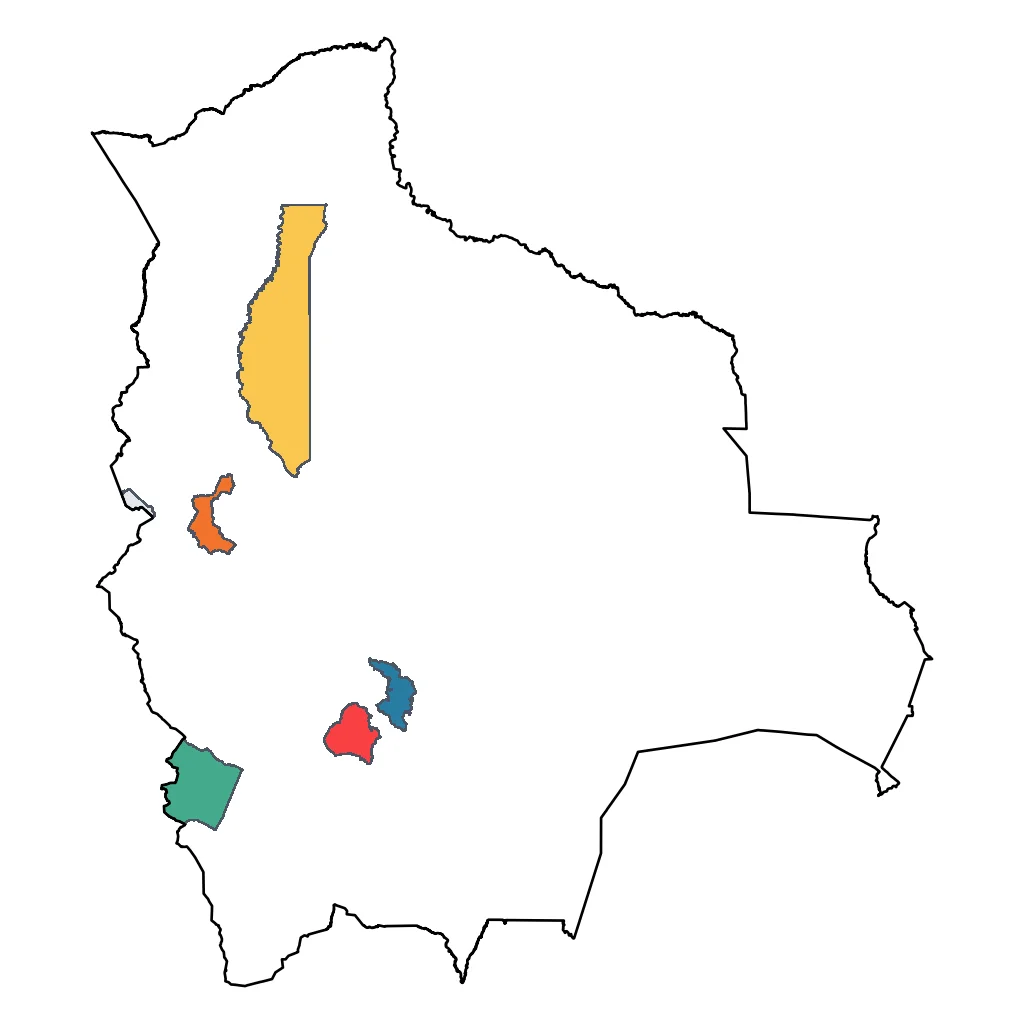

Scenic drives, countryside tours, route-based travel
Potosí is a crucial and spectacular stop on high-altitude Andean routes connecting Sucre and the Salar de Uyuni. The dry season (May-Sep) is essential for safety and breathtaking visibility of the Altiplano landscapes, whereas heavy summer rains often cause road washouts and poor driving conditions.

Hiking, wildlife, outdoor exploration, ecotourism
The mine descents are unique but are industrial heritage experiences, not nature-based adventure. The Altiplano exploration is scenic but generic. The region lacks dedicated adventure/nature attractions in the DB (only 1 attraction total, a scenic site). 'good' better reflects the limited adventure-nature offering compared to the Amazon or La Paz regions.

Events, celebrations, seasonal attractions
Home to the authentic Fiesta de Ch'utillos (August) and traditional Andean Carnival celebrations (February). August offers the best climate for outdoor festivities; February's Carnival is culturally rich but occurs during the peak of the rainy season, which may challenge less-experienced travelers.

Spa retreats, wellness centers, peaceful getaways
The nearby Tarapaya thermal springs offer a traditional soaking experience in a scenic crater, though facilities are rustic compared to international luxury spas. The cold, dry winter months (May-Aug) provide the most atmospheric conditions for enjoying the hot springs.