

⚠️ SAFETY WARNING: Due to a volatile security landscape characterized by armed conflict, terrorism, and high crime rates, government agencies (including CA, USA, UK, AU, IE, and NZ) advise travelers to reconsider or avoid all travel to the Democratic Republic of the Congo. Eastern regions specifically face severe risks of kidnapping and military clashes. Families are strongly urged to consult their own government's official travel advisory before considering a trip, as circumstances and risk assessments vary.
For those studying the geography of Africa, the Democratic Republic of the Congo stands as a colossus. It is the second-largest country on the continent, defined by the sweeping curve of the Congo River and the dense, biodiverse rainforests of the Congo Basin. The landscape ranges from the snowy peaks of the Rwenzori Mountains in the east to the savannas of the south. It is a destination that appeals primarily to conservationists and those seeking the rawest forms of nature, though the current infrastructure makes family travel extremely difficult.
The country's most famous inhabitants are its great apes. The Virunga National Park, Africa's oldest, protects endangered mountain gorillas, while Kahuzi-Biega National Park is home to the eastern lowland gorillas. Uniquely, the DRC is the only country where bonobos are found in the wild. Near the capital, Kinshasa, the Lola ya Bonobo sanctuary acts as a rehabilitation center for orphaned bonobos. This educational site allows visitors to observe these intelligent primates in a protected, semi-wild environment, offering a rare educational experience about wildlife conservation.
Culturally, the DRC is a powerhouse of music and art. Congolese Rumba is recognized by UNESCO for its global influence, and the streets of Kinshasa are vibrant with energy and creativity. However, the capital is chaotic, and urban infrastructure is often severely degraded. Roads outside major centers can be impassable, especially during the rainy season, and domestic flight safety is a major concern with many carriers blacklisted internationally.
Families considering this region must be aware of critical health requirements. A Yellow Fever vaccination is mandatory for entry, and malaria prophylaxis is essential. Medical facilities are very limited, often lacking basic supplies. Due to these logistical hurdles and safety risks, the DRC is generally not suitable for casual family holidays, remaining a destination for specialized professional travel or conservation efforts.

Explore Regions
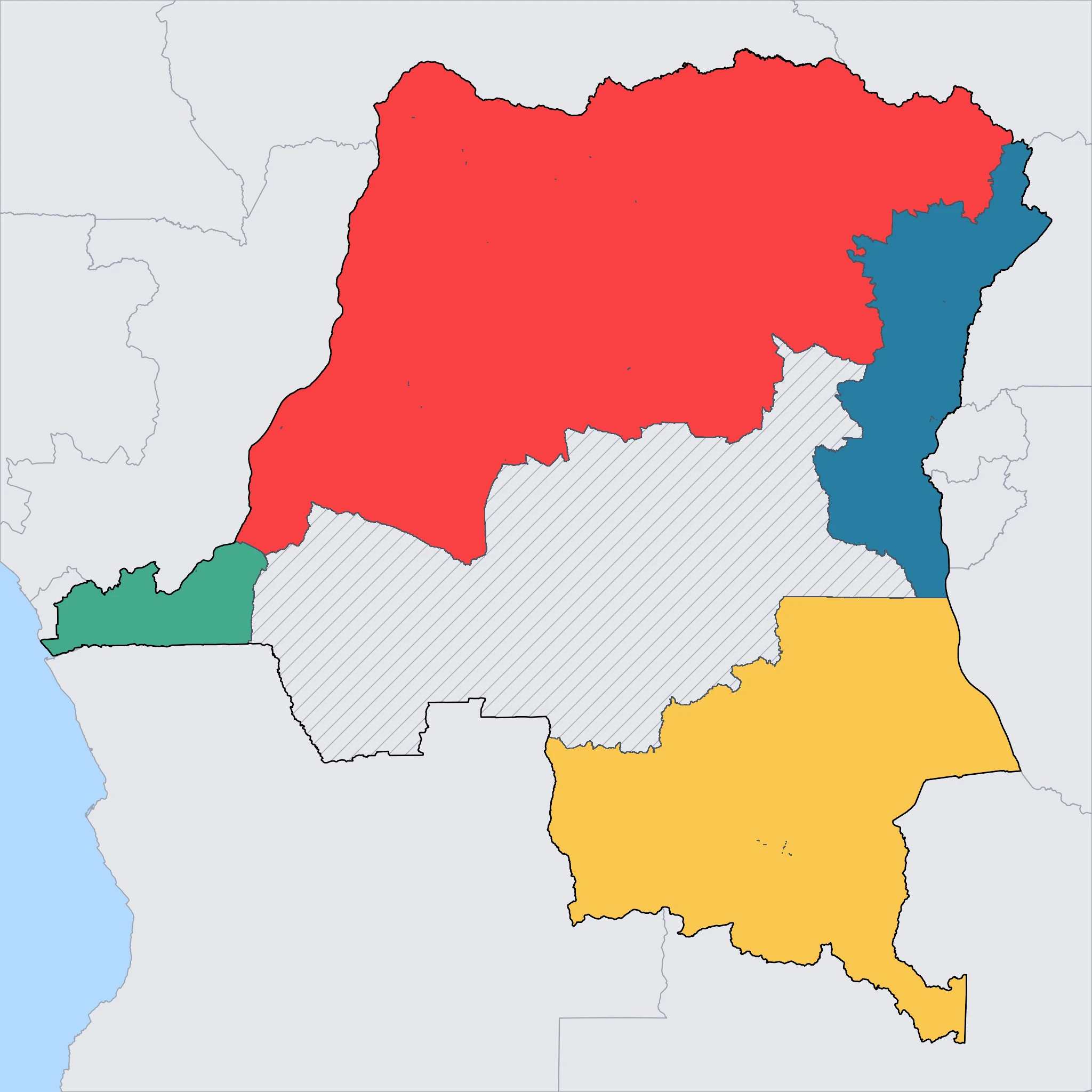
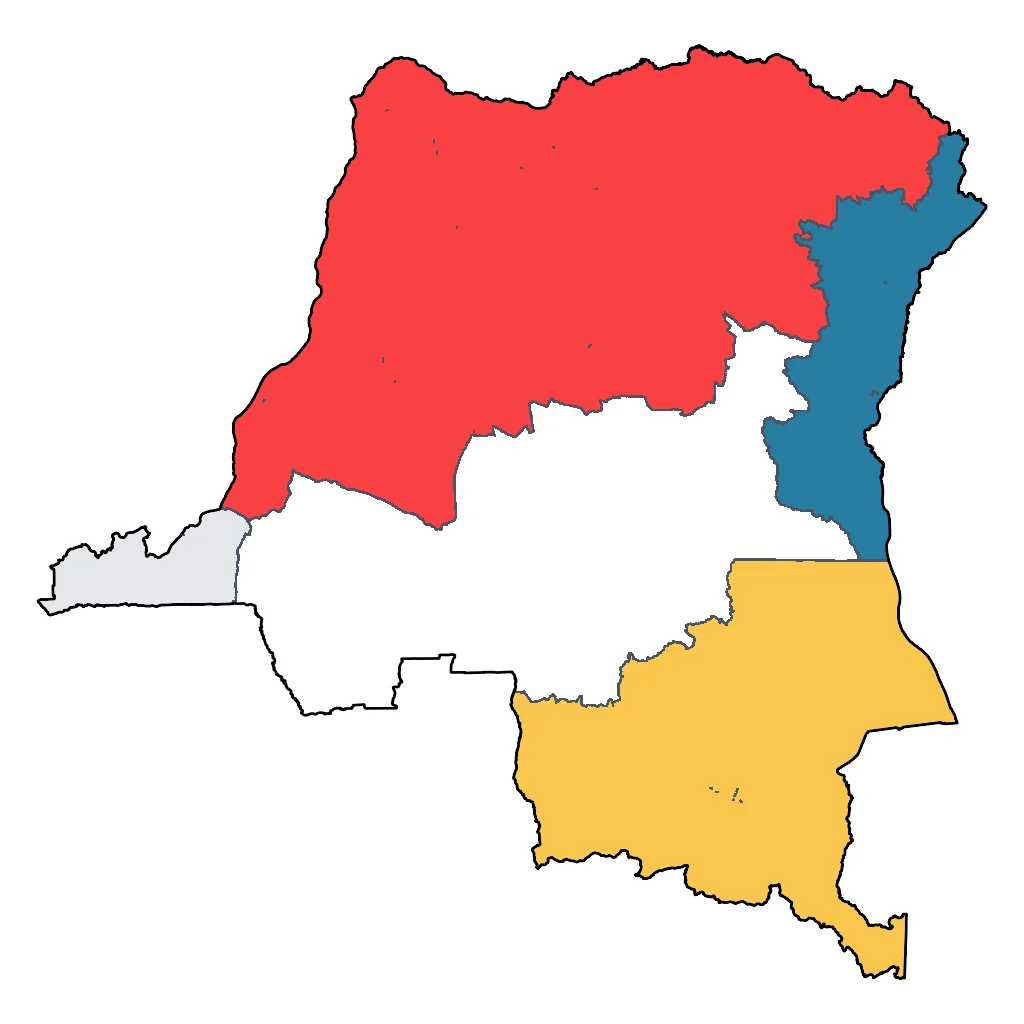
4 Regions
Congo River & Basin
Journey into the heart of the world's second-largest rainforest 🌿
Katanga & South
Industrial history meets green spaces in the copper capital ⛏️
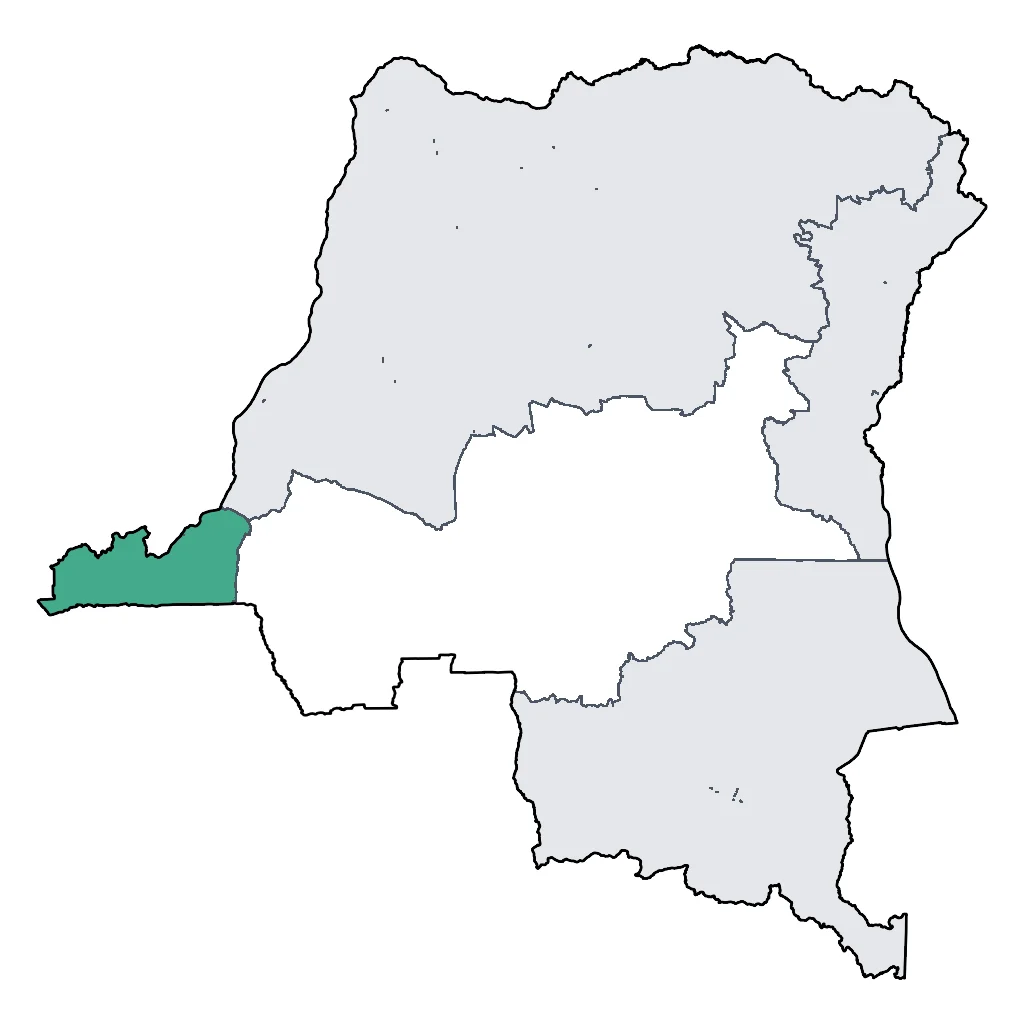
Kinshasa
Vibrant culture and the world's only bonobo sanctuary 🐒
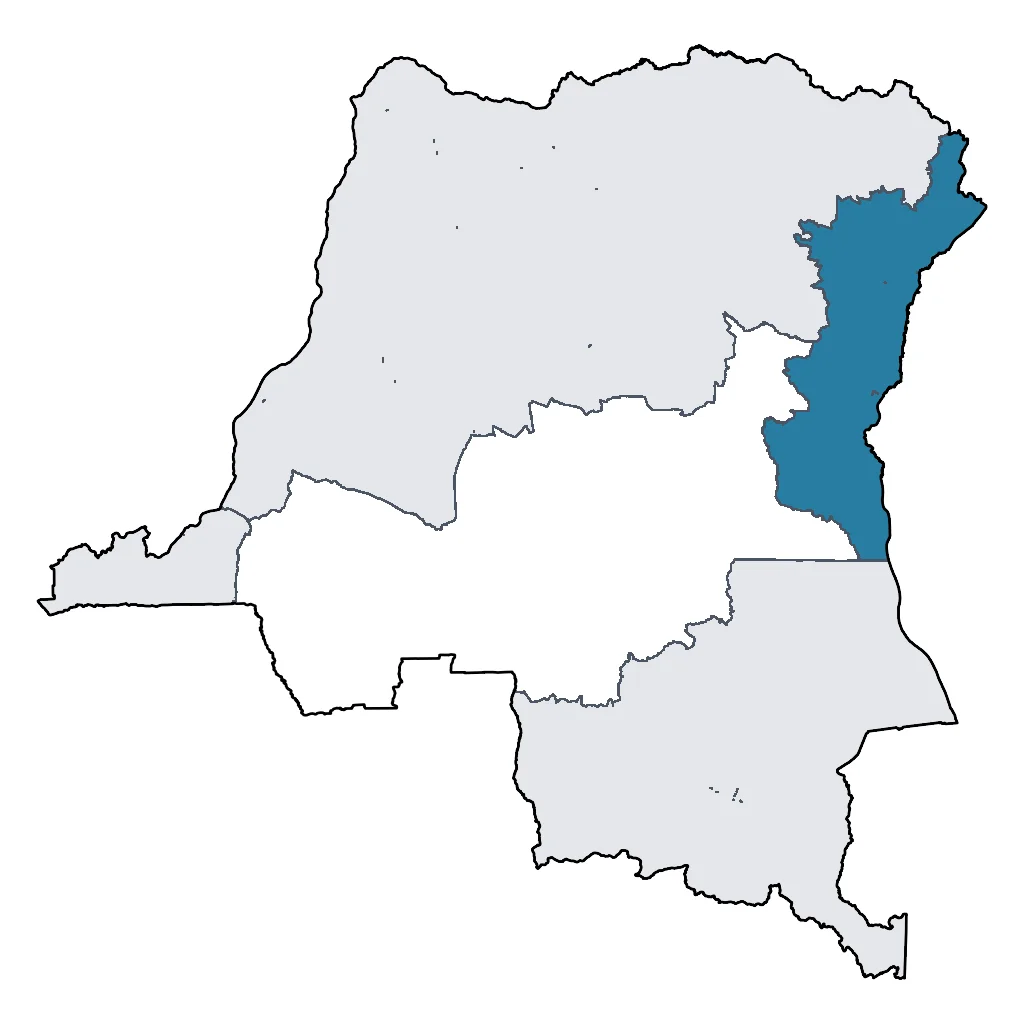
Virunga & Eastern DRC (gorillas)
Home to the majestic mountain gorillas and active volcanoes 🦍
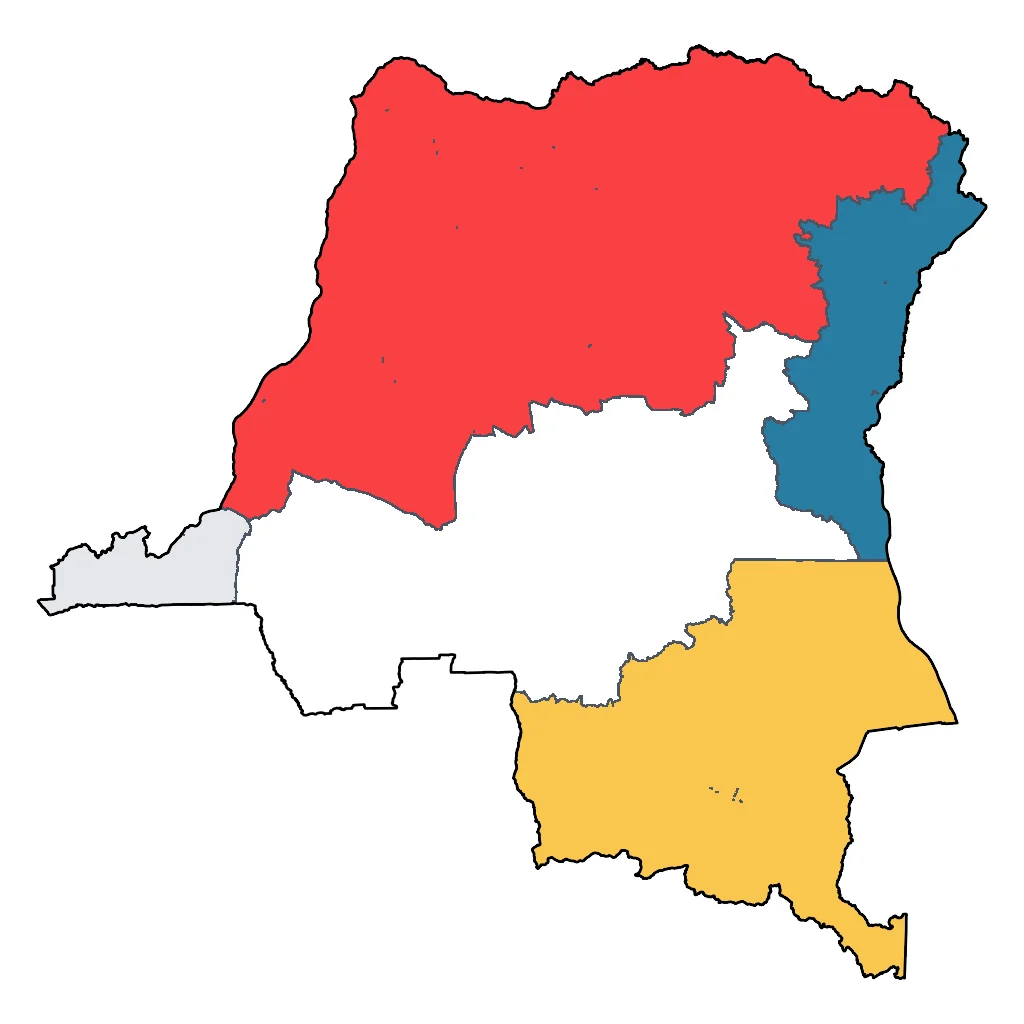
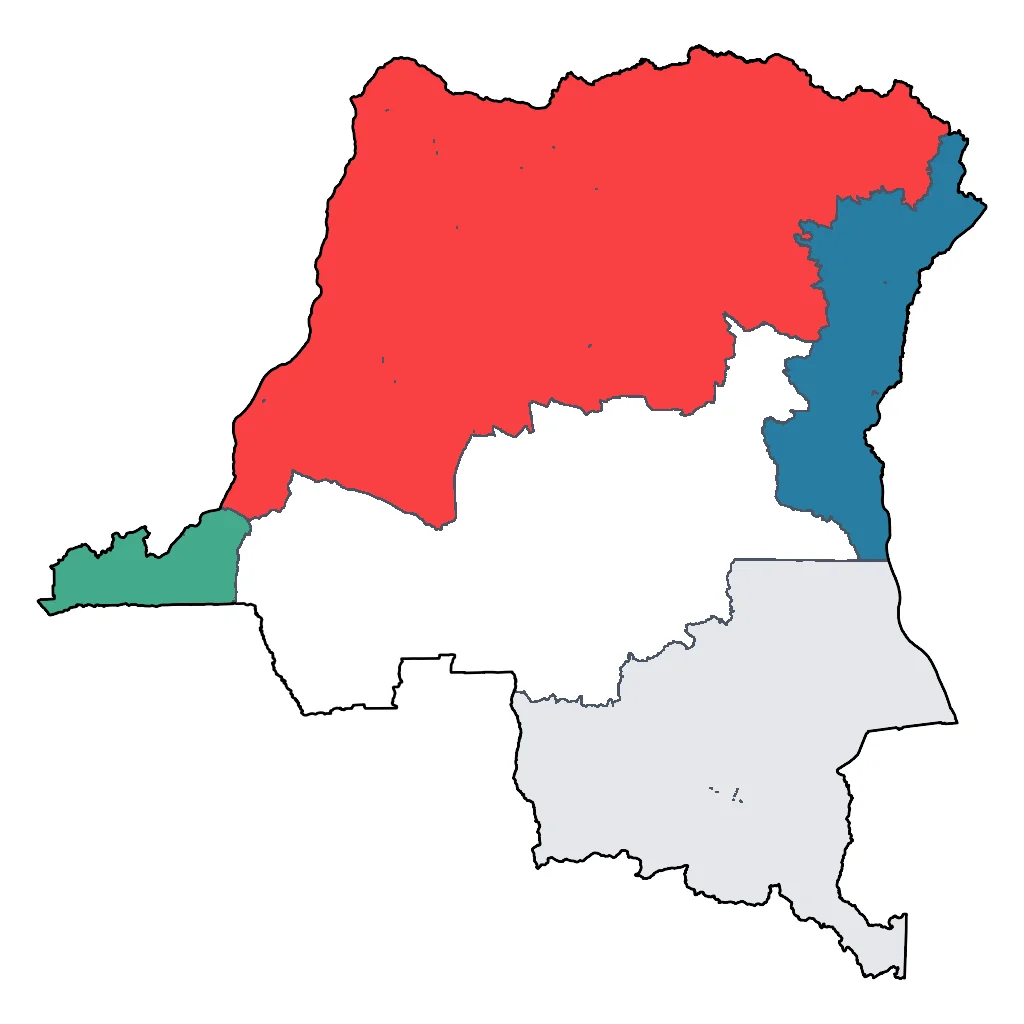
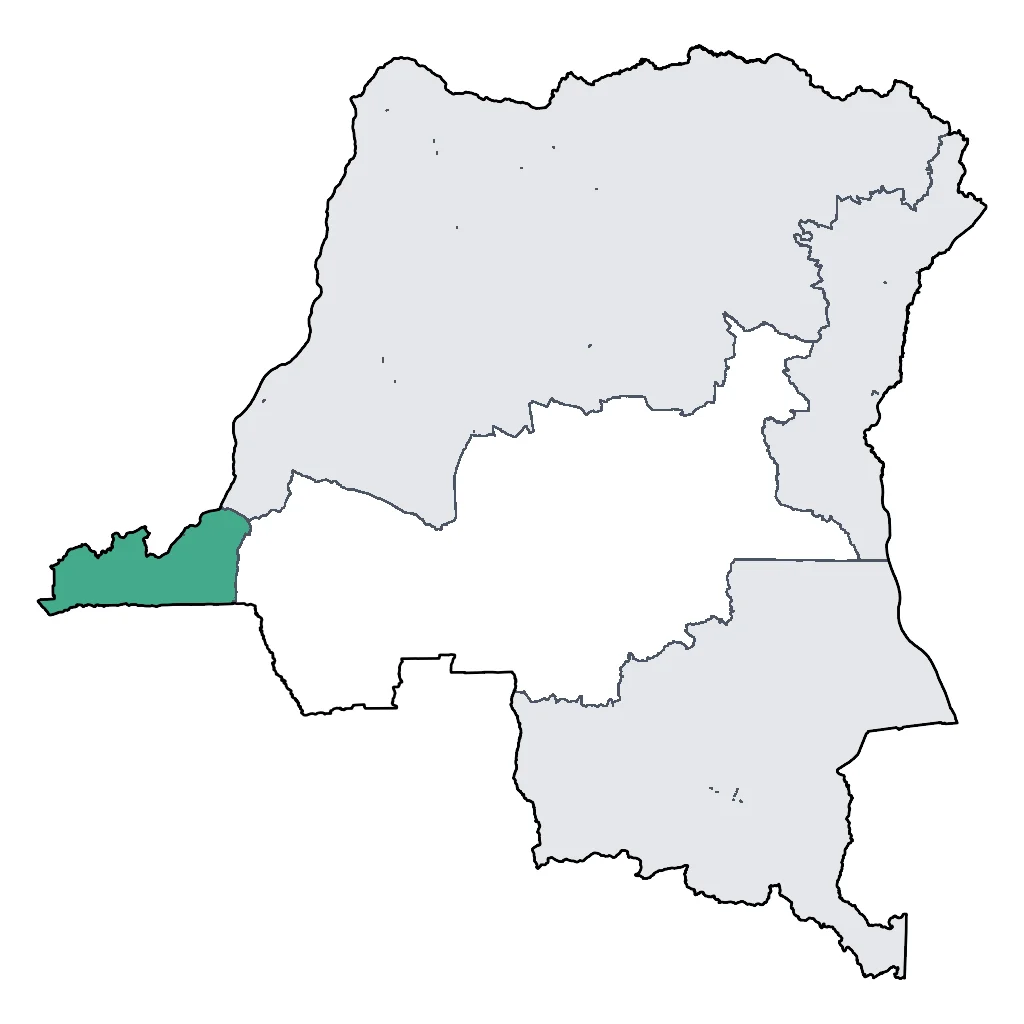
Click on a region marker to explore details. Use the dropdown to color regions by activity suitability.

Activities & Best Times

Adventure & Nature
ExcellentHiking, wildlife, outdoor exploration, ecotourism
A world-class destination offering unparalleled encounters with mountain gorillas and the world's largest lava lake. Peak months (Jun-Jul) provide the driest conditions for trekking through dense rainforest, while the primary wet seasons (Mar-May, Sep-Nov) make mountain slopes dangerously slick and difficult to navigate.
A bucket-list destination offering unparalleled biodiversity and the raw power of the world's deepest river in the second-largest rainforest on Earth. Peak months (Jan, Dec) align with lower rainfall (<100mm), which is critical for navigating the basin and spotting wildlife; the monsoon months (Sep-Nov) make trails impassable and river travel hazardous.
Home to the spectacular Kundelungu and Upemba National Parks and the Lofoi Falls, one of Africa's highest, offering rare and authentic savanna-plateau trekking. Peak dry months (May-Sep) provide essential track accessibility and visibility, whereas heavy monsoon rains from November to March render the wilderness areas nearly impassable.

Educational & Exploratory
Very GoodLearning experiences, scientific sites, historical education
Offers profound insights into primatology and volcanology with authentic conservation experiences that appeal to intellectually curious families. Research and field site accessibility is highest during the drier months; heavy rainfall in the off-season significantly hampers the ability to engage with scientists and conservationists in the field.
Provides a living laboratory for families to learn about complex hydrology, tropical ecology, and indigenous anthropology in a primordial setting. Drier conditions in Jan and Dec ensure safer access to remote field sites and research facilities, while extreme humidity and heavy rainfall in the off-season limit outdoor learning.
Provides exceptional learning opportunities regarding primatology and Central African history through specialized conservation sites and local galleries. The dry season is the best time for guided educational tours, whereas extreme humidity and heavy precipitation from November to April significantly degrade the experience.

City & Cultural
GoodUrban tourism, museums, historical sites, architecture
Congolese Rumba (UNESCO ICH) and Sapeur culture are internationally significant cultural phenomena, but Kinshasa lacks the museum/gallery/heritage site infrastructure of globally top-tier cultural cities (Paris, Istanbul, Tokyo). Cultural content is strong but tourist-facing infrastructure is limited.
The region offers profound, authentic immersion into riverboat life and traditional fishing cultures that remain untouched by mass tourism. While the cultural significance is high, the lack of world-class urban infrastructure for families makes it a marginal choice, best visited during the drier months to avoid the logistical chaos caused by heavy equatorial rains.
Lubumbashi features distinctive Art Deco colonial architecture and a vibrant local arts scene that provides a sophisticated urban contrast to the wilderness. It is best visited during the cooler dry months to enjoy the cosmopolitan atmosphere comfortably, though it lacks the density of heritage sites required for a higher rating.

Sports & Active
GoodSport tourism, fitness activities, active recreation
Offers world-class, high-endurance river expeditions and jungle trekking for well-travelled, active families. Peak months offer the most stable trail conditions and manageable river currents, whereas high rainfall (up to 212mm) during the wet season creates extreme physical challenges and limited visibility.
Features elite-level trekking and high-altitude volcanic climbs that challenge even experienced adventurers. Conditions are optimal when precipitation is at its lowest (Jun-Jul) for safe footing on volcanic rock and jungle trails; heavy rains (Aug-Nov) create hazardous mud and poor visibility.
The high-altitude plateaus offer unique terrain for hiking, birdwatching, and rugged expedition-style exploration for active families. Optimal conditions occur during the dry season when humidity is low and temperatures are moderate; the rainy season brings high humidity (up to 68%) and difficult terrain.

Festivals & Seasonal
GoodEvents, celebrations, seasonal attractions

Beach & Sea
MarginalBeach resorts, marine activities: diving, snorkelling, kite surfing, wind surfing, sailing

Relaxation & Wellness
MarginalSpa retreats, wellness centers, peaceful getaways

Airports & Flight Routes
Toggle options to view domestic routes and international airports. Click an airport for details.
Climate & Weather
Congo River & Basin
Show Details
| Month | Temp °C | Rain | Humidity |
|---|
Katanga & South
Show Details
| Month | Temp °C | Rain | Humidity |
|---|
Kinshasa
Show Details
| Month | Temp °C | Rain | Humidity |
|---|
Virunga & Eastern DRC (gorillas)
Show Details
| Month | Temp °C | Rain | Humidity |
|---|

Travel Advisory
Extreme risk; travel is strongly discouraged due to ongoing armed conflict, widespread violent crime, and the threat of terrorism.
Safety Topics
Traveller Advice (4 groups)

While not explicitly criminalized by statute, sexual and gender minorities face significant social stigma, harassment, and the threat of prosecution under public decency laws.

There is a very high risk of gender-based violence and sexual assault, particularly in areas affected by conflict in the East.

Aid workers are frequently targeted for kidnapping and forced taxation by armed groups in the eastern provinces. Organizations should maintain strict security protocols.

The U.S. government restricts minor dependents from accompanying staff in the country due to severe health and safety risks.