

Fiji is widely considered one of the most family-friendly destinations in the South Pacific, distinguished not just by its tropical landscape but by a culture that deeply values children. The warmth of the Fijian people is immediate upon arrival, with the enthusiastic greeting of "Bula!" echoing everywhere from the airport to remote villages. For parents, the highlight is often the exceptional childcare; many resorts offer dedicated "Bula Clubs" and affordable nanny services, allowing adults to relax while kids engage in supervised crab races, coconut husking lessons, and traditional storytelling.
Geography and Island Hopping
Most international flights land at Nadi International Airport on the main island of Viti Levu. From here, families often head to Port Denarau, a convenient hub of high-end resorts and the gateway to the outer islands. For those seeking the classic white-sand island experience, the Mamanuca Islands are a short ferry ride away and offer calm, shallow waters perfect for toddlers. Families willing to travel further can reach the Yasawa Islands, which are more rugged and remote, offering pristine snorkeling directly off the beach.
Nature and Wildlife
Beyond the pool, Fiji offers accessible adventures for varying energy levels. On the Coral Coast of Viti Levu, families can visit the Kula Wild Adventure Park to see colorful lorikeets and learn about the conservation of endangered crested iguanas and hawksbill turtles. For a messy but memorable experience, the Sabeto Hot Springs and Mud Pool near Nadi allows kids to cover themselves in natural mud before washing off in warm thermal pools. The Garden of the Sleeping Giant offers gentle walking paths through thousands of orchids, suitable for school-aged children.
Culture and Cuisine
Fijian culture is a highlight of any trip. Resorts often host Meke nights, featuring traditional song and dance that captivate children. A visit to a local village is a rewarding educational experience; families should dress modestly (shoulders and knees covered) and present a bundle of kava root as a gift to the chief. The food scene reflects a blend of indigenous and Indo-Fijian influences. While resorts serve standard international fare, adventurous families can try Kokoda (raw fish marinated in lemon and coconut cream) or mild vegetable curries with fresh roti.
Practical Information
The climate is tropical year-round, with the dry season (May to October) offering the most comfortable temperatures and lower humidity. The wet season (November to April) brings higher temperatures and a risk of cyclones. Sun protection is essential as UV levels are very high; rash guards and high-SPF sunscreen are mandatory for kids. While malaria is not present, mosquitoes can carry dengue fever, so insect repellent is recommended, especially at dusk. English is an official language and widely spoken, making communication easy for travelers.

Explore Regions
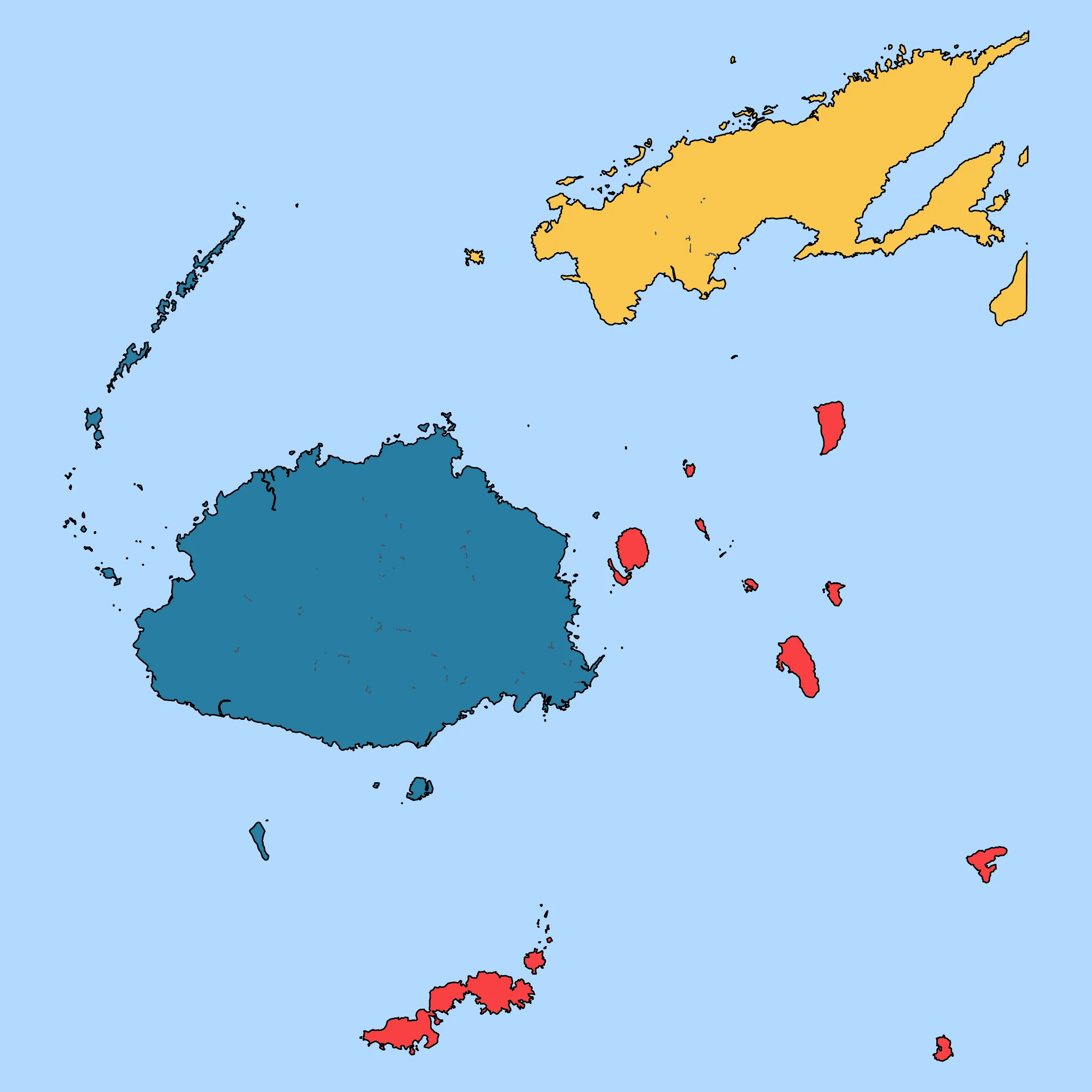
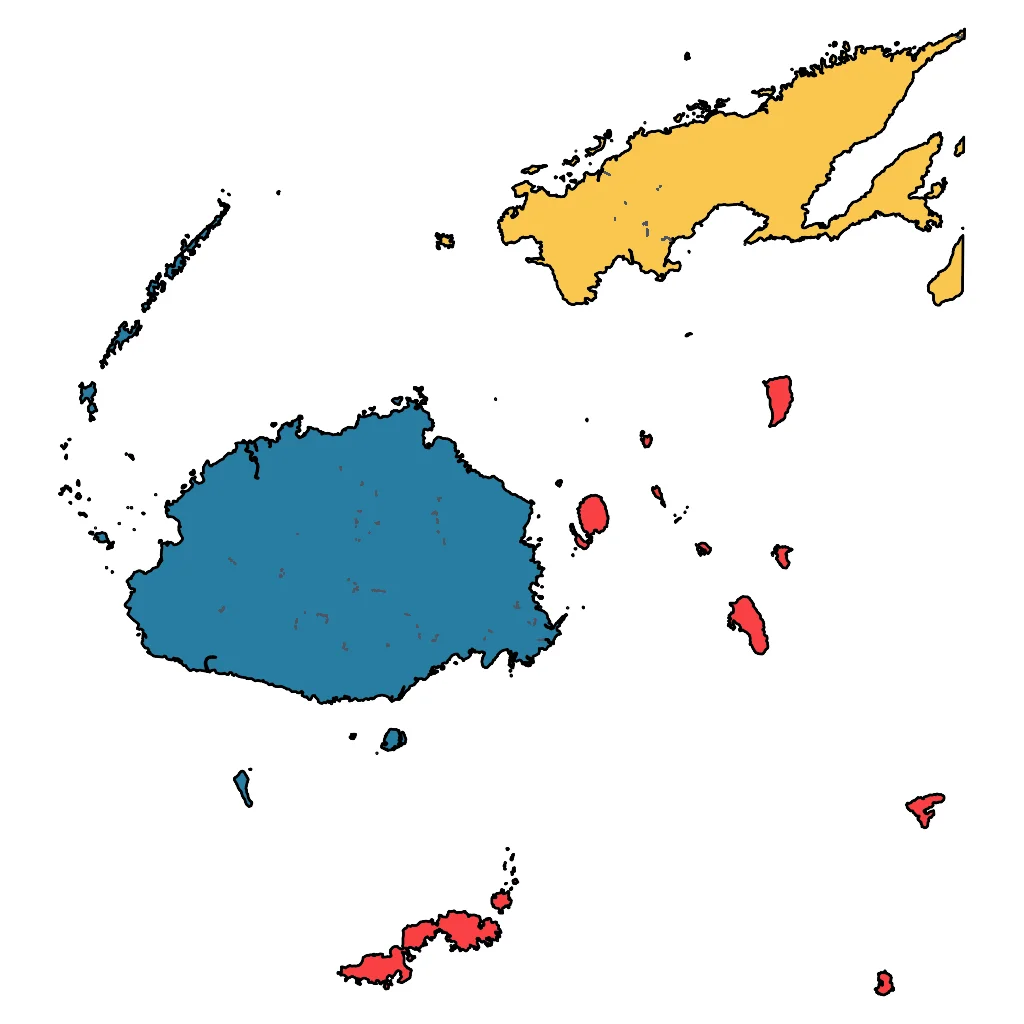
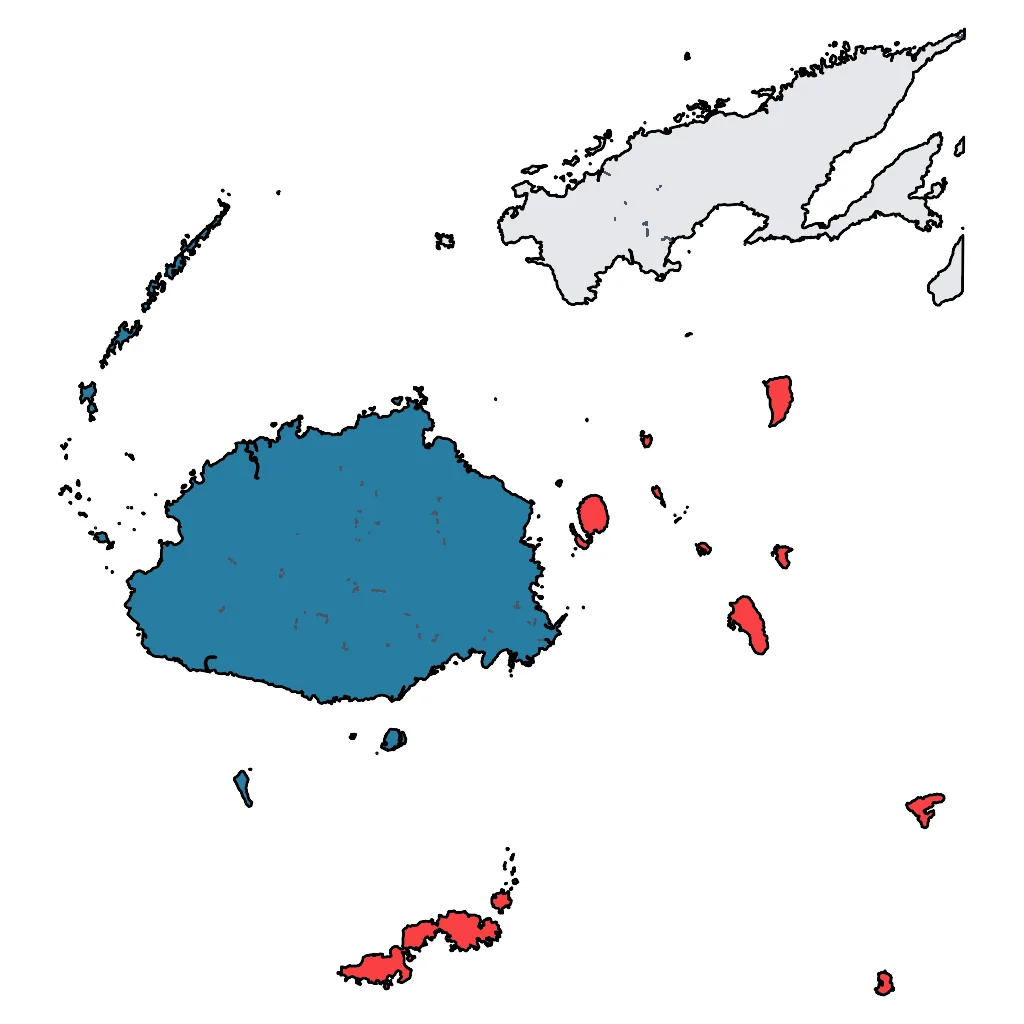
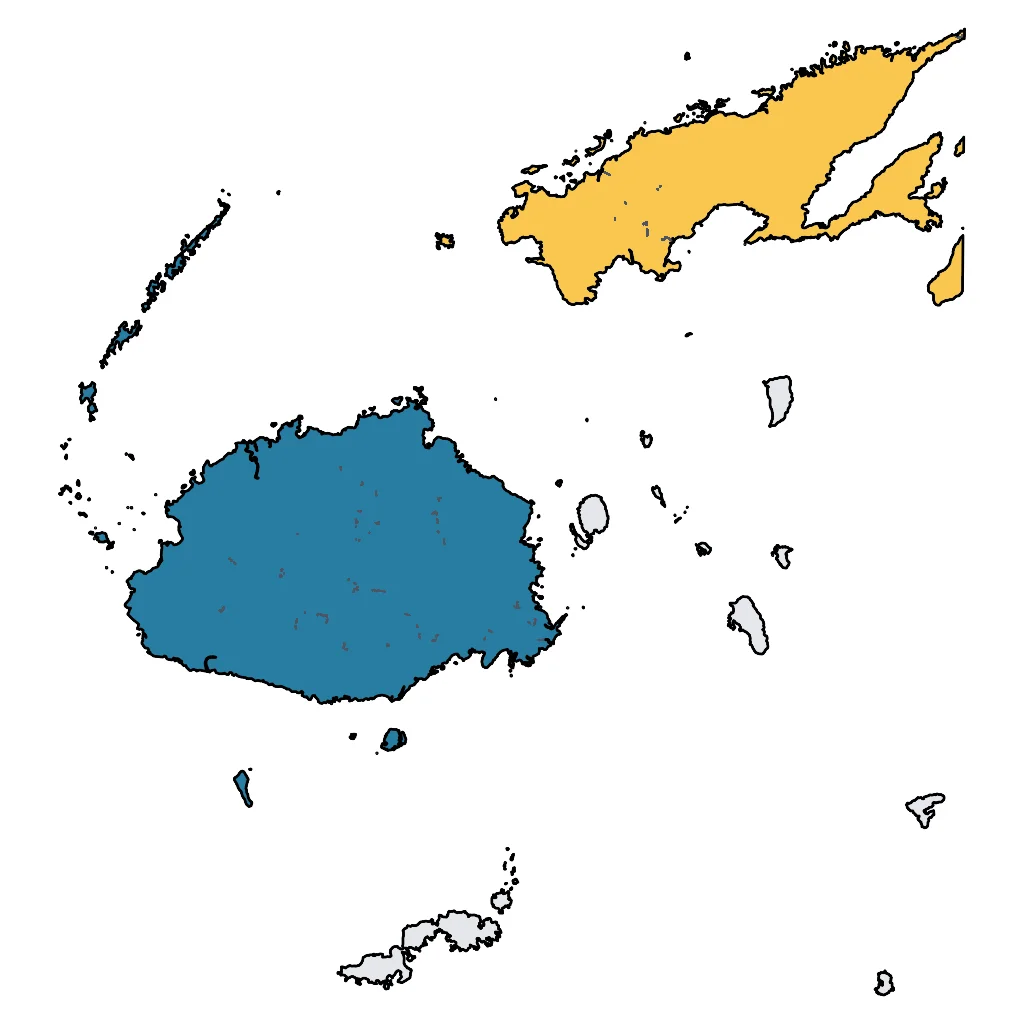
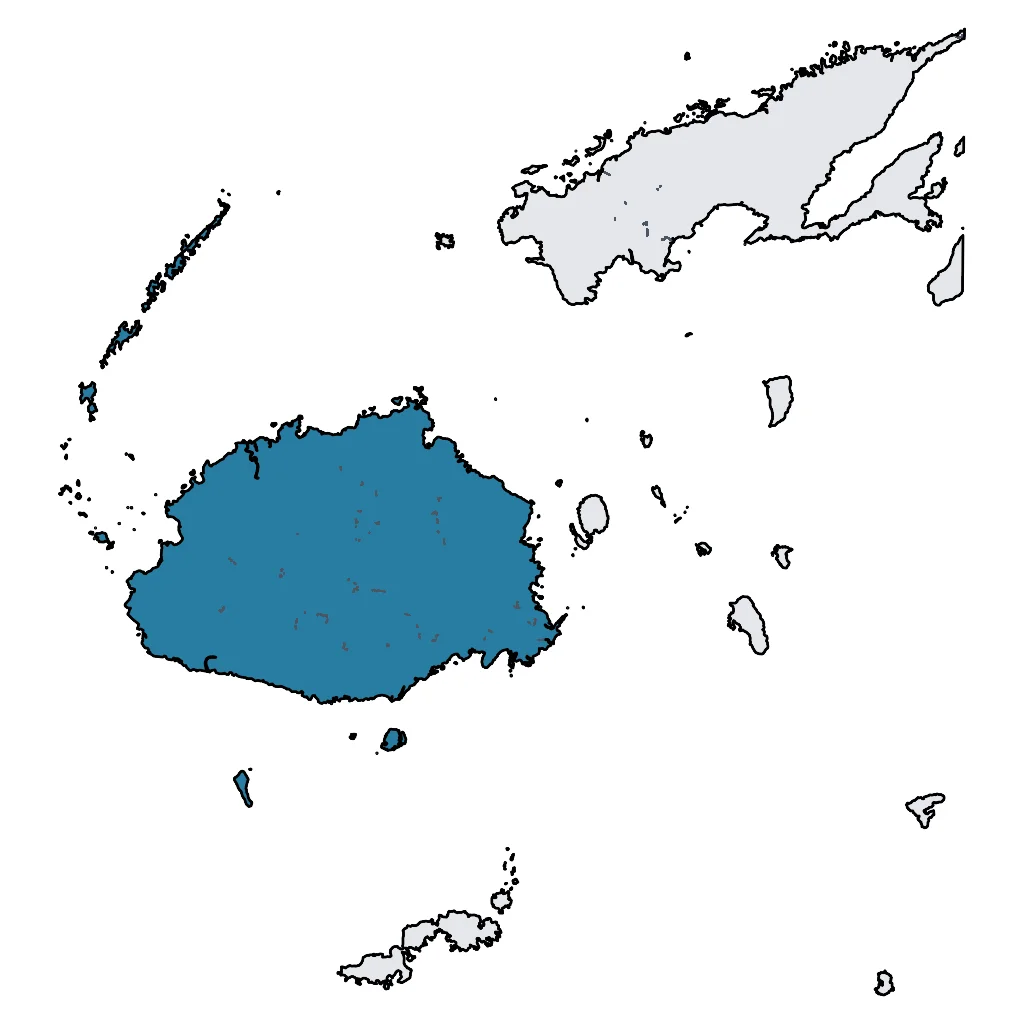
3 Regions
Outer Islands
Remote eco-adventures and authentic village life 🛶
Vanua Levu & Taveuni
Lush rainforests, waterfalls, and world-class reefs 🌿
Viti Levu & Western Islands (Nadi, Mamanuca, Yasawa)
The heart of Fiji's family holiday action 🏖️
Click on a region marker to explore details. Use the dropdown to color regions by activity suitability.

Activities & Best Times

Adventure & Nature
ExcellentHiking, wildlife, outdoor exploration, ecotourism
Known as the 'Garden Island,' Taveuni offers pristine rainforests, dramatic waterfalls, and rare endemic species like the Tagimoucia flower in an authentic wilderness setting. Trails are best explored during the drier winter months; summer months are marked by torrential rain (>300mm) that makes hiking trails muddy and hazardous.
Offers a rare chance to explore rugged, unexplored landscapes and unique ecosystems, such as Kadavu's endemic birdlife, far from commercial tourism. The cooler, drier winter months are ideal for hiking and wildlife spotting, whereas the extreme humidity (66%) and heavy rain (>260mm) of the austral summer make exploration difficult.
Offers unique adventures like white-water rafting on the Upper Navua River and exploring the Sigatoka Sand Dunes. The dry winter months provide firm trails and safe river levels; the wet season makes inland exploration difficult due to mud, humidity, and flash flood risks.

Beach & Sea
ExcellentBeach resorts, marine activities: diving, snorkelling, kite surfing, wind surfing, sailing
Home to the Great Astrolabe Reef and the pristine Lau Group, these islands offer world-class diving and untouched beaches that rival the Maldives for exclusivity and marine biodiversity. Peak months provide the best underwater visibility and lowest rainfall (93-125mm), while the high-precipitation months (Jan-Apr) carry cyclone risks and poor sea conditions.
Home to world-class coral reefs and the iconic turquoise waters of the Mamanuca and Yasawa chains, offering elite diving and snorkeling that rivals the Maldives. Peak dry season (Jun-Sep) provides optimal underwater visibility and low humidity, while the wet season (Nov-Apr) brings heavy tropical downpours and cyclone risks.
Home to the Great White Wall and Rainbow Reef, this region is a global benchmark for soft coral diving and world-class boutique marine resorts. Peak months offer maximum underwater visibility and calm seas, while the wet season (Nov-Apr) brings heavy runoff and cyclone risks that degrade sea conditions.

Relaxation & Wellness
ExcellentSpa retreats, wellness centers, peaceful getaways
Fiji is globally renowned for its 'Bula' hospitality and high-end island sanctuaries that specialize in authentic South Pacific spa rituals. The cooler, drier months (Jun-Sep) are ideal for outdoor wellness, whereas the high humidity of the monsoon season can be oppressive for relaxation.
The region features exclusive, low-density luxury retreats focused on privacy and natural soundscapes, far removed from mass-market tourism. July and August provide the lowest humidity and most comfortable temperatures for outdoor spa treatments, whereas the wet season's intense humidity can be oppressive for wellness seekers.
High-end, secluded eco-retreats offer sophisticated travelers a 'digital detox' rooted in authentic Fijian hospitality. The peak season provides comfortable temperatures (22-24°C) and lower humidity (60%) essential for outdoor wellness, while the wet season's heavy downpours limit the serenity of the remote island experience.

Sports & Active
ExcellentSport tourism, fitness activities, active recreation
Boasts world-class surfing at Cloudbreak and championship golf courses at Natadola Bay that meet the highest international standards. Peak months align with consistent trade winds and optimal swell conditions, while the off-season is plagued by unpredictable tropical storms.
Zero attraction evidence supports this rating. The claim of 'international destination for elite sea kayaking' is not substantiated by any editorial attractions in the database. Without specific named venues, operators, or facilities, 'good' is more appropriate — activity is available but not proven at the 'very_good' threshold.
Offers exceptional sea kayaking, jungle trekking, and world-renowned snorkeling in a rugged, natural landscape. Activity levels peak when rainfall is lowest to ensure safe navigation of coastal waters and forest paths, while heavy monsoon rains significantly limit outdoor recreation from November to April.

City & Cultural
GoodUrban tourism, museums, historical sites, architecture
A single small UNESCO port town (Levuka) and traditional village protocols do not constitute 'very_good' cultural tourism by international standards. Compared to regions with multiple museums, galleries, and cultural districts, this is 'good' — notable but not a cultural destination. The attraction evidence (1 site) supports 'good' at most.
Suva offers a window into colonial history and Pacific governance, though it lacks the density of world-class museums found in global capitals. The dry season is the only comfortable time for urban exploration, as the region's extreme humidity and high rainfall during summer make city walking uncomfortable.

Educational & Exploratory
GoodLearning experiences, scientific sites, historical education
Provides sophisticated families with genuine insights into Melanesian culture through village visits and archaeological sites like the Sigatoka dunes. Best experienced in the dry season when cultural festivals occur and site access is unimpeded by heavy regional rainfall.
Provides exceptional nature-based learning for children, focusing on tropical ecology, marine conservation at the Rainbow Reef, and volcanic geology. Peak months align with the best accessibility for guided national park tours and ecological field trips, while summer weather often restricts outdoor educational programming.
Families can experience an authentic immersion into traditional Fijian village life and ancient seafaring customs that remain largely unchanged. While the cultural education is profound and genuine, the lack of formal museum infrastructure limits the rating to marginal for those seeking academic or scientific facilities.

Festivals & Seasonal
GoodEvents, celebrations, seasonal attractions

Road Trips & Scenic
MarginalScenic drives, countryside tours, route-based travel
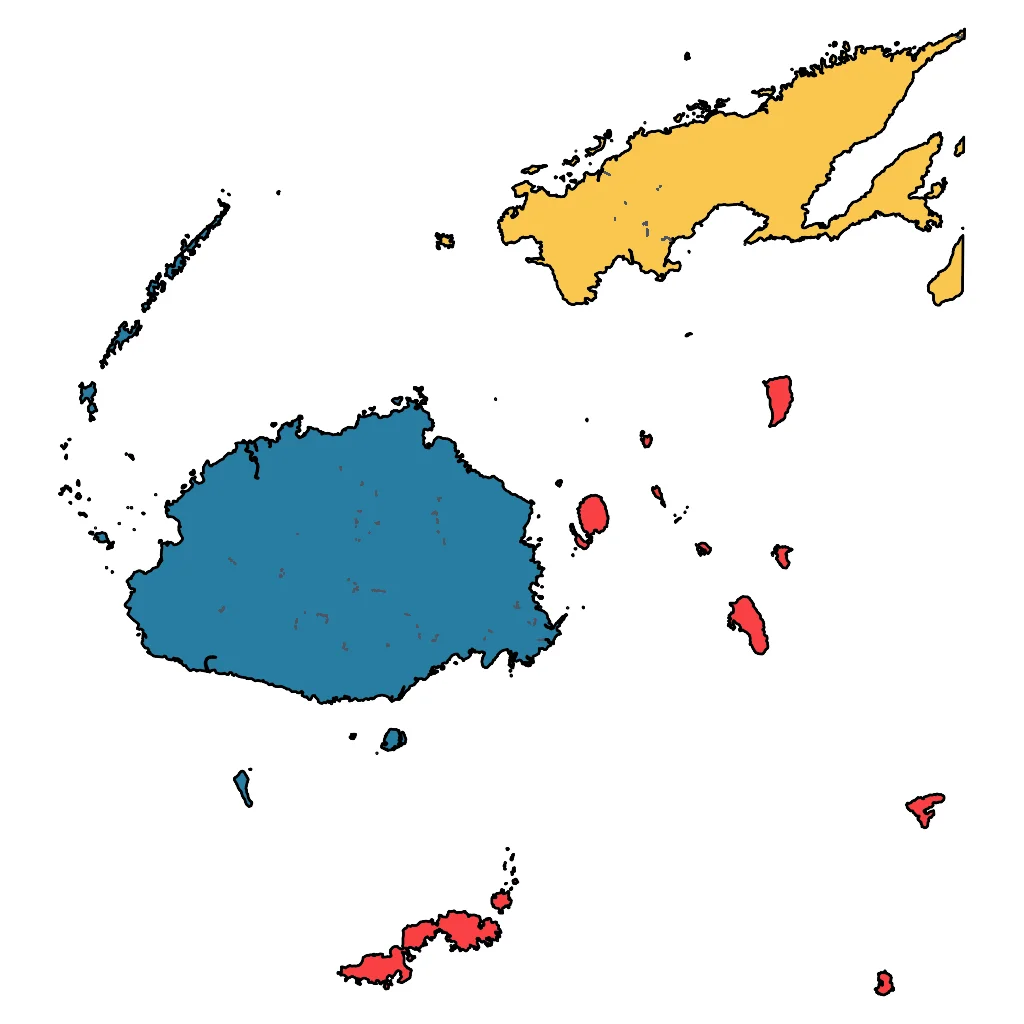
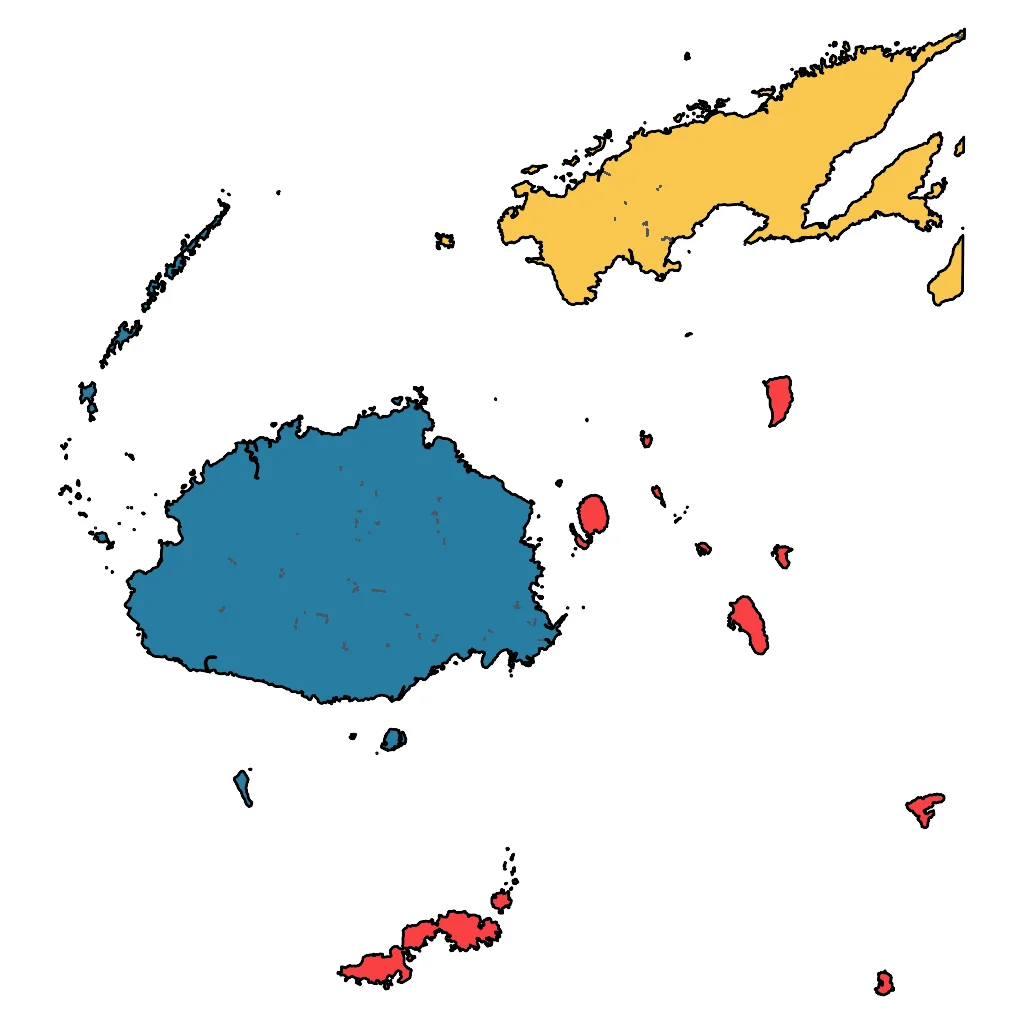
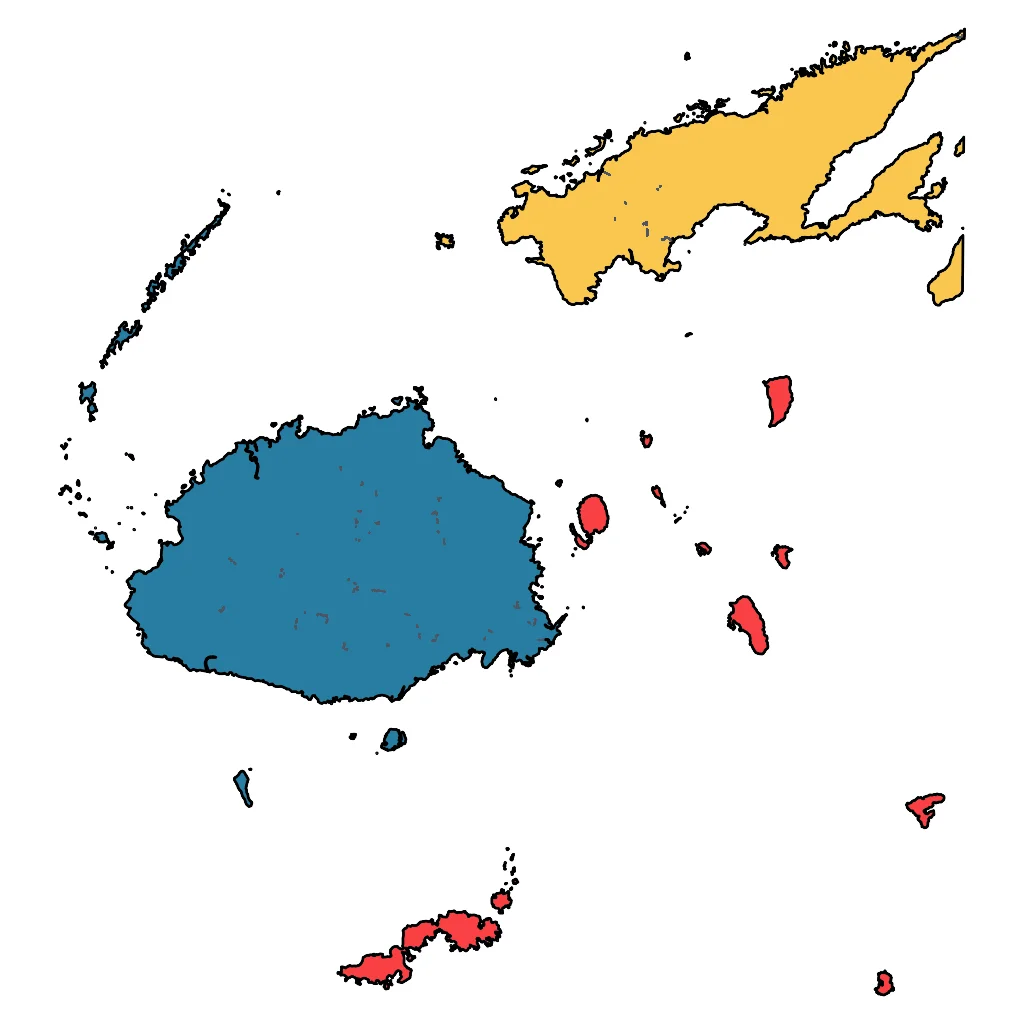

Airports & Flight Routes
Toggle options to view domestic routes and international airports. Click an airport for details.
Climate & Weather
Outer Islands
Show Details
| Month | Temp °C | Rain | Humidity |
|---|
Vanua Levu & Taveuni
Show Details
| Month | Temp °C | Rain | Humidity |
|---|
Viti Levu & Western Islands (Nadi, Mamanuca, Yasawa)
Show Details
| Month | Temp °C | Rain | Humidity |
|---|

Travel Advisory
Standard safety awareness applies; all major agencies agree on a low risk level for the country.
Safety Topics
Traveller Advice (3 groups)

Infrastructure and accessibility for those with mobility challenges are very limited in Fiji. Consult with hotels and tour operators directly regarding specific accessibility needs.

Female travelers, especially those moving alone, should exercise extreme caution at night. There have been reports of sexual harassment and serious sexual assaults involving foreign tourists in both urban and isolated areas.

While legal, public displays of affection may be met with local disapproval due to conservative social norms. Travelers are advised to be discreet outside of major resort areas.