

Greece stands out as a destination where education and relaxation naturally coexist. For children familiar with mythology, visiting the country feels like stepping into a storybook. Whether climbing the steps of the Acropolis in Athens or exploring the Labyrinth of the Minotaur in Crete, the history here is tangible and accessible. Beyond the ancient stones, the country functions as a massive aquatic playground, with thousands of islands offering calm, shallow waters ideal for young swimmers.
The geography defines the experience, splitting travel between the mountainous mainland and the island groups. The Cyclades (including Naxos and Paros) offer the iconic white-washed architecture, while the Ionian islands (like Corfu) provide lush greenery and calmer seas. Summers are hot and dry; families with toddlers often prefer May, June, or September when temperatures are milder, and the beaches are less crowded.
Greek culture is famously philoxenia (friend to strangers) and deeply child-centric. In local tavernas, children are welcomed rather than tolerated. There is no need for a specific "kids' menu" when tables are filled with meze-small plates of meatballs (keftedes), fried zucchini, and mild tzatziki dip that encourage sharing and trying new flavors. Dinner often happens late, and it is normal to see local children playing in village squares well past 9 PM while parents socialize nearby.
For logistics, island hopping adds an element of adventure. Large ferries resemble mini-cruise ships with plenty of room to roam, though high-speed catamarans can be choppy. Families should note that many island villages feature steep stairs and cobblestones, making baby carriers more practical than strollers. ⛴️
Key destinations cater to different needs. Naxos is frequently cited as the most family-friendly island due to its sandy, shallow beaches like Agios Prokopios. Rhodes offers a mix of beach resorts and the medieval intrigue of the Palace of the Grand Master. On the mainland, the Peloponnese region allows families to visit the original Olympic stadium at Olympia, where kids can run on the ancient track.

Explore Regions
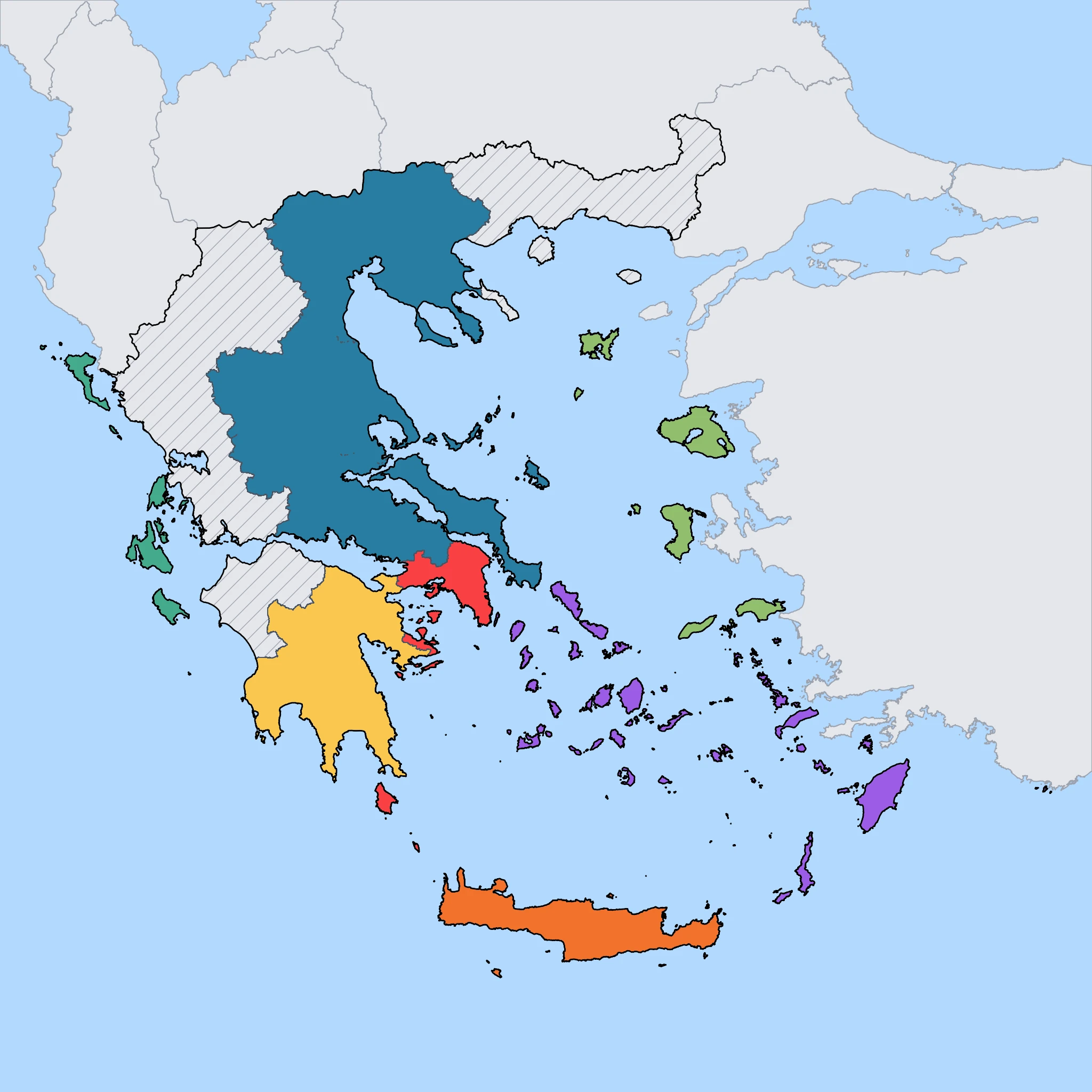
7 Regions
Athens & Attica
Ancient wonders and seaside fun 🏛️🌊
Central & Northern Greece (Thessaloniki, Meteora, Delphi, Halkidiki)
Mythical mountains and golden beaches ⛰️🏖️
Crete
Labyrinths, lagoons, and legends 🐂🏝️
Ionian Islands (Corfu, Kefalonia, Zakynthos)
Emerald waters and turtle spotting 🐢⛵
North Aegean (Lesbos, Samos, Chios)
Unspoiled islands and medieval mysteries 🏰🌿
Peloponnese
Heroes, castles, and olive groves 🛡️🫒
South Aegean Islands (Cyclades: Santorini, Mykonos, Naxos, Paros; Dodecanese: Rhodes, Kos)
Iconic views and island adventures 🇬🇷💙
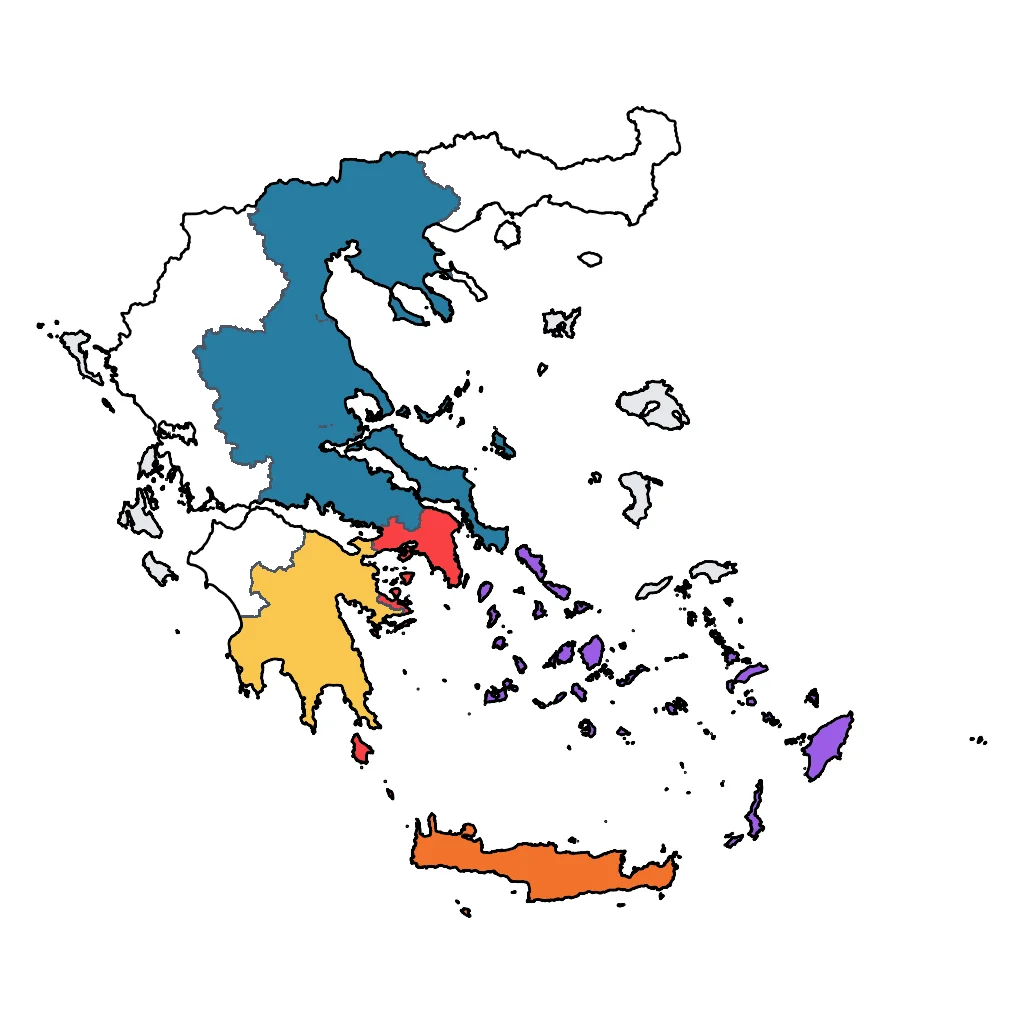
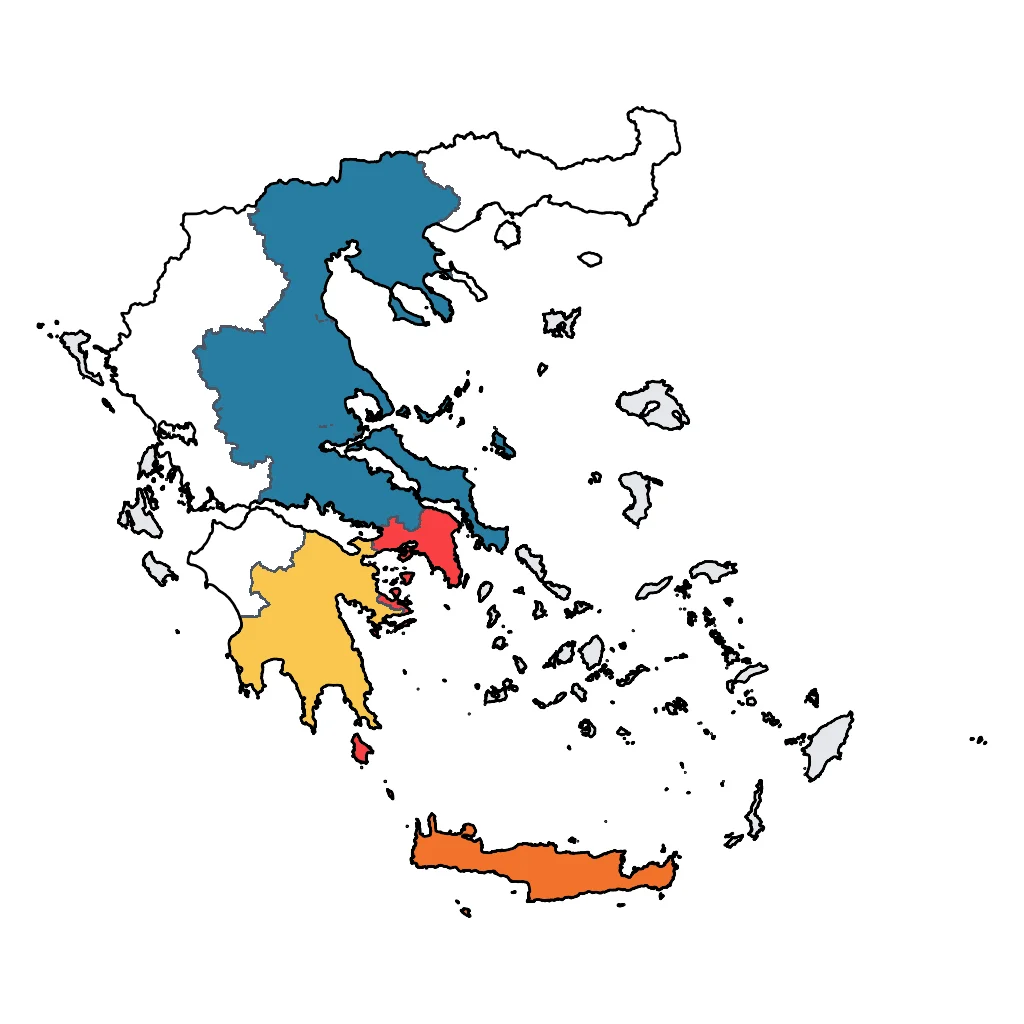
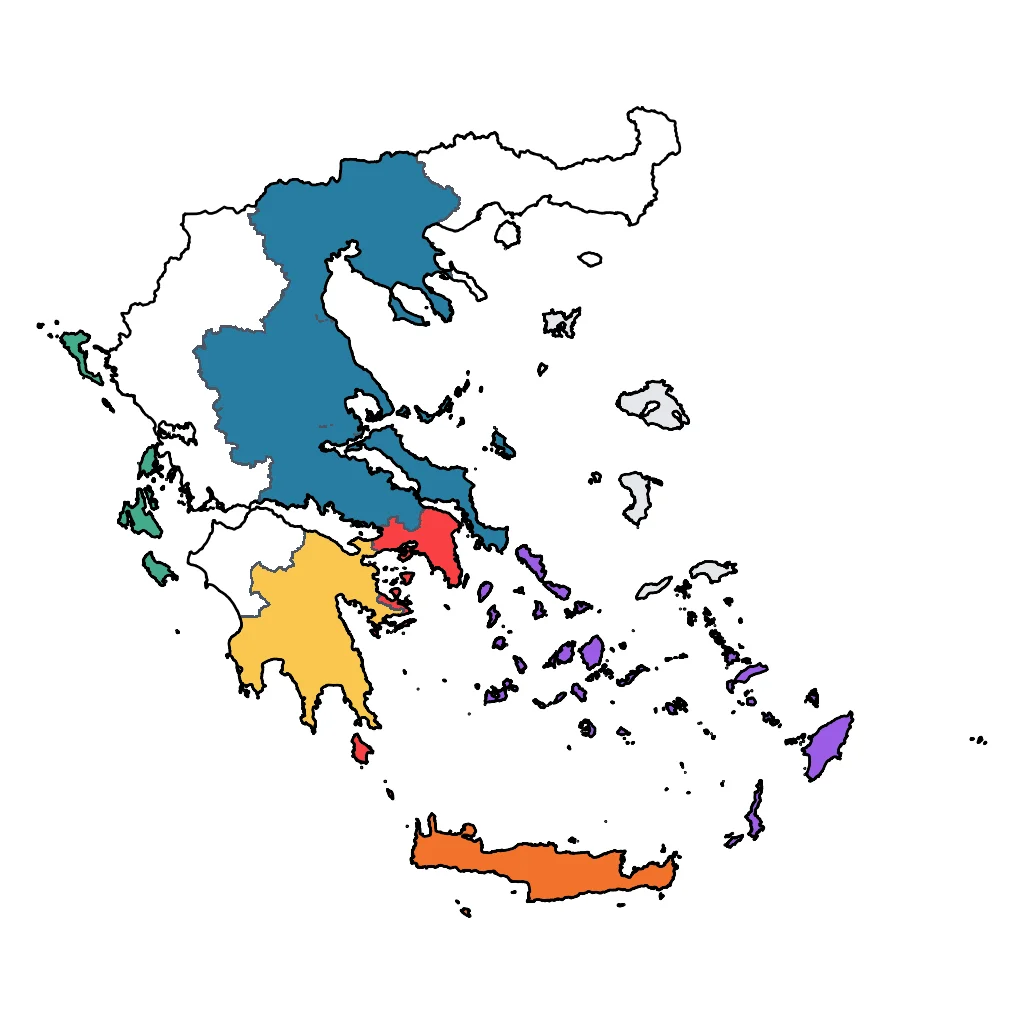
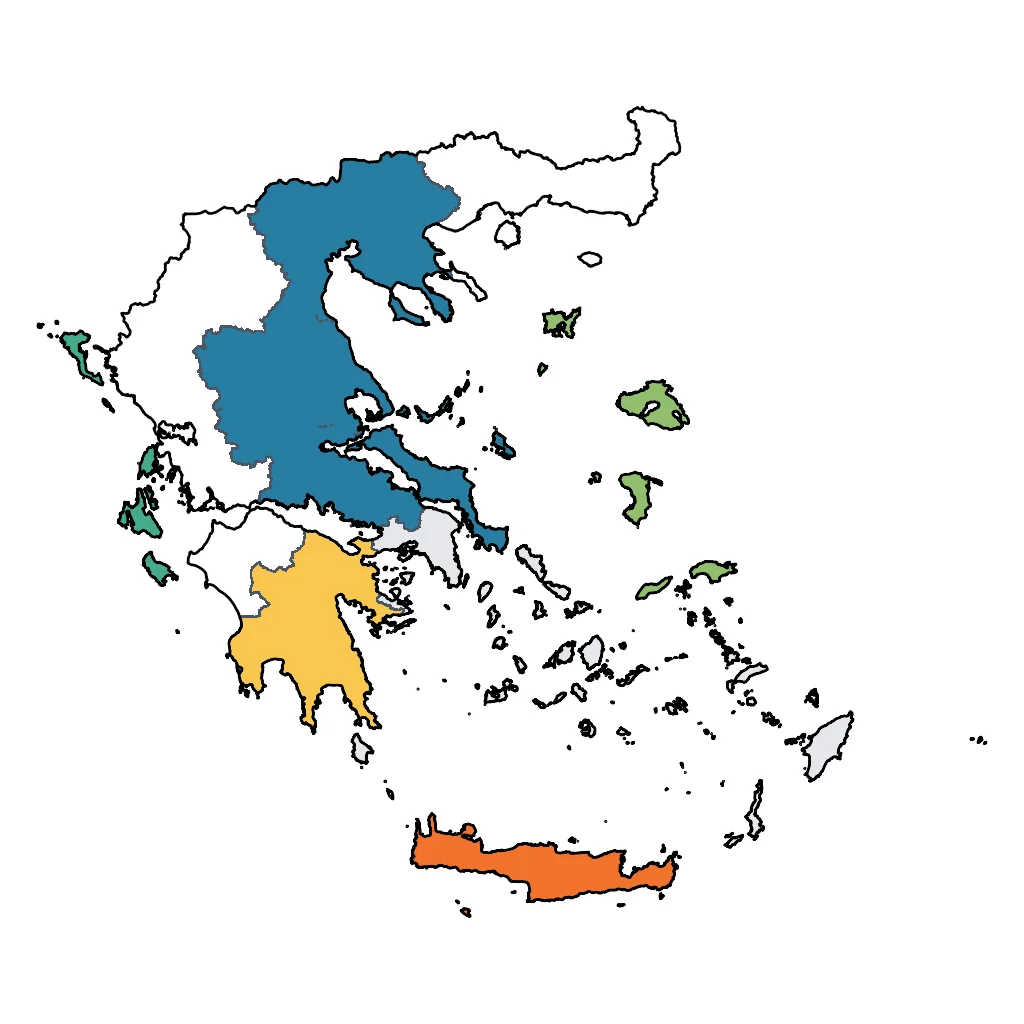
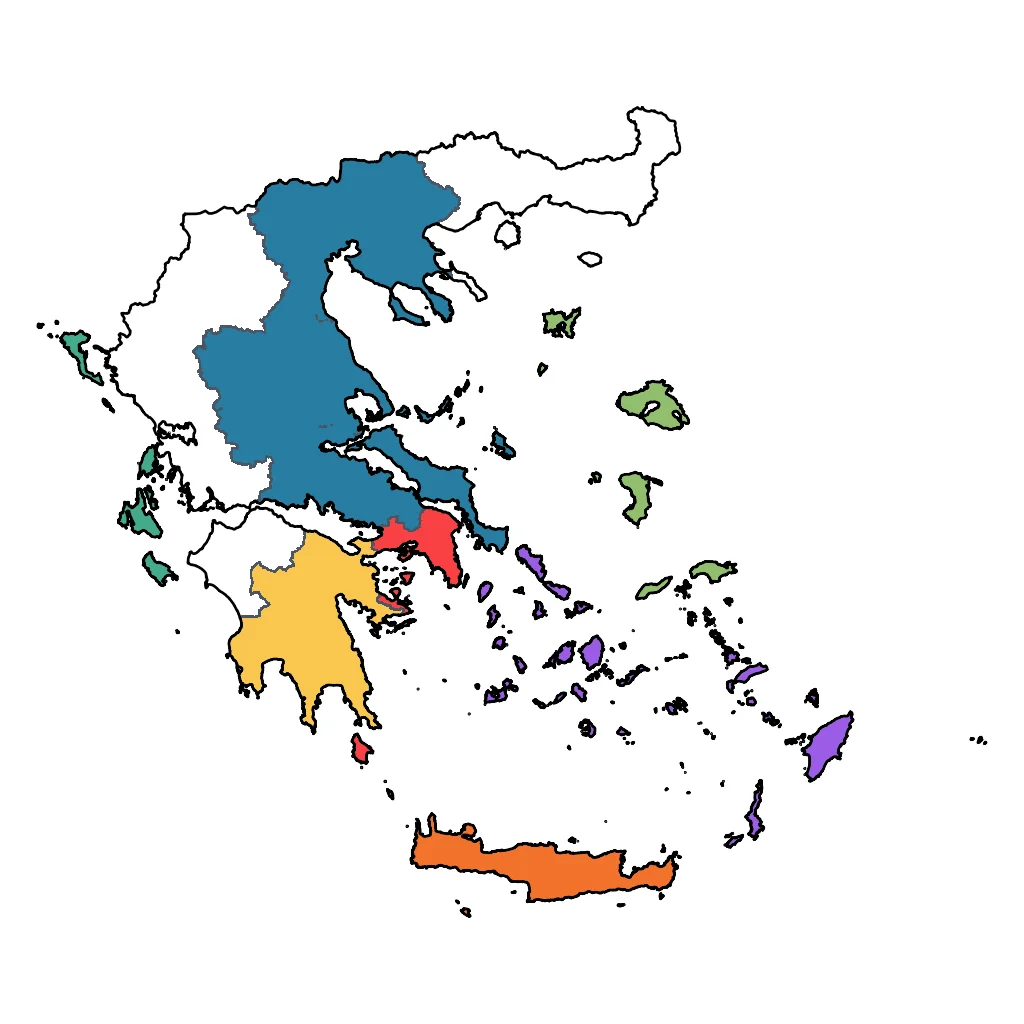
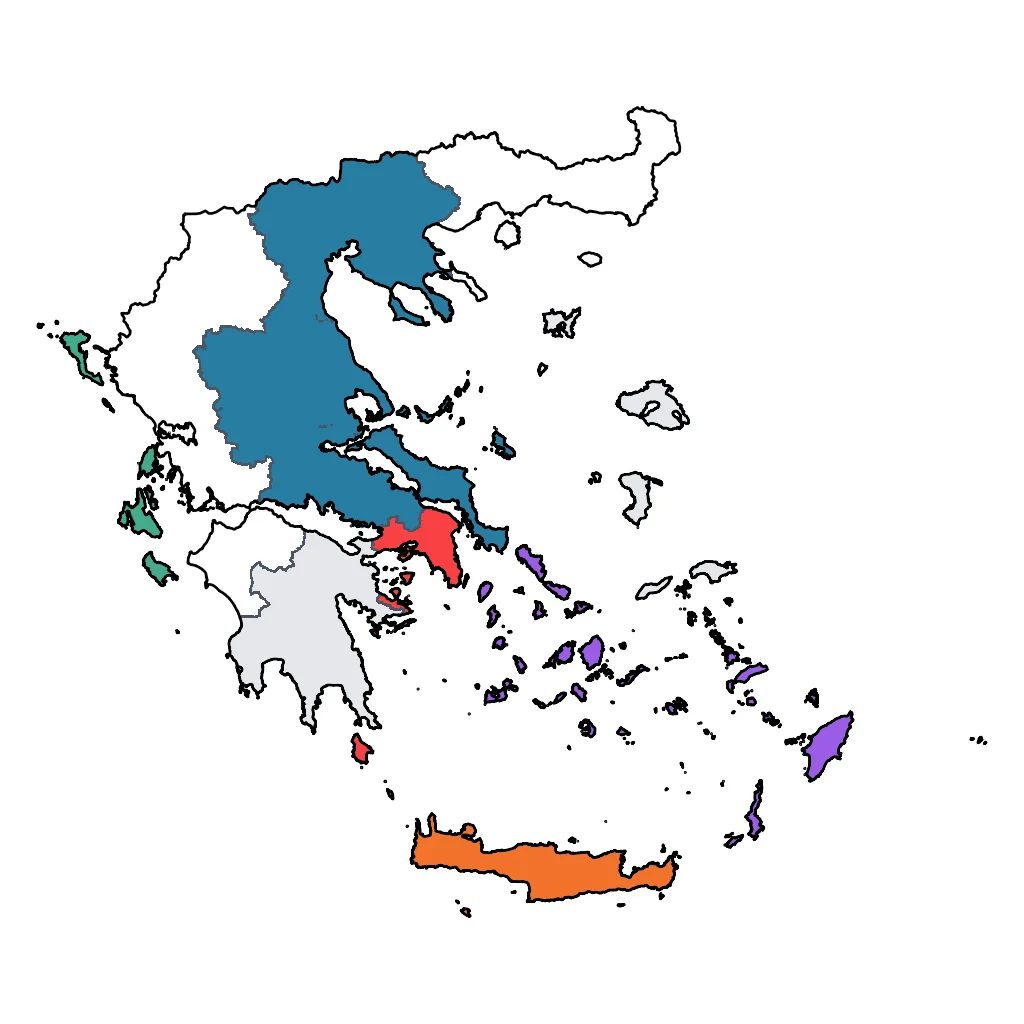
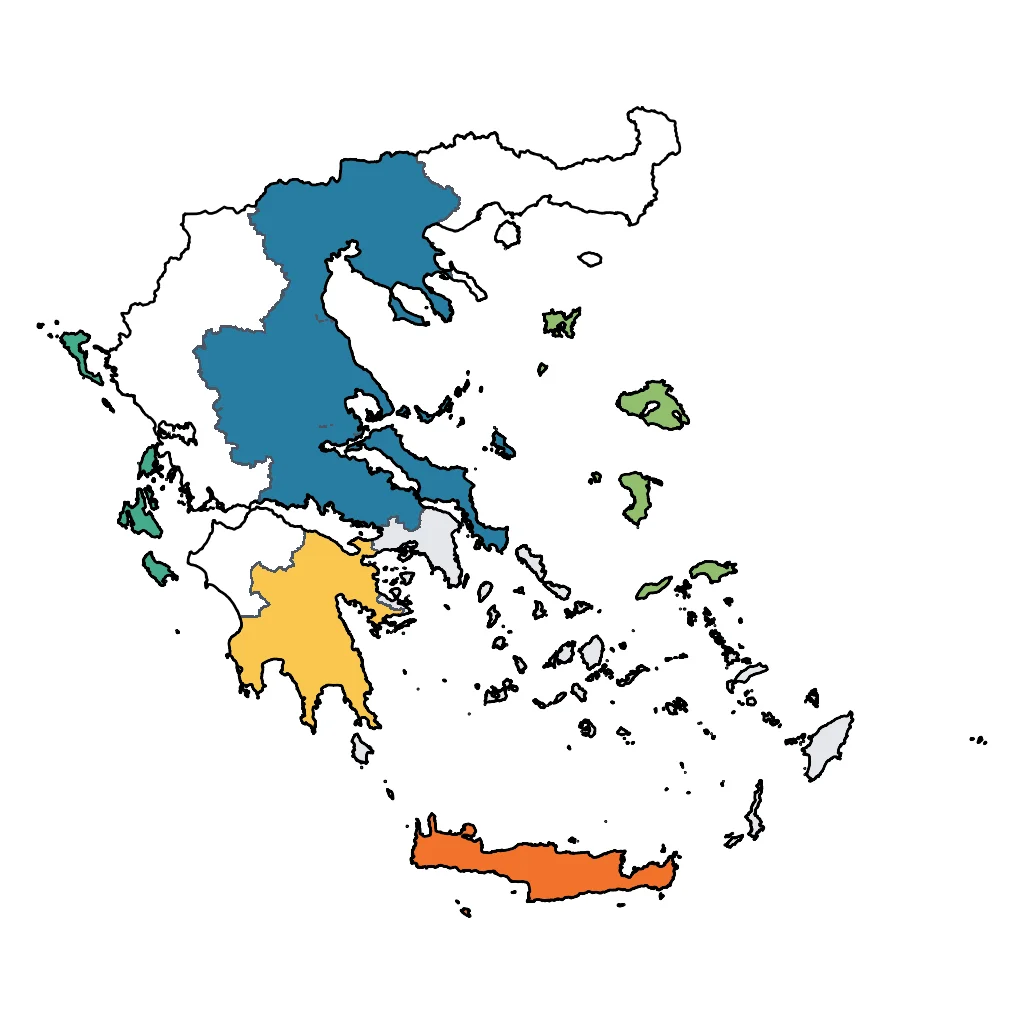
Click on a region marker to explore details. Use the dropdown to color regions by activity suitability.

Activities & Best Times
Beach & Sea
ExcellentBeach resorts, marine activities: diving, snorkelling, kite surfing, wind surfing, sailing
Home to iconic, world-class beaches like Shipwreck Bay and Myrtos, offering extraordinary limestone-filtered turquoise waters and premium yachting. July and August provide peak swimming temperatures and minimal rainfall, while June and September offer excellent conditions with slightly cooler water or shorter days.
Home to globally unique coastlines like the pink sands of Elafonisi and the palm forest of Vai. Peak summer months provide the crystal-clear, calm waters and warm temperatures (24-26°C avg) essential for world-class snorkeling and swimming.
World-class sailing, yachting, and iconic caldera-view beaches with crystal-clear Aegean waters. Peak summer months provide the warmest water and stable winds; shoulder months offer pleasant swimming conditions while winter is too cool and stormy.

City & Cultural
ExcellentUrban tourism, museums, historical sites, architecture
Boasts the world-renowned Minoan ruins of Knossos and atmospheric Venetian-Ottoman harbors in Chania and Rethymno. Spring and autumn offer the ideal mild climate for exploring complex archaeological sites without the intense summer heat or winter rains.
Home to the 'Center of the World' at Delphi and the gravity-defying monasteries of Meteora, this region offers globally unique heritage. May, June, and September provide the perfect moderate temperatures for exploring expansive ruins, whereas the intense July-August heat can be taxing for families.
Home to UNESCO World Heritage sites like the Medieval City of Rhodes and the prehistoric settlement of Akrotiri. Peak months offer comfortable walking temperatures; the height of summer (July-August) can be overcrowded and oppressively hot for urban exploration.

Educational & Exploratory
ExcellentLearning experiences, scientific sites, historical education
As the cradle of Europe's first advanced civilization, Crete offers unparalleled archaeological depth for families. The Heraklion Archaeological Museum is world-class, with peak conditions occurring when temperatures are comfortable for outdoor site tours.
Exceptional archaeological sites and museums in Thessaloniki and Delphi offer profound historical insights for well-traveled families. Peak months offer comfortable walking weather and full access to sites, while winter rain and summer heat peaks (32°C+) hinder the educational experience.
A world-class destination for history and archaeology, featuring the birthplace of the Olympics and sophisticated museums with international significance. Optimal weather in spring and autumn allows for comfortable, guided educational tours of extensive outdoor sites.

Sports & Active
ExcellentSport tourism, fitness activities, active recreation
A global hub for windsurfing and kitesurfing, particularly in Naxos and Paros, fueled by the consistent 'Meltemi' winds. Peak months align with the strongest, most reliable wind patterns; winter months lack the necessary infrastructure and thermal conditions for active water sports.
A premier destination for sailing and wind-based water sports with reliable summer thermal winds and high-quality marinas. Optimal conditions exist during the warm, stable summer months, while the off-season is characterized by rougher seas and heavy rainfall exceeding 180mm.
Excellent conditions for windsurfing and sailing, particularly in Eastern Crete where the 'Meltemi' winds are consistent in summer. Water temperatures and wind stability are at their international benchmark levels from June through September.

Adventure & Nature
Very GoodHiking, wildlife, outdoor exploration, ecotourism
Features diverse ecosystems including the Melissani sea caves and the loggerhead turtle nesting grounds in Zakynthos. The dry summer months provide optimal visibility and accessibility for exploration, whereas the heavy rainfall from November to March makes trail conditions and sea exploration unsuitable.
Features the Samaria Gorge, one of Europe's longest and most spectacular canyons, and the rugged White Mountains. Peak season aligns with the gorge's opening (May-Oct) and manageable temperatures, while winter brings high rainfall and trail closures.
Home to the UNESCO-protected Petrified Forest of Lesbos and world-class birdwatching in the Kalloni wetlands. The warm, dry months from May to October provide perfect conditions for exploring unique ecosystems, while winter rain makes trails less accessible.

Festivals & Seasonal
Very GoodEvents, celebrations, seasonal attractions
The Athens & Epidaurus Festival provides world-class drama and music in ancient theaters during the peak months of June and July. Shoulder periods cover authentic Greek Easter celebrations, offering sophisticated travelers deep cultural immersion not found in mass-market tourism.
Corfu's Greek Orthodox Easter celebrations are internationally famous for their unique traditions, such as the 'Botides' pot-throwing. April is the peak for this specific cultural draw, while August hosts traditional Panagia festivals; winter and autumn lack significant internationally recognized events.
Authentic cultural experiences include the profound celebrations of Greek Orthodox Easter (typically April) and vibrant village 'Panigiria' in August. These events provide sophisticated travelers with genuine, non-commercialized glimpses into local Cretan life.

Relaxation & Wellness
Very GoodSpa retreats, wellness centers, peaceful getaways
The Elounda region is internationally famous for ultra-luxury resorts and high-end spa facilities. Optimal relaxation occurs during the late spring and early autumn when humidity is low and the environment is serene before the peak August crowds.
Offers a blend of ultra-luxury spa resorts in Halkidiki and natural thermal springs like Pozar, catering to sophisticated tastes. Transition months provide a serene environment with ideal weather, whereas mid-winter is too damp and cold for most outdoor wellness retreats.

Road Trips & Scenic
Very GoodScenic drives, countryside tours, route-based travel
Spectacular cliffside drives on Kefalonia and Zakynthos offer some of the Mediterranean's most dramatic coastal vistas. Peak months provide the best visibility and dry roads; shoulder months are pleasant but see a sharp increase in precipitation, particularly in September and October.
Spectacular drives through the Lithi mountains and along dramatic coastal cliffs offer authentic encounters with traditional Cretan villages. Peak months offer dry roads and clear visibility, whereas winter months see heavy rain and occasional snow in high-altitude passes.
Dramatic coastal drives and winding mountain roads connect picturesque medieval villages with low traffic levels ideal for family exploration. Clear skies and dry roads from late spring through autumn ensure safe and scenic navigation of the islands' diverse landscapes.
Theme Park & Entertainment
MarginalAmusement parks, family entertainment venues
Corfu offers family-friendly water parks, providing entertainment for families, though they may not meet 'world-class' international theme park standards for discerning travelers. Peak operating months (June-August) benefit from mild temperatures (21-25°C) and very low rainfall (8-24mm), ensuring optimal conditions for water-based attractions. Shoulder months (May, September) offer pleasant weather but may have reduced operating hours; off-season months are unsuitable due to closures and cooler, wetter weather.
Crete offers family entertainment like water parks and the Cretaquarium, though these are not globally recognized 'world-class' theme park experiences for discerning international travelers. Peak summer months (June-August) provide optimal weather (24-26°C) for water-based attractions; May and September serve as shoulder months. Off-season months are generally too cool or wet for these types of entertainment.
While the Faliraki Water Park in Rhodes is a strong regional attraction, it lacks the 'world-class' status of major international theme parks. It is only suitable during the warmest months when all aquatic facilities are operational.

Ski & Snow
MarginalWinter sports, ski resorts, snow activities
Mount Parnassos near Delphi offers organized skiing, but facilities are modest compared to global benchmarks like the Alps. Suitable for a secondary winter activity during peak snow months (Jan-Feb), but lacks the scale for a primary international ski holiday.
While offering a unique Mediterranean skiing experience at Kalavrita, it lacks the infrastructure and reliability of top-tier global alpine destinations. Peak winter months provide the only viable snow window, though conditions are variable.
Airports & Flight Routes
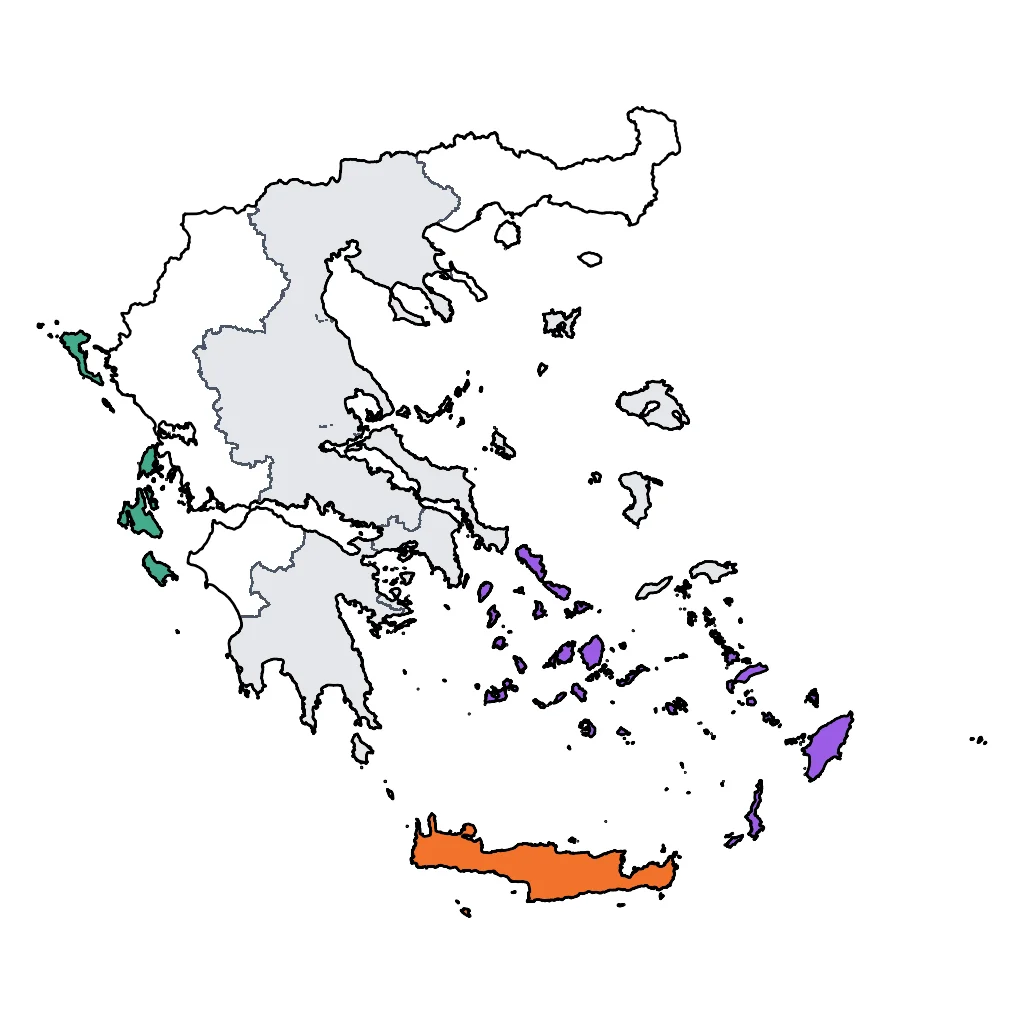
Toggle options to view domestic routes and international airports. Click an airport for details.
Climate & Weather
Athens & Attica
Show Details
| Month | Temp °C | Rain | Humidity |
|---|
Central & Northern Greece (Thessaloniki, Meteora, Delphi, Halkidiki)
Show Details
| Month | Temp °C | Rain | Humidity |
|---|
Crete
Show Details
| Month | Temp °C | Rain | Humidity |
|---|
Ionian Islands (Corfu, Kefalonia, Zakynthos)
Show Details
| Month | Temp °C | Rain | Humidity |
|---|
North Aegean (Lesbos, Samos, Chios)
Show Details
| Month | Temp °C | Rain | Humidity |
|---|
Peloponnese
Show Details
| Month | Temp °C | Rain | Humidity |
|---|

Travel Advisory
The country is considered safe; travelers should follow standard safety procedures and remain aware of local conditions.
Safety Topics
Traveller Advice (3 groups)

While same-sex relationships are legal and widely accepted in cities and major island hubs like Mykonos, more conservative attitudes may exist in rural or mainland areas. Public displays of affection might draw unwanted attention in those locations.

Ensure your travel insurance specifically covers the use of motorcycles or quad bikes, as many standard plans exclude these high-risk activities common on Greek islands.

Solo female travelers generally experience few issues, but are advised to maintain standard precautions and avoid walking alone in isolated or poorly lit areas late at night.