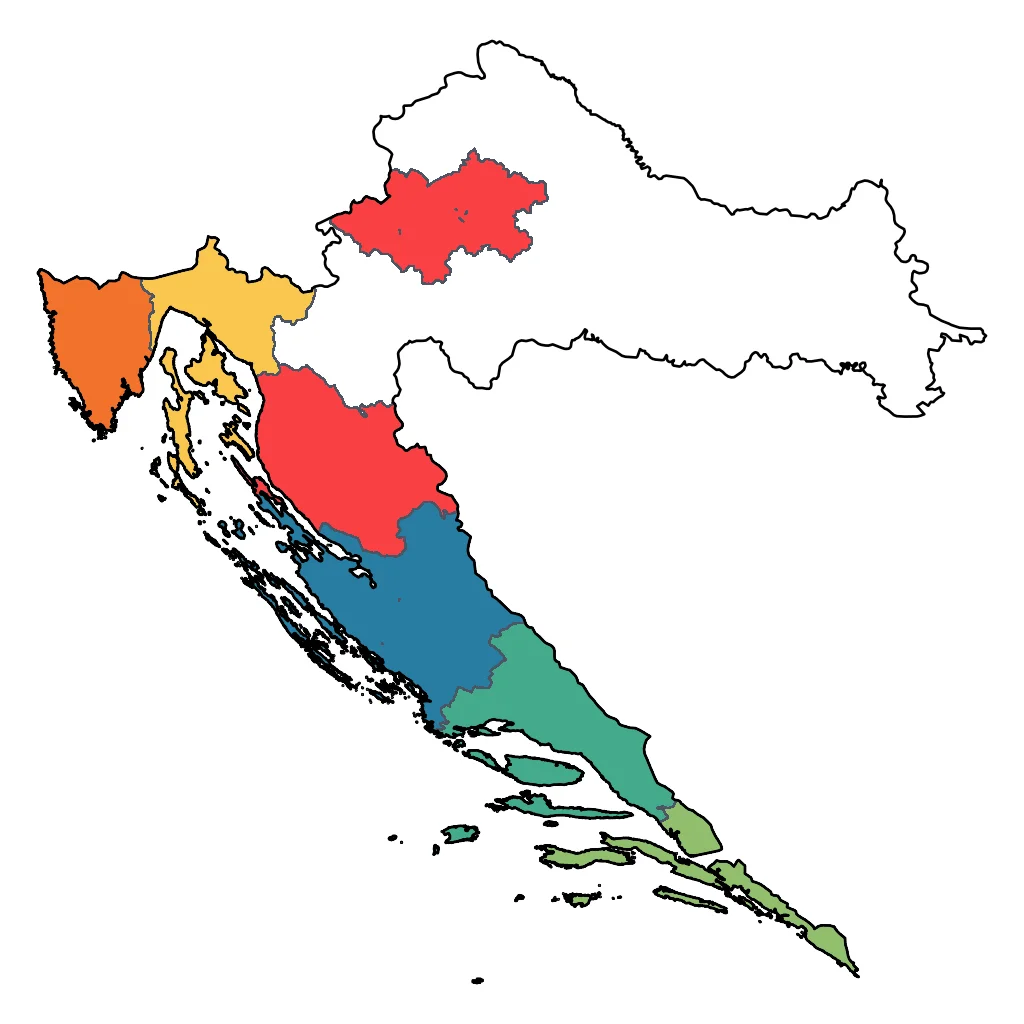

Southern Dalmatian Coast
Medieval walls and islands of myths and legends ⚔️🏝️
Southern Dalmatia is famous for its dramatic scenery, where steep mountains drop directly into the deep blue sea. While it hosts Croatia's most famous destination, Dubrovnik, the region also offers quiet islands and untouched nature. The Pelješac Bridge has made accessing this southern exclave much easier for families driving from the north, eliminating the need for border crossings through Bosnia and Herzegovina.
Dubrovnik is a living history museum. The main activity is walking the City Walls, which offer incredible views of the red rooftops and sea. The walls have safety railings, but parents should keep a close eye on climbers. To avoid the heat and crowds, it is best to visit the walls late in the afternoon. The Dubrovnik Cable Car whisks families up Mount Srđ in minutes for a panoramic view. Just a 15-minute boat ride away lies the island of Lokrum, a protected reserve with no cars, a botanical garden, and wild peacocks and rabbits that roam freely, delighting young children. Fans of movies and TV shows will recognize many filming locations here, adding a layer of fantasy to the visit.
The Pelješac Peninsula is known for its oysters (for the parents) and the town of Ston, which boasts the longest defensive walls in Europe—often called the 'European Great Wall'. The sandy beach at Prapratno provides a rare soft landing in a rocky region. From Pelješac, a short ferry ride takes you to Korčula, a mini-Dubrovnik where the streets are built in a fishbone pattern to control air flow. It is the alleged birthplace of Marco Polo, and kids enjoy climbing the tower of his house.
For nature-loving families, Mljet National Park on Mljet island is a peaceful escape. The park features two saltwater lakes that are warm and calm, perfect for swimming. A Benedictine monastery sits on an islet in the middle of the large lake, accessible by a solar-powered boat. The flat paths around the lakes are ideal for renting bicycles and exploring the shaded forests safely away from traffic.
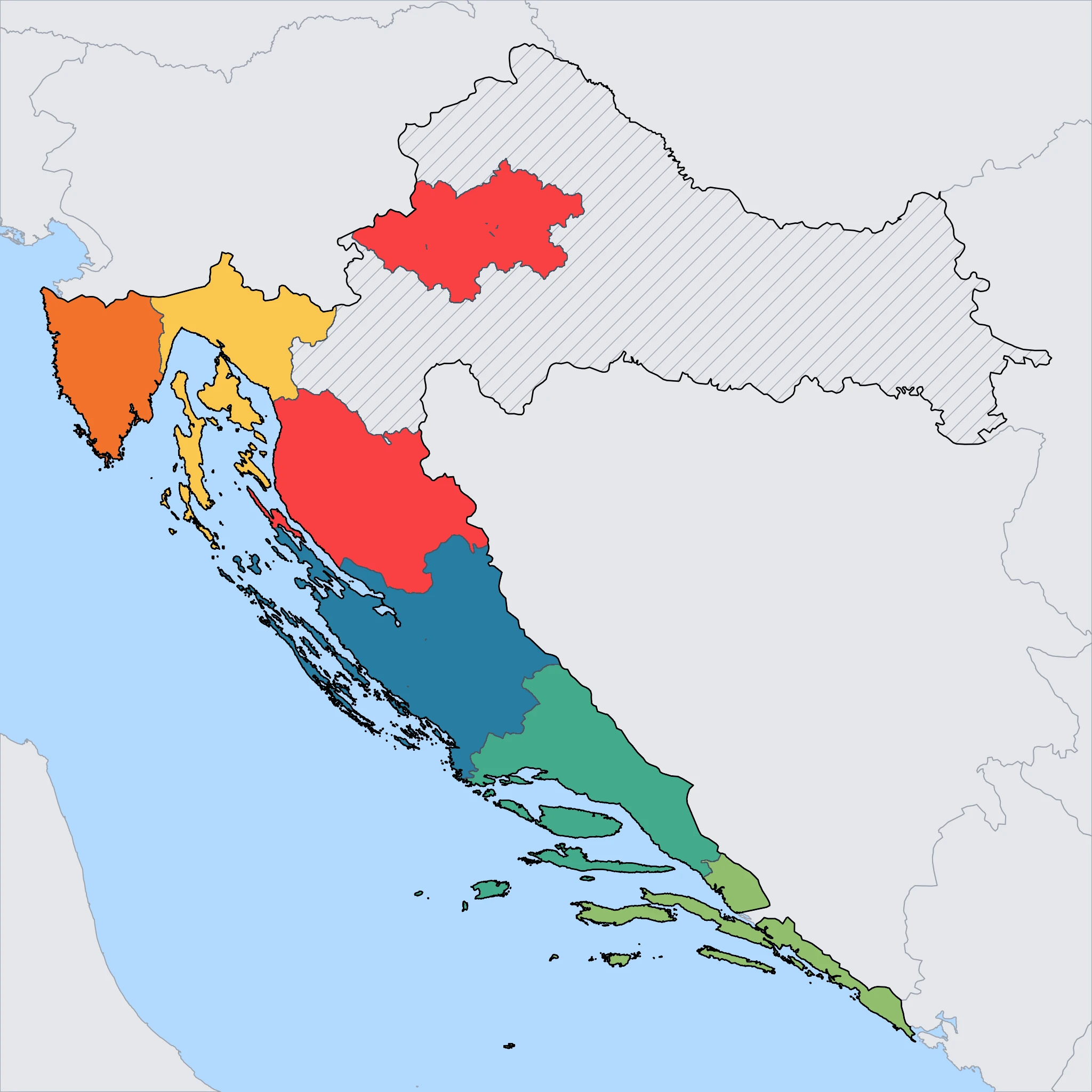
Click a region to explore

Activities & Best Times

Beach resorts, marine activities: diving, snorkelling, kite surfing, wind surfing, sailing
The Adriatic boasts world-renowned water clarity and the high-end nautical infrastructure of the Elafiti and Korčula islands. July and August provide the ideal 25°C+ temperatures and dry conditions for swimming and sailing, while winter months are too cold and experience heavy precipitation.
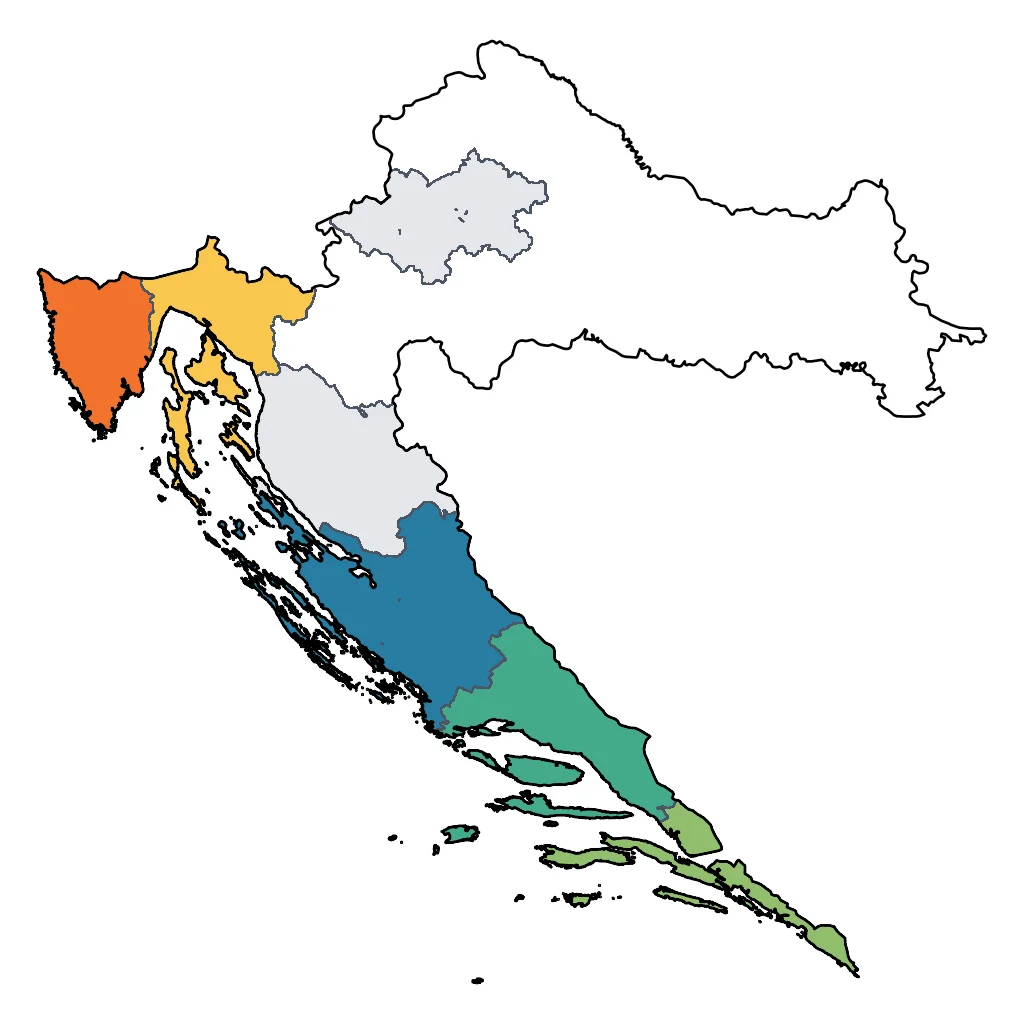

Urban tourism, museums, historical sites, architecture
Dubrovnik is a globally iconic UNESCO World Heritage site offering an unmatched blend of medieval architecture and sophisticated Mediterranean history. Peak season aligns with the prestigious Dubrovnik Summer Festival and optimal warm weather, whereas the very high rainfall from October to March significantly degrades the urban exploration experience.
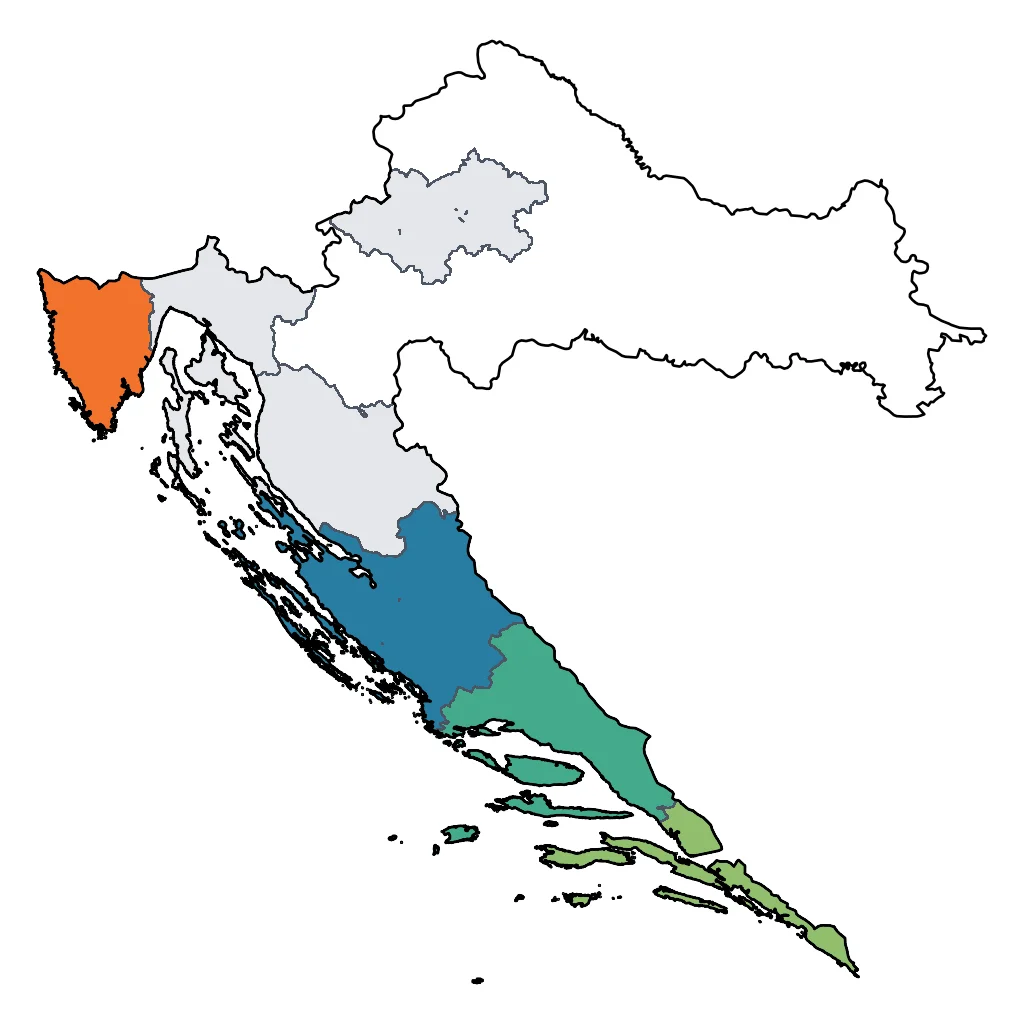

Hiking, wildlife, outdoor exploration, ecotourism
Mljet National Park provides a unique ecosystem of saltwater lakes and pristine forests that are ideal for ecotourism and hiking. May and June offer the most comfortable temperatures for active exploration before the intense heat of July/August or the heavy rainfall of the winter months.
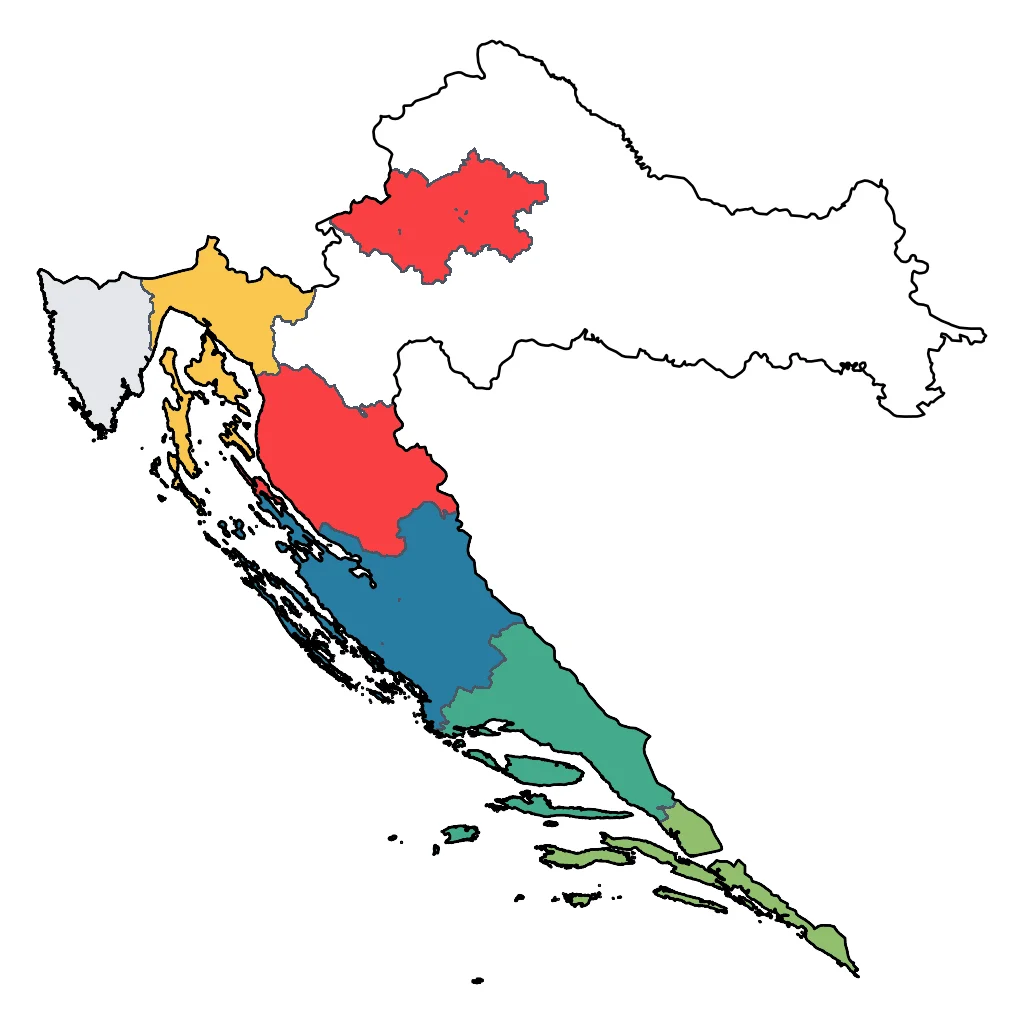

Learning experiences, scientific sites, historical education
The region serves as a living museum for the maritime history of the Republic of Ragusa and advanced medieval engineering. Historical sites are most accessible during the dry summer months, while significant winter rainfall (up to 181mm) limits access to archaeological sites and open-air educational tours.
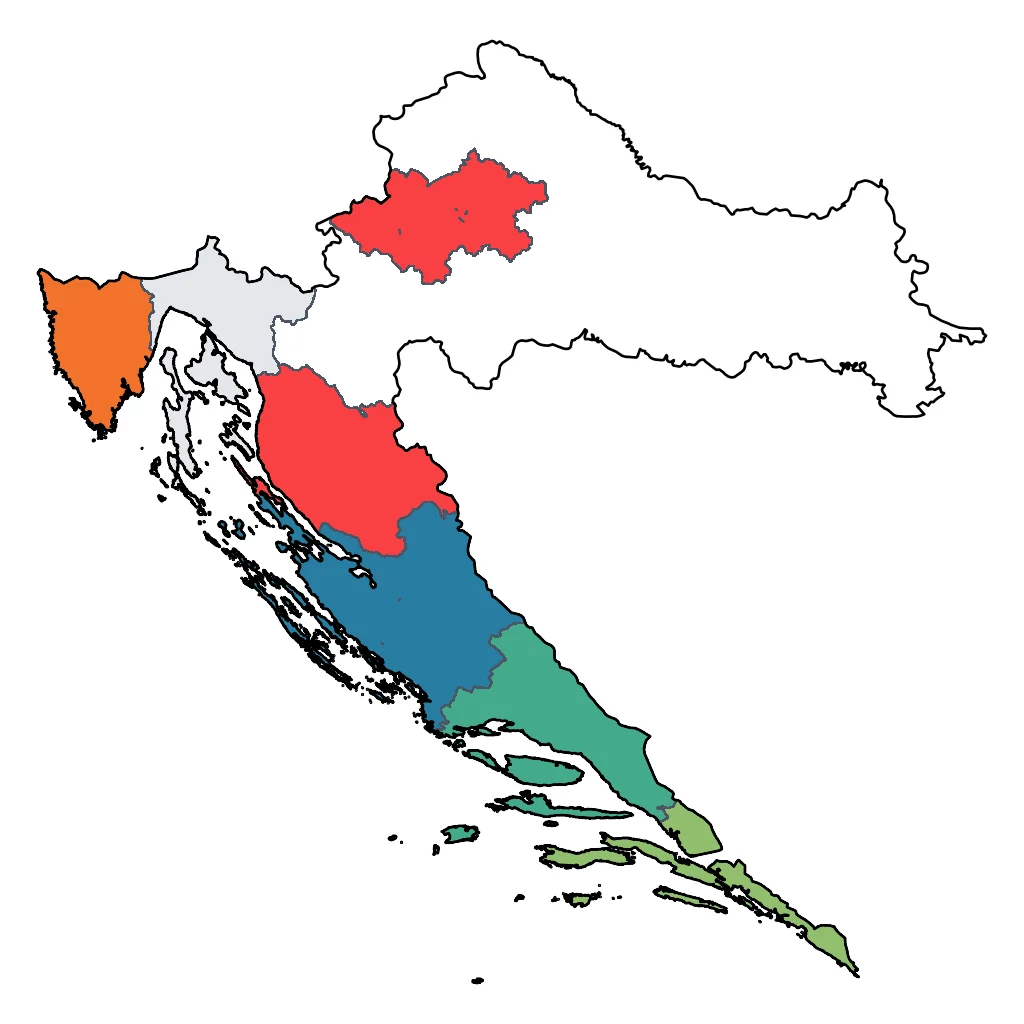

Events, celebrations, seasonal attractions
The Dubrovnik Summer Festival is an internationally significant cultural event featuring world-class theatre and music within the city walls. July and August are the primary months for these events, though February offers the authentic and traditional Feast of St. Blaise for culturally discerning travelers.
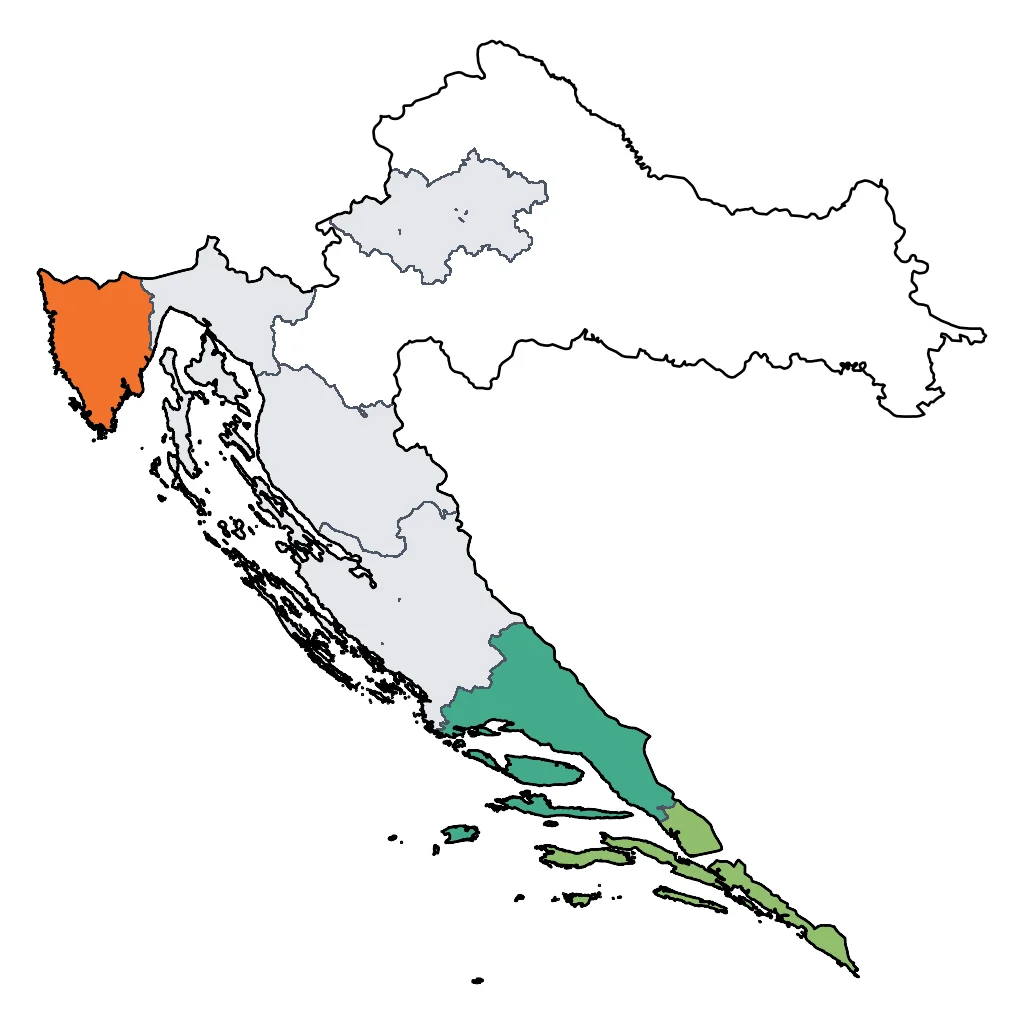

Spa retreats, wellness centers, peaceful getaways
Sophisticated five-star spa resorts and peaceful island retreats offer a world-class environment for disconnection. The summer months provide the calm, sunny weather essential for outdoor wellness and seaside relaxation, while high humidity and rain in winter make the region less suitable for wellness-focused travel.
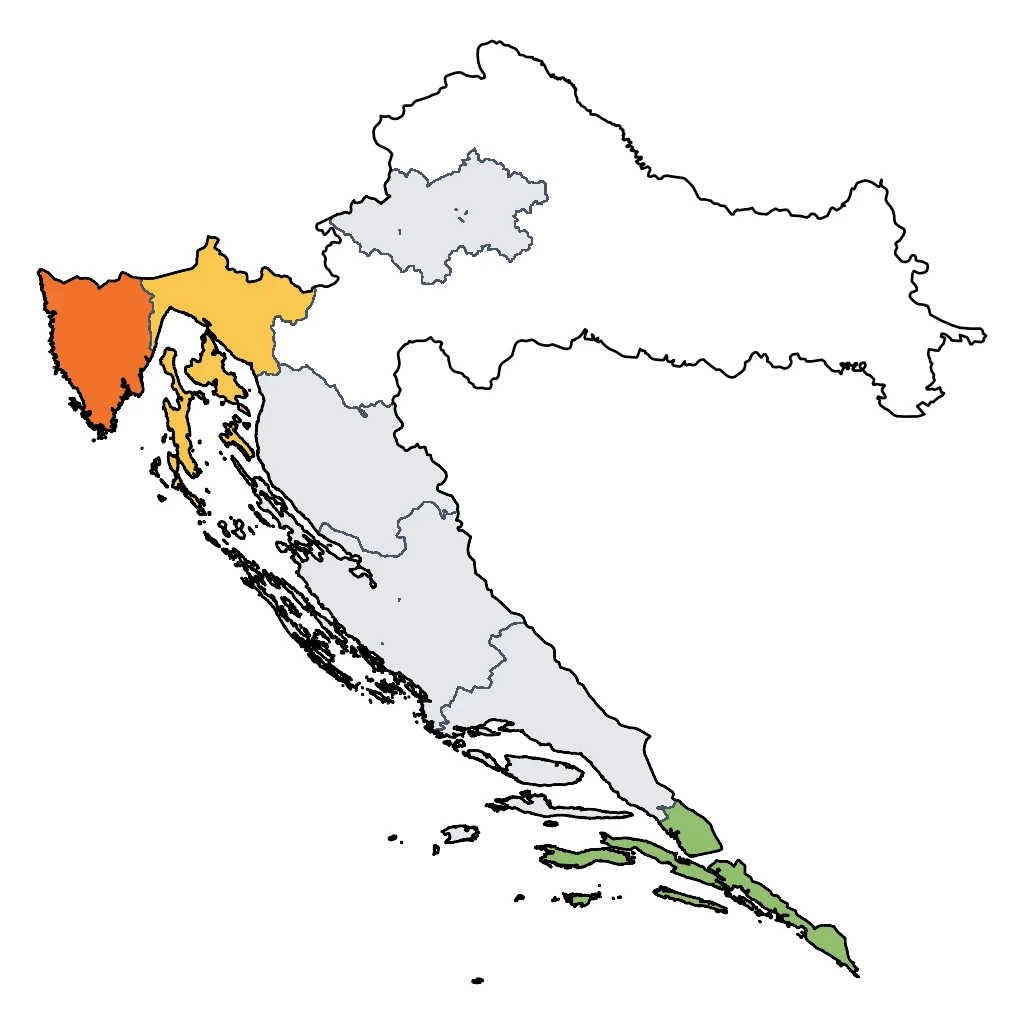

Scenic drives, countryside tours, route-based travel
While the D8 coastal road and Pelješac Peninsula are scenic, they represent short driving segments rather than multi-day touring routes. Against global benchmarks (Pacific Coast Highway, Iceland's Ring Road, Great Ocean Road), this does not reach 'excellent'. The region is outstanding for many things, but road trips is not its primary draw. 'very_good' appropriately reflects a beautiful but geographically compact coastal drive.

Sport tourism, fitness activities, active recreation
The region is a premier global destination for sailing and sea kayaking, with the Pelješac Peninsula offering excellent wind conditions. Late spring and early autumn provide the most consistent conditions for active sports without the overcrowding and mid-summer heat that can affect July and August.