

Croatia has established itself as one of Europe's most approachable destinations for family travel. Combining the history of the Mediterranean with a relaxed outdoor lifestyle, it offers a safe environment where children can run freely in car-free old towns and swim in some of the cleanest waters in the world.
The Adriatic Coast and Islands
The Croatian coastline is famous for its stunning clarity, largely because the beaches are predominantly pebble rather than sand. For families, this means excellent visibility for snorkeling and spotting fish in the shallows. Parents should pack water shoes for everyone to navigate the rocky entry points comfortably. A highlight for many children is the ferry travel between islands like Brač-home to the famous Zlatni Rat beach-and Korčula, where they can explore medieval streets alleged to be the birthplace of Marco Polo.
National Parks and Nature
Beyond the coast, Croatia's national parks provide accessible wilderness. Plitvice Lakes National Park is a network of 16 terraced lakes joined by waterfalls that extend into a limestone canyon. Families can explore the park via wooden boardwalks that hover right over the water, though swimming here is not permitted. For a similar experience closer to the coast, Krka National Park offers wide, cascading falls and boat trips that act as a great day trip from Split or Zadar.
Living History
History in Croatia is interactive rather than kept behind glass. In Split, the city center is actually the ancient retirement palace of Roman Emperor Diocletian; families live, eat, and shop within the 1,700-year-old walls. In Dubrovnik, you can walk the entire circuit of the massive city walls, looking down on the orange rooftops and the sea below. Further north in Zadar, modern art installations appeal to kids, specifically the Sea Organ, which plays music powered by the waves, and the Sun Salutation, a solar-powered light floor that lights up at night.
Food and Logistics
Croatian cuisine is highly palatable for picky eaters, featuring a strong Italian influence. Pizza, pasta, and risotto are staples on almost every menu, known locally as konobas. Bakeries sell burek, a flaky pastry filled with cheese or meat that serves as a perfect cheap snack. Traveling the country is straightforward with a reliable network of buses and modern highways, though renting a car offers the most flexibility for reaching smaller villages.

Explore Regions
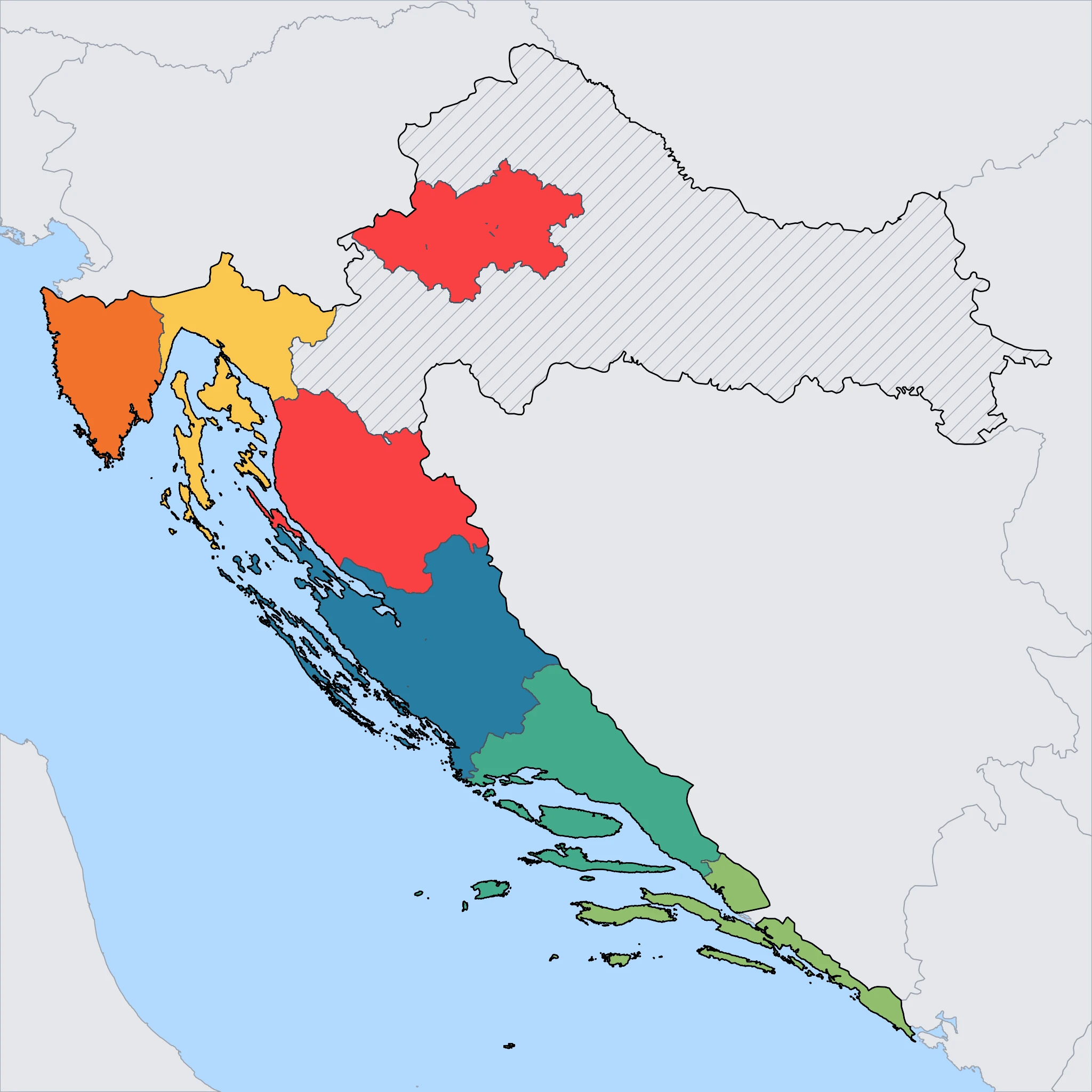
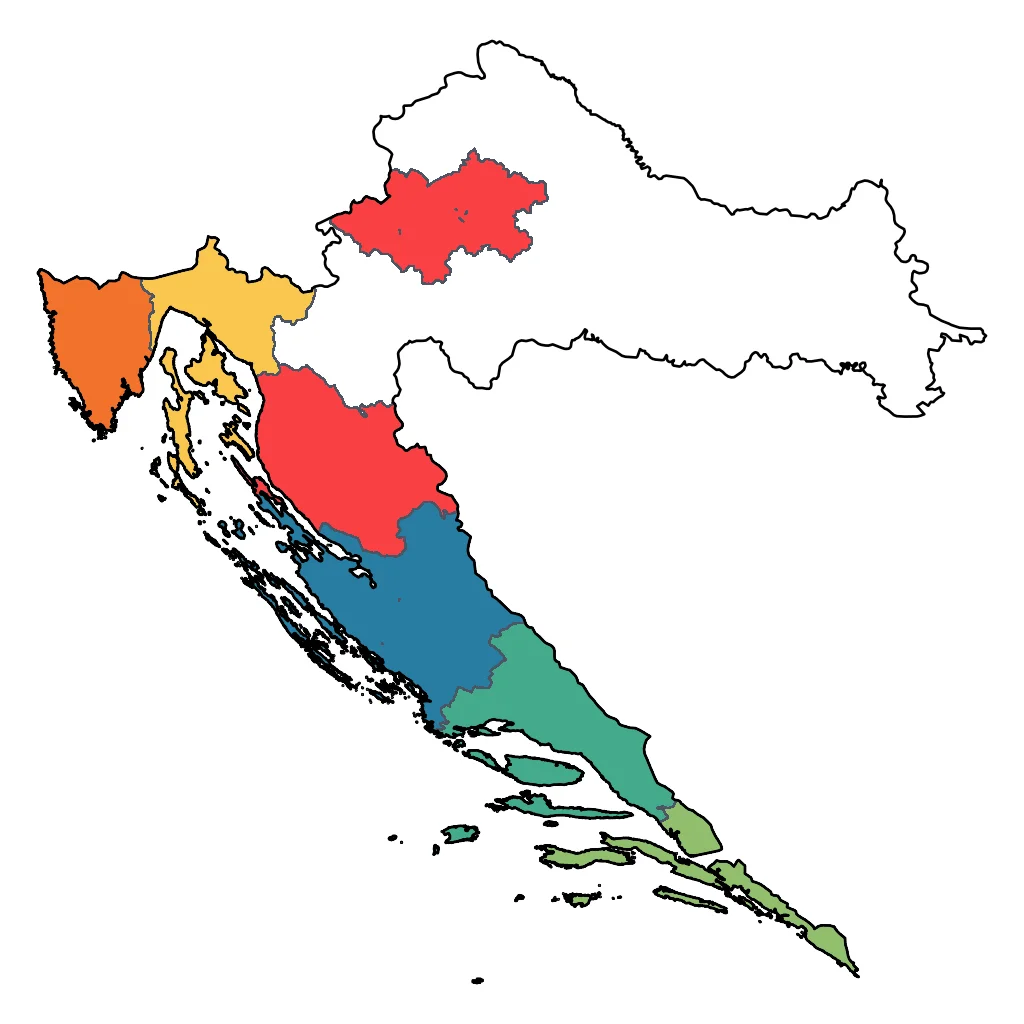
6 Regions
Central Dalmatian Coast & Islands
Roman ruins, island hopping, and family-friendly beaches 🏛️🌊
Istrian Peninsula
Dinosaur footprints, Roman arenas, and aquaparks 🦕🏟️
Kvarner Gulf Coast
Sandy coves, wild dolphins, and historic seaside promenades 🐬🏖️
Northern Dalmatian Coast
Sea organs, waterfalls, and shallow sandy lagoons 🎶🌊
Plitvice Lakes & Central Croatia
Cascading waterfalls and interactive city museums 🌲🏰
Southern Dalmatian Coast
Medieval walls and islands of myths and legends ⚔️🏝️
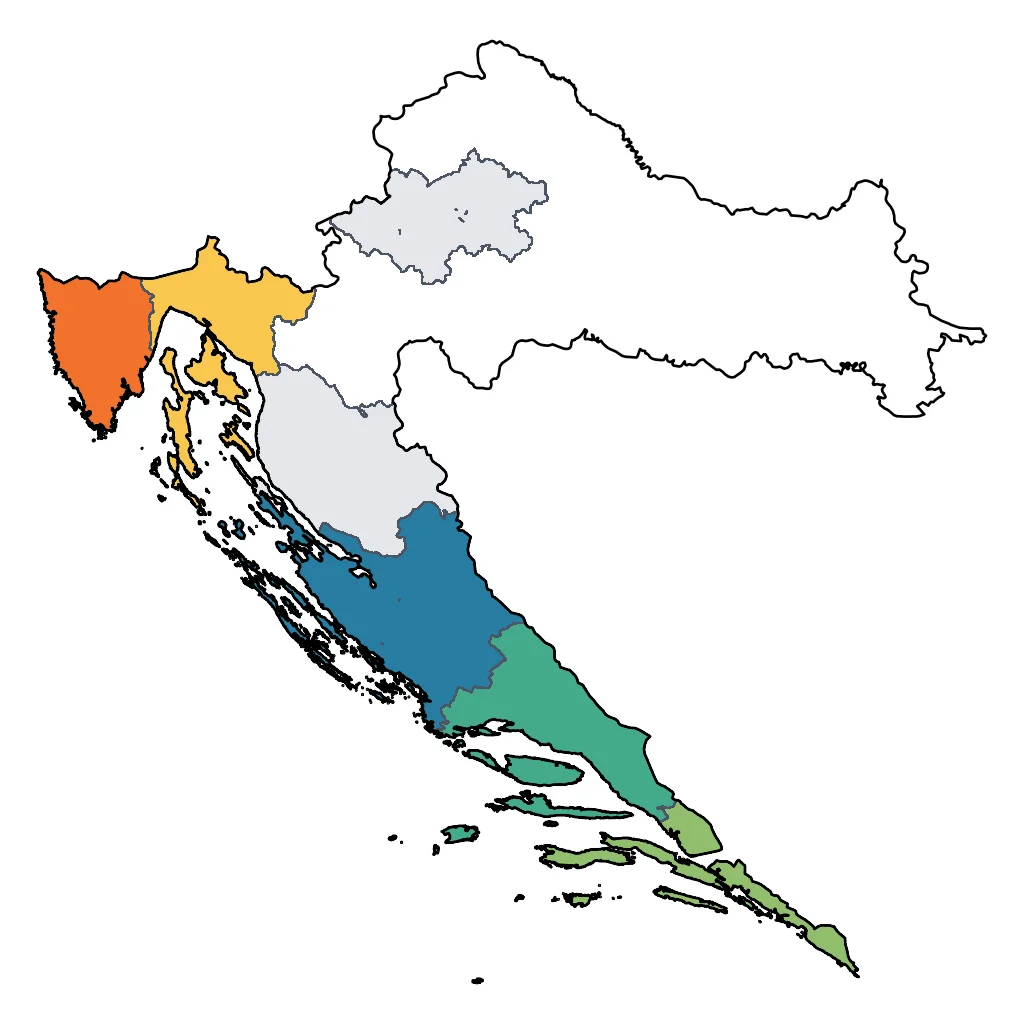
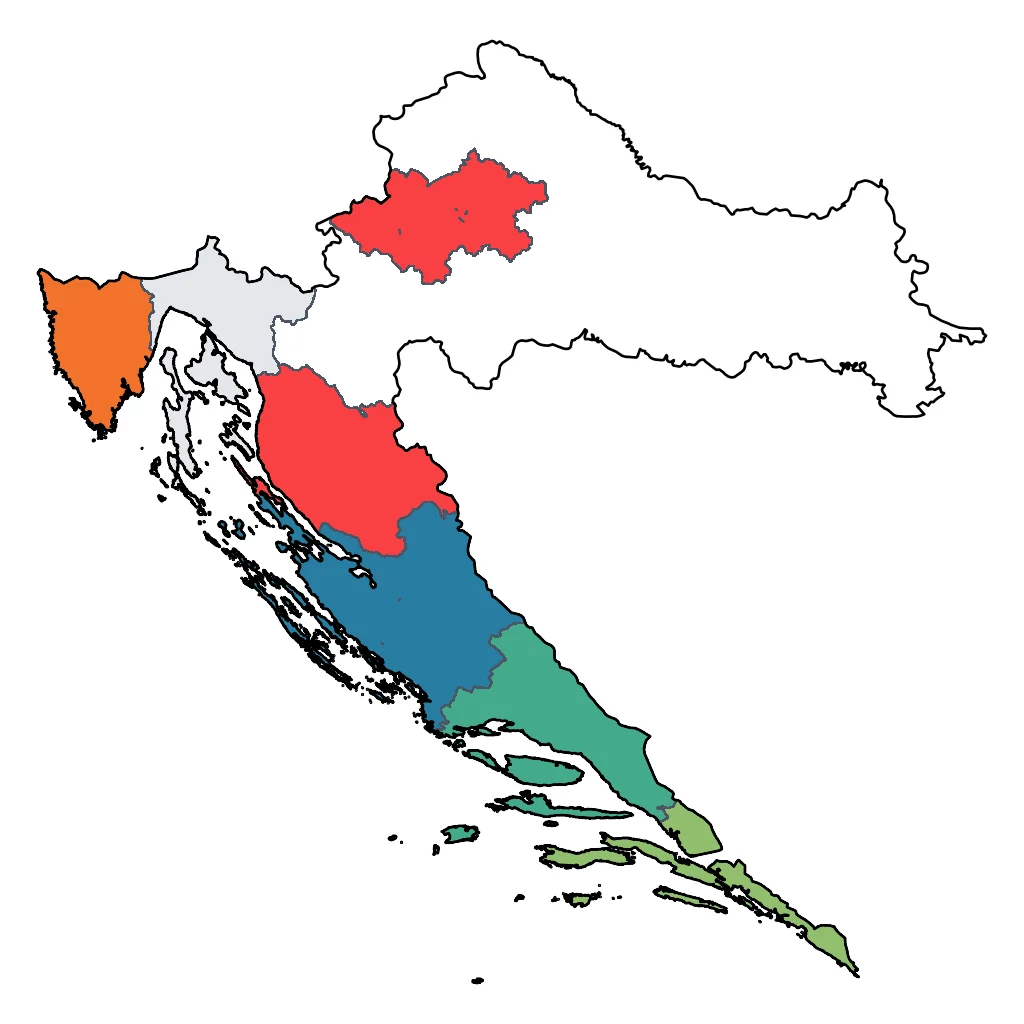
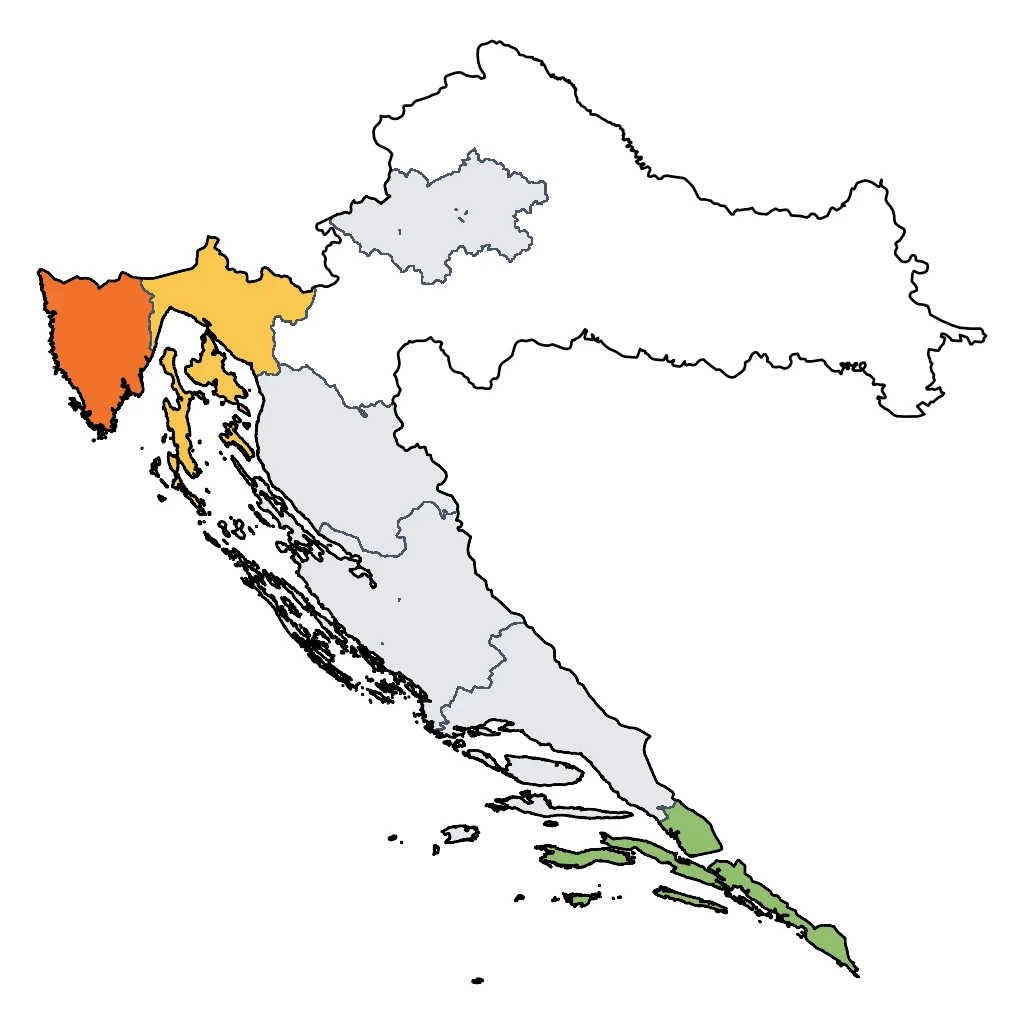
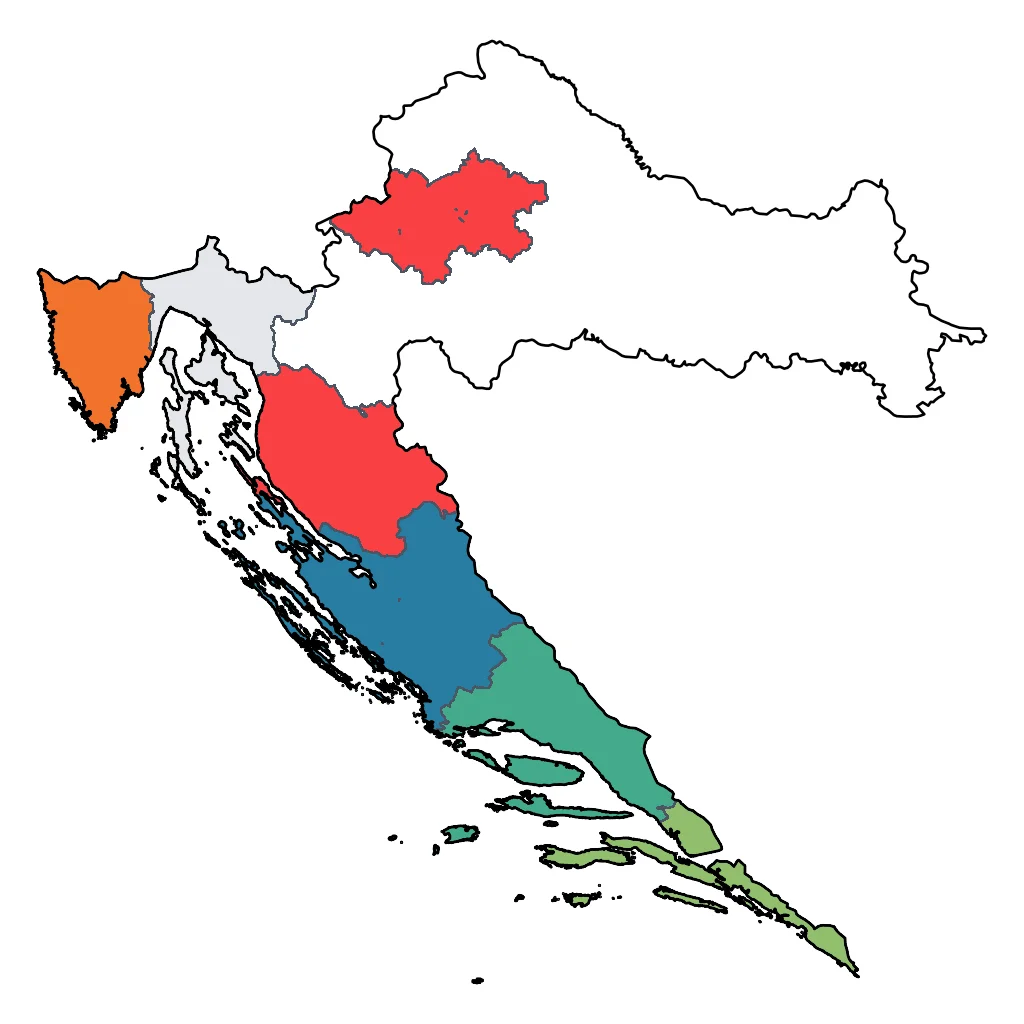
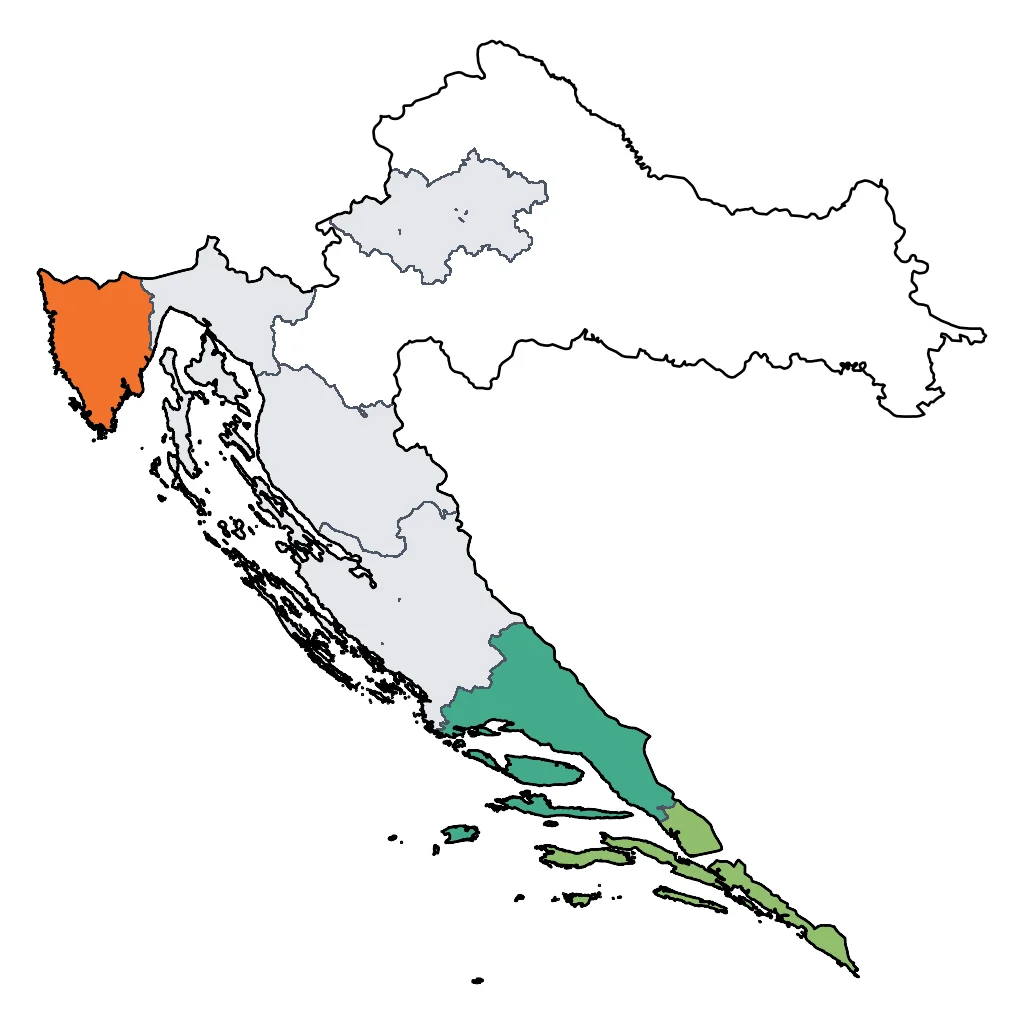
Click on a region marker to explore details. Use the dropdown to color regions by activity suitability.

Activities & Best Times

Adventure & Nature
ExcellentHiking, wildlife, outdoor exploration, ecotourism
Home to the UNESCO-listed Plitvice Lakes, featuring a globally unique karst system of 16 terraced lakes and spectacular waterfalls. Peak summer offers the best accessibility and lush scenery, while the significant rainfall of late autumn and winter can lead to trail closures and difficult hiking conditions.
Only 1 editorial attraction supports this classification (Cathedral of St James, which is a historic site, not a nature attraction). Kornati and Krka are referenced in notes but lack editorial attraction evidence. Against global adventure/nature benchmarks (Patagonia, New Zealand, Norwegian fjords) and even the better-evidenced Plitvice region within Croatia, 'excellent' is not justified. 'very_good' accurately reflects a strong but not globally top-tier nature destination with thin editorial evidence.
A unique ecosystem where the Risnjak mountain massif meets the sea, offering world-class biodiversity including lynx and dolphins. Summer months are peak for hiking and wildlife spotting, while extreme rainfall in autumn (up to 208mm) and winter snow make trails less accessible.

City & Cultural
ExcellentUrban tourism, museums, historical sites, architecture
Diocletian's Palace is a living UNESCO site of global significance, offering an authentic urban experience that avoids the 'museum-only' feel. Late spring and early autumn provide perfect walking temperatures; the mid-summer heat and winter rains are less ideal for exploring historic stone streets.
Dubrovnik is a globally iconic UNESCO World Heritage site offering an unmatched blend of medieval architecture and sophisticated Mediterranean history. Peak season aligns with the prestigious Dubrovnik Summer Festival and optimal warm weather, whereas the very high rainfall from October to March significantly degrades the urban exploration experience.
Zadar provides a sophisticated, authentic alternative to southern crowds with its Roman Forum and unique modern installations like the Sea Organ. Spring and autumn offer the best temperatures for urban exploration; winter months are often too wet and cold for comfortable sightseeing.

Beach & Sea
ExcellentBeach resorts, marine activities: diving, snorkelling, kite surfing, wind surfing, sailing
The Adriatic offers world-class water clarity and a unique island-hopping culture that is safe and sophisticated for families. Peak summer provides optimal sea temperatures and the lowest rainfall, while shoulder months remain pleasant but risk more precipitation.
The Adriatic boasts world-renowned water clarity and the high-end nautical infrastructure of the Elafiti and Korčula islands. July and August provide the ideal 25°C+ temperatures and dry conditions for swimming and sailing, while winter months are too cold and experience heavy precipitation.
Offers world-class sailing and exceptionally clear Adriatic waters with an authentic island-hopping culture. Peak season (Jul-Aug) aligns with optimal water temperatures and low rainfall; winter months are unsuitable due to cold temperatures and rougher sea conditions.

Educational & Exploratory
Very GoodLearning experiences, scientific sites, historical education
The region serves as an open-air classroom for Roman and Venetian history with exceptionally well-preserved archaeological sites. Best visited when the weather is mild enough for extended outdoor tours, avoiding the heavy winter rains and peak summer humidity.
The region serves as a living museum for the maritime history of the Republic of Ragusa and advanced medieval engineering. Historical sites are most accessible during the dry summer months, while significant winter rainfall (up to 181mm) limits access to archaeological sites and open-air educational tours.
Features significant sites like the Nikola Tesla Memorial Centre in Smiljan and Karlovac's specialized freshwater aquarium. These facilities provide authentic insights into science and local ecology, best enjoyed when road access is reliable and all interactive exhibits are fully operational.

Relaxation & Wellness
Very GoodSpa retreats, wellness centers, peaceful getaways
Boasts world-class luxury wellness retreats in Rovinj centered on local olive oil and wine therapies. Peak months allow for outdoor spa experiences and terrace relaxation, while the shoulder months offer a quieter, more secluded atmosphere.
Renowned since the Austro-Hungarian era as a health retreat, with high-end spa hotels in Lošinj and Opatija utilizing local aromatic herbs. The moderate climate of late spring and summer is ideal for outdoor therapy, while high humidity and rain in winter limit the 'air cure' experience.
Sophisticated five-star spa resorts and peaceful island retreats offer a world-class environment for disconnection. The summer months provide the calm, sunny weather essential for outdoor wellness and seaside relaxation, while high humidity and rain in winter make the region less suitable for wellness-focused travel.

Road Trips & Scenic
Very GoodScenic drives, countryside tours, route-based travel
The historic routes through the Lika highlands and Velebit foothills offer a dramatic transition from continental forests to Mediterranean karst landscapes. Peak months provide the best visibility and safety on winding mountain roads, whereas the high precipitation (frequently >150mm) in autumn and winter creates hazardous driving conditions.
The coastal highway offers spectacular Mediterranean vistas and access to authentic rural villages and historic towns. Peak months avoid the heavy summer tourist traffic while maintaining clear skies, whereas winter driving is hindered by high precipitation and strong Bura winds.
Often called the 'Tuscany of Croatia,' the region is perfect for gourmet driving tours through hilltop villages like Motovun. July is peak for its lower rainfall and high visibility, while the autumn shoulder season is ideal for those following the truffle harvest.

Sports & Active
Very GoodSport tourism, fitness activities, active recreation
Offers world-class freshwater kayaking and rafting on the Mrežnica and Korana rivers through pristine canyons and over travertine barriers. Activities are best during the warmer, relatively drier months of July and August; winter months are unsuitable due to near-freezing water temperatures and high river discharge.
An elite destination for sailing, sea kayaking, and cycling with high-quality infrastructure and diverse terrain. Warm, dry conditions from May to September are ideal for active recreation, while the significant rainfall in late autumn and winter makes outdoor sports impractical.
Renowned for the Parenzana cycling trail and professional tennis facilities (ATP Umag). Late spring and September offer the ideal 17-21°C range for high-intensity athletics, whereas winter rainfall makes outdoor tracks and courts less reliable.

Festivals & Seasonal
Very GoodEvents, celebrations, seasonal attractions
Hosts internationally recognized events like the Pula Film Festival and authentic autumn truffle festivals. Late summer and early autumn represent the peak for cultural and gastronomic celebrations, whereas winter sees a significant lull in major regional events.
The Dubrovnik Summer Festival is an internationally significant cultural event featuring world-class theatre and music within the city walls. July and August are the primary months for these events, though February offers the authentic and traditional Feast of St. Blaise for culturally discerning travelers.
The Split Summer Festival and island cultural events provide authentic Mediterranean celebrations during the high season. These events are concentrated in the hottest months when the tourist infrastructure is most active.
Theme Park & Entertainment
MarginalAmusement parks, family entertainment venues
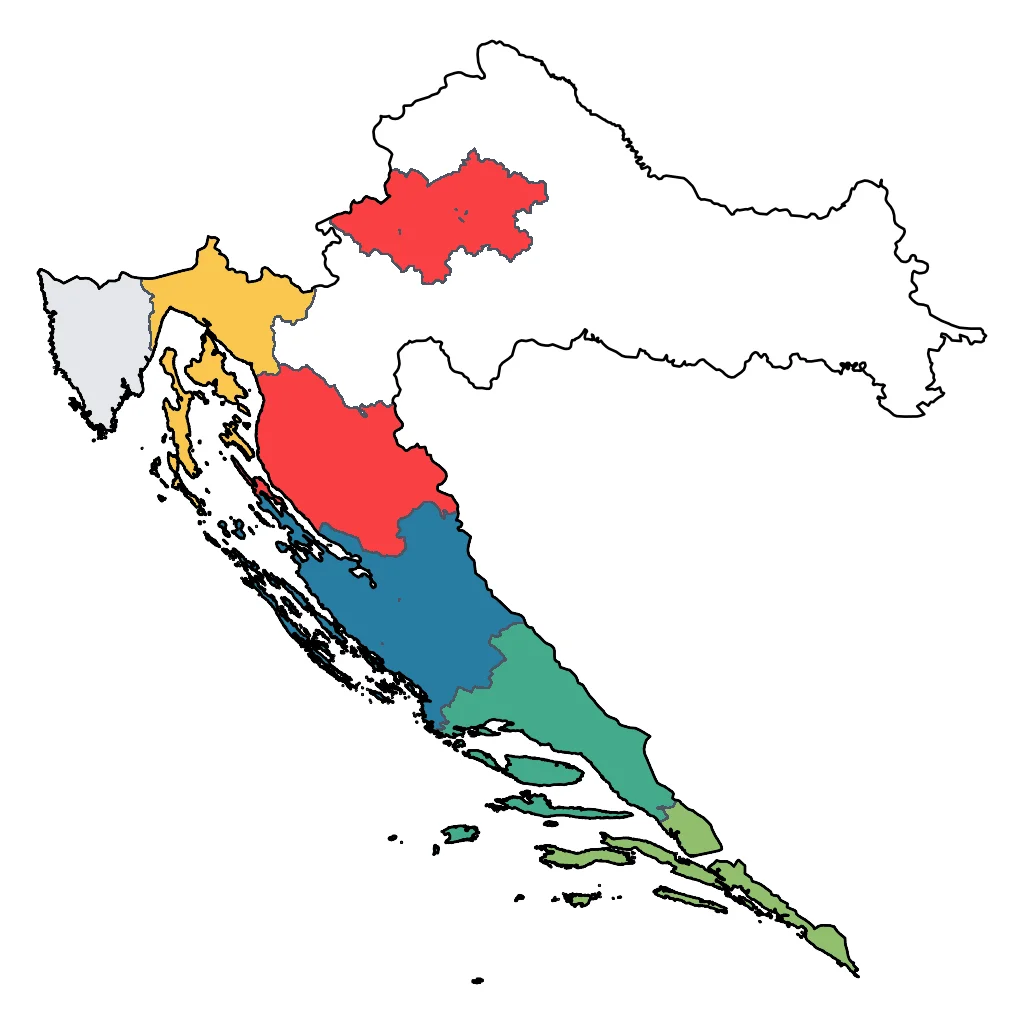
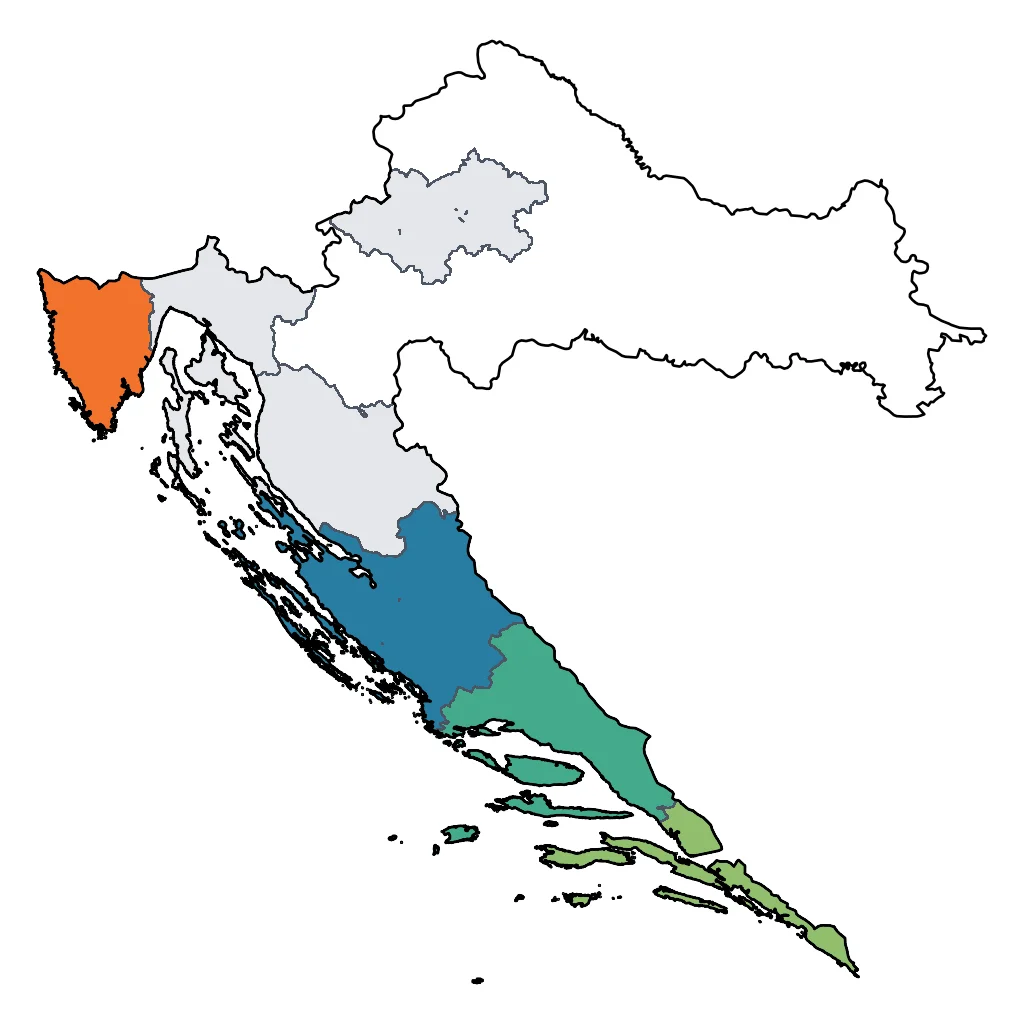

Airports & Flight Routes
Toggle options to view domestic routes and international airports. Click an airport for details.
Climate & Weather
Central Dalmatian Coast & Islands
Show Details
| Month | Temp °C | Rain | Humidity |
|---|
Istrian Peninsula
Show Details
| Month | Temp °C | Rain | Humidity |
|---|
Kvarner Gulf Coast
Show Details
| Month | Temp °C | Rain | Humidity |
|---|
Northern Dalmatian Coast
Show Details
| Month | Temp °C | Rain | Humidity |
|---|
Plitvice Lakes & Central Croatia
Show Details
| Month | Temp °C | Rain | Humidity |
|---|
Southern Dalmatian Coast
Show Details
| Month | Temp °C | Rain | Humidity |
|---|

Travel Advisory
All major agencies agree that Croatia is safe for standard travel, requiring only routine safety awareness similar to other EU destinations.
Safety Topics
Traveller Advice (3 groups)

While same-sex acts are legal, public displays of affection may occasionally draw unwanted attention or hostility in more conservative or rural areas.

Dual nationals should be aware that Croatia may require military service for male citizens. Check with the Croatian Ministry of Defence before traveling if you hold dual citizenship.

Exercise caution when using taxis, especially late at night. It is recommended to use reputable apps, share your ride status with friends, and photograph the taxi ID number upon entry.