

Japan is widely considered one of the most family-friendly destinations in Asia, renowned for its exceptional safety, cleanliness, and efficiency. For parents, the stress of navigating a foreign country is significantly reduced by reliable public transport and pristine facilities, including the abundance of clean public restrooms and baby-changing stations. For children, the country feels like a giant playground where ancient history sits alongside robots and neon lights.
The capital, Tokyo, is a sensory adventure. Families can visit the Ghibli Museum to see the whimsical world of Totoro (tickets required well in advance), explore the interactive digital art at teamLab Planets, or navigate the famous scramble crossing in Shibuya. Tokyo Disney Resort remains a major draw, but unique experiences like the Pokémon Centers and Akihabara's gadget shops often capture older kids' imaginations just as effectively.
Beyond the capital, the Shinkansen (bullet train) makes long-distance travel easy and exciting. A short ride away, Kyoto offers a slower pace where families can walk through the thousands of vermilion gates at Fushimi Inari Shrine or stroll the Arashiyama Bamboo Grove. Just south of Kyoto, Nara Park is an absolute highlight for children, who can buy special crackers to feed the hundreds of bowing wild deer that roam freely. In Osaka, Universal Studios Japan features the immersive Super Nintendo World, a bucket-list item for gaming families.
Geographically, Japan is an archipelago with four distinct seasons. Spring brings the famous cherry blossoms (sakura), though parks can be crowded. Summer is hot and humid, often involving festivals with fireworks. Autumn offers mild weather and stunning red leaves, while winter transforms the northern island of Hokkaido and the Japanese Alps into world-class ski destinations with powder snow suitable for beginners.
Japanese cuisine is surprisingly accessible for children. Kaitenzushi (conveyor-belt sushi) restaurants turn dining into a game where plates zoom by on tracks. For picky eaters, karaage (fried chicken), udon noodles, and tonkatsu (breaded pork cutlet) are safe and delicious staples. Convenience stores (konbini) are open 24/7 and stock high-quality rice balls (onigiri) and snacks, making them a lifesaver for hungry toddlers.
Travel logistics are streamlined by services like Takkyubin (luggage forwarding), allowing families to send heavy suitcases between hotels overnight so they can travel hands-free. While English is not spoken everywhere, translation apps and the helpful nature of locals bridge the gap. Families should be aware that good manners are valued; talking loudly on trains is discouraged, and shoes must be removed when entering homes, ryokans (traditional inns), and some temple halls.

Explore Regions
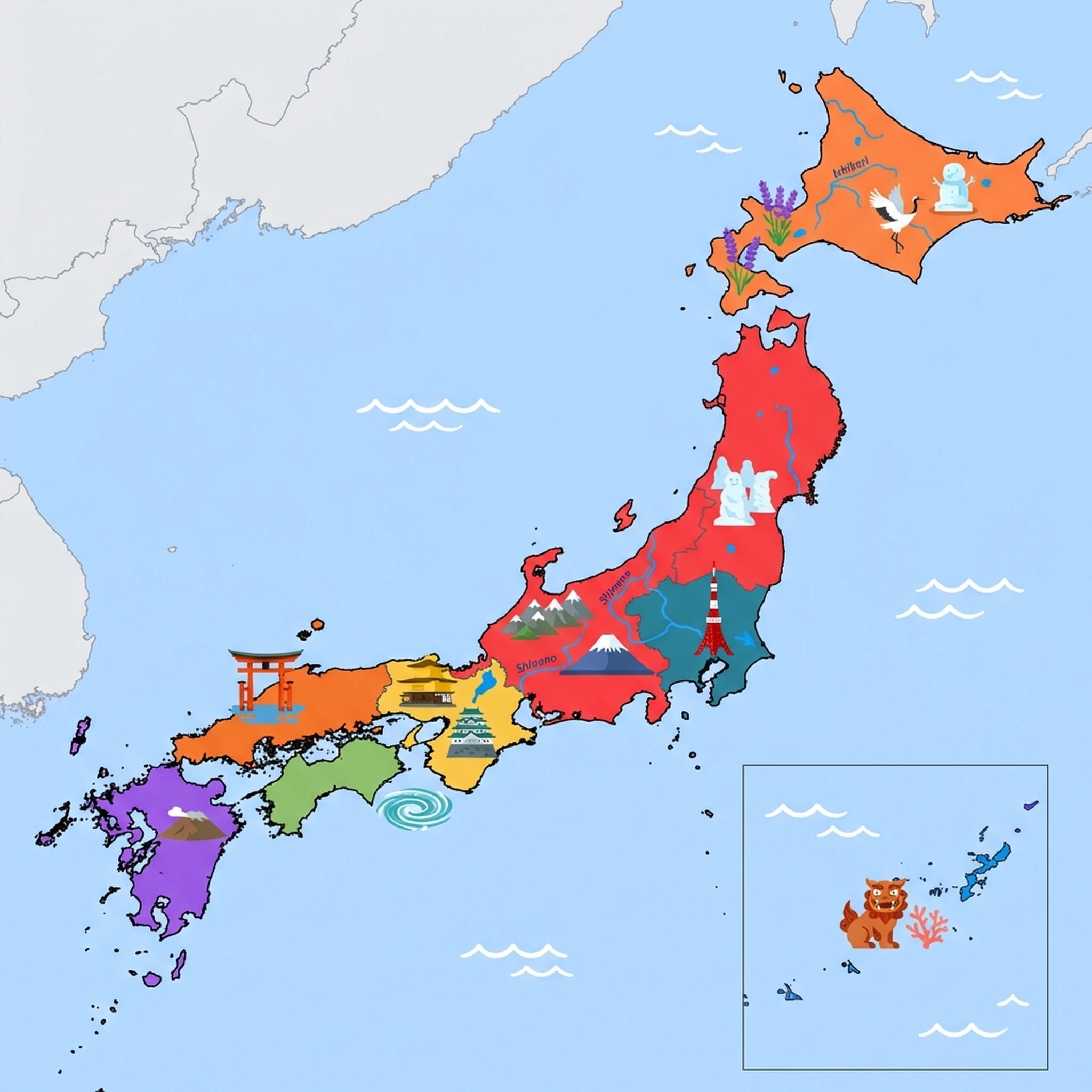
9 Regions
Chūbu & Japanese Alps
Snow monkeys, samurai towns, and alpine adventures 🏔️🐒
Chūgoku & Western Honshu
Sand dunes, floating shrines, and living history ⛩️🦌
Hokkaido
Wild nature, powder snow, and farm-fresh adventures ❄️🌻
Kantō & Tokyo Megalopolis
Neon lights, anime culture, and theme park magic 🗼🎢
Kyoto & Classical Japan
Ancient temples, bowing deer, and Super Nintendo World ⛩️🦌🍄
Kyūshū
Volcanoes, hot springs, and trains built for kids 🌋🚂
Okinawa & Ryūkyū Islands
Japan's tropical paradise with whale sharks and coral reefs 🌺🏝️
Shikoku
Wild whirlpools, vine bridges, and udon noodles 🍥🌀
Tōhoku
Samurai legends, vibrant festivals, and friendly foxes 🦊👺
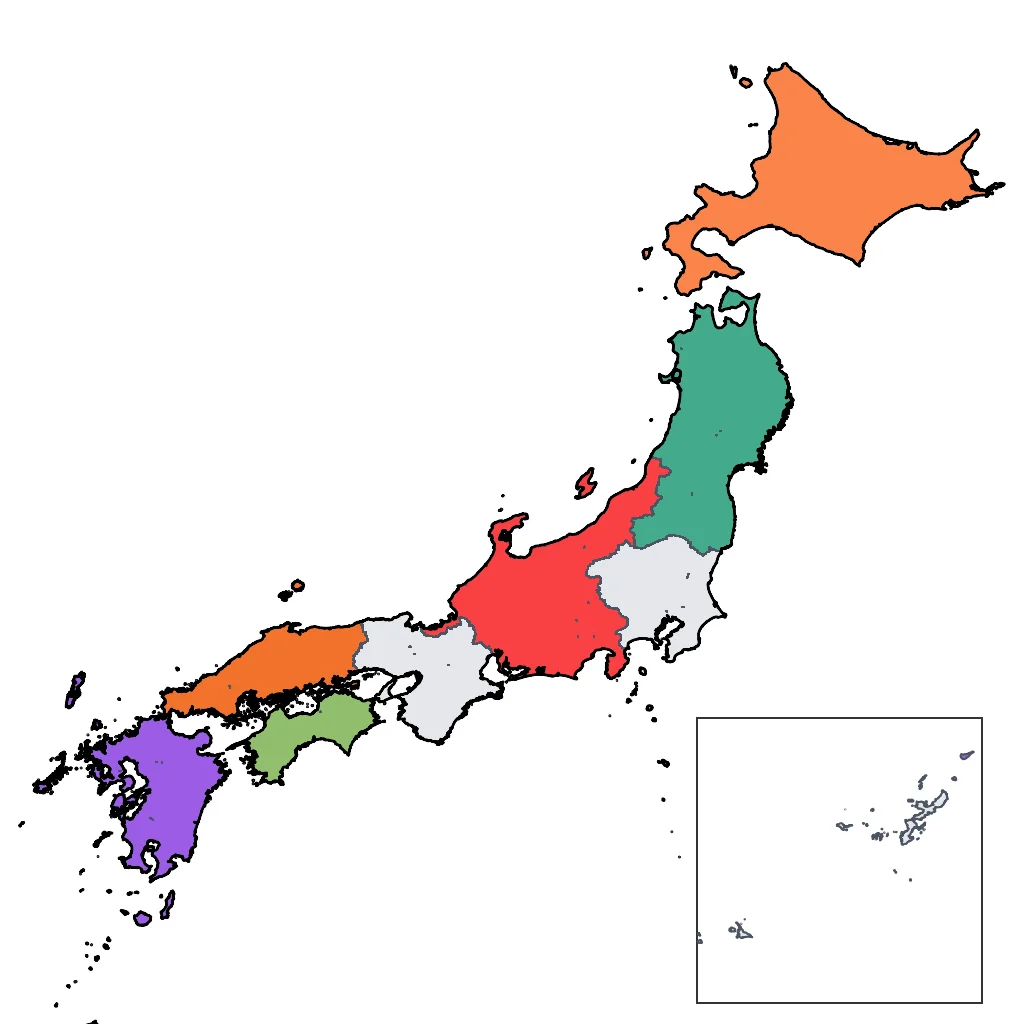
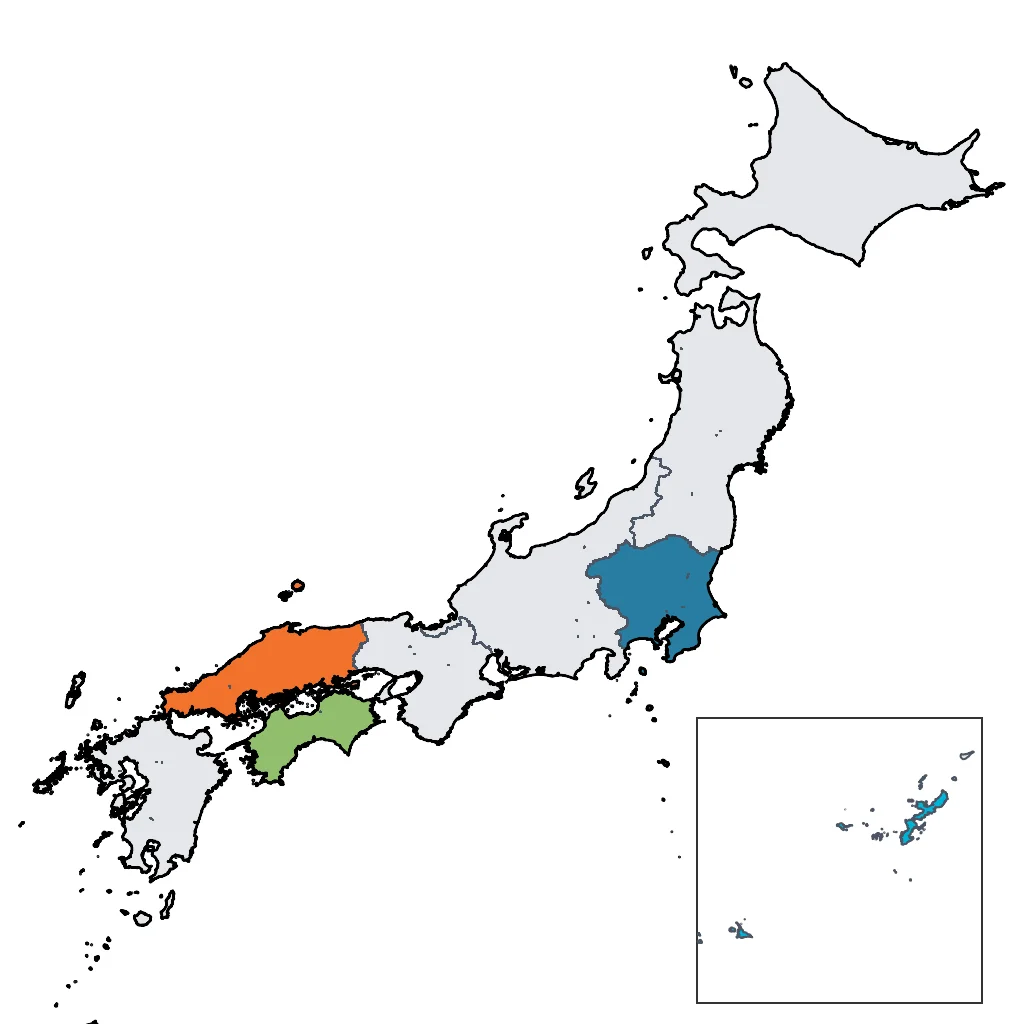
Click on a region marker to explore details. Use the dropdown to color regions by activity suitability.

Activities & Best Times

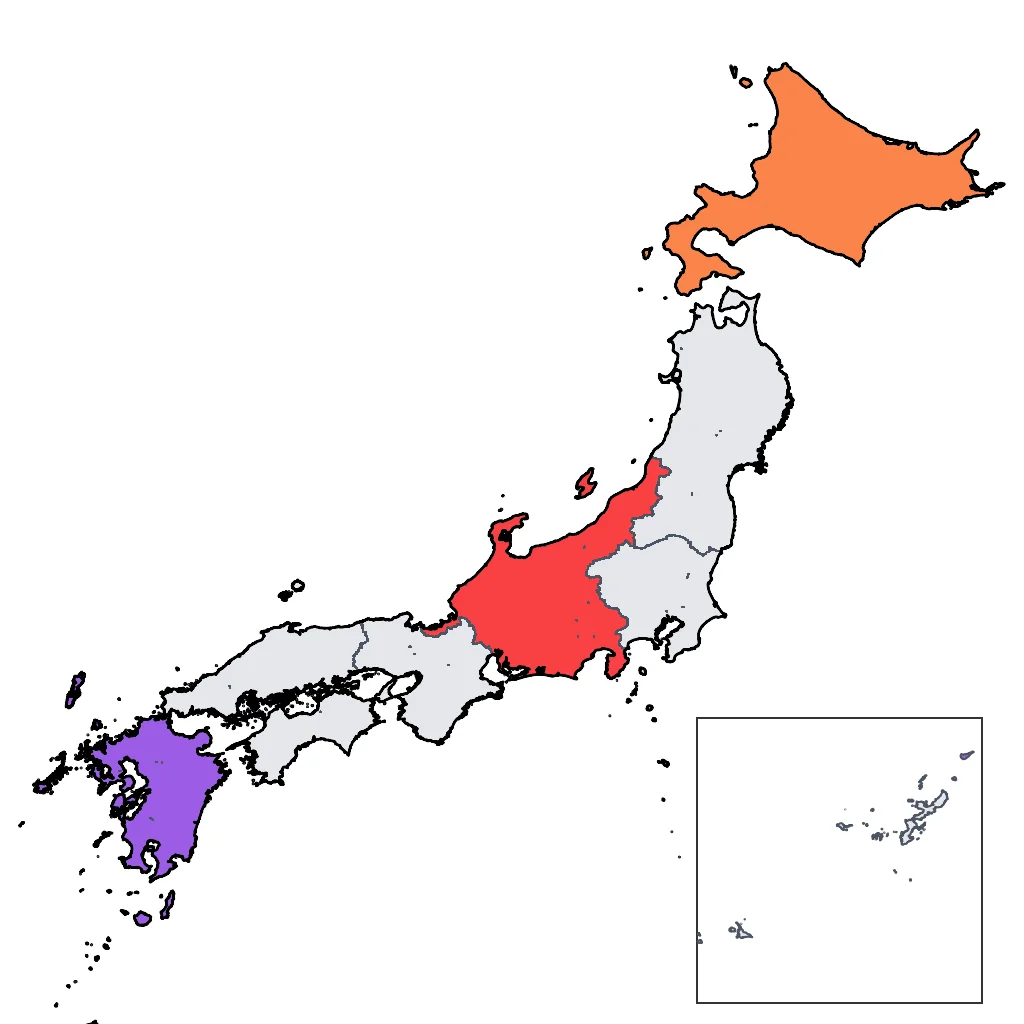
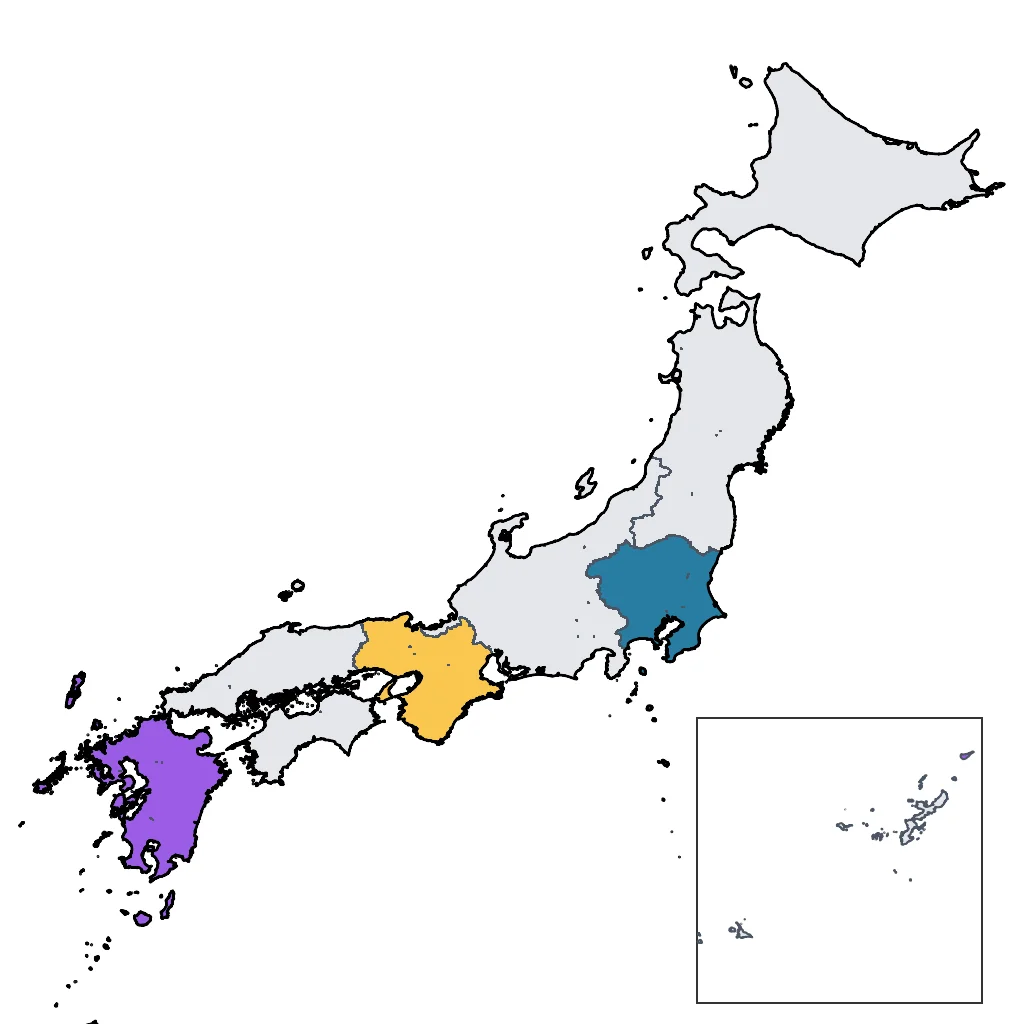
Adventure & Nature
ExcellentHiking, wildlife, outdoor exploration, ecotourism
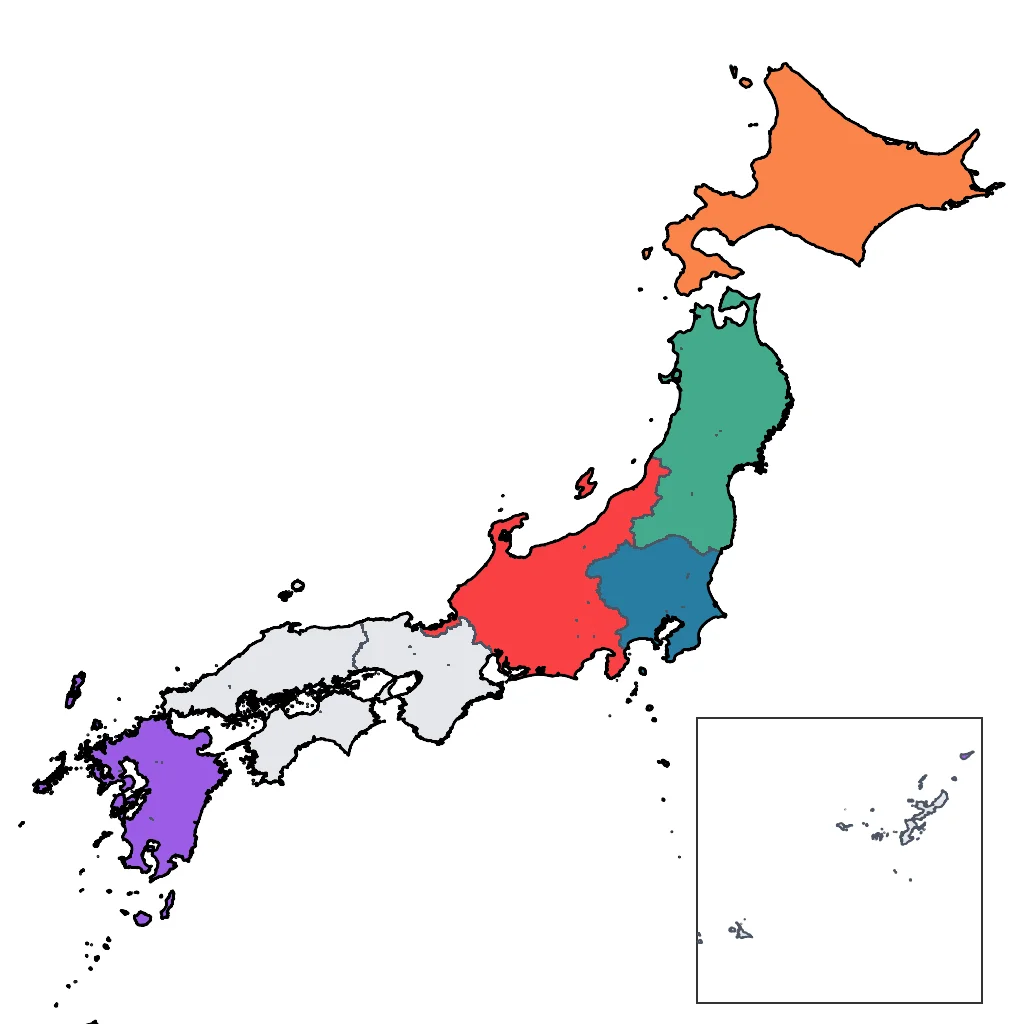
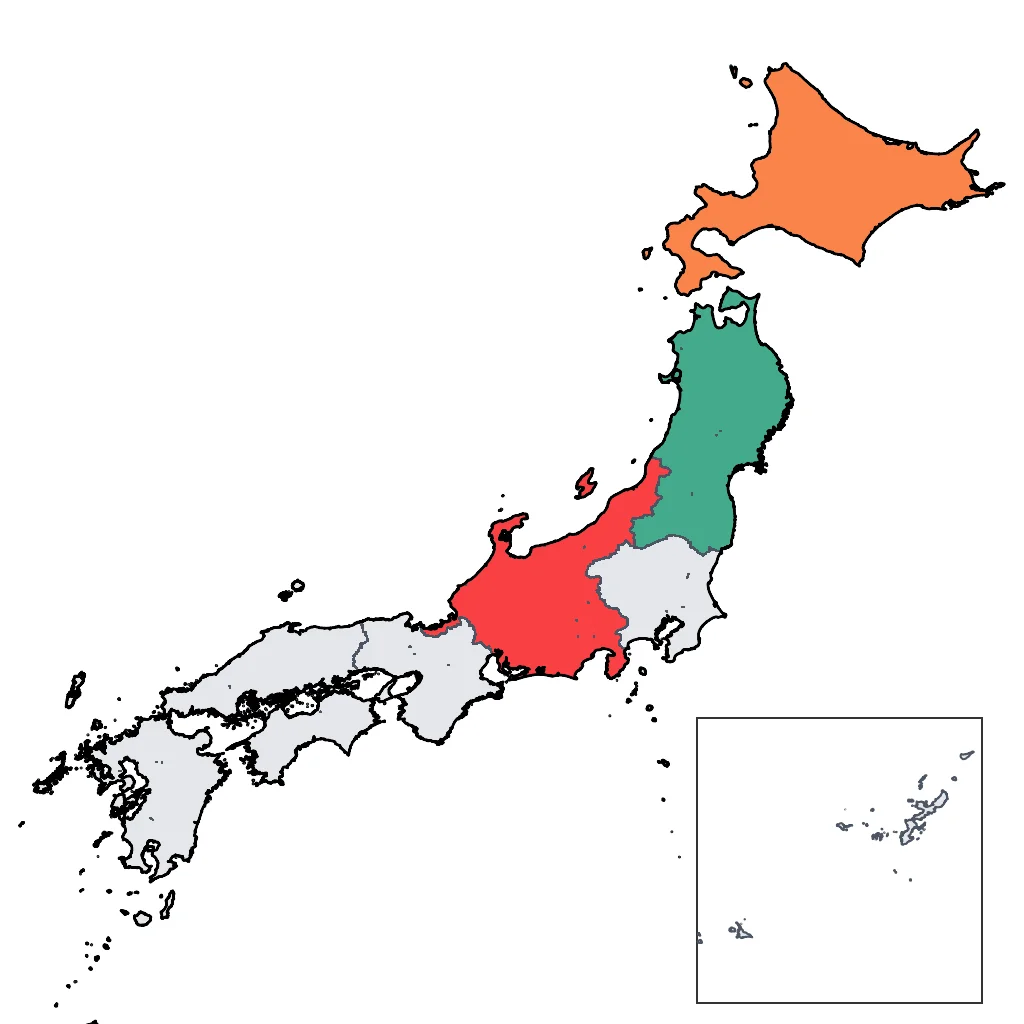
The 'Roof of Japan' features dramatic peaks like Mt. Fuji and the Kamikōchi valley, offering some of Asia's most pristine hiking and mountaineering. May and October provide optimal visibility and mild temperatures; summer months (Jul-Aug) are the only window for Fuji climbing, despite higher precipitation.
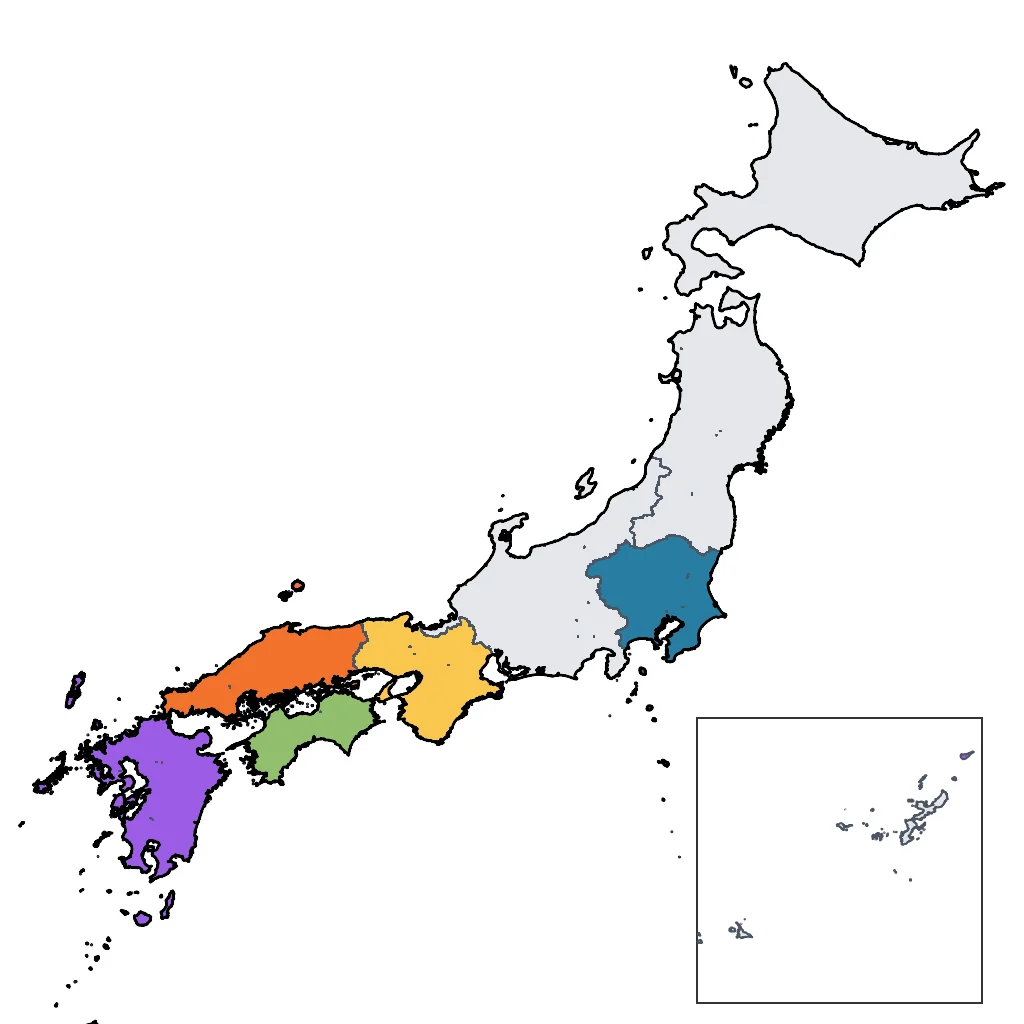
Features world-class natural sites including the ancient UNESCO cedar forests of Yakushima and the massive volcanic caldera of Mount Aso. Autumn and spring offer optimal hiking visibility and mild temperatures; June and July are off-season due to extreme monsoon rainfall exceeding 400mm monthly.
Home to UNESCO-listed Shiretoko and dramatic volcanic calderas, Hokkaido offers an untamed wilderness experience unique in East Asia. Peak summer months (Jun-Jul) feature mild temperatures and blooming flora; shoulder months provide stunning autumn colors or spring growth, though heavy late-summer rains (Aug-Sep) and winter snow limit trail accessibility.

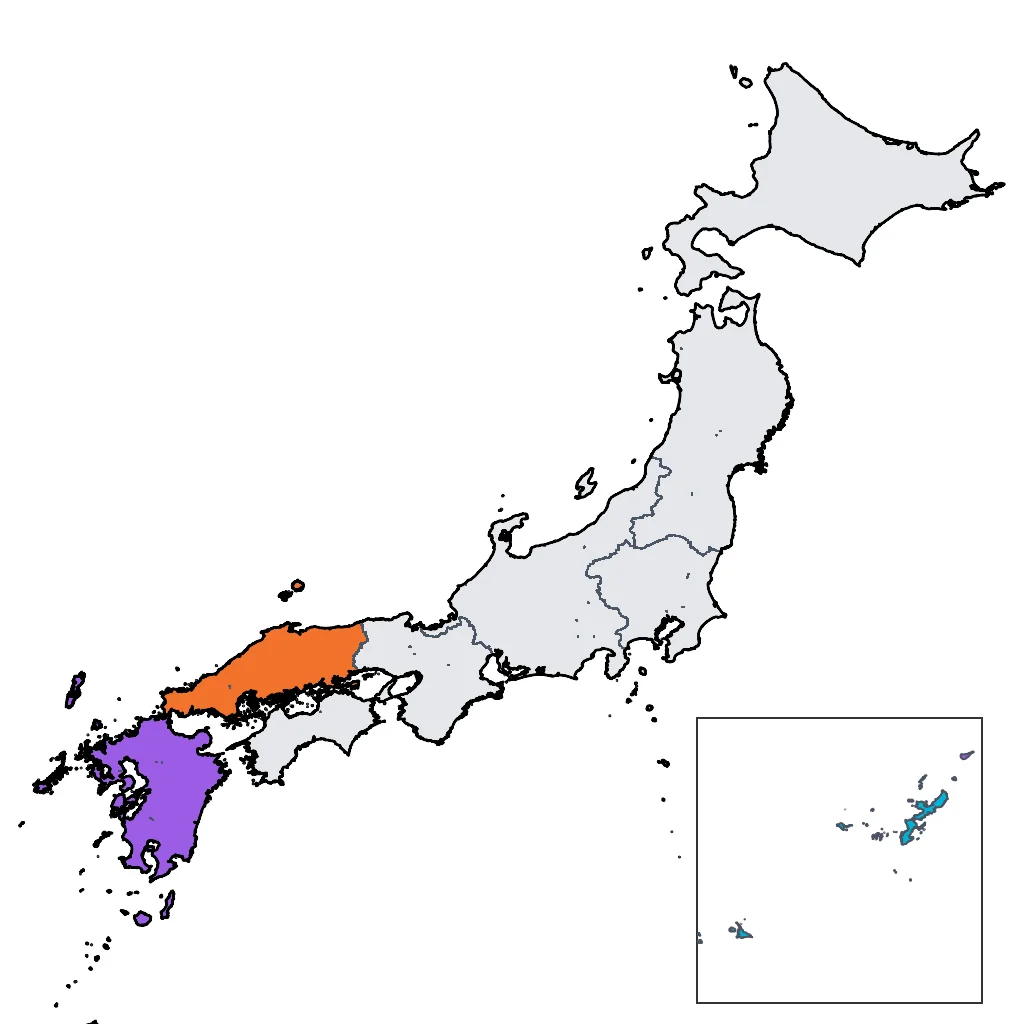
Beach & Sea
ExcellentBeach resorts, marine activities: diving, snorkelling, kite surfing, wind surfing, sailing
Home to the 'Kerama Blue' waters and world-class diving in Ishigaki, this region rivals the Maldives for marine biodiversity and luxury coastal retreats. July is peak as it offers the highest temperatures and a lull in the summer rains; shoulder months remain warm but carry higher typhoon risks and rainfall, while winter is too cool for world-class beach lounging.
The Seto Inland Sea provides calm, sapphire waters and white sand beaches, though it lacks the tropical biodiversity of benchmark destinations. August is the only month combining warm sea temperatures with manageable (though still significant) rainfall; other months are either too cold or too wet.
The Nichinan coast and southern islands offer beautiful beaches and surfing opportunities, though they face stiff international competition. August provides the warmest water and a break from the heaviest rains; winter months are too cold for meaningful marine activities.

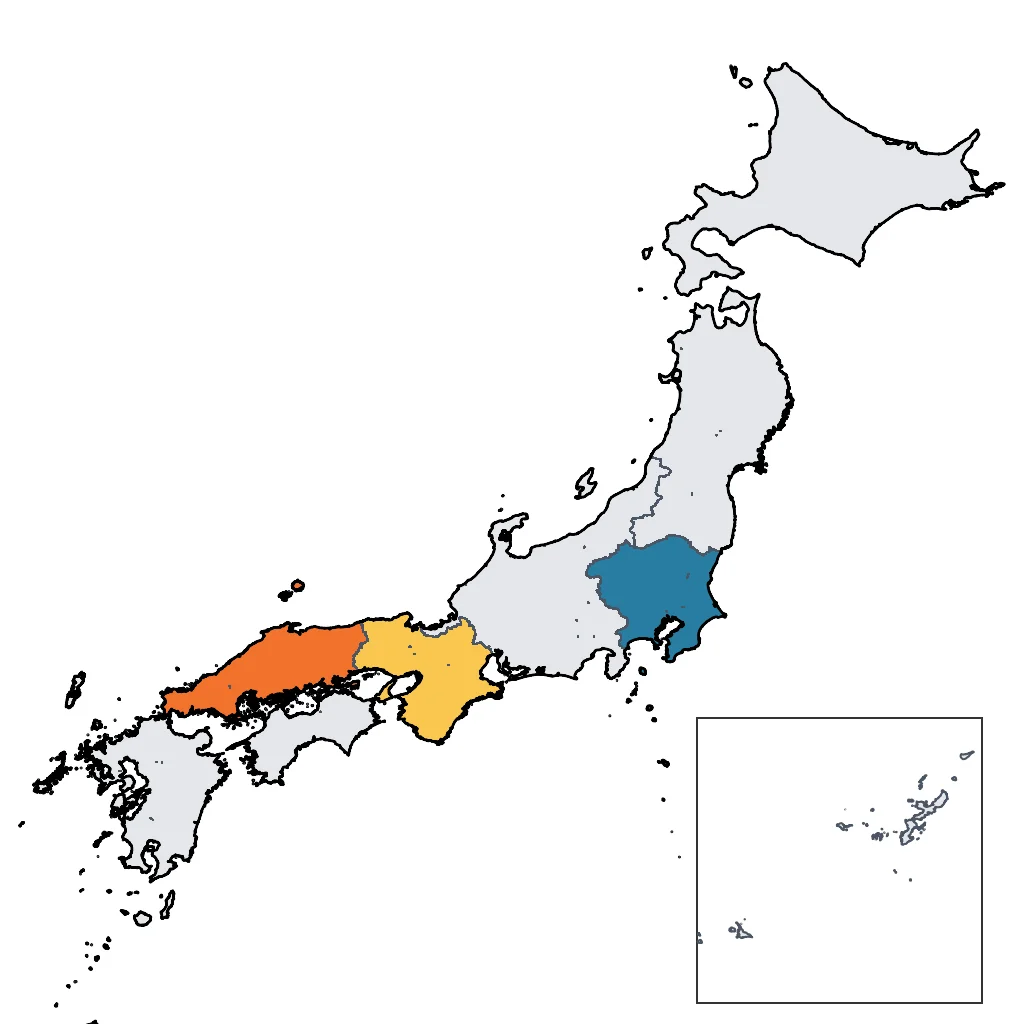
City & Cultural
ExcellentUrban tourism, museums, historical sites, architecture
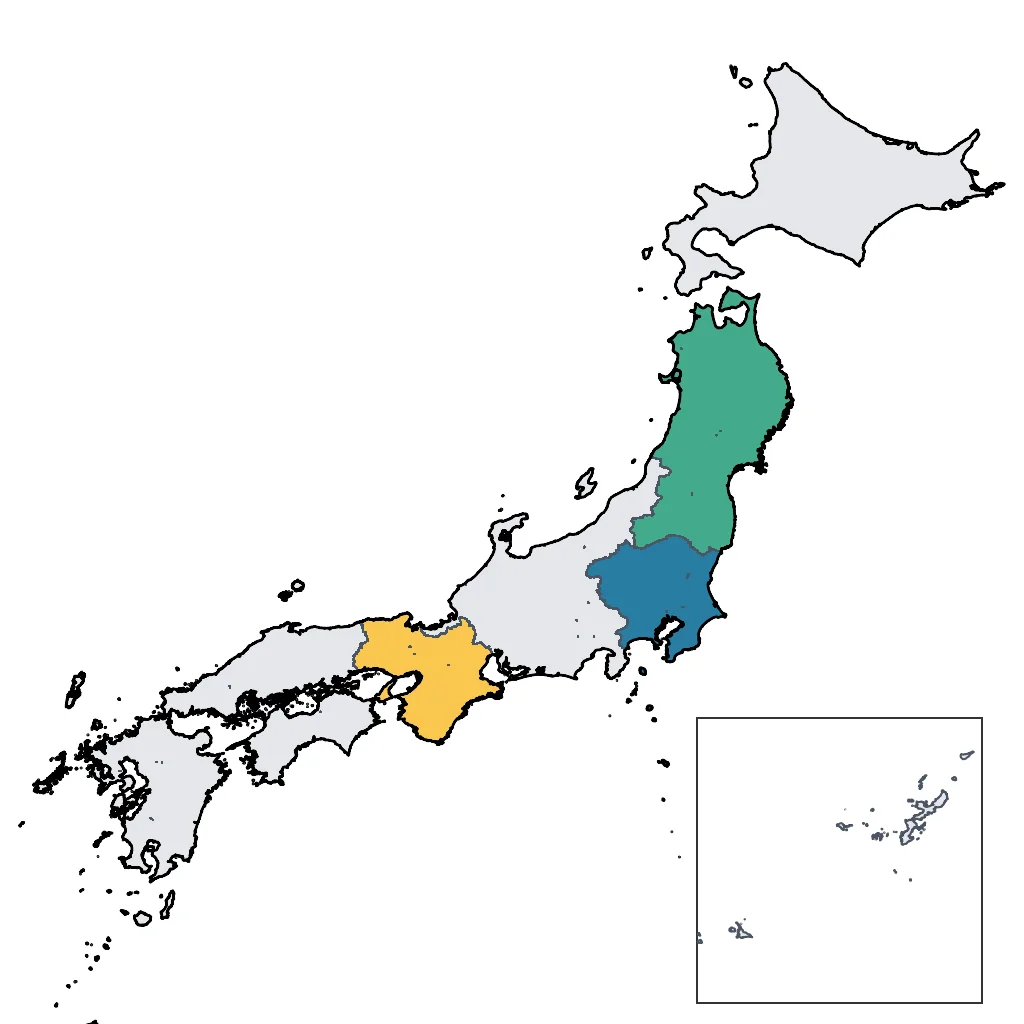
A world-leading megalopolis offering an unparalleled blend of hyper-modernity and ancient tradition, featuring world-class museums and Michelin-starred dining. Peak months align with the iconic cherry blossom season and autumn foliage; summer is excluded due to oppressive humidity and extreme heat.
As the global benchmark for Japanese heritage, this region offers unparalleled access to thousands of UNESCO temples, geisha districts, and imperial palaces. Peak months (Apr, May, Oct, Nov) offer mild temperatures (13-19°C) ideal for walking, while summer (Jun-Sep) is off-season due to extreme humidity and rainfall often exceeding 230mm.
Home to world-class UNESCO sites like Miyajima's floating torii and the Hiroshima Peace Memorial, offering profound historical depth and preserved Edo-period districts. Peak spring and autumn provide mild temperatures and low rainfall, while the summer months are hindered by oppressive humidity and extreme rainfall exceeding 250mm.

Educational & Exploratory
ExcellentLearning experiences, scientific sites, historical education
An educational powerhouse offering deep immersion into Zen Buddhism, traditional tea ceremonies, and samurai history. Temperate months are peak for visiting archaeological sites in Nara and Kyoto; high summer and deep winter conditions make multi-site historical exploration less comfortable for families.
Offers globally significant learning experiences at the Hiroshima Peace Memorial Museum and the maritime heritage sites of Kure. Seasonal timing is critical as many exhibits and historical quarters are best explored on foot during the temperate, drier spring and autumn months.
Offers profound learning opportunities through Buddhist pilgrimage heritage and pioneering environmental art projects on the 'Art Islands'. Best experienced in the mild autumn months; the heavy summer monsoons and high heat make the extensive outdoor movement required for these sites uncomfortable for families.

Festivals & Seasonal
ExcellentEvents, celebrations, seasonal attractions
Home to globally iconic events like the Sakura (cherry blossoms) and Sanja Matsuri, offering deep cultural immersion for sophisticated travelers. Peak timing follows the natural bloom and autumn color cycles; shoulder months feature major summer firework festivals despite the heat.
Home to world-renowned events like the Gion Matsuri, cherry blossom season, and autumn foliage illuminations. April and November are peak for natural spectacles; July is peak for major traditional festivals despite high rainfall (241mm), while winter months lack significant large-scale outdoor cultural events.
Tōhoku hosts the globally renowned 'Big Six' summer festivals in August and spectacular late-blooming cherry blossoms in April. Peak months align with these world-class events; shoulder months feature authentic snow festivals and autumn harvest celebrations.

Relaxation & Wellness
ExcellentSpa retreats, wellness centers, peaceful getaways
World-class authentic onsen (hot spring) culture in towns like Kusatsu and Nikko offers a unique, high-end wellness experience. Cold winter months are peak for traditional thermal soaking; the hot and humid summer months (Jun-Aug) make outdoor hot springs unappealing.
This region is a global benchmark for authentic onsen (hot spring) culture, featuring world-class ryokans in Gero and Yamanaka. The experience is best during the colder months (Oct-Feb) when the contrast between the steam and the crisp mountain air is most profound.
Home to world-renowned onsen hubs like Beppu, Yufuin, and the highly authentic Kurokawa Onsen, offering high-end ryokan experiences. Peak winter months provide the perfect atmospheric contrast for hot spring soaking; summer months are unsuitable due to high humidity and temperatures making hot baths less appealing.

Ski & Snow
ExcellentWinter sports, ski resorts, snow activities
Home to the 1998 Winter Olympics, Hakuba and Shiga Kogen offer world-class powder snow and sophisticated alpine infrastructure. Peak months (Jan-Feb) provide the most reliable sub-zero temperatures and deep bases, while March offers excellent spring skiing for families.
Home to world-class powder and the unique 'Snow Monsters' of Zao, offering a more authentic, less commercialized alternative to Hokkaido. Peak months provide consistent sub-zero temperatures and deep powder; shoulder months offer variable spring conditions, while summer is unsuitable.
Hokkaido is globally legendary for 'Japow'—ultra-dry, consistent powder snow and world-class infrastructure in resorts like Niseko. Jan-Feb offer peak sub-zero temperatures and deepest coverage, while Dec and Mar provide viable shoulder conditions with slightly more variable snow quality.

Theme Park & Entertainment
ExcellentAmusement parks, family entertainment venues
Home to Tokyo Disney Resort, widely regarded as the most meticulously maintained and service-oriented theme park experience globally. Spring and autumn provide the mildest conditions for long days outdoors; peak summer humidity and winter chills make the experience significantly less comfortable for families.
Universal Studios Japan in Osaka is a world-class destination, notably for Super Nintendo World. Peak periods align with mild weather (14-19°C) and lower rainfall; summer months are avoided due to intense heat and frequent heavy rain (up to 244mm in Sep) which can disrupt outdoor attractions.
Huis Ten Bosch in Nagasaki is a world-class, sophisticated Dutch-themed park featuring authentic architecture and elite garden displays. Spring and autumn offer the best conditions for exploring the vast outdoor grounds; summer is off-season due to oppressive heat and heavy monsoon rains.

Road Trips & Scenic
Very GoodScenic drives, countryside tours, route-based travel
The Shimanami Kaido is an internationally acclaimed scenic route connecting islands via world-class bridge infrastructure, perfect for sophisticated family exploration. Autumn offers the clearest visibility and spectacular foliage; summer rainfall and humidity levels (Jun-Sept) create poor driving and viewing conditions.
Spectacular alpine routes like the Venus Line and the Noto Peninsula coastline offer world-class driving vistas. May and October are peak for clear visibility and vibrant foliage; many mountain passes are closed or dangerous during the heavy snow months (Dec-Mar).
Spectacular scenic drives along the rugged San'in Coast and the engineering marvels of the Seto bridges. Peak months coincide with maximum visibility and vivid foliage, while the summer rainy season and winter mists frequently obscure the coastal panoramas.

Sports & Active
Very GoodSport tourism, fitness activities, active recreation
Boasts world-class cycling across the Seto Inland Sea and unique river kayaking in the remote interior. October is the peak for its optimal 19°C temperature and lower rainfall; summer is too wet and humid for strenuous outdoor activity, while winter temperatures are too low for active comfort.
High-quality active tourism including Olympic-grade surfing in Chiba and elite-level golf courses across the megalopolis. Optimal conditions for outdoor activity occur in the mild spring and dry autumn; summer humidity (>65%) and winter cold are prohibitive for sustained physical exertion.
Boasts the Shimanami Kaido, a world-class cycling route crossing the Seto Inland Sea islands with exceptional infrastructure for active families. Spring and autumn offer the 15-20°C range ideal for cycling; summer is too humid for strenuous activity, and winter winds can be biting.

Airports & Flight Routes
Toggle options to view domestic routes and international airports. Click an airport for details.
Climate & Weather
Chūbu & Japanese Alps
Show Details
| Month | Temp °C | Rain | Humidity |
|---|
Chūgoku & Western Honshu
Show Details
| Month | Temp °C | Rain | Humidity |
|---|
Hokkaido
Show Details
| Month | Temp °C | Rain | Humidity |
|---|
Kantō & Tokyo Megalopolis
Show Details
| Month | Temp °C | Rain | Humidity |
|---|
Kyoto & Classical Japan
Show Details
| Month | Temp °C | Rain | Humidity |
|---|
Kyūshū
Show Details
| Month | Temp °C | Rain | Humidity |
|---|

Travel Advisory
All major agencies categorize Japan at their lowest risk level, advising standard safety awareness without specific elevated warnings for the country as a whole.
Safety Topics
Traveller Advice (3 groups)

Inappropriate physical contact (groping) and 'upskirting' occasionally occur on crowded commuter trains. Many rail operators provide women-only carriages during peak hours to improve safety and comfort.

Major cities and transport hubs have excellent accessibility infrastructure, but older facilities or rural areas may present challenges. It is recommended to check specific accessibility guides for rail travel in advance.

Same-sex relationships are legal and social tolerance is generally high in urban areas, though same-sex marriage is not legally recognized and specific anti-discrimination protections vary by region.