
The Great White Place
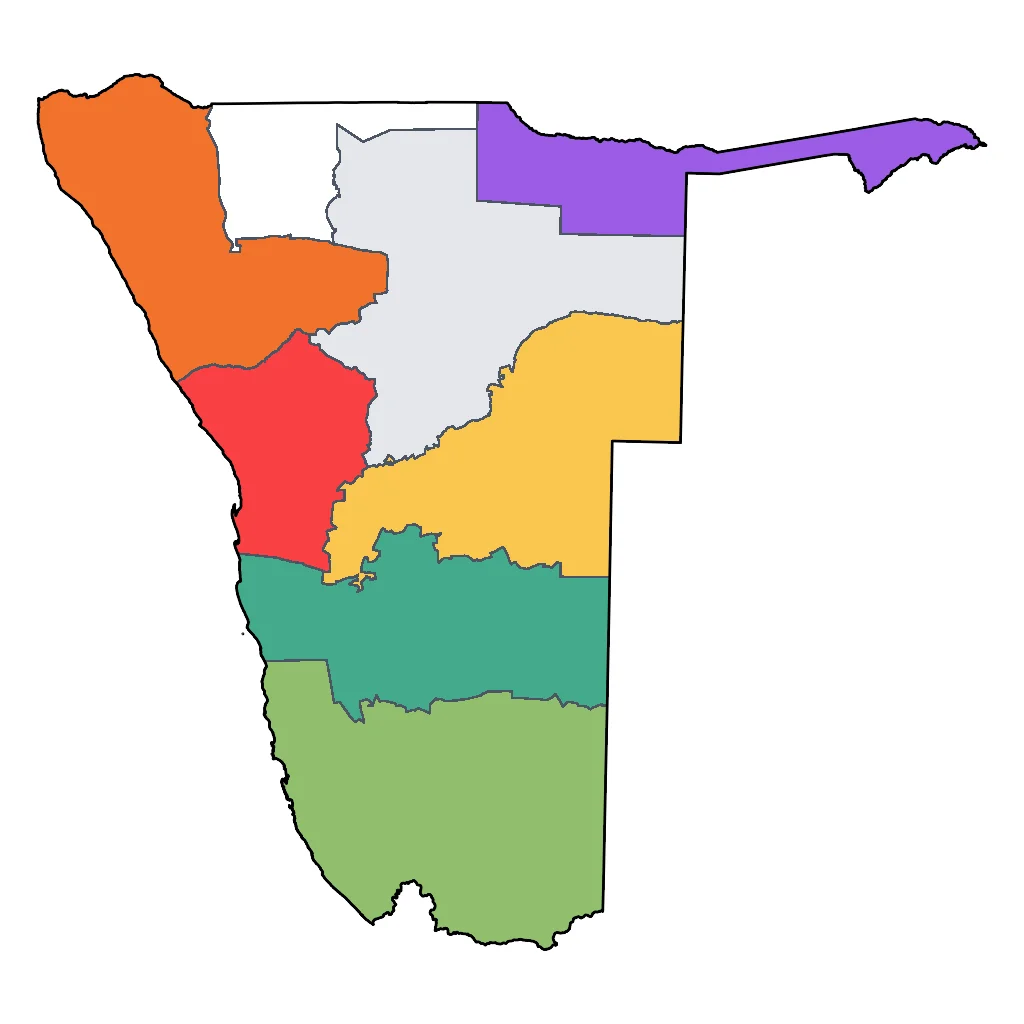
Etosha National Park is defined by its colossal salt pan, a shimmering white expanse visible from space. For travelling families, the geography works in your favour: the vegetation is sparse and the terrain flat, making it significantly easier for children to spot animals compared to dense bushveld reserves. The park is accessible via well-maintained gravel roads suitable for standard sedans, though a high-clearance vehicle offers better vantage points for shorter passengers. Winters are dry and cool, while summers bring rain that transforms the pan into a temporary lagoon attracting flamingos.
Waterhole Watching
The unique feature of Etosha is the abundance of waterholes, both natural and man-made. During the dry season, animals are forced to congregate at these spots to drink. Families can simply park next to a waterhole and wait; the "theatre of nature" comes to you. It is common to see zebras, springbok, and wildebeest jostling for position, while elephants dominate the scene when they arrive. The main rest camps—Okaukuejo, Halali, and Namutoni—feature floodlit waterholes. This allows parents to put the kids to bed and watch black rhinos or lions drink just a few metres away, or for older children to experience a night safari safely from behind a fence.
Family-Friendly Facilities
The government-run camps inside the park offer essential amenities like swimming pools, which are crucial for cooling off during the midday heat when animal activity lulls. There are also restaurants and shops stocking basic supplies. Staying inside the park ensures you are first out at the gates when they open at sunrise. Alternatively, numerous private lodges just outside the park gates offer higher luxury standards and guided game drives specifically tailored for children.
Educational Value
Etosha provides a live biology lesson. Kids can learn to identify different antelope species and observe animal hierarchies firsthand. The stark white background of the pan creates high-contrast visuals perfect for budding young photographers. Remember to enforce the rule of staying in the car at all times outside the fenced camps, as predators are camouflaged and dangerous.
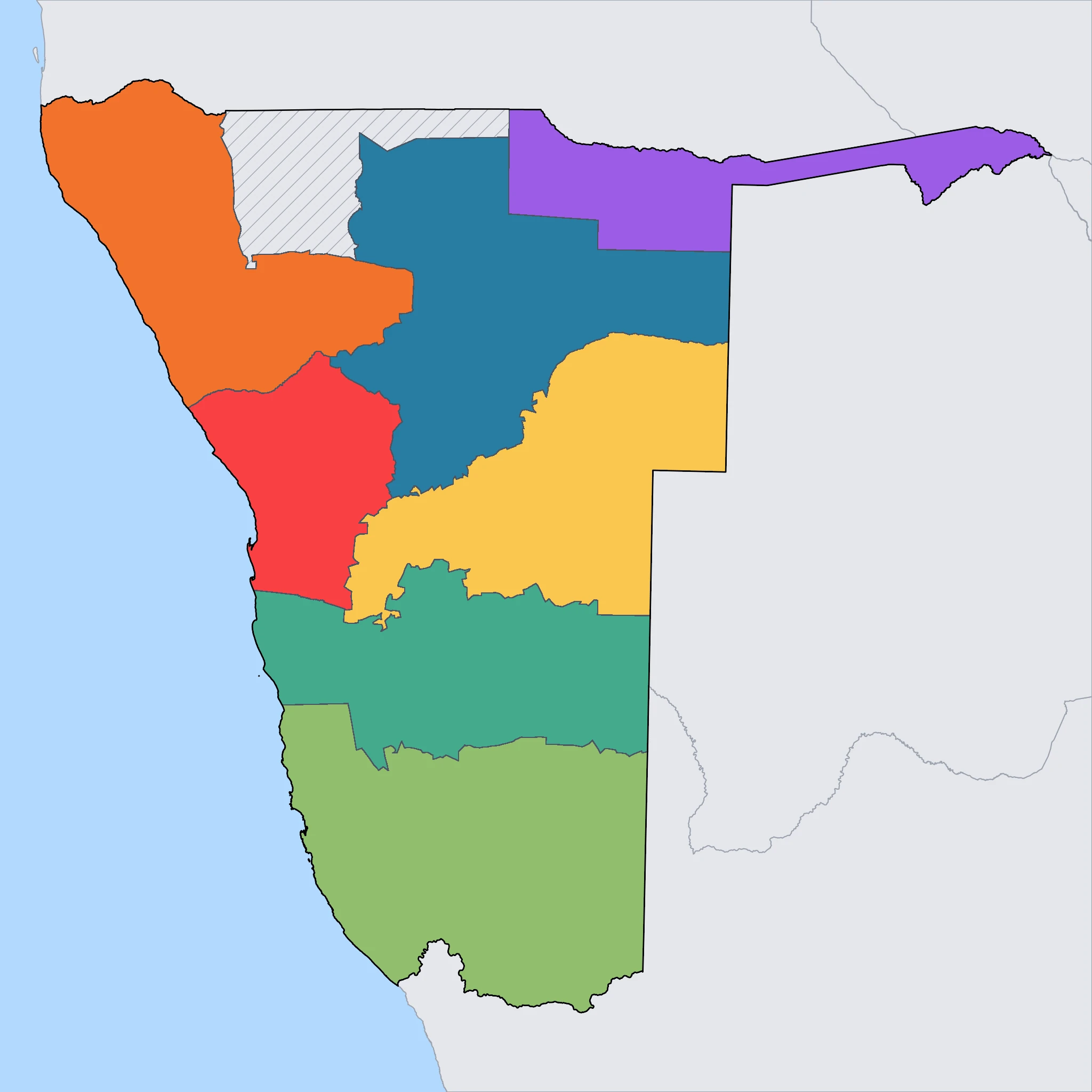
Click a region to explore

Activities & Best Times
Hiking, wildlife, outdoor exploration, ecotourism
A world-class wildlife destination featuring an iconic salt pan and unique floodlit waterholes for night-time viewing of rare species like the black rhino. Peak dry months (Jun-Sep) offer unparalleled animal density as wildlife congregates at permanent water sources, while the wet season (Dec-Mar) sees animals disperse into the dense bush.

Learning experiences, scientific sites, historical education
Provides an exceptional 'outdoor classroom' for natural history and conservation, highlighting desert-adapted biology and ecosystem management. The dry peak season allows for easy observation of complex social behaviors in megafauna; educational value is reduced during the rainy season when visibility is obscured by lush vegetation.

Spa retreats, wellness centers, peaceful getaways
Etosha is a national park visited primarily for safari. While luxury lodges have spa facilities, the region is not a wellness destination by international standards. 'Very_good' wellness implies it competes with dedicated spa/wellness regions like Bali or European thermal spa towns. 'Good' acknowledges the lodges provide comfort without overstating the wellness proposition.
Scenic drives, countryside tours, route-based travel
A premier destination for sophisticated self-drive safaris through vast, shimmering landscapes and well-maintained gravel road networks. Peak months ensure clear visibility and dry roads; the rainy season (Dec-Mar) can make some secondary tracks difficult to navigate and lessens the stark beauty of the salt pan.