
Bamyan and the Central Highlands
Ancient history carved into the heart of the Hindu Kush 🏔️
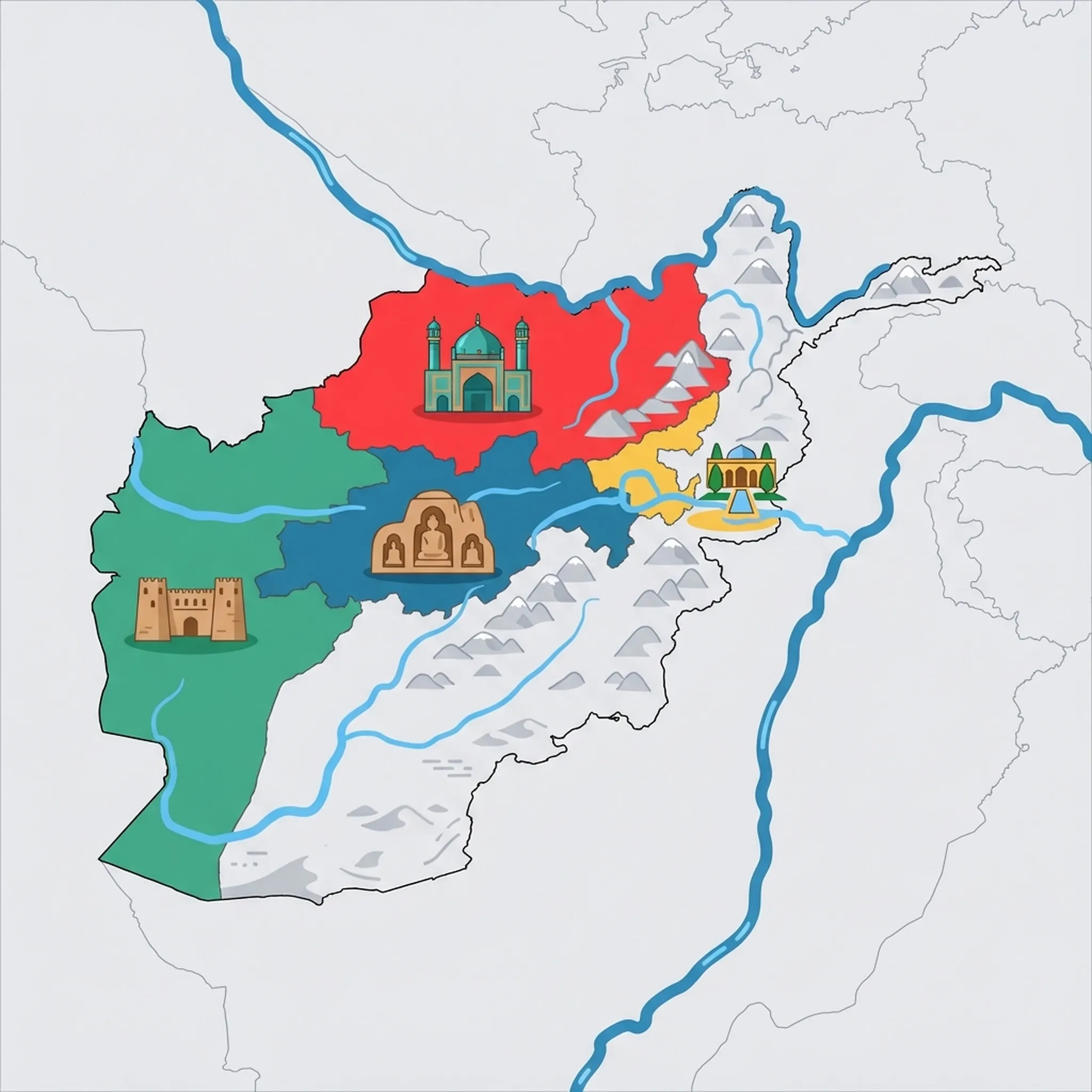
Click a region to explore
⚠️ SAFETY WARNING: Due to the volatile security situation, lack of emergency infrastructure, and risk of targeted violence, government agencies (including CA, USA, UK, AU, IE, and NZ) advise travelers to avoid all travel to Bamyan and the Central Highlands. The region is extremely remote, and consular assistance is unavailable. Families are strongly urged to consult their own government's official travel advisory before considering a trip.
Overview
The Central Highlands represent the rugged heart of Afghanistan, a region of soaring peaks and deep, fertile valleys. Bamyan was historically a peaceful hub on the Silk Road, where caravans paused to admire the colossal Buddha statues carved into the sandstone cliffs. Although the statues were destroyed, the cultural landscape remains a testament to the region's ancient heritage, surrounded by the snowy peaks of the Koh-i-Baba range.
For families, the area is defined by its dramatic natural wonders rather than urban amenities. The air here is crisp and thin, and the landscape shifts from ochre deserts to brilliant azure waters. While the town itself is a quiet settlement with a distinct Hazara cultural identity, the surrounding valleys offer breathtaking scenery that has historically drawn hikers and history enthusiasts from around the world.
Key Attractions
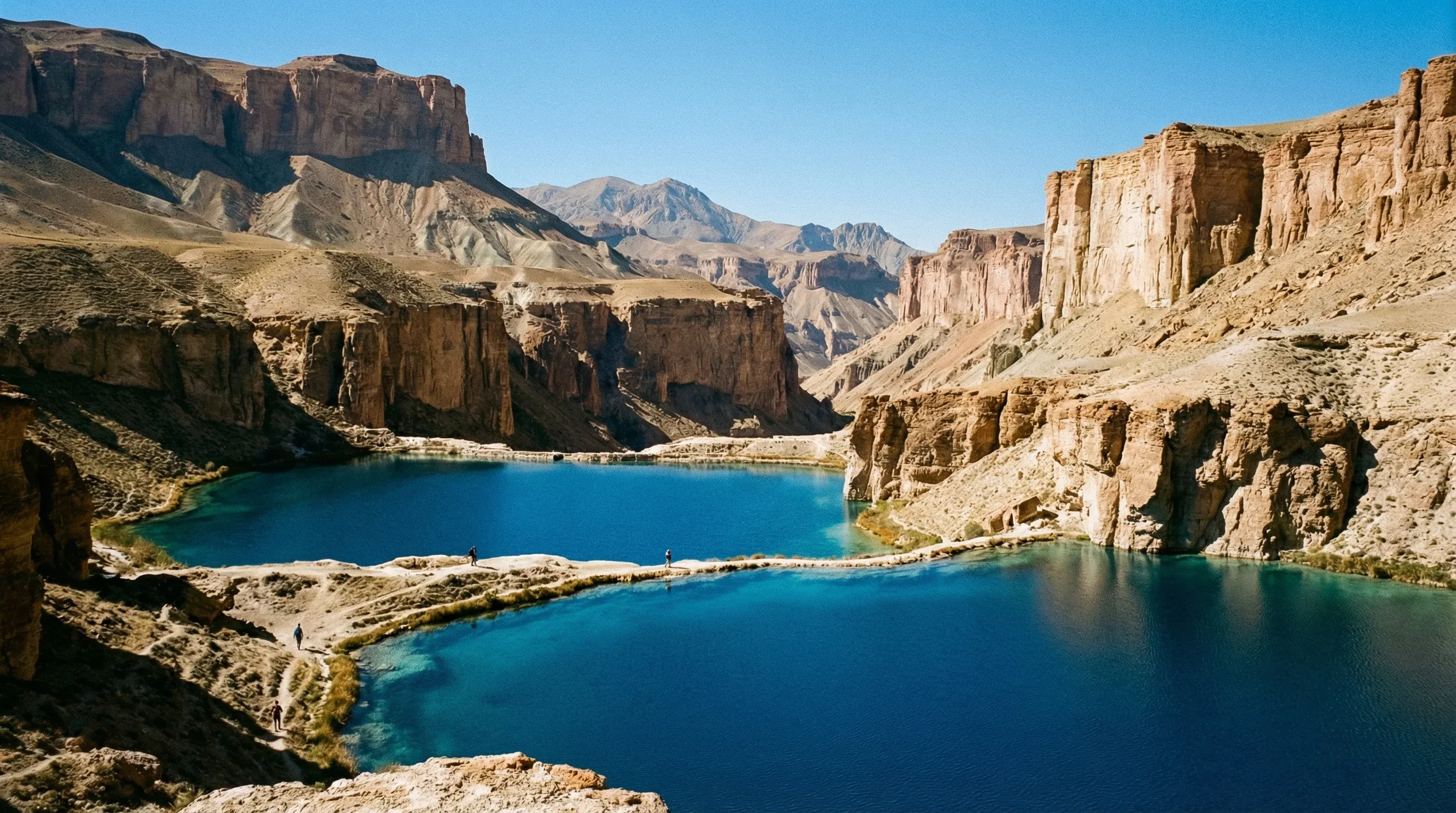
The region's crown jewel is the Band-e-Amir National Park, a series of six deep blue lakes separated by natural travertine dams. Legend says they were created by Ali, the son-in-law of the Prophet Muhammad. It is a surreal sight against the dusty canyon walls and was once a popular spot for paddle-boating.
Closer to the main town, the Buddhas of Bamyan Niches remain an awe-inspiring site. Families can explore the honeycomb of caves used by monks centuries ago, many containing remnants of original oil paintings. Further afield lies the enigmatic Minaret of Jam, a UNESCO World Heritage site standing alone in a remote river valley, showcasing intricate brickwork from the Ghurid dynasty.
Practical Advice
The climate is harsh, with pleasant, mild summers but freezing, snowy winters that can cut off road access for months. The best time to visit—historically speaking—is late spring to early autumn (May to September).
Food & Drink
Typical meal times: Lunch is typically served from 12:00 pm to 2:00 pm, and dinner from 7:00 pm to 9:00 pm.
Typical meal costs: A meal for a family of four in a local guesthouse costs roughly 1,500–2,500 AFN (approx. $21–35 USD / €19–32 EUR).
Dietary requirements: The local diet is simple and relies heavily on bread (nan) and dairy. Vegetarian options like potato stew are available, but meat is a staple for guests. Gluten-free options are difficult to find due to the ubiquity of wheat bread.
Signature dishes:
- Qoroot – A reconstituted dried yogurt dish, often served with bread or noodles, offering a strong, sour, and salty flavour.
- Bamyan Kebab – Skewers of marinated lamb or mutton grilled over charcoal, famous for their tenderness and minimal seasoning.
- Bolani – Fried flatbreads stuffed with potato, leeks, or pumpkin, widely loved by children as a snack.
Why this score?
The Central Highlands are defined by the high-altitude Hindu Kush range, offering some of the most rugged and physically demanding terrain in Asia. Treks to the Shah Foladi summit and the remote trails around Band-e-Amir provide extreme wilderness experiences with virtually no emergency services or support. Travelers must be entirely self-sufficient in a landscape of dramatic cliffs and high-mountain passes.
Why this score?
Medical infrastructure in this remote region is limited to basic provincial clinics that lack modern diagnostic equipment or specialized care. In the event of a serious injury or illness, evacuation to Kabul is necessary, which is hindered by long travel times on difficult roads. International travelers will find almost no facilities capable of managing complex medical emergencies or providing English-speaking staff.
Why this score?
Despite housing iconic sites like the Band-e-Amir lakes and the Buddha niches, the region remains a niche destination for a very small number of intrepid international travelers. Infrastructure is geared toward basic domestic needs, and the volume of foreign visitors is minimal compared to global standards. It is recognized as a cultural treasure but lacks the accessibility or safety profile for mainstream international tourism.

Local costs are very low by international standards, though sourcing reliable transport and security significantly increases the expense for foreigners. A basic guesthouse room typically costs 2,000–4,000 AFN (approx. $28–56 USD / €26–52 EUR) per night. Basic meals are inexpensive, with street food snacks costing under 100 AFN (approx. $1.40 USD / €1.30 EUR).

Getting Here & Around
Getting Here
- Air – Small flights occasionally operate from Kabul to Bamyan Airport (BIN), though schedules are erratic and subject to cancellation.
- Road – The drive from Kabul takes approximately 4–6 hours via the Ghorband Valley or Hajigak Pass. The roads are rough, unpaved in sections, and prone to security checkpoints.
Getting Around
- Car – A 4WD vehicle is essential for navigating the unpaved roads to Band-e-Amir National Park and surrounding valleys.
- Walking – The main bazaar and the base of the Buddhas of Bamyan Niches are best explored on foot, though altitude can make walking tiring for young children.
No airports in this region. See the country flight map for nearby connections.

Packing List
The high altitude (2,500m+) means UV radiation is much stronger than expected.
Electricity supply is extremely intermittent or non-existent in guest houses.
Bottled water may be unavailable in remote areas like Band-e-Amir.
Nights drop to freezing even in summer due to the mountainous elevation.
Essential for women and girls to adhere to strict local dress codes immediately upon arrival.
ATMs don't accept foreign cards. Bring pristine, post-2013 bills for exchange.
Electricity cuts are frequent and daily, even in hotels.
Tap water is unsafe and bottled water isn't always available in remote areas.
Internet is unreliable and checkpoints may demand physical copies of permits.
Dust is ubiquitous and running water for handwashing can be scarce.

Activities & Best Times

Hiking, wildlife, outdoor exploration, ecotourism
Features the spectacular Band-e-Amir National Park and the rugged Hindu Kush, offering world-class trekking and immersion in untouched wilderness. Peak summer provides dry, clear conditions for high-altitude exploration, while winter brings extreme sub-zero temperatures and snow-blocked trails.

Urban tourism, museums, historical sites, architecture
Home to the UNESCO-listed Bamyan Buddhas and the remote Minaret of Jam, this region offers deep historical immersion in ancient Silk Road heritage. Optimal visitation is during the mild, dry months of late spring through early autumn; winter is prohibitively harsh for exploring outdoor archaeological sites.

Spa retreats, wellness centers, peaceful getaways
The region hosts several natural hot springs like Paymuri, providing a rustic and authentic wellness experience in a dramatic mountain setting. These outdoor thermal baths are best enjoyed in the warm summer months, as remote locations become difficult to reach during the snowy winter season.

Sport tourism, fitness activities, active recreation
High-altitude trekking peaks like Shah Foladi and dedicated cycling routes offer physically demanding activities for active families in a unique landscape. The summer window is essential for these sports to avoid high-altitude snow and the heavy rains of early spring.

Scenic drives, countryside tours, route-based travel
The scenic drive from Bamyan to Band-e-Amir offers dramatic geological formations, though road quality and security remain significant considerations for international families. Summer provides the most stable road conditions and best visibility, while winter snows often render high passes like Shibar impassable.




Public Holidays & Calendar Next 12 months
Public holidays, festivals, cultural celebrations, and seasonal natural phenomena coming up in Bamyan and the Central Highlands over the next 12 months.
Loading holidays and events...

Travel Advisory
All major international agencies agree that travel to Afghanistan is extremely dangerous due to terrorism, civil conflict, and the risk of arbitrary detention. Consular assistance is virtually non-existent.
Safety Topics
Traveller Advice (4 groups)

Sexual and gender minorities face severe legal and physical risks, as same-sex relationships are criminalized under the current legal framework.

Female visitors face extreme restrictions on movement, including the requirement of a male chaperone and strict adherence to specific dress codes. Violence against women remains a widespread concern with no legal recourse.

Individuals working for aid or faith-based organizations are specifically targeted for surveillance and arbitrary arrest. Their movements are closely monitored by local security services.

Media professionals are often viewed with suspicion of espionage. Reporters face high risks of detention and should expect their activities to be scrutinised by the de facto authorities.
Agency Summaries
Refrain from visiting due to the extremely unstable safety environment, frequent terror incidents, ongoing civil conflict, and significant threats of being kidnapped or detained by authorities. Human rights are broadly suppressed and embassy services are suspended.
Do not travel for any reason. Foreign nationals face extreme risks of terrorism, arbitrary detention, and violent crime. Consular services are not available within the country and local authorities actively monitor foreign visitors.
A high risk of terrorism and general instability makes travel to any part of the country extremely dangerous. Irish citizens are advised to avoid all travel.
No part of the country is considered safe. Australians are at critical risk of terror attacks, kidnapping, and indefinite detention. Border regions are especially dangerous due to military conflict with neighboring countries.
The security landscape is hostile and volatile. Foreigners are primary targets for kidnapping and terrorist groups. New Zealanders currently present should leave immediately.
Travel is discouraged under all circumstances. The security climate is unpredictable, with a high risk of detention for foreign citizens. Tensions at the borders, particularly with Pakistan, have led to violent clashes.
Information is provided for general guidance only and does not constitute travel, safety, medical, or legal advice. Conditions may change. Users are responsible for independently verifying information before travel.