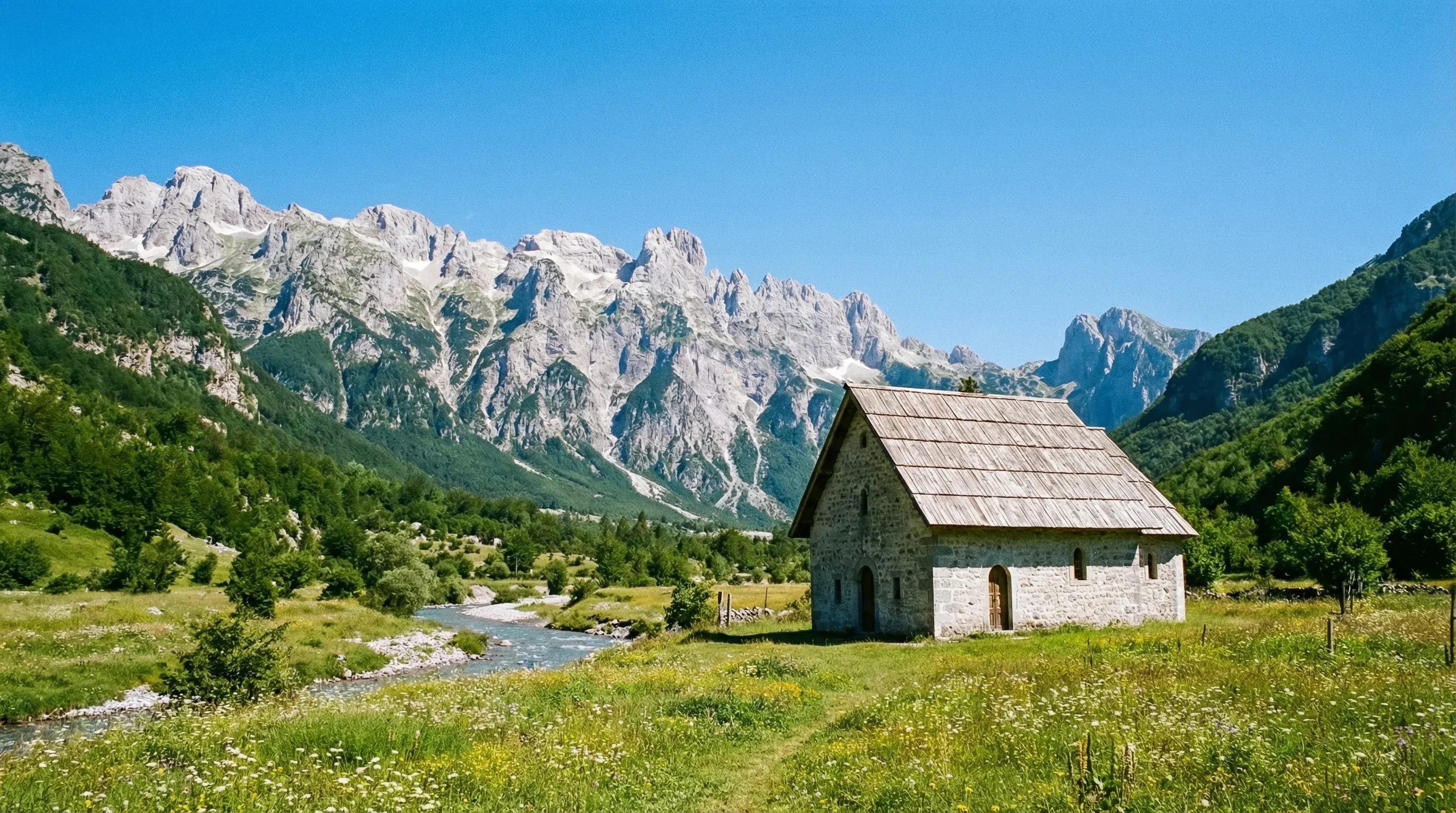

Albanian Alps / Accursed Mountains
Where fairy-tale rivers meet soaring limestone peaks 🏔️
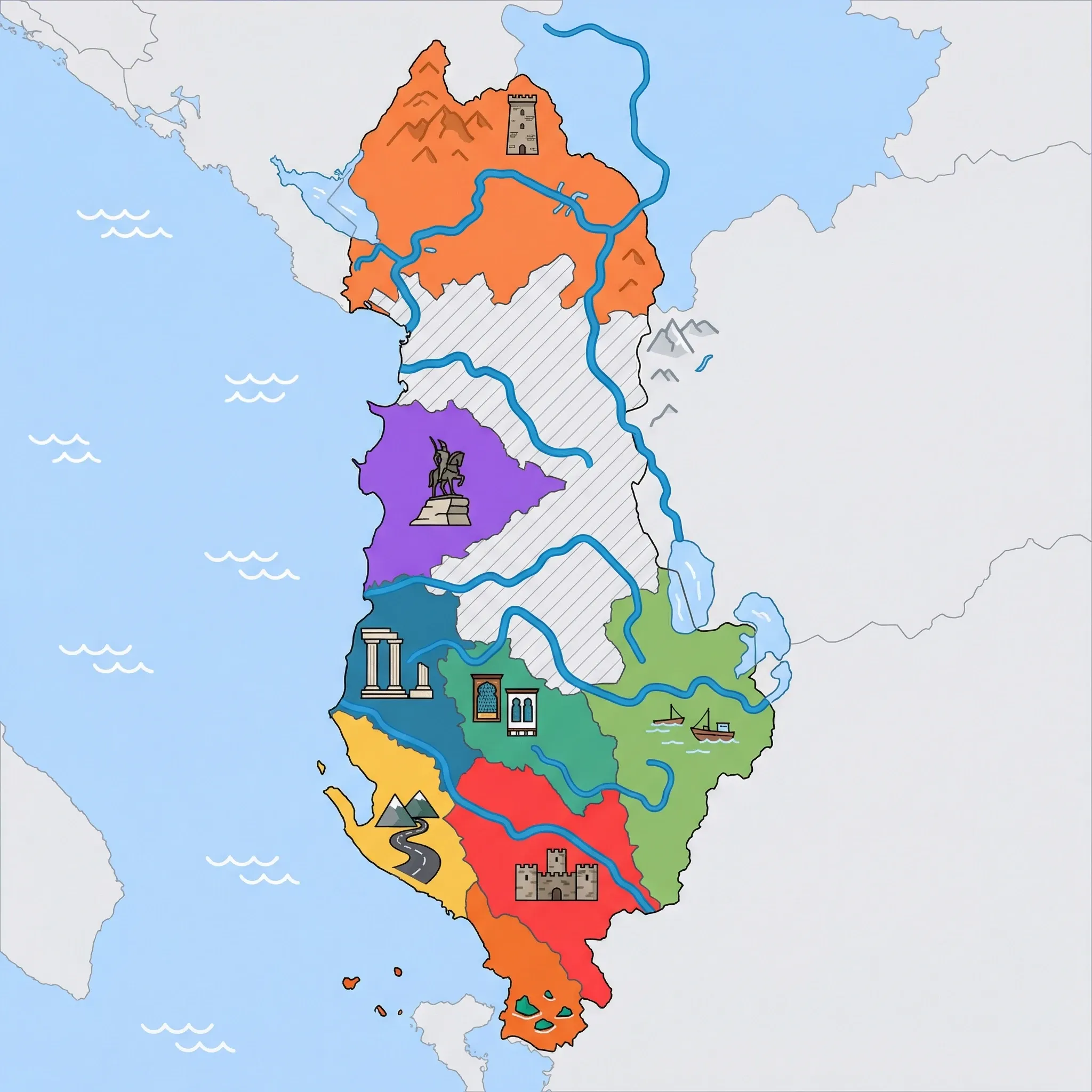
Click a region to explore
The Albanian Alps, ominously known as the Bjeshkët e Namuna (Accursed Mountains), are widely considered the jewel of Albania's landscapes. For families, this region offers a profound sense of adventure that is becoming increasingly rare in Europe. Far from being "accursed," the valleys of Theth and Valbona are lush, welcoming, and teeming with hospitality. The geography is dramatic—vertical limestone cliffs enclose verdant valleys dotted with traditional stone houses. The climate here is alpine; while the coast swelters in July, the Alps remain refreshingly cool, especially in the evenings. The culture is distinct from the rest of Albania, deeply rooted in the Kanun (ancient mountain laws) and a tradition of guest-honor that treats visitors like royalty.
What makes this region special for children is the sheer scale of the nature and the feeling of exploration. It isn't a place for strollers or resort amenities; it is a place for riding in 4x4 jeeps over mountain passes, spotting eagles, and listening to legends about giants and fairies. The journey itself—often involving a ferry ride across Lake Komani—is an attraction, frequently described as one of the world's most beautiful boat trips. While the infrastructure is rustic, the guesthouses (bujtinas) are family-run, offering a warm, communal atmosphere where children can play in open meadows while parents enjoy the utter silence of the mountains.
Key Attractions
The absolute highlight for water-loving families is the Shala River. Accessible only by boat via Lake Komani, this tributary is nicknamed the "Thailand of Albania" due to its intense azure color and lush surroundings. The water is freezing, but the shallows are perfect for wading, and the boat ride there is magical for kids. Deep in the mountains lies Theth Historic Village, a living museum of alpine life. Here, families can visit the iconic Reconciliation Tower, where children can learn about the history of blood feuds in a way that is educational rather than frightening. The village is the gateway to Theth National Park, which offers hiking trails ranging from easy valley strolls to challenging ascents.
On the other side of the peaks lies Valbona Valley National Park. The Valbona River glows an impossible turquoise, and the valley floor is wide and flat, making it easier for younger children to explore than the steeper terrain of Theth. Before heading into the mountains, most families stop in Shkodër to visit Rozafa Castle. Perched high above the city, the castle ruins are safe to scramble over and offer legends of a woman walled into the masonry—a spooky story that older children often find fascinating.
Practical Advice
The best time to visit is late May to September. Snow blocks the passes in winter and early spring. The road to Theth is now paved, making access easier, but the road from Theth to other villages often requires a 4x4 transfer. Pack warm layers even in August; temperatures drop sharply at night. Cash is absolute king here—ATMs are non-existent in the valleys.
Food & Drink
Typical meal times: Breakfast is early (7:00 am to 9:00 am) to fuel hikers. Lunch is 1:00 pm to 2:30 pm, and dinner is usually served 7:30 pm to 9:00 pm, often communally in guesthouses.
Typical meal costs: Meals are hearty and affordable. A dinner in a guesthouse costs around 800–1,200 ALL (approx. $9–13 USD / €8–12 EUR) per person. Lunch picnics are cheaper.
Dietary requirements: Mountain food is heavy on dairy and meat (lamb/goat). Vegetarians will enjoy excellent cheeses and fresh vegetables, but vegans may struggle as butter, yogurt, and cheese are staples in almost every dish. Gluten-free bread is rare.
Signature dishes:
- Flija – A spectacular layered pancake dish baked outdoors over hours using a majestic metal lid (saç) covered in hot coals; watching it being made is half the fun.
- Tave Krap – A rich carp casserole with onions and tomatoes, a specialty of the Shkodër region near the lake.
- Maza e Zier – A warm, fondue-like dip made from boiled cornflour and cheese, perfect for dipping fresh bread after a cold hike.
Why this score?
This is Albania's most rugged region, featuring sharp limestone peaks, the famous Peaks of the Balkans trail, and remote villages like Theth accessible by winding mountain roads. The combination of the Lake Komani ferry and high-altitude trekking provides a significant level of physical challenge and isolation.
Why this score?
Medical facilities in the high mountains are extremely limited, often restricted to basic mountain rescue and small clinics in Shkodër or Bajram Curri. Serious injuries often require long-distance transport to Tirana, and English-speaking medical staff are rare in these remote alpine areas.
Why this score?
While iconic for hikers and increasingly popular on social media, the region remains a niche destination with seasonal access and limited bed capacity compared to the coast. International flow is growing rapidly through the Theth-Valbona circuit, but it lacks the volume of Albania's major seaside hubs.

While rural, costs can be higher than the Albanian average due to logistics. A private double room in a guesthouse with breakfast costs 4,000–6,500 ALL (approx. $42–70 USD / €40–65 EUR). Transport via private 4x4 transfer is pricey, often 5,000–7,000 ALL (approx. $53–75 USD / €50–70 EUR) per ride.
Family Travel Notice
Minors traveling with only one parent or alone must carry notarized parental consent. Note that children born to Albanian parents may be regarded as local citizens, regardless of their place of birth.

Getting Here & Around
Getting Here
- Airports – Tirana International Airport (TIA) is the main entry point, roughly 2 hours south of Shkodër.
- Driving – Shkodër is the gateway city. From there, Theth is a 2-hour drive on a newly paved road. Valbona requires a drive to Lake Koman, then a ferry, then a further drive.
- Ferry – The Lake Komani Ferry is a stunning transit method connecting the road to Valbona; it takes cars and foot passengers.
Getting Around
- Car – A high-clearance vehicle or 4x4 is recommended if you plan to explore beyond the main paved village roads.
- Minibuses (Furgons) – The primary public transport. They run on loose schedules from Shkodër to Theth Historic Village and Valbona.
- Hiking – Once in the villages, walking is the only way to reach specific waterfalls and sights like the Blue Eye of Theth.
No airports in this region. See the country flight map for nearby connections.

Packing List
Mountain roads are incredibly winding and the Komani ferry can occasionally be choppy.
Power cuts occur in mountain villages and street lighting is non-existent.
Trails are rocky and often muddy; sneakers are insufficient for Theth or Valbona.
There are zero ATMs in Theth or Valbona; you must bring all cash from Shkodër.
Essential for the Albanian Riviera (Ksamil, Himarë) where many beautiful beaches are pebbly or rocky.
Cobblestone streets in historic towns like Gjirokastër and Berat make strollers nearly impossible to use.
Roads like the Llogara Pass and routes to the Alps are incredibly winding and can affect sensitive travelers.
Occasional power cuts can occur, and street lighting in smaller coastal villages can be sparse.
Mosquitoes can be aggressive in coastal areas and near lagoons like Karavasta during summer evenings.

Activities & Best Times

Hiking, wildlife, outdoor exploration, ecotourism
A premier European wilderness destination featuring the world-renowned Peaks of the Balkans trail and dramatic karst landscapes. Trails and high-altitude national parks are best accessed from June to September; winter snow makes these areas dangerous and inaccessible for families.

Urban tourism, museums, historical sites, architecture
Rich heritage ranging from Shkodër's Rozafa Castle to the unique ethnographic history of the Lock-in Tower of Theth. Cultural exploration is most rewarding during the drier, warmer months, as the region experiences very high precipitation and cold temperatures in winter.
Beach resorts, marine activities: diving, snorkelling, kite surfing, wind surfing, sailing
Unique freshwater 'beaches' like the Shala River offer a world-class fjord-like setting with crystal-clear water. Peak months reflect the short window when glacial waters are bearable for swimming and river transport is most reliable.

Scenic drives, countryside tours, route-based travel
Home to spectacular scenic drives like the SH20 Kelmend road, which offers world-class Alpine vistas on modern infrastructure. Safe driving conditions and visibility are best in summer, while winter months carry high risks of snow-related closures on steep mountain passes.

Sport tourism, fitness activities, active recreation
Offers high-quality infrastructure for mountain sports, including the Zipline Theth and established cross-border trekking routes. Activities are highly seasonal, dictated by the clearing of snow from mountain passes and the operational dates of local adventure outfitters.

Attractions (12 total)



Public Holidays & Calendar Next 12 months
Public holidays, festivals, cultural celebrations, and seasonal natural phenomena coming up in Albanian Alps / Accursed Mountains over the next 12 months.
Loading holidays and events...

Travel Advisory
While Albania is widely accessible for tourism, multiple international agencies advise increased vigilance due to crime and occasional civil unrest. Risk assessments are evenly split between normal and elevated caution, resulting in a moderate advisory level overall.
Safety Topics
Traveller Advice (3 groups)
Minors traveling with only one parent or alone must carry notarized parental consent. Note that children born to Albanian parents may be regarded as local citizens, regardless of their place of birth.

Ensure your passport is valid for at least six months and that you have comprehensive medical insurance that covers emergency evacuation, as local healthcare standards vary significantly outside major cities.

When visiting rural or less developed areas, be aware that solo female travelers may experience occasional verbal harassment or unwanted attention.
Agency Summaries
General safety levels are high, with no special restrictions for Irish citizens. Visitors are encouraged to monitor local news. Consular assistance is managed by the embassy in Greece.
No major travel restrictions are in place. Travelers are advised to obtain comprehensive insurance, as medical facilities are limited outside the capital. Specific documentation like an International Driving Permit and Green Card is necessary for motorists.
Heightened vigilance is recommended due to the potential for political demonstrations in Tirana and limited healthcare infrastructure. Consular support is provided through the embassy in Italy as there is no local Australian mission.
There are more safety and security concerns than typically found in New Zealand, primarily related to crime and the potential for civil unrest. Petty theft is a risk in crowded tourist areas.
Visitors should be more vigilant due to crime levels, particularly street crime in urban centers and organized crime activity countrywide. The embassy has highlighted specific dining establishments in Tirana to avoid due to security concerns and unfair business practices.
Albania is generally considered safe for visitors, though travelers should remain aware of aggressive local driving habits and potential hazards on rural roads. Specific regulations apply to children of Albanian descent and those traveling with only one parent.
Information is provided for general guidance only and does not constitute travel, safety, medical, or legal advice. Conditions may change. Users are responsible for independently verifying information before travel.