
Berat & Central Highlands
Ottoman history and canyon adventures in the heart of Albania 🏰
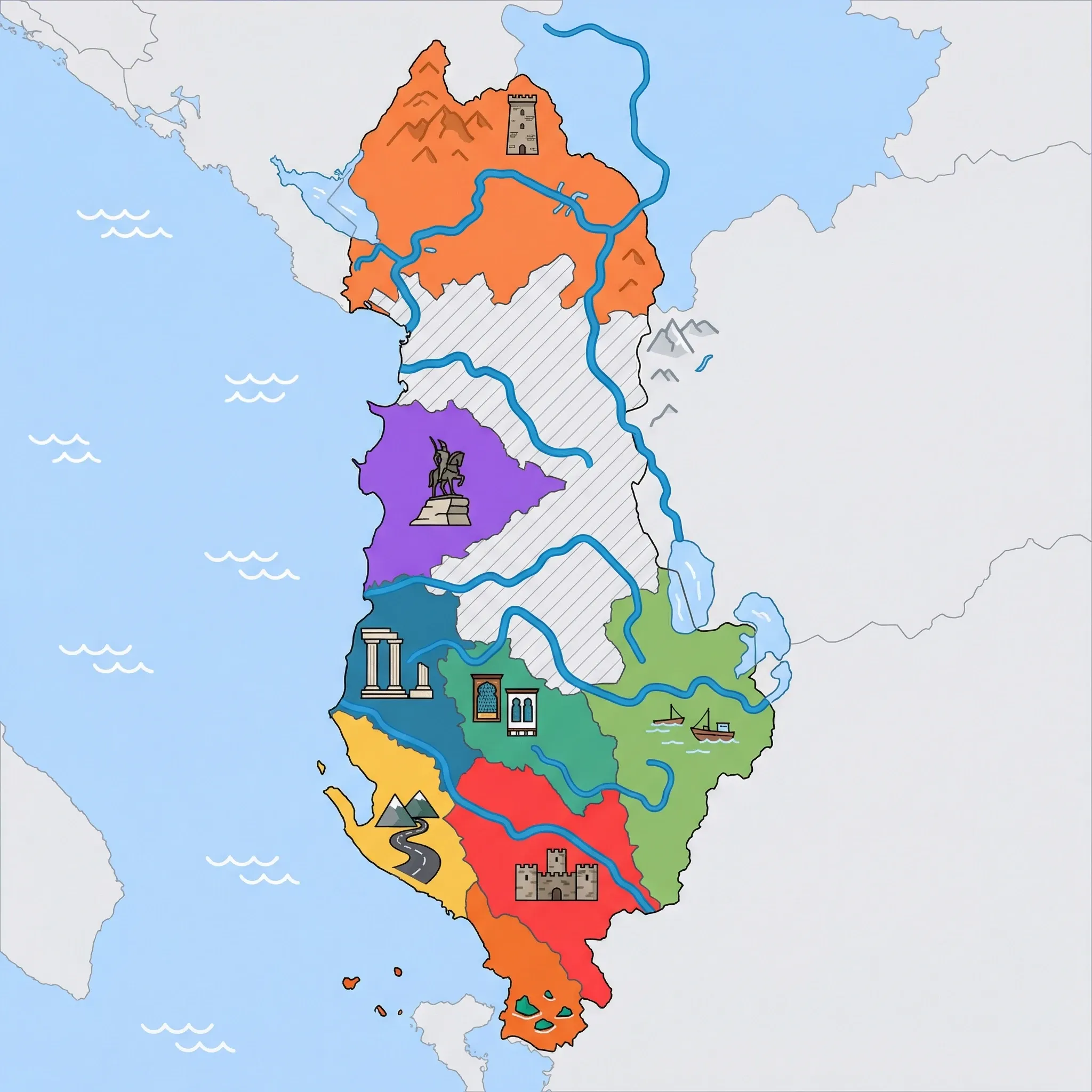
Click a region to explore
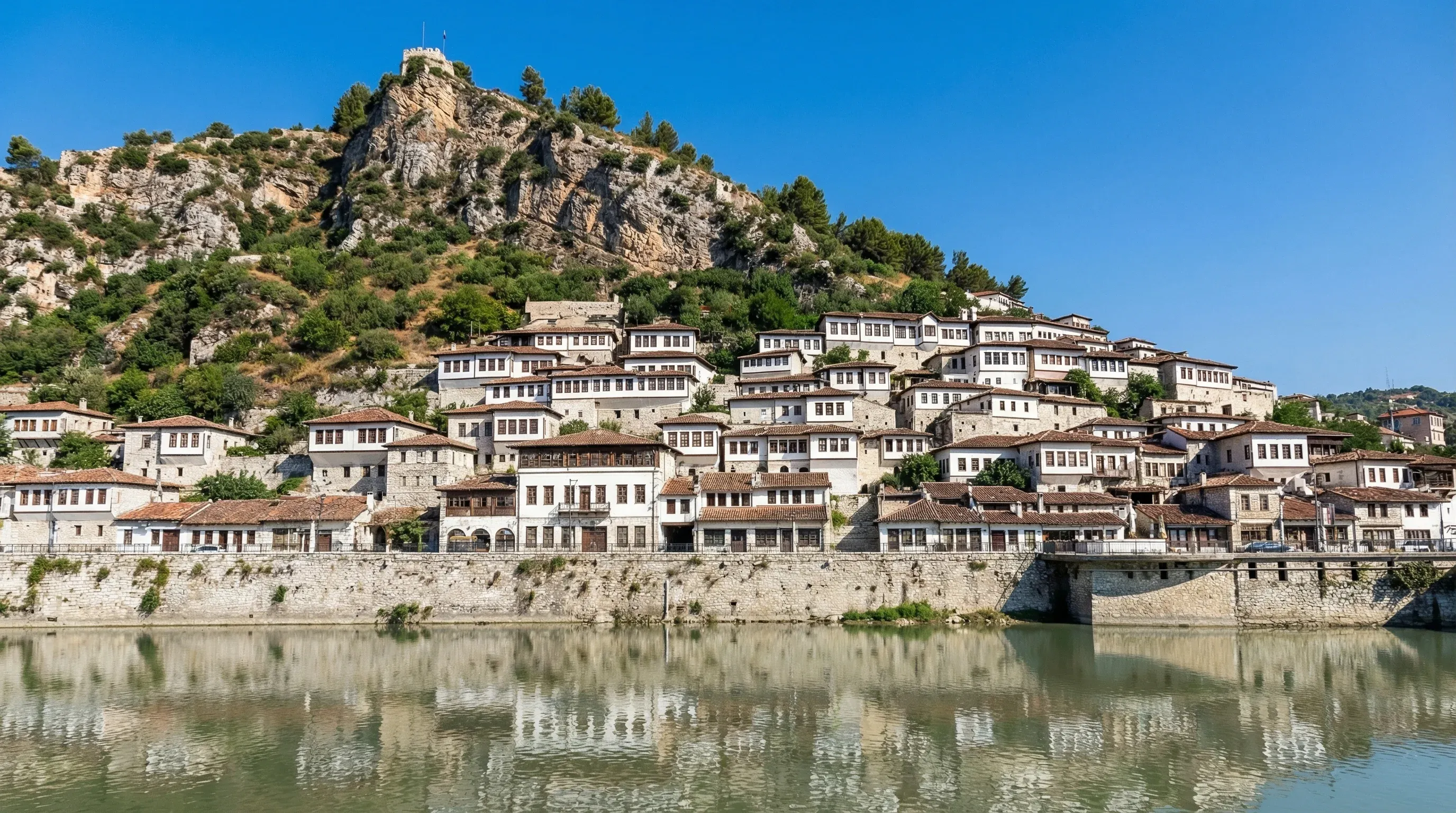
The Central Highlands of Albania are dominated by the Osumi River valley and the majestic Mount Tomorr, but the undisputed star is the city of Berat. This UNESCO World Heritage site is visually striking, defined by its tiers of white Ottoman houses with brown roofs climbing up the steep hills on either side of the river. For families, Berat feels like a step back in time without being a museum piece; it is a living, breathing city where children play football in the castle courtyards and grandmothers sell lace on the cobblestones. The climate here is Mediterranean but inland, meaning summers can be fiercely hot, while spring and autumn offer perfect exploring weather. The atmosphere is relaxed and safe, with a pedestrian-friendly boulevard (The Xhiro) coming alive every evening.
Beyond the architecture, this region is Albania's capital of outdoor river adventure. The landscape shifts from the orderly stone city to the wild, vertical walls of the Osumi Canyon. This contrast allows families to combine a cultural morning with an active afternoon. The region is also deeply spiritual; Mount Tomorr is a holy site for the Bektashi order, adding a layer of mystical culture to the visit. Kids will enjoy the physicality of this region—climbing the steep streets of Mangalem, walking the ramparts, and splashing in the river canyons.
Key Attractions
The crown jewel is Berat Castle (Kalaja). Unlike many European castles which are empty shells, this is a residential neighborhood. Families can wander the labyrinth of stone alleys, spot turkeys and chickens roaming free, and enjoy panoramic views. Inside the castle walls, the Onufri Iconographic Museum is colorful enough to hold a child's attention, housed in a church with a beautifully intricate wooden iconostasis. It's a great introduction to Albanian art history without being overwhelming.
For nature lovers, a day trip to Osumi Canyon is essential. In spring, when water levels are high, you can raft the rapids (Class II, generally safe for older children/teens). In summer, when the water is lower, you can hike into the canyon and swim in natural pools. The canyon walls are spectacular, rising vertically with waterfalls cascading down. It is a Jurassic Park-style landscape that captures the imagination.
Practical Advice
The cobblestones in Berat are famously slippery, even when dry. Leave the strollers at the hotel; a carrier is essential for toddlers. Summer temperatures (July-August) often exceed 35°C (95°F), so plan castle visits for early morning or late afternoon. The canyon is best visited with a guided tour as the roads can be rough.
Food & Drink
Typical meal times: Lunch is leisurely, from 1:00 pm to 3:00 pm. Dinner is the main social event, usually 8:00 pm to 10:00 pm.
Typical meal costs: Very affordable. A family feast costs 3,000–4,500 ALL (approx. $32–48 USD / €30–45 EUR). Street snacks like byrek cost less than $1.
Dietary requirements: Excellent for vegetarians. This region produces much of Albania's produce. Stuffed peppers, eggplant, and salads are everywhere. Nuts (walnuts) are common in desserts.
Signature dishes:
- Pula me Rosnica – A hearty chicken dish served with small pellets of dough (rosnica) cooked in the broth, a comfort food kids usually love.
- Çobo Sheqerpare – A dense, syrup-soaked biscuit dessert that provides a massive sugar rush.
- White Slanina Cheese – The local feta-style cheese is renowned; often served baked with tomato and peppers (Fërgesë).
Why this score?
The region offers a mix of developed historical sites and rugged nature, specifically the Osumi Canyon which provides opportunities for rafting and hiking. While the city of Berat is easy to navigate, the surrounding Tomorr National Park requires 4x4 vehicles and offers true wilderness experiences.
Why this score?
Berat has a regional hospital capable of handling basic emergencies, but it is not specialized for foreign tourism or complex cases. Visitors typically find limited English-speaking staff, and for significant issues, transfer to the capital's more modern private clinics is standard practice.
Why this score?
As a UNESCO World Heritage site, Berat is a primary stop for almost every cultural tour of Albania, drawing a steady stream of international day-trippers and overnight visitors. Its '1000 windows' architecture makes it one of the most recognizable and photographed inland destinations in the Balkans.

Berat is one of the best value destinations in Europe. A stay in a traditional Ottoman house hotel costs 3,500–6,000 ALL (approx. $37–64 USD / €35–60 EUR). Restaurant meals are generous and cheap, with mains often costing 500–800 ALL (approx. $5–8.50 USD / €5–8 EUR).
Family Travel Notice
Minors traveling with only one parent or alone must carry notarized parental consent. Note that children born to Albanian parents may be regarded as local citizens, regardless of their place of birth.

Getting Here & Around
Getting Here
- Bus – Frequent buses run from Tirana's South Terminal to Berat; the journey takes about 2–2.5 hours.
- Driving – Easy drive from Tirana or Durrës. The road is good quality. Parking in historic Berat is very limited; check if your hotel has a space.
Getting Around
- Walking – The only way to see the historic centers of Mangalem, Gorica, and Berat Castle. Be prepared for steep inclines.
- Taxi – Cheap and useful for getting up to the castle if you want to avoid the steep hike with tired kids.
- Organized Tours – Essential for visiting Osumi Canyon unless you have a robust rental car.
No airports in this region. See the country flight map for nearby connections.
Official Links

Packing List
The limestone cobblestones in the castle and Mangalem are polished glass-smooth and dangerous in flip-flops.
Osumi Canyon riverbeds are rocky and slippery.
Strollers are completely useless on the cobbled stairs of the historic center.
Cobblestone streets in historic towns like Gjirokastër and Berat make strollers nearly impossible to use.
Credit cards are rarely accepted outside luxury hotels and supermarkets; you will need cash for almost everything.
Roads like the Llogara Pass and routes to the Alps are incredibly winding and can affect sensitive travelers.
Occasional power cuts can occur, and street lighting in smaller coastal villages can be sparse.
Mosquitoes can be aggressive in coastal areas and near lagoons like Karavasta during summer evenings.

Activities & Best Times

Urban tourism, museums, historical sites, architecture
UNESCO-listed Berat is a world-class cultural destination featuring exceptionally well-preserved Ottoman architecture and the major Onufri Iconographic Museum. Spring and autumn offer the most comfortable climate for exploring the steep, historic cobblestone quarters of Mangalem and Gorica.

Hiking, wildlife, outdoor exploration, ecotourism
The region offers significant wilderness immersion in Mount Tomorr National Park and the dramatic Osumi Canyon. Peak visitation aligns with dry weather for trekking and canyoning, while winter months are unsuitable due to heavy precipitation and highland snow.

Scenic drives, countryside tours, route-based travel
Scenic routes like the Osumi Canyon drive provide spectacular landscapes and authentic rural encounters for sophisticated touring. Summer months offer the best driving visibility and road safety, as winter rains and mountain conditions can complicate travel.

Sport tourism, fitness activities, active recreation
The region features major recognized trails for high-intensity hiking and mountain cycling, notably around the North Summit of Tomorr. Activity is best in the transition seasons when temperatures are moderate and the infrastructure is safely accessible.



Public Holidays & Calendar Next 12 months
Public holidays, festivals, cultural celebrations, and seasonal natural phenomena coming up in Berat & Central Highlands over the next 12 months.
Loading holidays and events...

Travel Advisory
While Albania is widely accessible for tourism, multiple international agencies advise increased vigilance due to crime and occasional civil unrest. Risk assessments are evenly split between normal and elevated caution, resulting in a moderate advisory level overall.
Safety Topics
Traveller Advice (3 groups)
Minors traveling with only one parent or alone must carry notarized parental consent. Note that children born to Albanian parents may be regarded as local citizens, regardless of their place of birth.

Ensure your passport is valid for at least six months and that you have comprehensive medical insurance that covers emergency evacuation, as local healthcare standards vary significantly outside major cities.

When visiting rural or less developed areas, be aware that solo female travelers may experience occasional verbal harassment or unwanted attention.
Agency Summaries
General safety levels are high, with no special restrictions for Irish citizens. Visitors are encouraged to monitor local news. Consular assistance is managed by the embassy in Greece.
No major travel restrictions are in place. Travelers are advised to obtain comprehensive insurance, as medical facilities are limited outside the capital. Specific documentation like an International Driving Permit and Green Card is necessary for motorists.
Heightened vigilance is recommended due to the potential for political demonstrations in Tirana and limited healthcare infrastructure. Consular support is provided through the embassy in Italy as there is no local Australian mission.
There are more safety and security concerns than typically found in New Zealand, primarily related to crime and the potential for civil unrest. Petty theft is a risk in crowded tourist areas.
Visitors should be more vigilant due to crime levels, particularly street crime in urban centers and organized crime activity countrywide. The embassy has highlighted specific dining establishments in Tirana to avoid due to security concerns and unfair business practices.
Albania is generally considered safe for visitors, though travelers should remain aware of aggressive local driving habits and potential hazards on rural roads. Specific regulations apply to children of Albanian descent and those traveling with only one parent.
Information is provided for general guidance only and does not constitute travel, safety, medical, or legal advice. Conditions may change. Users are responsible for independently verifying information before travel.