
Central Riviera / Vlora & Llogara
Where the mountains dive into two seas 🦌🌊
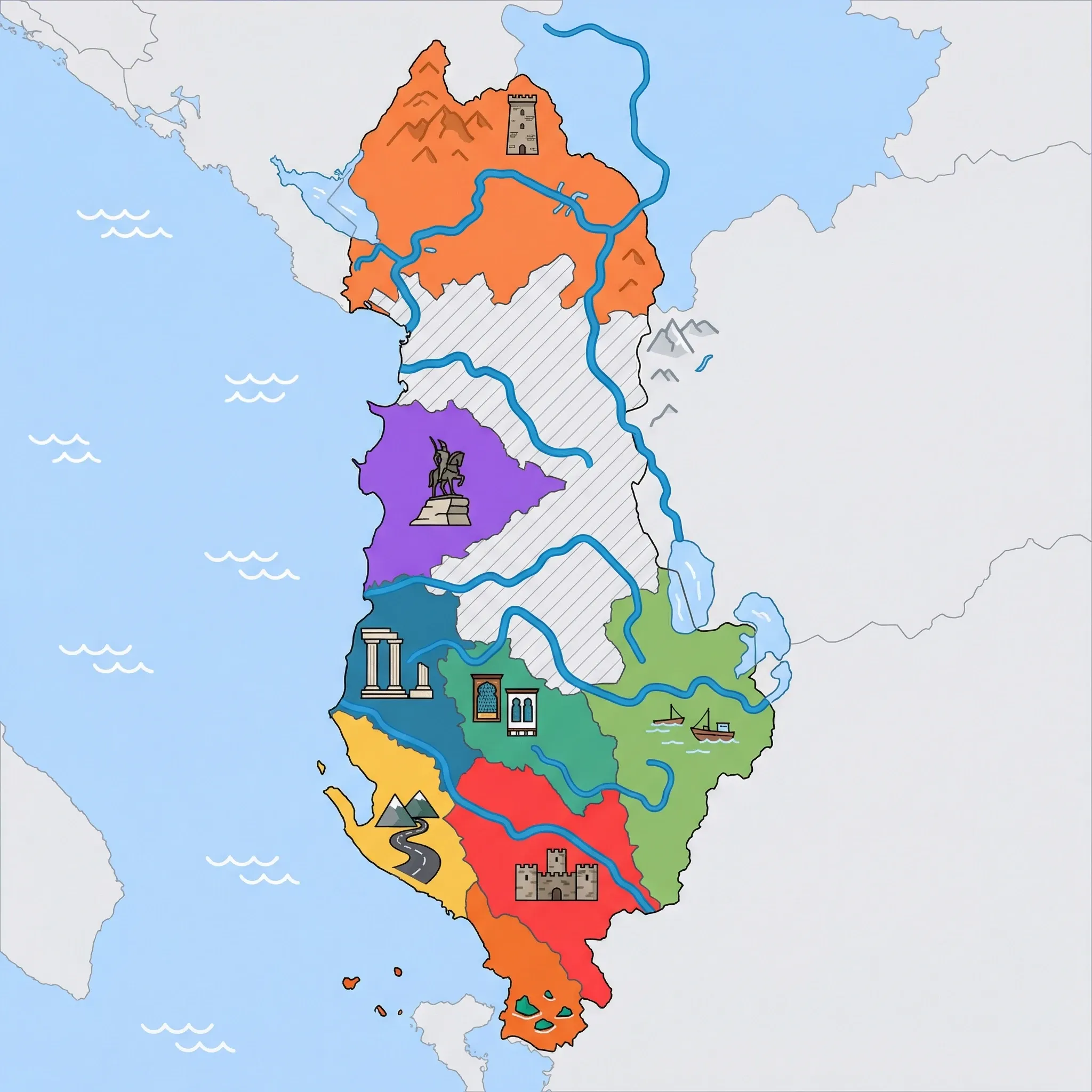
Click a region to explore
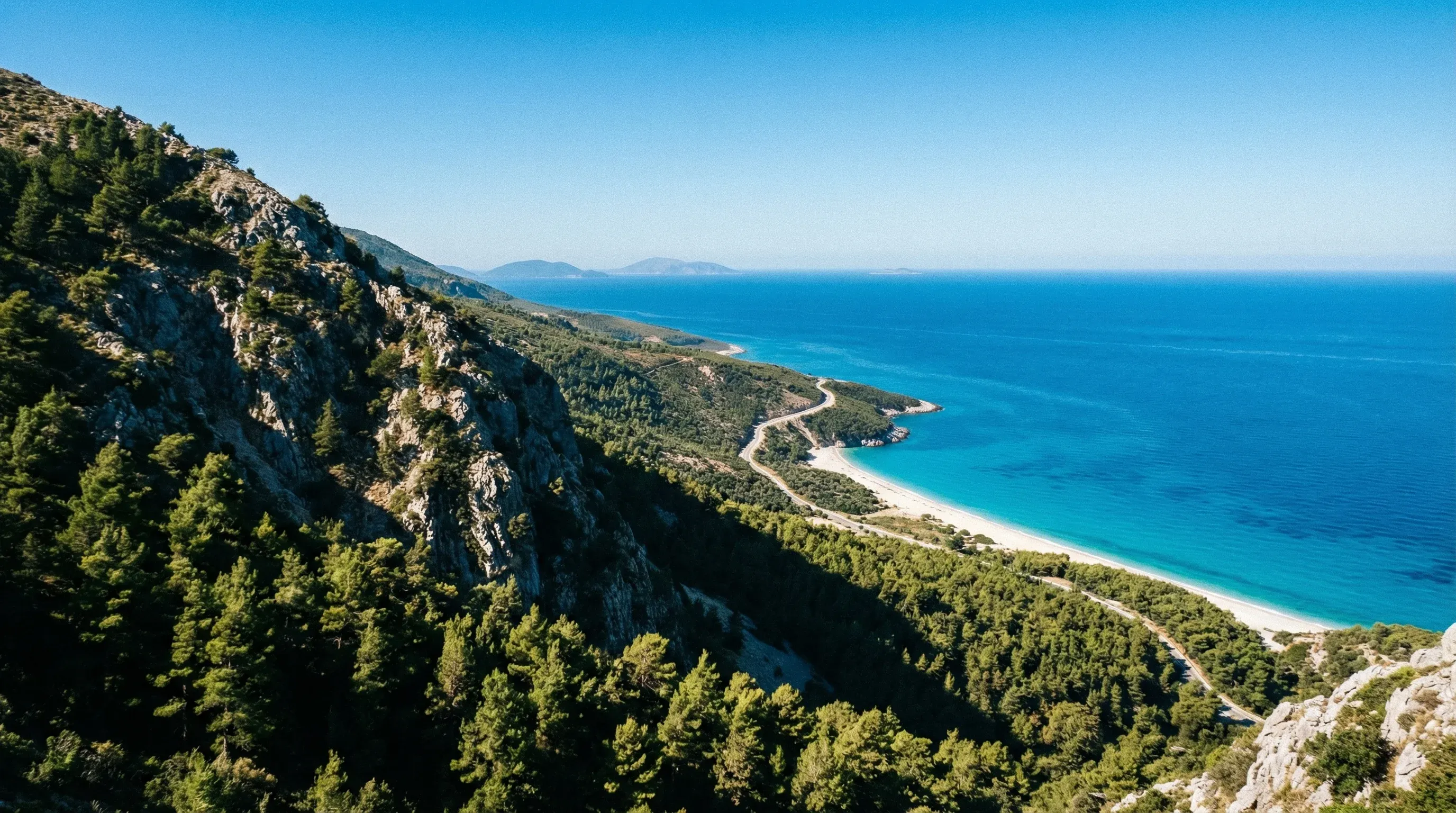
This region represents the dramatic transition between the flat sandy beaches of the Adriatic and the rugged, rocky beauty of the Ionian coast. Vlora is a major port city with a renovated waterfront promenade (Lungomare) that is perfect for families with strollers and scooters. It has a buzz of modern energy, with fairgrounds, restaurants, and basketball courts lining the shore. However, just a short drive south changes the scenery entirely. The coast becomes wilder, leading to the Karaburun Peninsula, a massive finger of land that remains largely uninhabited and accessible only by boat or long hikes.
For families, the highlight is the juxtaposition of beach and mountain. You can swim in warm waters in the morning and have a picnic in the cool, pine-scented air of the Llogara Pass in the afternoon. The region is steeped in history—Vlora is the city of Albanian independence—but for kids, the appeal lies in the boat trips to caves and islands. The atmosphere is a mix of urban chaotic fun in Vlora city and serene nature in the national parks. It serves as the perfect "base camp" for exploring the central coast without the extreme crowds found further south in Sarandë.
Key Attractions
Driving the The Albanian Riviera SH8 Grand Tour involves crossing the Llogara Pass, but the park at the top is a destination in itself. Llogara National Park is famous for its "flag pines" (trees bent by the wind) and, crucially for children, a population of semi-tame deer that often come near the restaurants to be fed. It’s a magical forest experience with cooler temperatures.
For a sea adventure, families should book a boat trip to Karaburun-Sazan National Marine Park. These trips usually visit the massive Haxhi Ali Cave (which boats can enter) and the former military island of Sazan. Exploring the abandoned bunkers and tunnels on Sazan is a thrilling "secret agent" experience for older kids. Closer to the city, St. Mary's Monastery, Zvërnec is located on an island in a lagoon connected by a long wooden boardwalk. Walking the boardwalk is fun for toddlers, and the surrounding pine forest is great for picnics.
Practical Advice
Vlora is windy—great for cooling down, but hold onto hats. The drive up Llogara Pass is steep with many switchbacks; motion sickness is a real risk for children. The beaches in Vlora city are sandy/shallow (good for toddlers), while the beaches past the tunnel towards Radhimë become pebbly and deeper.
Food & Drink
Typical meal times: Lunch 1:00 pm to 3:00 pm. Dinner 8:00 pm to 10:30 pm. In summer, restaurants stay open very late.
Typical meal costs: Vlora is slightly cheaper than the south. Seafood pasta costs 800–1,200 ALL (approx. $8.50–13 USD / €8–12 EUR). Fresh fish is sold by the kilo.
Dietary requirements: Seafood dominates, but Italian influence means excellent pizza and pasta are everywhere, making it easy to feed picky eaters. Gluten-free pasta is available in high-end spots.
Signature dishes:
- Harapash – A polenta-like dish cooked with lamb intestines and cheese; it sounds challenging but is creamy and delicious (comfort food).
- Yoghurt with Honey and Walnuts – The Llogara pass is famous for this specific dessert, often sold by roadside vendors.
- Roasted Lamb – In Llogara, whole lambs are roasted on spits; the meat is incredibly tender and mild.
Why this score?
The dramatic Llogara Pass offers paragliding and steep hiking trails into the Ceraunian Mountains, while the Karaburun Peninsula provides boat-access-only coves and sea caves. These areas offer a significant step up in ruggedness compared to the developed urban beaches of Vlora.
Why this score?
Vlora is one of Albania's larger cities and possesses better-than-average regional medical infrastructure, including some private clinics familiar with tourists. However, it still lacks the specialized international-standard care found in Tirana, and language barriers remain a common hurdle in public facilities.
Why this score?
Vlora serves as a major gateway to the south and is a popular seaside destination for both domestic and regional tourists from Kosovo and North Macedonia. The Llogara Pass is a famous transit point that sees high traffic, though it feels slightly less 'international' than the Sarandë-Ksamil stretch further south.

Vlora offers a wide range of prices. A modern seafront apartment can cost 5,000–8,000 ALL (approx. $53–85 USD / €50–80 EUR) per night. Coffee is cheap (80 ALL), but sunbed rentals on private beaches can range from 500–1,500 ALL (approx. $5–16 USD / €5–15 EUR).
Family Travel Notice
Minors traveling with only one parent or alone must carry notarized parental consent. Note that children born to Albanian parents may be regarded as local citizens, regardless of their place of birth.

Getting Here & Around
Getting Here
- Driving – Connected to Tirana by a modern highway (approx. 2 hours). It is the starting point of the coastal drive south.
- Bus – Frequent buses from Tirana and Durrës arrive at Vlora's central bus station.
- Ferry – Direct ferries connect Vlora with Brindisi (Italy), making it a key entry point for Italian tourists.
Getting Around
- Car – Highly recommended for visiting Zvërnec, Llogara, and the beaches of Radhimë.
- Boat – Daily tour boats leave Vlora port for Karaburun-Sazan National Marine Park.
- Public Bus – City buses run the length of the lungomare (seafront), which is cheap and convenient for beach access.
No airports in this region. See the country flight map for nearby connections.
Official Links

Packing List
The Llogara Pass switchbacks are notorious for inducing car sickness in children.
Vlora is known as the windy city, and Llogara Pass is significantly colder than the coast.
Great for spotting birds at Narta Lagoon and deer in Llogara.
Essential for the Albanian Riviera (Ksamil, Himarë) where many beautiful beaches are pebbly or rocky.
Cobblestone streets in historic towns like Gjirokastër and Berat make strollers nearly impossible to use.
Credit cards are rarely accepted outside luxury hotels and supermarkets; you will need cash for almost everything.
Roads like the Llogara Pass and routes to the Alps are incredibly winding and can affect sensitive travelers.
Occasional power cuts can occur, and street lighting in smaller coastal villages can be sparse.
Mosquitoes can be aggressive in coastal areas and near lagoons like Karavasta during summer evenings.

Activities & Best Times

Hiking, wildlife, outdoor exploration, ecotourism
Llogara National Park offers a spectacular meeting of mountains and sea with high-altitude hiking trails like Maja e Çikës. Late spring and early autumn are peak for trekking to avoid intense summer heat and winter snow on the pass.

Urban tourism, museums, historical sites, architecture
As the cradle of Albanian independence, Vlora offers significant historical sites including the National Museum of Independence and Kanina Castle. May, June, and September provide the most comfortable climate for exploring the city's historic quarters and monuments.
Beach resorts, marine activities: diving, snorkelling, kite surfing, wind surfing, sailing
The Karaburun-Sazan National Marine Park offers pristine, boat-accessible coves and sea caves with exceptional water clarity. July and August provide peak swimming temperatures, while June and September are excellent shoulder months with fewer crowds.
Scenic drives, countryside tours, route-based travel
The Llogara Pass is one of Europe's most dramatic scenic drives, offering hairpin turns with sweeping views of the Ionian Coast. Peak months offer clear visibility and safe driving conditions, while the high-summer months can experience heavy coastal traffic.

Sport tourism, fitness activities, active recreation
The region is a premier destination for paragliding from the Llogara Pass down to the coast, alongside established adventure parks. Stable wind conditions in late spring and early autumn make it the ideal period for these activities.

Learning experiences, scientific sites, historical education
The Llogara National Park Visitor Center and Zvërnec Ecomuseum offer niche educational insights into local biodiversity. They are best visited during the warmer months when the surrounding natural areas are fully accessible to families.
Amusement parks, family entertainment venues
Small-scale regional attractions like the Llogara Adventure Park provide local family entertainment but are not standalone international draws. These facilities typically only operate during the peak summer tourism season.
Attractions (12 total)



Public Holidays & Calendar Next 12 months
Public holidays, festivals, cultural celebrations, and seasonal natural phenomena coming up in Central Riviera / Vlora & Llogara over the next 12 months.
Loading holidays and events...

Travel Advisory
While Albania is widely accessible for tourism, multiple international agencies advise increased vigilance due to crime and occasional civil unrest. Risk assessments are evenly split between normal and elevated caution, resulting in a moderate advisory level overall.
Safety Topics
Traveller Advice (3 groups)

Minors traveling with only one parent or alone must carry notarized parental consent. Note that children born to Albanian parents may be regarded as local citizens, regardless of their place of birth.

Ensure your passport is valid for at least six months and that you have comprehensive medical insurance that covers emergency evacuation, as local healthcare standards vary significantly outside major cities.

When visiting rural or less developed areas, be aware that solo female travelers may experience occasional verbal harassment or unwanted attention.
Agency Summaries
General safety levels are high, with no special restrictions for Irish citizens. Visitors are encouraged to monitor local news. Consular assistance is managed by the embassy in Greece.
No major travel restrictions are in place. Travelers are advised to obtain comprehensive insurance, as medical facilities are limited outside the capital. Specific documentation like an International Driving Permit and Green Card is necessary for motorists.
Heightened vigilance is recommended due to the potential for political demonstrations in Tirana and limited healthcare infrastructure. Consular support is provided through the embassy in Italy as there is no local Australian mission.
There are more safety and security concerns than typically found in New Zealand, primarily related to crime and the potential for civil unrest. Petty theft is a risk in crowded tourist areas.
Visitors should be more vigilant due to crime levels, particularly street crime in urban centers and organized crime activity countrywide. The embassy has highlighted specific dining establishments in Tirana to avoid due to security concerns and unfair business practices.
Albania is generally considered safe for visitors, though travelers should remain aware of aggressive local driving habits and potential hazards on rural roads. Specific regulations apply to children of Albanian descent and those traveling with only one parent.
Information is provided for general guidance only and does not constitute travel, safety, medical, or legal advice. Conditions may change. Users are responsible for independently verifying information before travel.