
Gjirokastër & Zagoria
A city of stone and Europe's last wild river 🏰⛰️
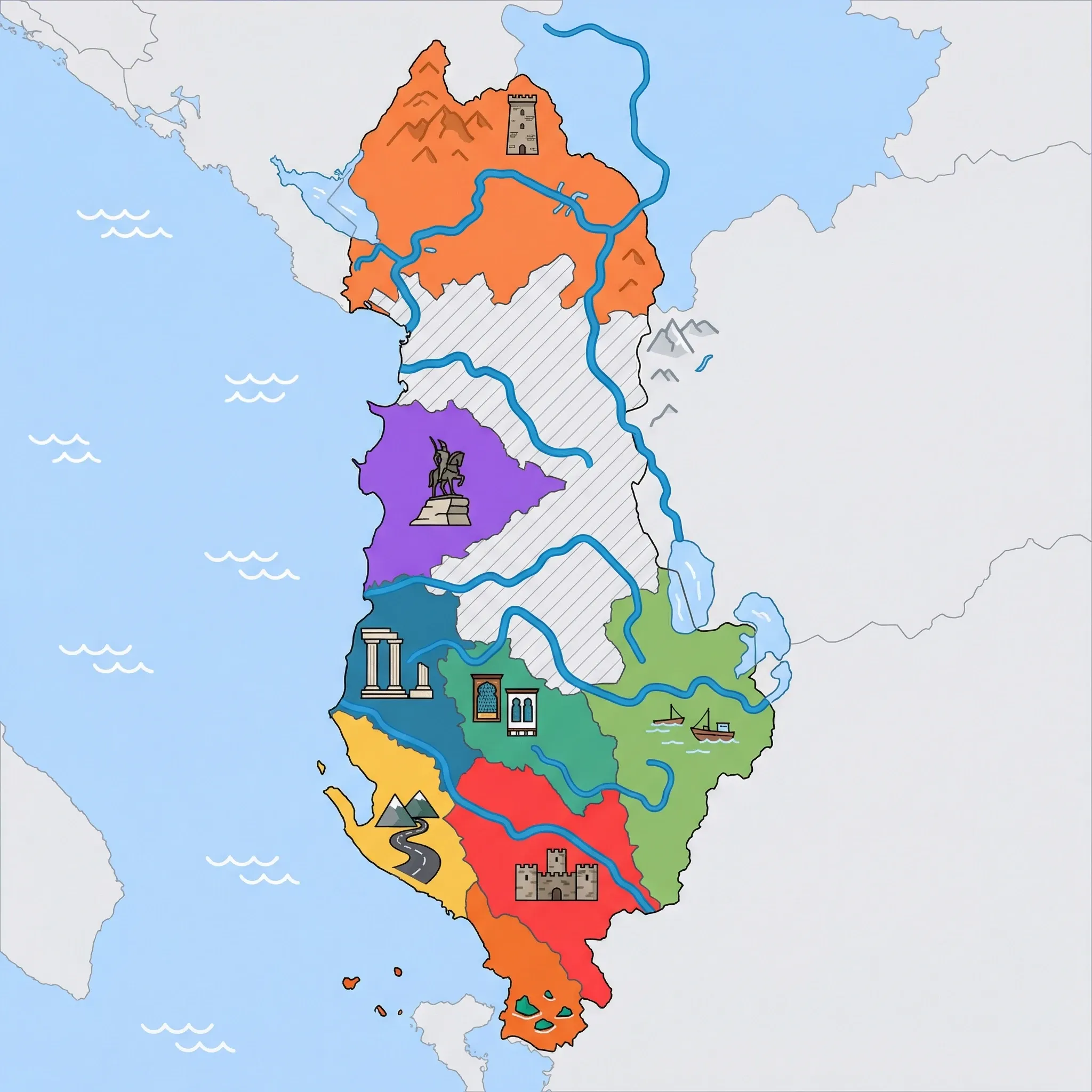
Click a region to explore
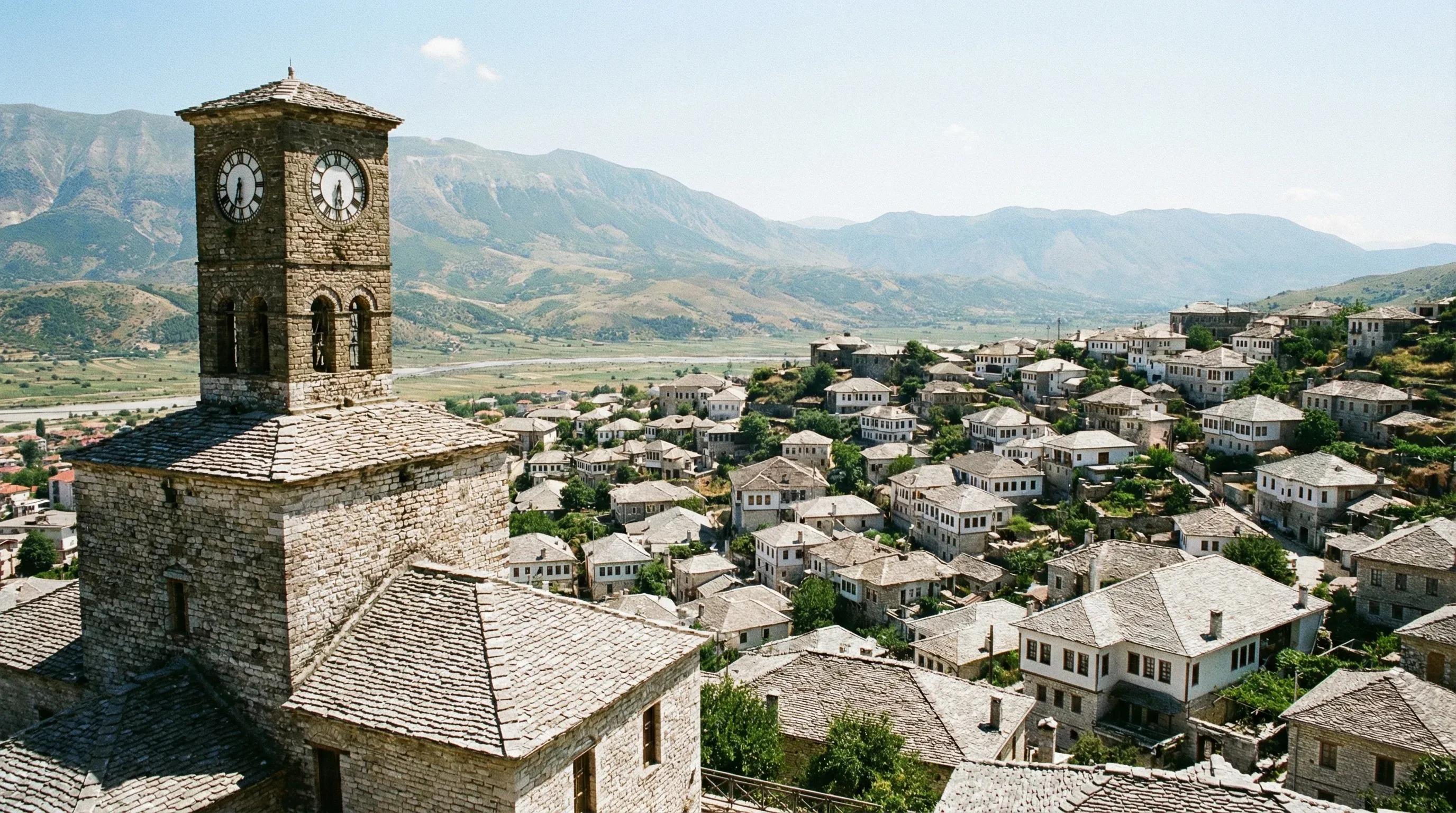
Gjirokastër is a UNESCO World Heritage site that looks like it grew directly out of the mountain rock. The roofs are made of gray stone slabs, and the streets are steep and cobbled. For families, the city feels like a medieval maze. It is the birthplace of Enver Hoxha and Ismail Kadare, and history hangs heavy here, but the vibe is vibrant with a bustling bazaar selling handmade crafts. The region extends to Përmet and the Zagoria valley, an area of stunning natural beauty characterized by the Vjosa River—one of the last wild, undammed rivers in Europe.
This region appeals to families who want to combine culture with low-stress nature activities. The city stimulates the imagination with its "fortress houses" (Zekate or Skenduli house), showing kids how families lived 200 years ago with secret viewing holes and defensive walls. Meanwhile, the Përmet area offers thermal waters that are free to access and shallow enough for kids to play in safely. The pace of life here is slower than the coast; it’s about slow food, history, and mountain air.
Key Attractions
Dominating the skyline is Gjirokastër Castle. It is immense. Inside, there is a weapons museum (lots of cannons) and, bizarrely, the wreckage of a US Air Force jet from the Cold War, which is always a hit with kids. The castle grounds are extensive, perfect for running around while parents admire the view of the Drino Valley.
Further east near Përmet, the Bënjë Thermal Baths are a must. Located at the start of the Lengarica Canyon, these natural sulfur pools are warm (around 28-30°C) and sit beneath an Ottoman stone bridge. It’s a natural spa day for free. Behind the baths, you can walk into the canyon when the water is low. Nearby is the Vjosa Wild River National Park, perfect for rafting or simply skipping stones on the riverbanks. The water is pristine and the scenery is lush.
Practical Advice
Gjirokastër is NOT stroller friendly. The cobbles are large and uneven; bring a carrier. In summer, the stone city traps heat—midday can be scorching (40°C+). Përmet is known as the "City of Flowers" and is generally cooler and greener. The thermal baths can smell of sulfur (rotten eggs)—warn the kids beforehand!
Food & Drink
Typical meal times: Lunch 1:00 pm to 3:00 pm. Dinner 8:00 pm to 10:00 pm.
Typical meal costs: Moderate. A traditional meal in the bazaar costs 1,200–1,800 ALL (approx. $13–19 USD / €12–18 EUR) per person.
Dietary requirements: Gjirokastër has unique local dishes. Vegetarian options are plentiful (rice balls, vegetable pies). Përmet is famous for its slow food and organic produce.
Signature dishes:
- Qifqi – The trademark snack of Gjirokastër; fried rice balls with egg and herbs (usually mint). Kids love them as "Albanian arancini."
- Oshaf – A dessert made from sheep's milk yogurt and figs, baked until it has a caramelized top. Unique to this region.
- Gliko – Whole fruit preserves (walnut, cherry, watermelon) served as a welcome treat in Përmet.
Why this score?
The Zagoria Valley and the Vjosa River provide excellent opportunities for off-road cycling, rafting, and multi-day horseback riding in a largely undeveloped landscape. While the town of Gjirokastër is well-trodden, the surrounding hinterland remains delightfully rugged and sparsely populated.
Why this score?
Gjirokastër has basic public hospital services, but specialized care for foreigners is lacking, and the rugged terrain of the Zagoria valley makes emergency extraction difficult. Most international travelers requiring significant medical attention are stabilized here before being moved to Tirana or across the border to Greece.
Why this score?
Gjirokastër is a staple of the Albanian tourist circuit due to its UNESCO status and impressive fortress, attracting a high volume of international cultural tourists. The recent designation of the Vjosa as a Wild River National Park has also begun to draw niche ecological and adventure tourists to the surrounding valleys.

Accommodation prices are reasonable, with boutique heritage hotels costing 5,000–9,000 ALL (approx. $53–95 USD / €50–90 EUR). Food is distinct and good value. Përmet is generally cheaper than Gjirokastër.
Family Travel Notice
Minors traveling with only one parent or alone must carry notarized parental consent. Note that children born to Albanian parents may be regarded as local citizens, regardless of their place of birth.

Getting Here & Around
Getting Here
- Driving – About 3.5 hours south of Tirana or 1 hour inland from Sarandë. The road to Gjirokastër is excellent.
- Bus – Regular buses run from Tirana and Sarandë. The bus station is at the bottom of the hill; you'll need a taxi to get up to the old town.
Getting Around
- Walking – Essential within the Gjirokastër Old Town. Be prepared for steep uphill walks.
- Car – Necessary for visiting Përmet, the thermal baths, or the Zagoria field.
- Taxi – Cheap and plentiful in Gjirokastër for getting from the new town to the old town.
No airports in this region. See the country flight map for nearby connections.
Official Links

Packing List
The stone streets are incredibly slippery and steep; flip-flops are dangerous here.
For the thermal baths and canyon walking to protect feet from sharp rocks.
The sulfur water at Bënjë can sometimes stain light-colored swimwear.
Cobblestone streets in historic towns like Gjirokastër and Berat make strollers nearly impossible to use.
Credit cards are rarely accepted outside luxury hotels and supermarkets; you will need cash for almost everything.
Roads like the Llogara Pass and routes to the Alps are incredibly winding and can affect sensitive travelers.
Occasional power cuts can occur, and street lighting in smaller coastal villages can be sparse.
Mosquitoes can be aggressive in coastal areas and near lagoons like Karavasta during summer evenings.

Activities & Best Times

Hiking, wildlife, outdoor exploration, ecotourism
Home to the Vjosa Wild River National Park and the remote Zagoria trails, the region offers world-class immersion in pristine Balkan wilderness. Optimal conditions occur in late spring and early autumn when water levels are ideal for river activities and temperatures are perfect for mountain trekking.

Urban tourism, museums, historical sites, architecture
The UNESCO-listed 'City of Stone' features exceptionally preserved Ottoman architecture and a vibrant, authentic bazaar that appeals to sophisticated travelers. Peak months offer comfortable walking temperatures, whereas the intense heat of July and August can make exploring the steep, stone-paved streets challenging.

Sport tourism, fitness activities, active recreation
The region boasts dedicated cycling routes through the Vjosa Valley and significant canyoning opportunities in Lengarica, supported by a growing professional guide network. Activity seasons are dictated by river flow safety and manageable temperatures, excluding the wet and cold winter months.

Scenic drives, countryside tours, route-based travel
The SH75 and Muzina Pass offer dramatic, high-contrast landscapes and cultural pitstops that showcase the rugged beauty of Southern Albania. While driving is best in the clear visibility of spring and autumn, winter months are avoided due to high precipitation and potential fog in mountain passes.

Spa retreats, wellness centers, peaceful getaways
Natural thermal springs at Bënjë provide an authentic, scenic restorative experience but lack the luxury infrastructure expected by global wellness tourists. The springs are most enjoyable during months with pleasant ambient temperatures, as the outdoor facilities are fully exposed to the elements.



Public Holidays & Calendar Next 12 months
Public holidays, festivals, cultural celebrations, and seasonal natural phenomena coming up in Gjirokastër & Zagoria over the next 12 months.
Loading holidays and events...

Travel Advisory
While Albania is widely accessible for tourism, multiple international agencies advise increased vigilance due to crime and occasional civil unrest. Risk assessments are evenly split between normal and elevated caution, resulting in a moderate advisory level overall.
Safety Topics
Traveller Advice (3 groups)
Minors traveling with only one parent or alone must carry notarized parental consent. Note that children born to Albanian parents may be regarded as local citizens, regardless of their place of birth.

Ensure your passport is valid for at least six months and that you have comprehensive medical insurance that covers emergency evacuation, as local healthcare standards vary significantly outside major cities.

When visiting rural or less developed areas, be aware that solo female travelers may experience occasional verbal harassment or unwanted attention.
Agency Summaries
General safety levels are high, with no special restrictions for Irish citizens. Visitors are encouraged to monitor local news. Consular assistance is managed by the embassy in Greece.
No major travel restrictions are in place. Travelers are advised to obtain comprehensive insurance, as medical facilities are limited outside the capital. Specific documentation like an International Driving Permit and Green Card is necessary for motorists.
Heightened vigilance is recommended due to the potential for political demonstrations in Tirana and limited healthcare infrastructure. Consular support is provided through the embassy in Italy as there is no local Australian mission.
There are more safety and security concerns than typically found in New Zealand, primarily related to crime and the potential for civil unrest. Petty theft is a risk in crowded tourist areas.
Visitors should be more vigilant due to crime levels, particularly street crime in urban centers and organized crime activity countrywide. The embassy has highlighted specific dining establishments in Tirana to avoid due to security concerns and unfair business practices.
Albania is generally considered safe for visitors, though travelers should remain aware of aggressive local driving habits and potential hazards on rural roads. Specific regulations apply to children of Albanian descent and those traveling with only one parent.
Information is provided for general guidance only and does not constitute travel, safety, medical, or legal advice. Conditions may change. Users are responsible for independently verifying information before travel.