
Southern Riviera / Himarë–Sarandë–Ksamil
Turquoise waters and ancient ruins in the sunniest corner of Albania ☀️🏛️
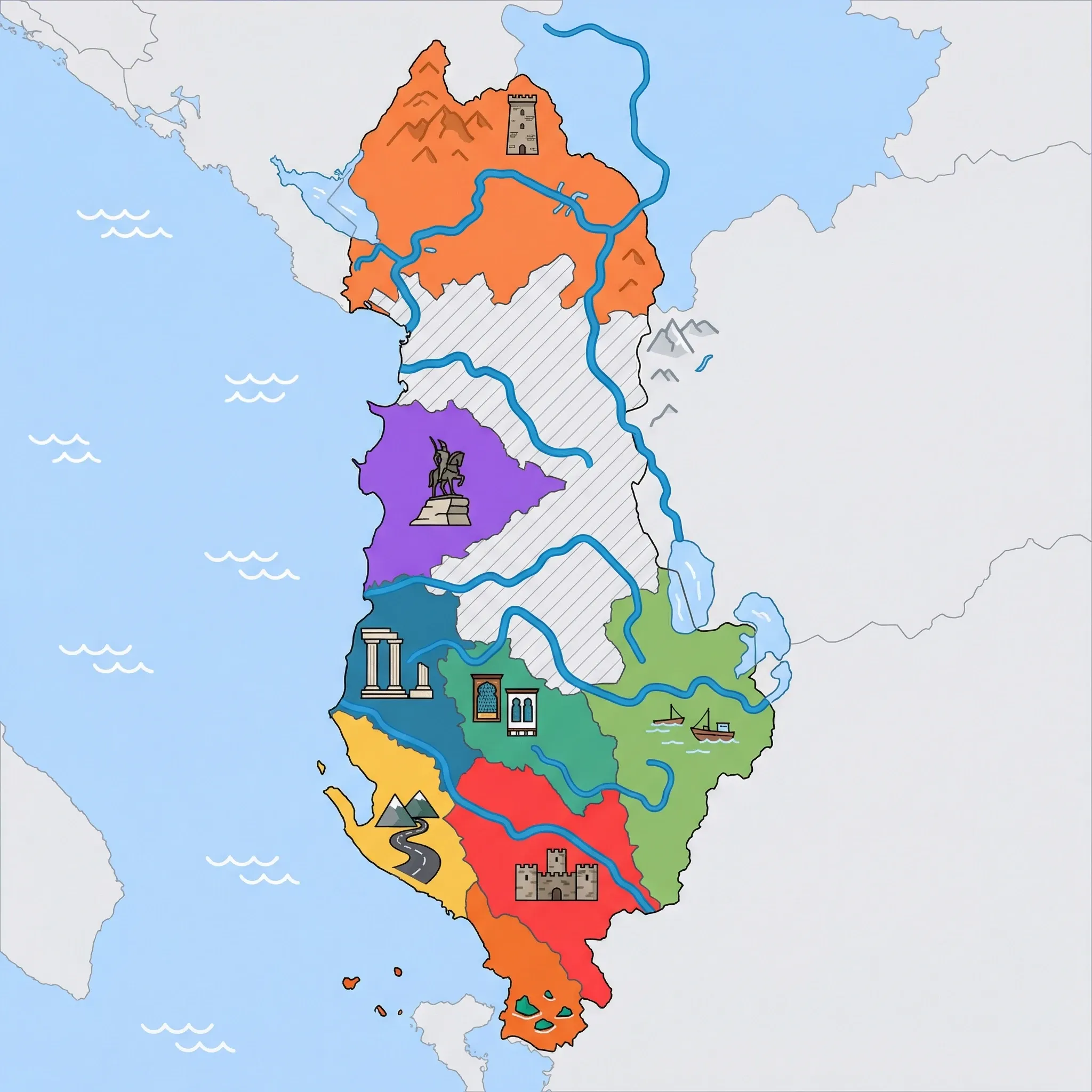
Click a region to explore
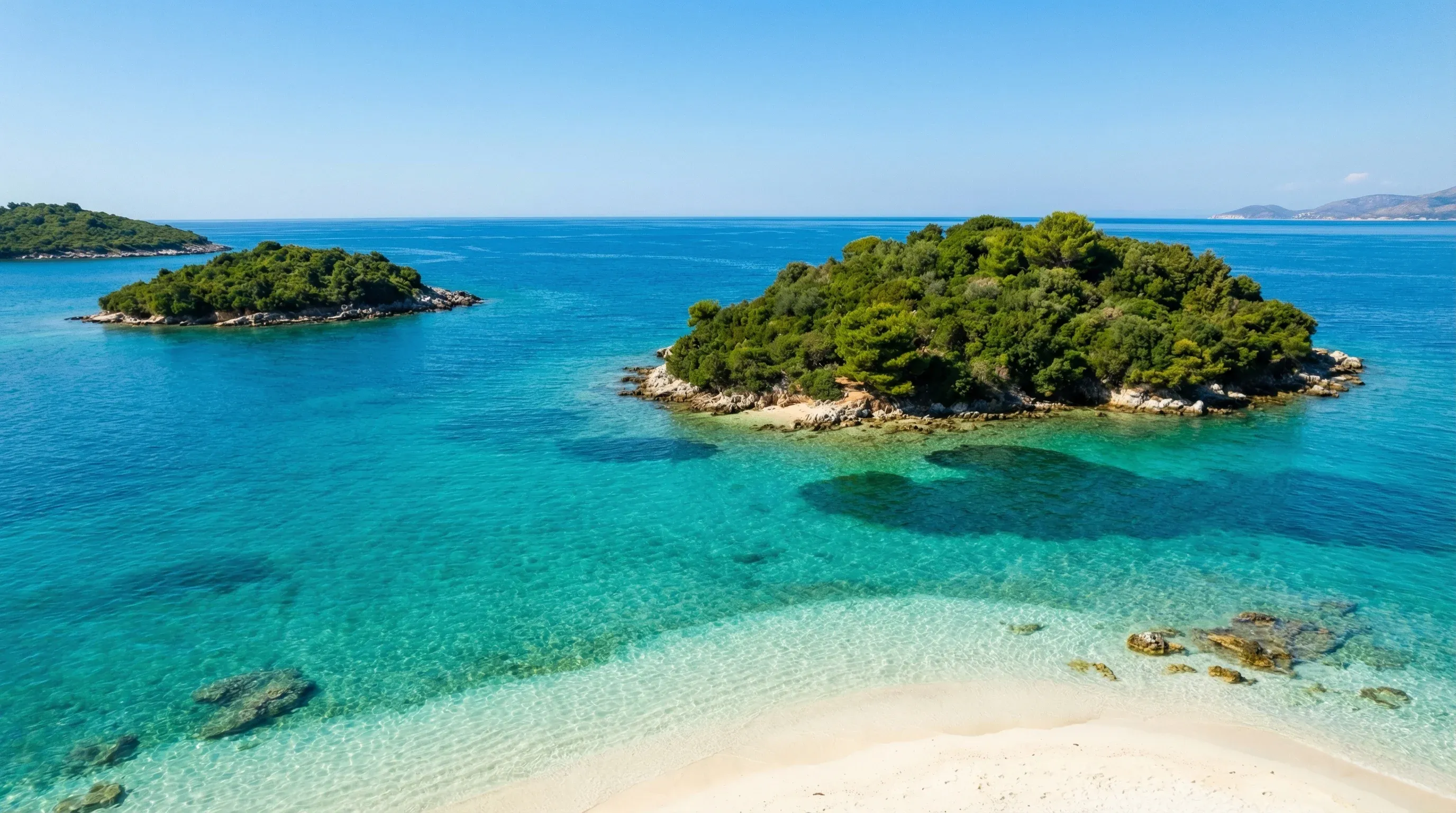
The Southern Riviera is where Albania feels most Mediterranean. Sarandë is a bustling high-rise city built around a horseshoe bay, acting as the transport and nightlife hub. Just south lies Ksamil, famous for its white sand (imported) and three small islands that you can swim or paddle to. This area is incredibly popular in July and August, offering a resort-style atmosphere with beach bars, foam parties, and sunbeds galore. For families who prefer a quieter vibe, the town of Himarë further north offers a more laid-back, authentic Greek-Albanian village feel with pebbly beaches and olive groves.
What makes this region distinct is the density of attractions. You have the country's best beaches, its most impressive archaeological site (Butrint), and its most famous natural spring (Blue Eye) all within a 1-hour radius. It is easy to fill a week here. The water quality is exceptional—crystal clear and turquoise. However, families should be prepared for crowds in peak summer; this is not a hidden gem anymore, it is the main event.
Key Attractions
Butrint Archaeological Park is a must. It is a microcosm of Mediterranean history located in a dense forest on a peninsula. Children love the ferry that pulls cars across the canal on a wire, and the ruins themselves include a Roman theater, mosaics, and turtles swimming in the flooded sanctuary. Most of it is shaded, making it doable even in summer.
The Ksamil Islands are beautiful but busy. Renting a pedal boat to reach the further islands is a fun family activity. Inland, The Blue Eye (Syri i Kaltër) is a stunning natural spring where water bubbles up from a depth of over 50 meters. The water is freezing (10°C), but the colors are hypnotic. The path there is now paved and easy for families.
Practical Advice
Avoid August if you hate crowds. Traffic between Sarandë and Ksamil can be gridlocked in summer. Ksamil beaches are privatized—you must pay for sunbeds (expensive in peak season). Sarandë is very hilly; check your accommodation's location regarding stairs.
Food & Drink
Typical meal times: Late! Lunch 1:30 pm to 4:00 pm. Dinner 8:30 pm to 11:00 pm.
Typical meal costs: The most expensive region. Sunbeds can cost 2,000–5,000 ALL (approx. $21–53 USD / €20–50 EUR). Seafood pasta 1,200–1,800 ALL (approx. $13–19 USD / €12–18 EUR).
Dietary requirements: Seafood and Italian cuisine dominate. Mussels are the local specialty (farmed in Butrint lagoon). Easy for pescatarians.
Signature dishes:
- Mussels (Midhje) – From the Butrint lagoon, served steamed, fried, or in soup. The freshest you will find.
- Grilled Octopus – A staple of the southern coast, usually very tender.
- Kumbo – Not a dish, but a fruit (kumquat) grown in the Xarra area near Butrint, made into liqueurs and jams.
Why this score?
While primarily a beach destination, the region offers adventure through boat explorations of hidden bays like Gjipe and the vast, unpaved terrain of the Butrint wetlands. The steep coastal mountains dropping into the Ionian Sea provide a dramatic backdrop for scenic drives and moderate hiking.
Why this score?
Sarandë has several private clinics and a public hospital that are very accustomed to treating tourists during the summer peak. While capable of handling most common holiday ailments, serious surgical or specialized needs still typically require a transfer to Tirana or a ferry to Corfu, Greece.
Why this score?
This is Albania's tourism powerhouse, with Ksamil and Sarandë drawing massive crowds of international visitors, particularly from Europe and the Mediterranean. The region has the highest concentration of hotels and tourism-focused infrastructure in the country, though it remains below the scale of mega-destinations like the Costa del Sol.

This is Albania's most expensive zone. In July/August, prices can double. A hotel room can cost 8,000–15,000 ALL (approx. $85–160 USD / €80–150 EUR). Off-season (May/Sept), prices drop by 50%.
Family Travel Notice
Minors traveling with only one parent or alone must carry notarized parental consent. Note that children born to Albanian parents may be regarded as local citizens, regardless of their place of birth.

Getting Here & Around
Getting Here
- Ferry – The Corfu-Sarandë ferry takes only 30 minutes (hydrofoil). Many families fly into Corfu (Greece) and take the boat over.
- Driving – The drive from Tirana takes 3.5–4.5 hours via the new tunnel/inland route, or longer via the scenic coastal road.
Getting Around
- Car – Useful for flexibility, but parking in Sarandë/Ksamil is a nightmare in August.
- Bus – Regular buses connect Sarandë, Ksamil, and Butrint. They are cheap but get very crowded.
- Taxi – Plentiful but agree on the price beforehand.
No airports in this region. See the country flight map for nearby connections.

Packing List
Most beaches (except Ksamil) are pebble/stone; entering the water can be painful without them.
Butrint is a wetland area and mosquitos are aggressive in the shade.
The water visibility is excellent, especially around the Ksamil islands and rocky coves.
Cobblestone streets in historic towns like Gjirokastër and Berat make strollers nearly impossible to use.
Credit cards are rarely accepted outside luxury hotels and supermarkets; you will need cash for almost everything.
Roads like the Llogara Pass and routes to the Alps are incredibly winding and can affect sensitive travelers.
Occasional power cuts can occur, and street lighting in smaller coastal villages can be sparse.

Activities & Best Times

Hiking, wildlife, outdoor exploration, ecotourism
Boasts significant natural landmarks like the Blue Eye and Mount Çika, offering unique coastal-mountain biodiversity. Peak hiking conditions are found in late spring and early autumn; mid-summer heat makes strenuous exploration more challenging.

Urban tourism, museums, historical sites, architecture
Home to the world-class Butrint Archaeological Park and several historic castles that reflect complex Byzantine and Ottoman history. Best visited when temperatures allow for comfortable walking among ruins, avoiding the peak heat of August and winter rains.

Beach resorts, marine activities: diving, snorkelling, kite surfing, wind surfing, sailing
Features turquoise waters and the iconic Ksamil Islands, though beach infrastructure for high-end families is still maturing. Peak summer offers optimal water temperatures, while shoulder months provide a quieter experience with pleasant air temperatures.

Sport tourism, fitness activities, active recreation
Includes several established trails and adventure centers for active families, such as the Mount Çika routes. Activity is most enjoyable during periods of mild weather, as trails can be inaccessible during the rainy winter months.

Scenic drives, countryside tours, route-based travel
The SH8 Coastal Drive offers dramatic Mediterranean views, though it is a single primary route rather than a network. Late spring and early autumn provide clear visibility and manageable traffic compared to the crowded summer months.
Amusement parks, family entertainment venues
Provides basic family entertainment via regional facilities like Saranda Luna Park and Llogara Adventure Park. These venues are typically operational and most appealing during the main summer holiday window.

Attractions (10 total)



Public Holidays & Calendar Next 12 months
Public holidays, festivals, cultural celebrations, and seasonal natural phenomena coming up in Southern Riviera / Himarë–Sarandë–Ksamil over the next 12 months.
Loading holidays and events...

Travel Advisory
While Albania is widely accessible for tourism, multiple international agencies advise increased vigilance due to crime and occasional civil unrest. Risk assessments are evenly split between normal and elevated caution, resulting in a moderate advisory level overall.
Safety Topics
Traveller Advice (3 groups)

Minors traveling with only one parent or alone must carry notarized parental consent. Note that children born to Albanian parents may be regarded as local citizens, regardless of their place of birth.

Ensure your passport is valid for at least six months and that you have comprehensive medical insurance that covers emergency evacuation, as local healthcare standards vary significantly outside major cities.

When visiting rural or less developed areas, be aware that solo female travelers may experience occasional verbal harassment or unwanted attention.
Agency Summaries
General safety levels are high, with no special restrictions for Irish citizens. Visitors are encouraged to monitor local news. Consular assistance is managed by the embassy in Greece.
No major travel restrictions are in place. Travelers are advised to obtain comprehensive insurance, as medical facilities are limited outside the capital. Specific documentation like an International Driving Permit and Green Card is necessary for motorists.
Heightened vigilance is recommended due to the potential for political demonstrations in Tirana and limited healthcare infrastructure. Consular support is provided through the embassy in Italy as there is no local Australian mission.
There are more safety and security concerns than typically found in New Zealand, primarily related to crime and the potential for civil unrest. Petty theft is a risk in crowded tourist areas.
Visitors should be more vigilant due to crime levels, particularly street crime in urban centers and organized crime activity countrywide. The embassy has highlighted specific dining establishments in Tirana to avoid due to security concerns and unfair business practices.
Albania is generally considered safe for visitors, though travelers should remain aware of aggressive local driving habits and potential hazards on rural roads. Specific regulations apply to children of Albanian descent and those traveling with only one parent.
Information is provided for general guidance only and does not constitute travel, safety, medical, or legal advice. Conditions may change. Users are responsible for independently verifying information before travel.