
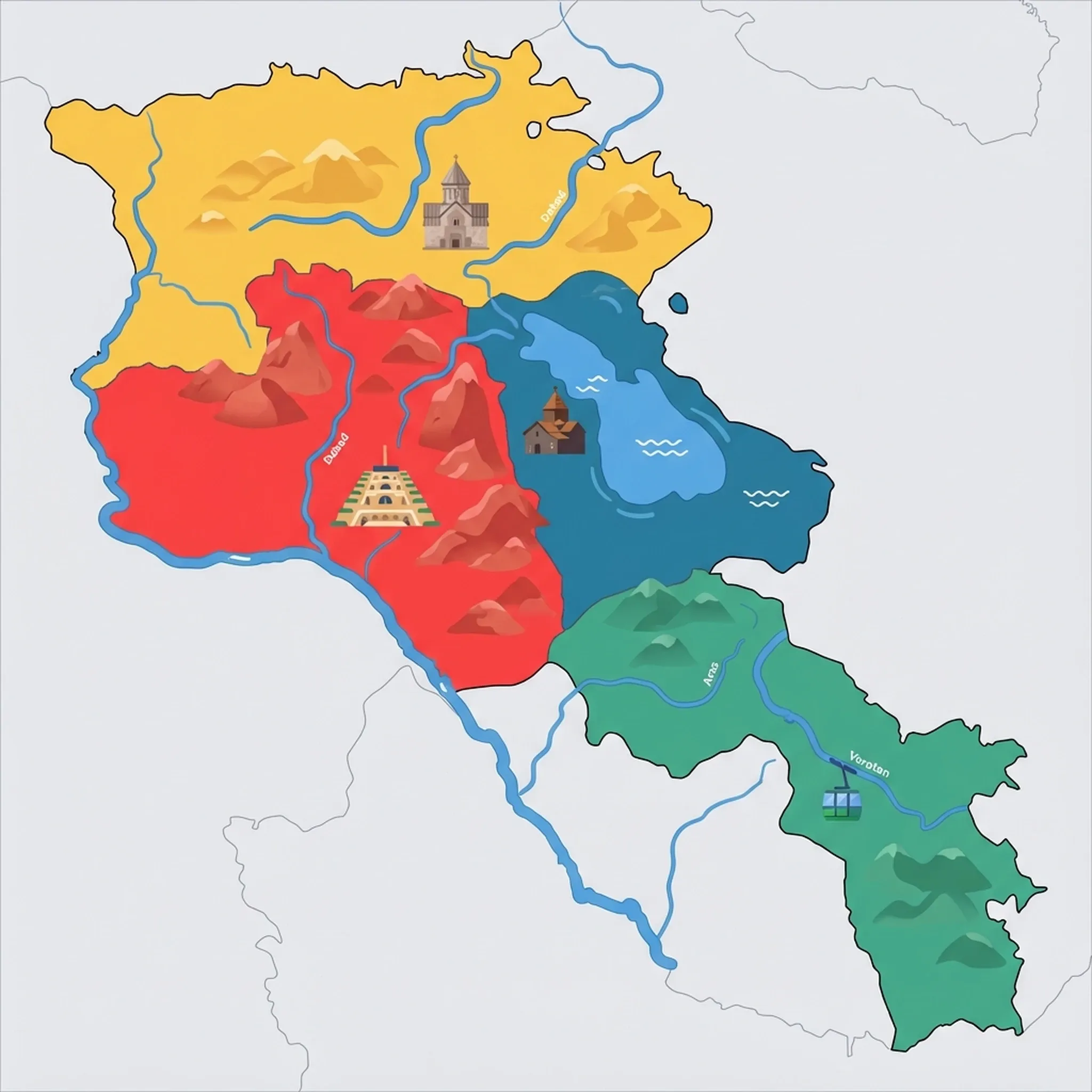
Click a region to explore
Overview
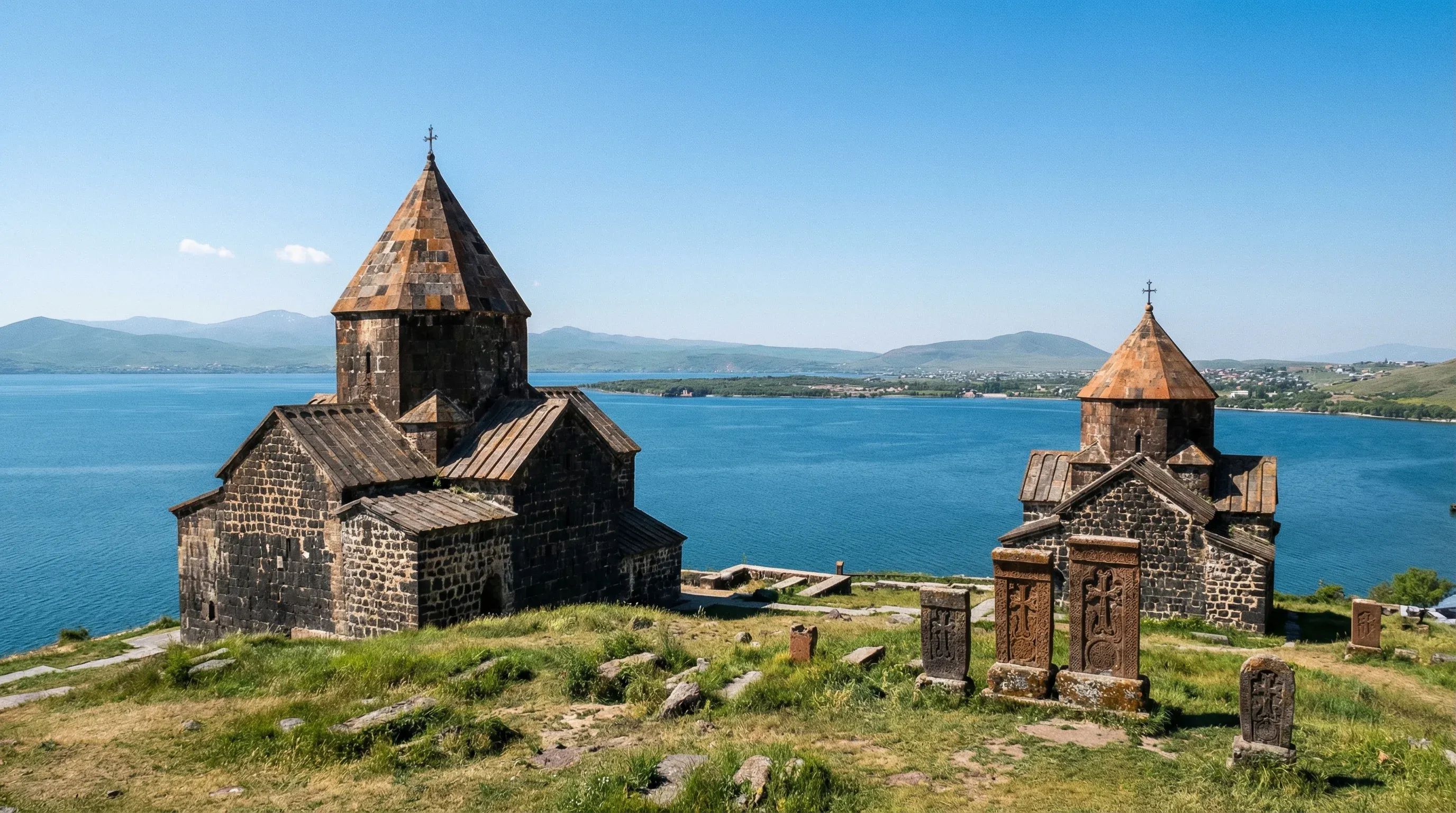
Lake Sevan is one of the largest high-altitude freshwater lakes in the world, sitting at 1,900 meters above sea level. For families visiting Armenia, it serves as a massive inland sea, providing a cool respite from the summer heat of the lowlands. The landscape is dramatic, with changing water colours ranging from deep azure to turquoise, framed by treeless mountains that turn golden in the summer and white in winter. It is a place where nature and history intersect visibly; medieval monasteries perch on precipices overlooking the water, and the horizon often feels endless. The air here is thin and crisp, and the sun is significantly stronger than in the capital, so sun safety is a priority for children even on cloudy days.
The vibe around Lake Sevan varies by season. In July and August, it is a bustling summer resort area where local families gather for barbecues and swimming. The beaches are mostly pebbled rather than sandy, making water shoes a good idea for little feet. Beyond the beaches, the region offers a window into rural Armenian life. You will see vendors selling sweet corn and smoked fish by the roadside, and the pace of life is slower. It is an excellent destination for families who want to mix outdoor recreation with manageable cultural sightseeing, as the key historical sites are compact and exciting for children to explore without being overwhelming.
Key Attractions
The most iconic stop is the peninsula, home to Sevanavank Monastery. While the climb involves steep stairs, it is manageable for active children, and the view from the top is the definitive image of the region. The complex dates back to the 9th century, and the dark stone churches against the blue water create a striking contrast. It is a functioning religious site, so modest dress is appreciated, though rules are relaxed for young children.
For a slightly more mysterious adventure, the Noratus Cemetery is a must-visit. It is the largest majestic field of khachkars (cross-stones) in the world. Walking through the field feels like navigating a stone forest, with thousands of intricately carved markers covered in orange moss. Kids are often fascinated by the carvings, which depict scenes of weddings, farm life, and musicians from centuries ago. Nearby, Lake Sevan itself is the main attraction; public beaches are available, but many families opt for private beach areas attached to restaurants where you can rent gazebos.
Practical Advice
The best time to visit for swimming is July through early September. However, even in summer, evenings can get chilly due to the altitude, so bring jumpers. The water is refreshing (some might say cold), rarely exceeding 20°C (68°F). If you are visiting in spring or autumn, it is purely a sightseeing destination as it will be too cold to swim. Facilities at public beaches can be basic; private resorts offer better toilets and changing rooms for a small fee.
Food & Drink
Typical meal times: Lunch is the primary meal here, often a long affair between 1:00 pm and 3:00 pm. Dinner is served from 7:00 pm to 9:00 pm, though lakeside restaurants stay open later in summer.
Typical meal costs: A family of four can expect to pay 12,000–25,000 AMD (approx. $30–60 USD / €28–58 EUR) for a feast including fresh fish and sides.
Dietary requirements: This region is famous for fish, but vegetarians will find grilled vegetables, cheeses, and lavash bread widely available. Vegan options are decent (salads, beans), but specify "no cheese." Gluten-free travelers should stick to grilled items and avoid bread.
Signature dishes:
- Ishkhan (Sevan Trout) – The prince of local fish, usually poached or grilled on skewers. It has pinkish meat and is mild enough for children.
- Sevan Crawfish (Khechap) – Freshwater crayfish boiled with dill and bay leaves. It is a messy, hands-on eating experience that adventurous kids often enjoy.
- Gata – A sweet, round pastry often sold near monastic sites. The version here is dense and buttery, perfect for a quick energy boost.
Why this score?
The region offers moderate adventure through high-altitude water sports, the nearby Geghama mountain hikes, and the rugged terrain of the Sevan National Park. While accessible, the 1,900-meter elevation and variable mountain weather provide a distinct outdoor experience for families.
Why this score?
Medical facilities in the Sevan area are limited to basic regional clinics and small hospitals that may lack English-speaking staff. For anything beyond minor ailments or stabilization, tourists are typically transported back to the capital, which is about an hour away.
Why this score?
As Armenia's largest body of water and a primary summer retreat, Lake Sevan sees heavy domestic traffic and is a standard stop for international tour groups visiting Sevanavank. However, its international recognition remains modest compared to global lake destinations, and tourism is highly seasonal.

Prices near the main tourist peninsula can be inflated compared to the rest of the country. A mid-range lakeside hotel cottage costs 25,000–45,000 AMD (approx. $60–110 USD / €55–105 EUR) per night. Restaurant meals are generally reasonable, with a whole grilled trout costing around 3,000–5,000 AMD (approx. $7.50–12.50 USD / €7–12 EUR).

Getting Here & Around
Getting Here
- Driving – The most common way to reach the lake. It is a roughly 60-minute drive (65 km) from Yerevan on the M4 highway.
- Train – A seasonal electric commuter train operates daily in summer from Yerevan to the Sevan Peninsula. It is slow (approx. 2 hours) but scenic and very cheap.
- Minibus (Marshrutka) – Vans depart frequently from Yerevan’s Northern Bus Station to Sevan city, though you will need a taxi to reach the peninsula or Sevanavank Monastery from the drop-off point.
Getting Around
- Car – Having a rental car is highly recommended for families to move between the peninsula, Noratus Cemetery, and quiet beaches.
- Taxi – Taxis are plentiful near the main hotel strips and Sevan city. Negotiate the price beforehand or use apps like GG or Yandex if within range of the city.
- Walking – The peninsula area is pedestrian-only near the churches, requiring some stair climbing.
No airports in this region. See the country flight map for nearby connections.
Official Links

Packing List
Beaches are rocky and pebbled, which can be painful for children's feet.
At 1,900m altitude, UV radiation is much stronger than the temperature suggests.
Sudden winds and temperature drops are common, even on hot summer days.
The high-altitude air is extremely dry and can chap skin quickly.
To use the 'pulpulaks' (free spring water fountains) found on almost every street corner.
Women generally need to cover heads/shoulders when entering active monasteries.
Essential for children on the winding mountain roads to Tatev or Dilijan.
Useful for exploring cave dwellings in Khndzoresk and navigating dimly lit village streets.
The high altitude air (often dry) and strong sun can crack lips quickly.
Convenient for visiting local homes where removing shoes is mandatory custom.

Activities & Best Times

Hiking, wildlife, outdoor exploration, ecotourism
Lake Sevan is the largest alpine lake in the Caucasus at 1,900m elevation, offering a globally unique high-altitude aquatic environment. The combination of dramatic Geghama mountain landscapes, rare high-altitude diving, and pristine alpine setting justifies international 'excellent' calibration for adventure/nature seekers.

Urban tourism, museums, historical sites, architecture
Home to the iconic Sevanavank Monastery and the world's largest collection of khachkars at Noratus Cemetery. These ancient sites are best visited during the warmer months to avoid the biting winds that sweep across the peninsula in winter.

Scenic drives, countryside tours, route-based travel
Features the spectacular Vardenyats (Selim) Pass, a remarkably preserved segment of the Silk Road with an ancient caravanserai. Driving is most reliable in summer as high mountain passes frequently close due to snow during the long winter season.

Sport tourism, fitness activities, active recreation
Provides rare high-altitude diving opportunities at 1,900m and extensive cycling loops around the lake. The window for water-based activities is narrow, restricted to July and August when water temperatures reach their modest peak.
Winter sports, ski resorts, snow activities
The Sevan Ski Resort offers basic winter sports facilities with impressive lake views, though it is smaller and less developed than global standards. Snow reliability is best in January and February, but infrastructure remains localized.



Public Holidays & Calendar Next 12 months
Public holidays, festivals, cultural celebrations, and seasonal natural phenomena coming up in Lake Sevan over the next 12 months.
Loading holidays and events...

Travel Advisory
While most of Armenia is safe for standard travel, the majority of international agencies suggest increased vigilance due to regional security tensions and military activity near the borders. Travelers should avoid specific conflict zones.
Safety Topics
Traveller Advice (4 groups)

Solo female travelers should follow standard safety protocols and remain observant of their surroundings, particularly at night and in less populated areas.
Accessibility infrastructure in Armenia can be limited; travelers should research specific venues and transport options in advance.

It is recommended to check local customs and legal status regarding sexual orientation before traveling, as public attitudes can be conservative.

Dual citizens should be aware that Armenia shares visitor data with Russian security services. Additionally, those entering from Iran should exercise extreme care as consular support is restricted in that region.
Agency Summaries
While the country is generally safe for visitors, a high level of vigilance is necessary near the border with Azerbaijan due to the threat of military activity. Landmines and armed skirmishes make these specific regions extremely hazardous.
Authorities strongly advise against visiting any area within 5km of the eastern border with Azerbaijan. Tensions between the two nations remain high, and certain highways near the border are also considered unsafe.
Armenia is relatively safe with low crime rates, but travelers are encouraged to keep their valuables secure and avoid sensitive border areas where political tensions exist.
The security level has been heightened because of the unstable situation in the broader region, especially concerning Iran. Travel to border zones with Azerbaijan should be avoided entirely due to the threat of conflict.
Standard safety measures are sufficient for most parts of the country. However, regional instability means travelers must avoid the borders with Azerbaijan and stay informed about local protests.
Visitors should be more alert due to potential military confrontations. Certain areas near the border with Azerbaijan are designated as 'Do Not Travel' zones because of the ongoing risk of armed conflict.
Information is provided for general guidance only and does not constitute travel, safety, medical, or legal advice. Conditions may change. Users are responsible for independently verifying information before travel.