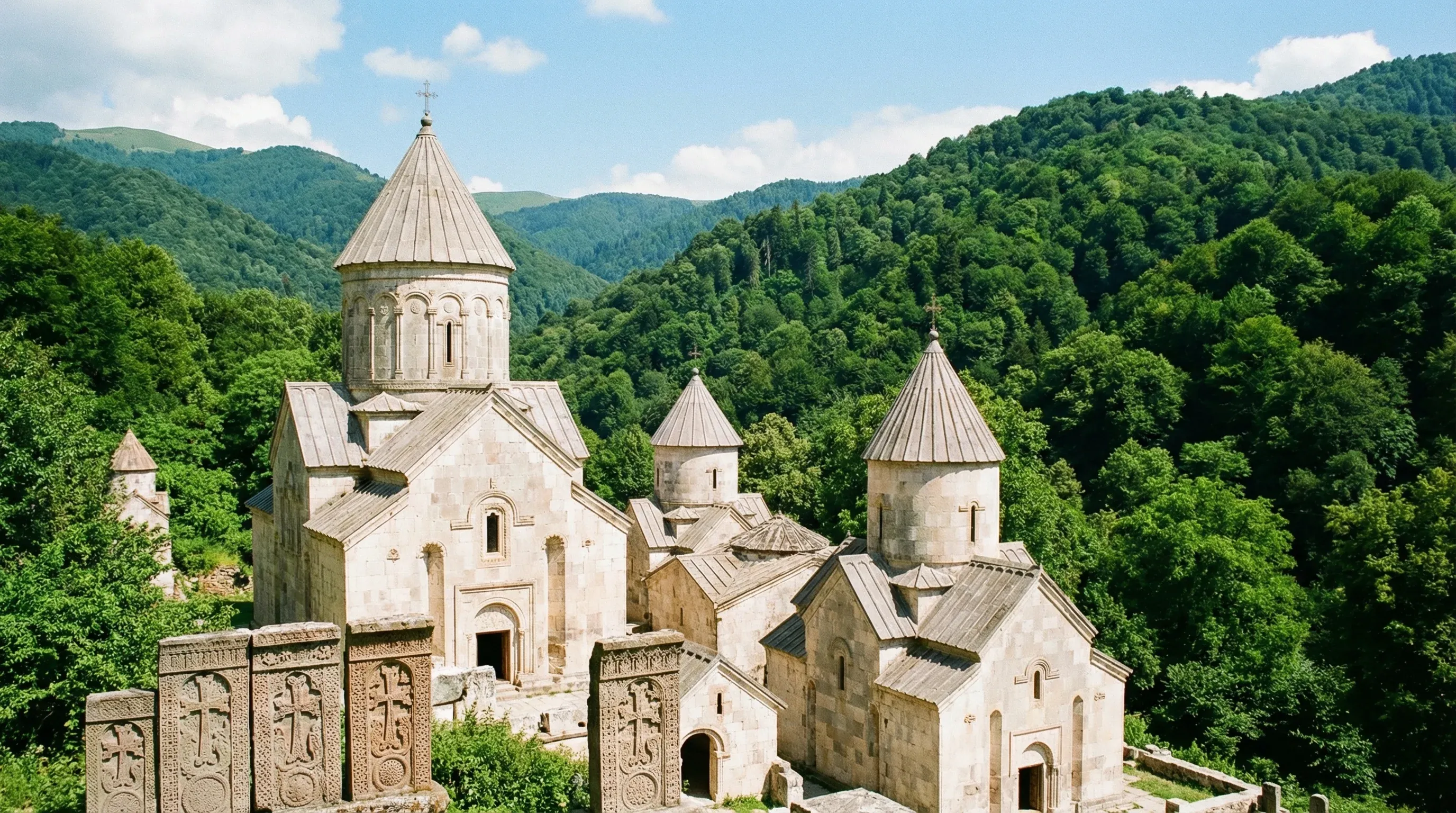

Northern Armenia (Dilijan)
Forest adventures and fairy-tale monasteries 🌲🍄
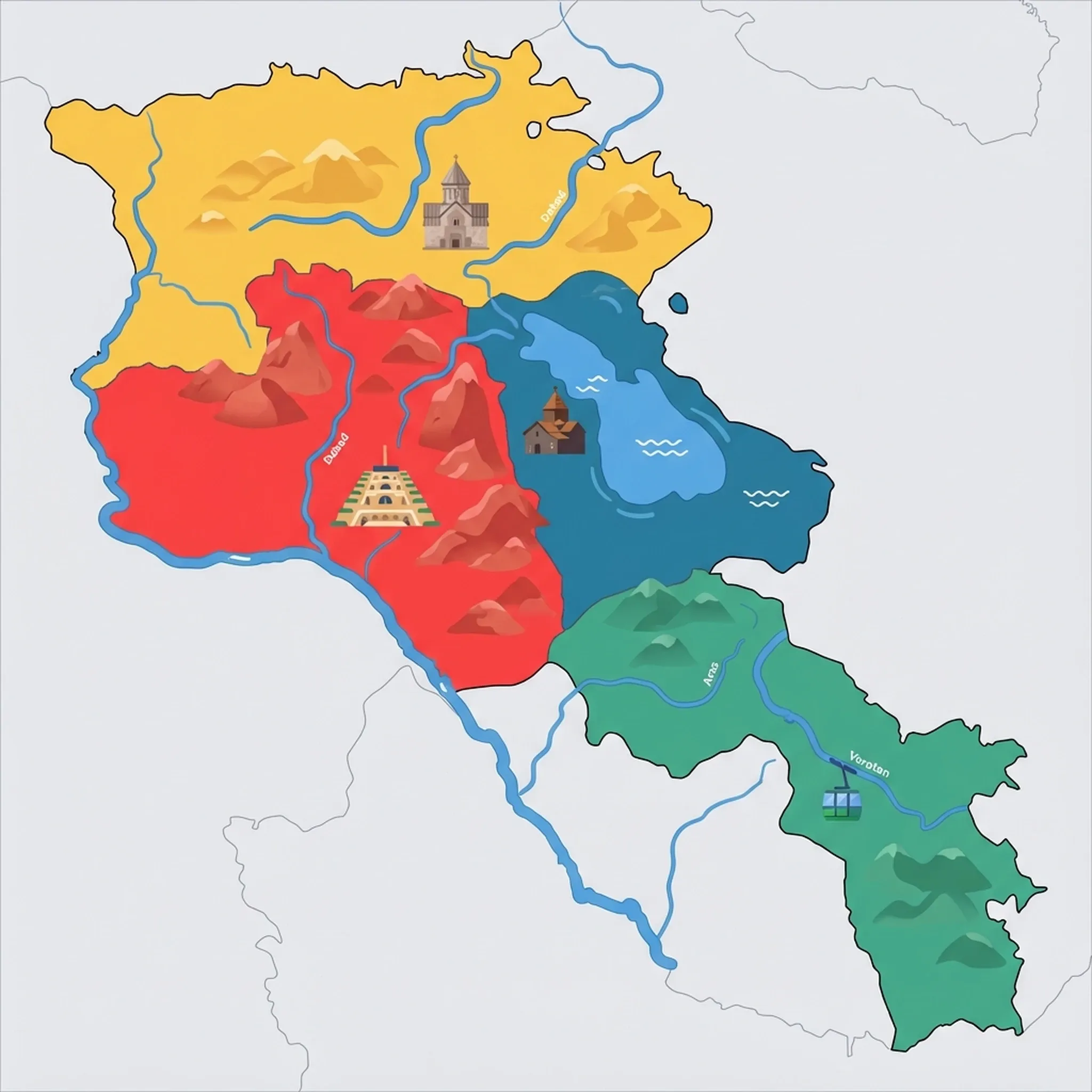
Click a region to explore
Overview
Northern Armenia, centered around the spa town of Dilijan, feels like a completely different country compared to the arid landscapes of the south. This is the green heart of Armenia, a region of dense deciduous forests, rolling mist, and hidden waterfalls. For families, it serves as the perfect playground for outdoor adventures. The climate is milder and more humid, making it a favorite summer retreat for locals escaping the Yerevan heat. The town of Dilijan itself retains a 19th-century charm with its restored wooden balconies and craft workshops, where children can watch woodcarvers and potters at work.
The region is part of the Dilijan National Park, meaning nature is accessible immediately from the roadside. It is a fantastic destination for introducing children to hiking, as the trails are often shaded and less rugged than in the high mountains. The atmosphere is fairy-tale-like; medieval monasteries appear suddenly through gaps in the trees, and the forest floor is often covered in wildflowers or mushrooms. It offers a mix of relaxation and high-energy activity, catering to both parents who want to enjoy the mountain air and teenagers looking for adrenaline activities.
Key Attractions
A major highlight for active families is Yell Extreme Park in the nearby village of Yenokavan. It offers zip-lining, rope parks, and horseback riding suitable for various ages, set against a stunning gorge backdrop. For a calmer day out, Lake Parz is a small, serene lake where you can rent paddle boats and enjoy a flat, easy walk around the perimeter. It is very popular with local families for picnics.
Cultural exploration here is exciting because the sites are embedded in nature. Haghartsin Monastery is a standout; recently restored, its white stone contrasts beautifully with the surrounding green forest. The complex includes an ancient refectory and a hollow tree that kids love to climb inside. Another gem is Goshavank Monastery, located in a traditional village where cows often wander the streets, adding a rustic charm that delights younger visitors.
Practical Advice
The weather in Dilijan can be unpredictable. Rain is common even in summer, so waterproofs are essential. The best time to visit is June to September for warmth, or October for spectacular autumn foliage. If you plan to hike, check trail conditions as mud can be an issue after rainfall. The region is generally very safe, but stick to marked trails in the national park.
Food & Drink
Typical meal times: Lunch is usually 1:00 pm to 3:00 pm. Dinner tends to be earlier here than in the capital, typically 6:30 pm to 8:30 pm.
Typical meal costs: A family meal costs around 10,000–22,000 AMD (approx. $25–55 USD / €23–50 EUR). Prices are slightly lower than in Yerevan.
Dietary requirements: The region is famous for foraging. Vegetarians are well-catered for with mushroom dishes and sorrel soups. Walnut sauces are common, so be vigilant with nut allergies.
Signature dishes:
- Mushroom Soup – Made with wild forest mushrooms gathered locally; it is earthy, rich, and unlike standard cream of mushroom soups.
- Aveluk (Wild Sorrel) – Braised wild sorrel braids with garlic and walnuts. A unique, slightly sour taste that is a staple of the region.
- Dilijan Halva – A sweet confection made from honey and nuts, different in texture from the sunflower halva found elsewhere.
Why this score?
The region is a premier destination for forest trekking and mountain biking within Dilijan National Park. With attractions like Yell Extreme Park offering zip-lining and the Transcaucasian Trail passing through, it provides significant but manageable adventure for active families.
Why this score?
While Dilijan has seen recent infrastructure investment, including a modern medical center, it still operates at a provincial level. International travelers will find limited specialized care and may face language barriers when seeking complex medical assistance locally.
Why this score?
Known as 'Little Switzerland,' Dilijan is a well-established hub for nature lovers and the Armenian diaspora, featuring a high concentration of guesthouses and hotels. It maintains a steady flow of international hikers and weekend visitors from Yerevan, though it lacks the volume of a major global mountain resort.

Dilijan attracts tourists, so prices are moderate. A family guesthouse room usually costs 20,000–35,000 AMD (approx. $50–90 USD / €45–80 EUR). High-end resort hotels can be significantly more expensive. Street food (corn, pastries) is very cheap, around 500–1,000 AMD (approx. $1.25–2.50 USD / €1.15–2.30 EUR).

Getting Here & Around
Getting Here
- Driving – Dilijan is approximately 95 km from Yerevan (1.5 hours). The drive involves passing through a long tunnel; locals say the weather often changes from sunny to misty as you exit into the north.
- Bus – Marshrutkas (minibuses) depart from Yerevan's Northern Bus Station to Dilijan town center regularly.
- Taxi – A private transfer allows you to stop at Lake Parz on the way, which is hard to reach by public bus.
Getting Around
- Car – Highly recommended. While Dilijan town is walkable, attractions like Haghartsin Monastery and Yell Extreme Park are spread out and require a vehicle.
- Taxi – Local taxis are cheap and plentiful in Dilijan town. You can negotiate a half-day rate for a driver to take you to the monasteries and wait.
- Hiking – Trails in Dilijan National Park are well-marked, and short hikes are a viable transport mode between some sites.
No airports in this region. See the country flight map for nearby connections.

Packing List
This is the wettest region in Armenia; rain showers occur frequently even in summer.
The roads, especially the pass to Yenokavan, are very winding.
Forest trails can be muddy and slippery; sneakers may not suffice.
Forest areas have more mosquitoes and gnats than the dry southern regions.
To use the 'pulpulaks' (free spring water fountains) found on almost every street corner.
Women generally need to cover heads/shoulders when entering active monasteries.
Useful for exploring cave dwellings in Khndzoresk and navigating dimly lit village streets.
The high altitude air (often dry) and strong sun can crack lips quickly.
Convenient for visiting local homes where removing shoes is mandatory custom.

Activities & Best Times

Hiking, wildlife, outdoor exploration, ecotourism
Dilijan National Park offers an authentic alpine wilderness experience with the Transcaucasian Trail providing world-class hiking through lush forested mountains. Peak visitation occurs during the warm summer months when trails are dry and the ecosystem is fully accessible.

Sport tourism, fitness activities, active recreation
Yell Extreme Park provides internationally competitive adventure infrastructure including professional-grade ziplines and MTB loops. The high-adrenaline season is concentrated in the dry summer months when outdoor safety and facility operations are optimal.

Urban tourism, museums, historical sites, architecture
While the region features important monastic heritage (Haghartsin, Goshavank, Haghpat/Sanahin), it lacks the urban cultural infrastructure and institutional density of a 'very_good' rating. The monasteries are rurally situated rather than integrated into a city cultural experience. 'Good' better reflects the quality monastery heritage without overstating urban cultural offerings.

Scenic drives, countryside tours, route-based travel
Scenic drives such as the Semyonovka Pass offer spectacular mountain vistas and access to remote monasteries on well-maintained routes. Travel is best from late spring to autumn to avoid hazardous ice and fog on high-altitude mountain passes.

Learning experiences, scientific sites, historical education
The Dilijan National Park Visitor Center and local museums provide respectable educational insights into Caucasian ecology and regional history. These facilities are most engaging during the main tourist season when guided tours and discovery programs are fully active.

Amusement parks, family entertainment venues
While not a global theme park hub, Verev Rope Park offers localized family entertainment within a natural setting. Operations are strictly seasonal, peaking during the dry summer school holiday window.




Public Holidays & Calendar Next 12 months
Public holidays, festivals, cultural celebrations, and seasonal natural phenomena coming up in Northern Armenia (Dilijan) over the next 12 months.
Loading holidays and events...

Travel Advisory
While most of Armenia is safe for standard travel, the majority of international agencies suggest increased vigilance due to regional security tensions and military activity near the borders. Travelers should avoid specific conflict zones.
Safety Topics
Traveller Advice (4 groups)

Solo female travelers should follow standard safety protocols and remain observant of their surroundings, particularly at night and in less populated areas.

Accessibility infrastructure in Armenia can be limited; travelers should research specific venues and transport options in advance.

It is recommended to check local customs and legal status regarding sexual orientation before traveling, as public attitudes can be conservative.

Dual citizens should be aware that Armenia shares visitor data with Russian security services. Additionally, those entering from Iran should exercise extreme care as consular support is restricted in that region.
Agency Summaries
While the country is generally safe for visitors, a high level of vigilance is necessary near the border with Azerbaijan due to the threat of military activity. Landmines and armed skirmishes make these specific regions extremely hazardous.
Authorities strongly advise against visiting any area within 5km of the eastern border with Azerbaijan. Tensions between the two nations remain high, and certain highways near the border are also considered unsafe.
Armenia is relatively safe with low crime rates, but travelers are encouraged to keep their valuables secure and avoid sensitive border areas where political tensions exist.
The security level has been heightened because of the unstable situation in the broader region, especially concerning Iran. Travel to border zones with Azerbaijan should be avoided entirely due to the threat of conflict.
Standard safety measures are sufficient for most parts of the country. However, regional instability means travelers must avoid the borders with Azerbaijan and stay informed about local protests.
Visitors should be more alert due to potential military confrontations. Certain areas near the border with Azerbaijan are designated as 'Do Not Travel' zones because of the ongoing risk of armed conflict.
Information is provided for general guidance only and does not constitute travel, safety, medical, or legal advice. Conditions may change. Users are responsible for independently verifying information before travel.