
Burgenland & Neusiedlersee
Sunny days, shallow waters, and stork-spotting adventures ☀️
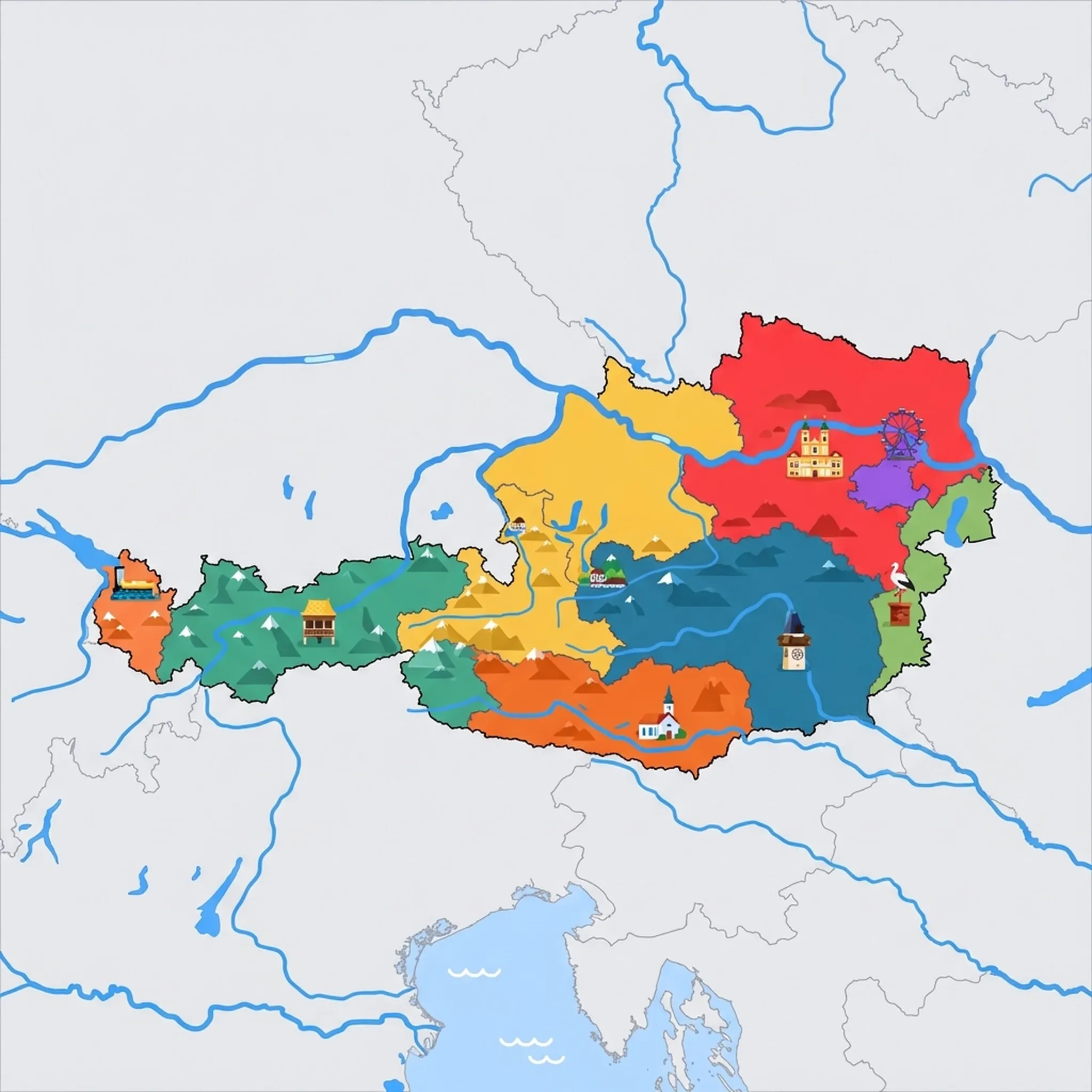
Click a region to explore
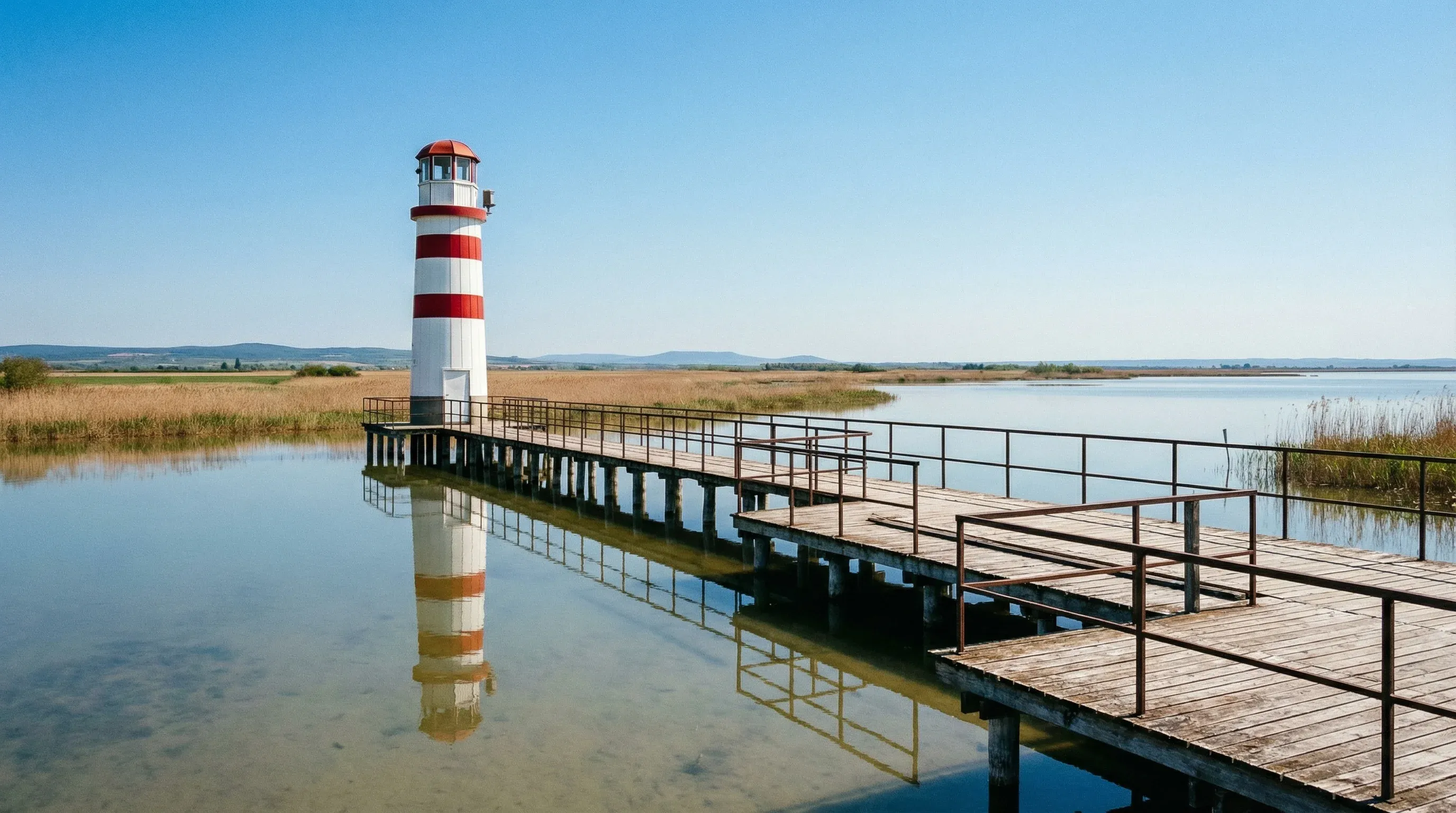
Burgenland stands in stark contrast to the rest of Alpine Austria. Here, jagged peaks are replaced by the rolling Pannonian Plain, endless vineyards, and a climate that boasts 300 days of sunshine a year. For families, this is arguably the most relaxing region in the country. The landscape is flat, making it the premier destination for family cycling trips where even the youngest riders can keep up without exhaustion. The region's heart is the magnificent Lake Neusiedl, a shallow steppe lake that warms up quickly in summer and is safe for toddlers to splash in. The culture here feels distinctively blend of Austrian and Hungarian influences, evident in the architecture, the food, and the relaxed pace of life. Visiting families often describe it as an 'Austrian seaside' holiday, despite being landlocked, thanks to the reed-lined shores and sailing culture.
Culturally, the region is rich with history without being stuffy. You will find grand palaces where the music of Haydn still echoes, sitting just miles away from wild, protected marshlands teeming with birdlife. It is a place where nature and culture coexist beautifully; children can watch storks nesting on chimney tops in the town of Rust in the morning and explore Roman history in the afternoon. The distinct lack of steep mountains makes the horizon feel endless, and the sunsets over the lake are legendary. Whether you are exploring the fairytale castles or swimming in thermal waters, Burgenland offers a low-stress, high-enjoyment environment perfectly suited for traveling with children.
Key Attractions
The absolute highlight for children is Familypark Neusiedlersee (Filippo's Farm). It is Austria's largest theme park, beautifully integrated into the forest with rides that cater to small children and teenagers alike, avoiding the concrete jungle feel of other international parks. For a dose of nature, a guided safari in the Nationalpark Neusiedler See-Seewinkel is essential. Rangers take families into the reed belt to spot rare birds and magnificent grey cattle; it is an educational experience that feels like a true expedition. History comes alive at Burg Forchtenstein, a formidable fortress that houses one of the largest private armories in Europe—kids are usually fascinated by the real suits of armor and weapons. Finally, for relaxation, the St. Martins Therme is not just a spa but a lodge that offers children's research stations and nature discovery programs alongside its swimming pools.
Practical Advice
The best time to visit is from May to September to take advantage of the swimming lake and warm evenings. July and August can get quite hot, so bring high-factor sunscreen and hats. The region is famous for the Neusiedler See Card, often provided free by hotels, which grants free access to lidos and public transport. Mosquitoes can be prevalent near the reed belt at dusk, so packing effective repellent is non-negotiable.
Food & Drink
Typical meal times: Lunch is typically served from 11:30 am to 2:00 pm. Dinner is usually eaten between 6:00 pm and 9:00 pm, which is slightly later than in the Alpine west due to the warm evenings.
Typical meal costs: A family meal in a traditional tavern costs around €50–80 (approx. $55–85 USD / £45–70 GBP). Fine dining in vineyards can be higher.
Dietary requirements: Vegetarian options are standard, though the region is heavy on meats. Gluten-free options are available in supermarkets and larger restaurants, but cross-contamination in smaller kitchens is a risk to check.
Signature dishes:
- Pannonische Fischsuppe – A spicy, paprika-rich fish soup made from local lake fish like carp or pike-perch, reflecting the Hungarian influence.
- Gansl (Goose) – Particularly in autumn, roast goose with red cabbage and dumplings is the regional pride.
- Somlauer Nockerl – A decadent dessert of sponge cake, vanilla custard, chocolate sauce, and walnuts.
- Bohnenstrudel – A savoury strudel filled with mashed beans, a unique rustic specialty of the region.
Why this score?
The terrain is dominated by the flat Pannonian Plain, making it ideal for leisure cycling but offering little in the way of rugged adventure. Most activities are centered around shallow lake waters and well-maintained theme park facilities.
Why this score?
Regional hospitals in Eisenstadt and Oberwart provide reliable care, though they lack the high-level specialization found in Vienna. Medical staff are accustomed to tourists, but language barriers may be more frequent than in the capital.
Why this score?
While a favorite for domestic travelers and neighbors from Hungary, it lacks the global name recognition of Austria's alpine regions. The area primarily draws niche crowds for birdwatching in Seewinkel and families visiting the Neusiedler See or Familypark.

Burgenland offers excellent value compared to the ski regions or Vienna. Accommodation ranges from farm stays at €80–120 (approx. $85–130 USD / £70–100 GBP) to luxury thermal resorts. Dining in 'Heuriger' (wine taverns) is affordable, with hearty platters costing €12–18 (approx. $13–19 USD / £10–15 GBP) per person.
Family Travel Notice
Single parents or guardians traveling with minors who are not their own should carry notarized consent letters and proof of relationship to prevent delays at border control.

Getting Here & Around
Getting Here
- Airports – Vienna International Airport (VIE) is the closest major hub, located just 40–50 minutes by car from the region.
- Train – Excellent rail connections run from Vienna Central Station to Neusiedl am See in roughly 40 minutes. Connections to Eisenstadt are also frequent.
- Driving – The region is easily accessed via the A4 motorway from Vienna. It is approximately a 45-minute drive from Vienna to Lake Neusiedl (Neusiedler See).
Getting Around
- Cycling – This is the primary mode of transport for many tourists. The paths are flat, paved, and well-signposted, making it perfect for families to bike between towns and attractions like the Nationalpark Neusiedler See-Seewinkel.
- Car – Useful for reaching more remote vineyards or Burg Forchtenstein on the hill. Parking is generally plentiful.
- Ferry – Bicycle ferries cross the lake regularly between Mörbisch and Illmitz, acting as a shortcut for cyclists.
No airports in this region. See the country flight map for nearby connections.
Official Links

Packing List
The reed belts around the lake are prime breeding grounds for mosquitoes in summer.
Essential for the world-class birdwatching opportunities in the Seewinkel area.
You will likely spend more time on bike saddles here than anywhere else in Austria.
The region is notoriously windy (good for sailing), even on sunny days.
Tick-borne encephalitis is a risk in tall grass and forests; essential for hikers.
Many mountain huts (Almhütten) and small rural cafes do not accept cards.
Tap water is pure alpine spring water almost everywhere—don't buy plastic.
Essential for safe traction on alpine trails and walking on city cobblestones.
Austria has no ocean, but its crystal-clear lakes are a summer highlight.

Activities & Best Times

Hiking, wildlife, outdoor exploration, ecotourism
The Seewinkel National Park is a premier European destination for birdwatching and unique Pannonian steppe ecosystems. Spring and autumn migrations are peak periods for wildlife enthusiasts, while summer heat can be intense on the open plains.

Urban tourism, museums, historical sites, architecture
The region offers rich Esterházy heritage in Eisenstadt and impressive medieval fortifications at Forchtenstein Castle. December is a peak period for traditional Austrian Christmas culture, while spring and autumn offer optimal weather for exploring historical sites.

Sport tourism, fitness activities, active recreation
The Neusiedler See Cycle Path (B10) is a world-class route for families, complemented by unique activities like the Sonnenland Draisinentour. Ideal conditions for cycling and sailing are found in the mild, breezy periods of spring and late summer.

Spa retreats, wellness centers, peaceful getaways
Known for high-end thermal retreats like St. Martins Therme & Lodge, which offers a unique 'spa-safari' concept. The winter and late autumn months are the traditional peak for thermal tourism, providing a restorative contrast to the cold weather.

Scenic drives, countryside tours, route-based travel
The Burgenland Wine Road and Castle Road offer sophisticated driving routes through rolling vineyards and historic landmarks. The harvest months of September and October are particularly scenic, while spring offers lush blooms across the plain.

Amusement parks, family entertainment venues
Features Familypark Neusiedlersee, Austria's largest amusement park, alongside high-quality water parks like Sonnentherme Lutzmannsburg. These facilities are primarily summer-focused for international visitors, with seasonal closures in the colder winter months.

Learning experiences, scientific sites, historical education
The National Park Center in Illmitz and the Landesmuseum Burgenland provide authentic insights into the region's unique natural history and Pannonian culture. Best visited when the National Park is most active and guided tours are frequently available.

Events, celebrations, seasonal attractions
Features unique international cultural events like the Opera in the Quarry and the Mörbisch Lake Festival during summer. November is also a peak for the authentic Martiniloben wine traditions, attracting connoisseurs to the region's cellar doors.

Attractions (17 total)



Public Holidays & Calendar Next 12 months
Public holidays, festivals, cultural celebrations, and seasonal natural phenomena coming up in Burgenland & Neusiedlersee over the next 12 months.
Loading holidays and events...

Travel Advisory
All major agencies agree that Austria is a low-risk destination where standard personal safety awareness is sufficient.
Safety Topics
Traveller Advice (3 groups)

Single parents or guardians traveling with minors who are not their own should carry notarized consent letters and proof of relationship to prevent delays at border control.

The social environment is inclusive and same-sex relationships are legally recognized. Travelers are unlikely to face issues, though standard discretion in less urban areas is always a balanced approach.

Mountain enthusiasts should monitor avalanche warnings closely before skiing or hiking. It is essential to have specialized insurance that covers alpine rescue and medical evacuation by air.
Agency Summaries
Austria is considered a safe destination where travelers should apply standard safety measures. Risks are comparable to those found in Canada.
Austria maintains a low threat profile. While general vigilance is recommended due to global trends, the local situation is very safe.
The country is categorized at the lowest risk level. Visitors are advised to follow standard security protocols and stay informed of local conditions.
No specific warnings against travel are in place. The environment is stable, though visitors should remain aware of their surroundings in urban centers.
Ireland advises its citizens to follow typical safety routines while visiting. The country remains a low-risk destination for international visitors.
General safety levels are high. Travelers are advised to use common sense and be alert to petty crime in areas popular with tourists.
Information is provided for general guidance only and does not constitute travel, safety, medical, or legal advice. Conditions may change. Users are responsible for independently verifying information before travel.