
Belarusian Lakeland
A pristine sanctuary of glacial lakes and ancient pine forests 🌲💧
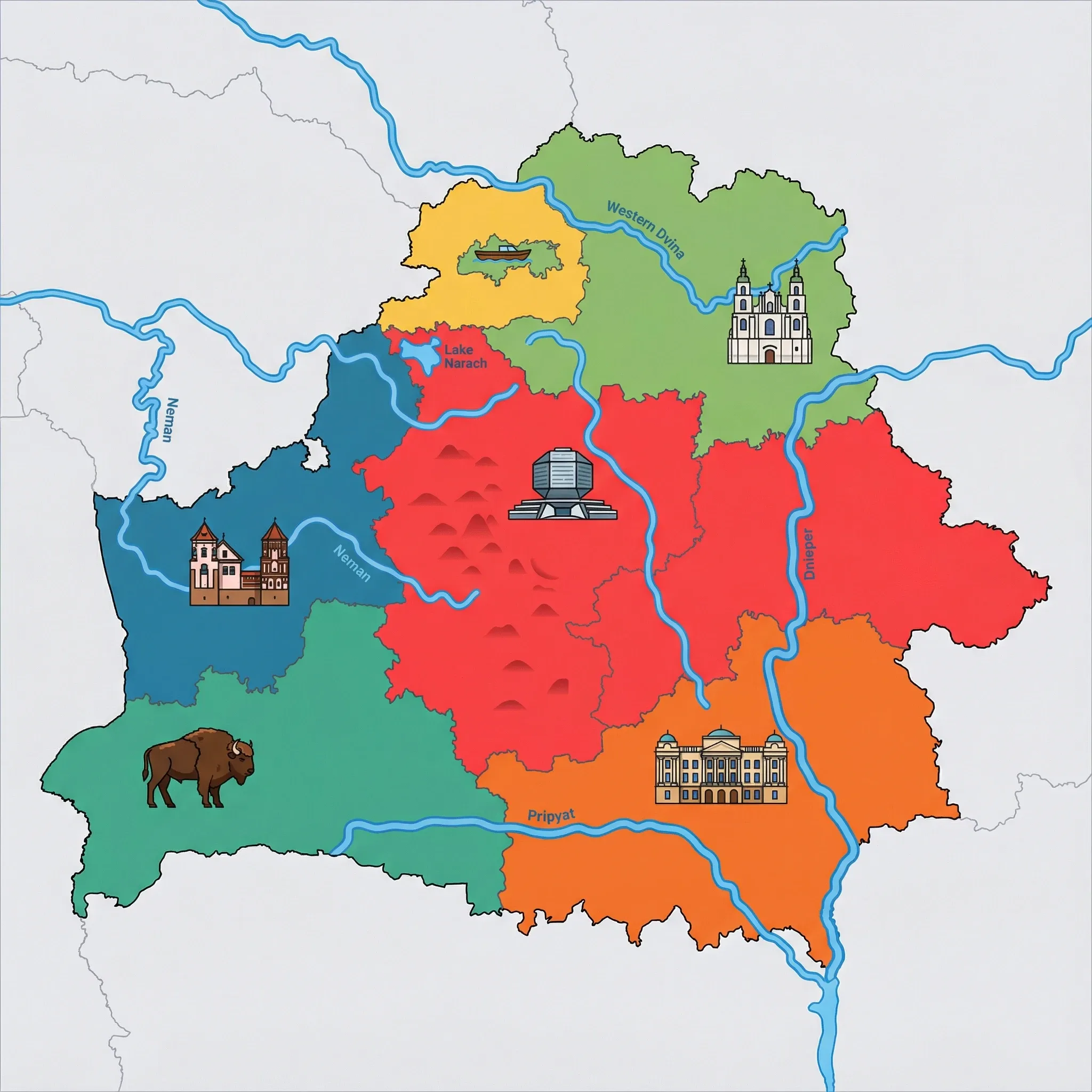
Click a region to explore
⚠️ SAFETY WARNING: Due to the risk of arbitrary detention, unpredictable security situations, and extremely limited consular support, government agencies (including CA, USA, UK, AU, IE, NZ) advise travelers to avoid all travel to this region. The proximity to the Latvian and Russian borders adds additional sensitivity to the area. Families are strongly urged to consult their own government's official travel advisory before considering a trip, as circumstances and risk assessments vary.
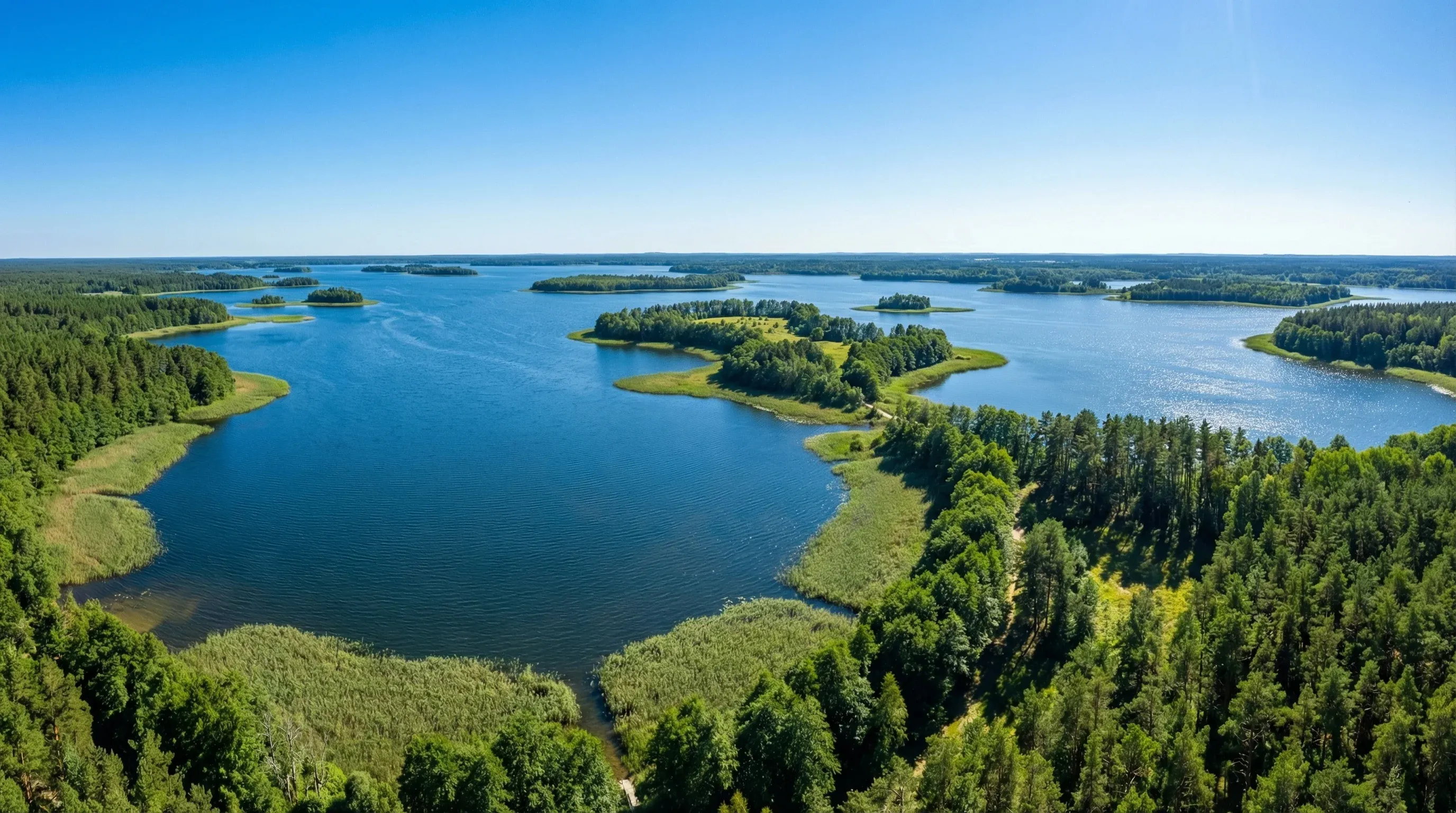
The Belarusian Lakeland, centered around the historic town of Braslav, is a region of exceptional natural beauty that historically attracted families seeking solitude and outdoor adventure. Geographically, it is a landscape carved by glaciers, resulting in a complex network of over 300 lakes connected by winding rivers and streams. The terrain is rolling and forested, offering a stark contrast to the flatter plains found elsewhere in the country. For families, the primary appeal lies in the deep connection to nature; this is a place where the noise of the city fades away, replaced by the sounds of wind in the pines and water lapping against sandy shores. The climate here is slightly cooler than the south, with fresh, crisp air that makes summer hiking and swimming refreshing rather than oppressive.
Culturally, the Lakeland is a quiet guardian of folklore and tradition. Small villages dot the landscape, where wooden architecture still dominates and local legends about lake spirits and ancient hillforts are passed down through generations. While it lacks the grand stone castles of the west, it makes up for it with atmospheric wooden churches and the sheer majesty of its natural panoramas. The pace of life is slow and seasonal, revolving around fishing, berry picking, and the rhythms of the forest. For children, the region offers a vast, open-air playground where they can learn to row a boat, spot rare birds, and experience the simplicity of rural life.
Key Attractions
The crown jewel of the region is undoubtedly the Braslav Lakes National Park. This sprawling protected area is not just a single destination but a collection of experiences perfect for active families. The park includes some of the cleanest and deepest lakes in Eastern Europe, such as Lake Drivyaty and Lake Snudy. Families can rent boats to explore the numerous islands, some of which have their own internal lakes, creating a unique "lake within an island" phenomenon. The park authority maintains several tourist campsites and nature trails specifically designed to be accessible for children, offering educational signage about the local beaver populations, moose, and diverse birdlife.
Beyond the water, the Mount Mayak (Lighthouse Hill) viewpoint offers one of the best panoramic views in the country, allowing children to see the interconnected waterways stretching to the horizon. In the town of Braslav itself, the Castle Hill (Zamkovaya Gora) provides a history lesson where kids can run along the ancient earthen ramparts that once defended the settlement. While the infrastructure is rustic compared to Western Europe, the sheer accessibility of nature makes it a compelling spot for families who prioritize the outdoors over luxury.
Practical Advice
Best time to visit: The only viable window for a family holiday is high summer (July to August), when water temperatures are suitable for swimming and the forests are lush. Winters are harsh, and spring/autumn can be very muddy.
Family logistics: Infrastructure is limited. While there are guest houses (usadbas), amenities like supermarkets and pharmacies are only found in Braslav town. A car is absolutely essential as public transport to the lakes is virtually non-existent. Parents should bring a robust first-aid kit, as medical facilities are basic.
Food & Drink
Typical meal times: Lunch is the main meal, served between 1:00 pm and 3:00 pm. Dinner is typically eaten later, around 7:00 pm to 8:00 pm.
Typical meal costs: A hearty meal for a family of four in a local guest house costs approx. 60–100 BYN (approx. $18–30 USD / €17–28 EUR). Prices are significantly lower than in Minsk.
Dietary requirements: Vegetarian options are scarce in rural areas and usually limited to side salads or potatoes. Vegan and gluten-free specific dishes are almost non-existent; travelers with strict allergies should self-cater.
Signature dishes:
- Braslav Eel – Smoked eel is the region's most famous delicacy, caught fresh from the lakes and smoked over alder wood.
- Uha (Fish Soup) – A clear, rich broth made from freshwater catch like pike or perch, often cooked over an open fire.
- Draniki with Mushrooms – The national potato pancake dish, here served specifically with wild forest mushrooms gathered locally.
Why this score?
The region offers moderate adventure through multi-day kayaking expeditions and wild camping around the 300+ glacial lakes. The terrain is gentle but the density of the lake networks and the remote nature of the national park provide a sense of isolation for active families.
Why this score?
Medical facilities in the town of Braslav are basic and primarily serve the local population with very limited English-speaking staff. Serious medical emergencies typically require a multi-hour transfer to Vitebsk or the capital, Minsk.
Why this score?
While a beloved domestic summer retreat, the Lakeland remains largely off the radar for international travelers outside of neighboring Baltic states and Russia. The infrastructure in Braslav is catered toward local 'agrotourism' and camping rather than high-volume international tourism.

The Lakeland is one of the most affordable regions in Belarus. Accommodation in rural guest houses is very reasonably priced, typically ranging from 80–150 BYN (approx. $25–45 USD / €22–42 EUR) per night for a family room. Food costs are low, especially if buying local produce or fish. Activities like swimming and hiking are free, though national park permits have a nominal fee.

Getting Here & Around
Getting Here
- Driving – The primary way to reach the region is by road. Braslav is approximately a 3.5-hour drive from Minsk (240 km) via the R3 highway. Roads near the lakes can be unpaved gravel.
- Bus – Regular buses run from Minsk Central Bus Station to Braslav, taking around 4.5 hours. It is a budget option but tiring for young children.
- Train – There is no direct train station in Braslav. The nearest railway hub is Druya, but connections are infrequent and slow, making this a poor choice for families.
Getting Around
- Car – Essential for families. To travel between Braslav Lakes National Park sites, you need your own vehicle as sights are spread out over 50km.
- Bicycle – The region is excellent for cycling, with relatively flat terrain and low traffic on country roads. Many guest houses offer bike rentals.
- Walking – While great for hiking specific trails, distances are too great to rely on walking for transport between lakes.
No airports in this region. See the country flight map for nearby connections.
Official Links

Packing List
Mosquitoes and horseflies are extremely prevalent near the lakes in summer.
ATMs are rare outside Braslav town and card terminals often fail in rural areas.
Forest areas have a high population of ticks; quick removal is essential.
Rural street lighting is minimal and power cuts can occur in storms.
Foreign cards rarely work; exchange bureaus reject bills with even tiny tears or marks.
Legally mandatory for pedestrians to wear reflective items in the dark; fines apply.
GPS signals can be jammed near borders/military zones and roaming is expensive.
Border guards often require physical proof of medical insurance, not digital copies.
Border crossings can take 10-20+ hours with no access to charging points.

Activities & Best Times

Hiking, wildlife, outdoor exploration, ecotourism
The region features a unique post-glacial landscape with the Braslav Lakes National Park and Safari Park offering authentic wildlife encounters and rugged trekking. Peak summer provides the necessary warmth and accessibility for exploring the water-rich ecosystems and the Slobodka Esker Ridge.

Urban tourism, museums, historical sites, architecture
The historic town of Braslav and its Castle Hill provide a window into the northern frontier history of the Grand Duchy of Lithuania. The experience is best during the summer and early autumn when historic churches and panoramic viewpoints are most accessible to international travelers.

Scenic drives, countryside tours, route-based travel
The Braslav Lakes Scenic Loop and the Ancient Northern Road offer picturesque driving through a landscape of over 300 lakes and hills. Optimal driving conditions and visibility occur in summer and during the autumn foliage peak in September and October.

Sport tourism, fitness activities, active recreation
The region maintains dedicated cycling and hiking infrastructure, notably the Slobodkovskaya Ozernaya Gryada trail and specific lake-circuit routes. Activity is strictly seasonal, with peak conditions restricted to the dry and warm summer months.

Learning experiences, scientific sites, historical education
Local museums and the Yelnya Ecological Visit-Center offer insights into the region's unique glacial formation and conservation efforts. These facilities lack the scale of major international centers but provide useful context during the primary summer visiting season.




Public Holidays & Calendar Next 12 months
Public holidays, festivals, cultural celebrations, and seasonal natural phenomena coming up in Belarusian Lakeland over the next 12 months.
Loading holidays and events...

Travel Advisory
All major international agencies maintain their highest risk rating for Belarus. Extreme caution is required due to the country's involvement in the Ukraine conflict, the high risk of arbitrary political detention, and the lack of accessible consular services.
Safety Topics
Traveller Advice (3 groups)

Dual citizens are treated exclusively as local nationals and may be subject to mandatory military service or travel bans when attempting to leave. All visitors should assume electronic devices and communications are monitored by authorities.

Severe restrictions apply to non-governmental activities, and staff may face legal action or detention for participating in programs not explicitly approved by the regime.

Media professionals are at heightened risk of targeted harassment and arrest for any reporting deemed critical of the administration. Accreditation does not guarantee safety from prosecution.
Agency Summaries
Ongoing volatility in the security environment and the risk of harsh penalties for vaguely defined crimes make travel extremely dangerous. Travelers are urged to depart immediately while commercial options remain available.
Travel is strongly discouraged due to the risk of arbitrary detention, the presence of Russian military forces, and the possibility of localized civil unrest. Consular services have been suspended following the closure of the embassy in Minsk.
Irish citizens are warned against all travel due to the high risk of detention and the unstable regional security situation. Consular assistance is only available through the embassy in Lithuania.
Avoid visiting the country due to the ongoing regional conflict and the unpredictable enforcement of local laws. The Canadian government provides extremely limited consular assistance through its embassy in Poland.
A maximum level warning is in place due to Russian military activity and the high risk of arbitrary law enforcement. Departure routes are limited, and the government has no diplomatic presence to assist citizens.
British nationals face a high risk of arrest for past or present political activities. The security situation is volatile due to the war in neighboring Ukraine, and official support for travelers is severely restricted.
Information is provided for general guidance only and does not constitute travel, safety, medical, or legal advice. Conditions may change. Users are responsible for independently verifying information before travel.