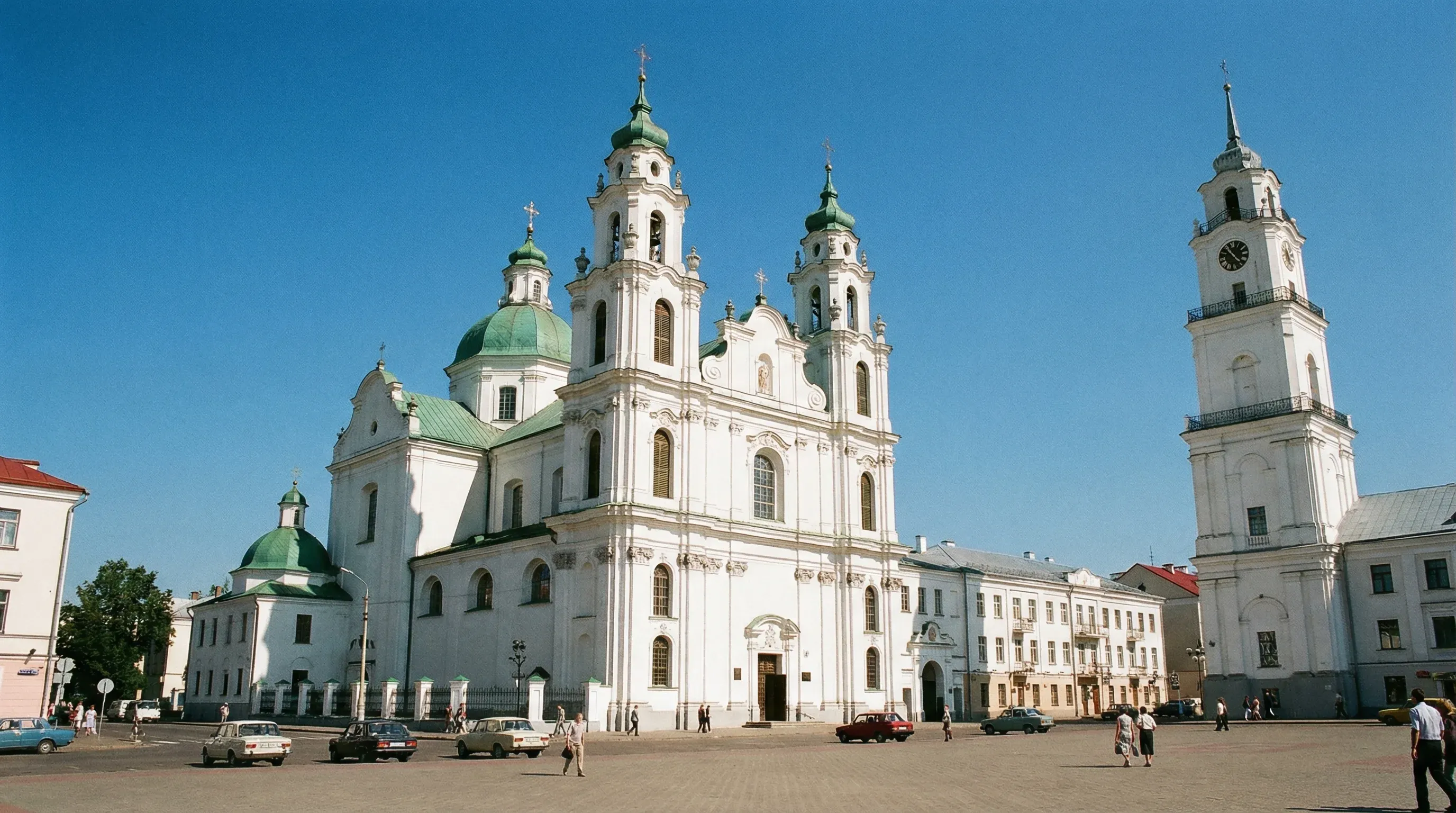

Vitebsk & Historic North
The cultural capital of festivals and ancient cathedrals 🎨⛪
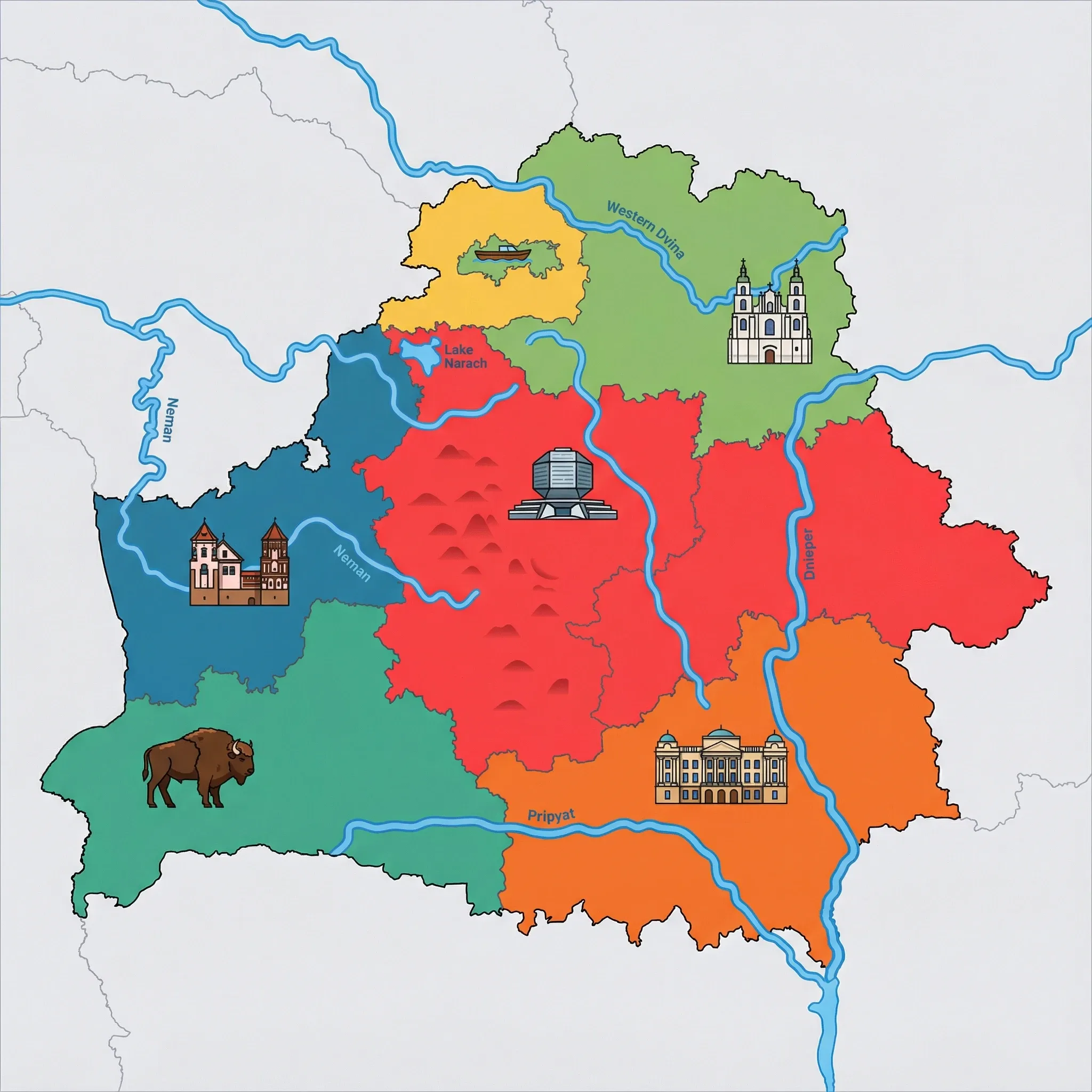
Click a region to explore
⚠️ SAFETY WARNING: Due to the ongoing regional conflict and proximity to the Russian border, government agencies (including CA, USA, UK, AU, IE, NZ) advise travelers to avoid all travel to Vitebsk and northern Belarus. The security situation is unpredictable, and support for foreign nationals is severely restricted. Families are strongly urged to consult their own government's official travel advisory before considering a trip, as circumstances and risk assessments vary.
Vitebsk and the Historic North are steeped in art and religion. This region is the spiritual and cultural cradle of Belarus, home to its oldest city, Polotsk. The landscape is dominated by the majestic Western Dvina River, which cuts through high banks and rolling hills. Vitebsk itself is a city of hills and bridges, famous globally as the home of the avant-garde artist Marc Chagall. For families, the city offers a whimsical, artistic atmosphere that differs from the monumentalism of Minsk. The streets are often filled with art students and musicians, especially during the summer festivals.
Polotsk, a short drive away, feels like an open-air history book. It is a quiet, manageable town for walking with children, filled with ancient monasteries and monuments. The region is cooler than the south, with snowy winters that turn the landscape into a classic Slavic postcard. The vibe here is intellectual yet provincial, proud of its history as the center of the earliest Belarusian statehood. It is a place for slow travel, visiting museums, and walking along river embankments.
Key Attractions
In Polotsk, the Saint Sophia Cathedral is the headline act. While the interior is now a concert hall with a magnificent organ, the building itself is an icon. Children might be more interested in the quirky monuments nearby, such as the Geographic Center of Europe monument and the unique Monument to the Letter "Ў" (a letter unique to the Belarusian alphabet).
In Vitebsk, the Vitebsk Old Town and Town Hall area is pedestrian-friendly and offers great views. Families visiting in July might catch the Slavianski Bazaar in Vitebsk, a massive arts festival that takes over the city with street performers, craft markets, and concerts, creating a carnival atmosphere that kids love. The Marc Chagall Art Center is small but offers a glimpse into the childhood of the famous painter, with a garden that is lovely in summer.
Practical Advice
Best time to visit: July is peak season due to the festival—book months in advance. Late spring is quieter.
Family logistics: Vitebsk is hilly; comfortable shoes are a must. Polotsk is flat and easy to navigate. English is less spoken here than in Minsk.
Food & Drink
Typical meal times: Lunch 12:00 pm to 2:00 pm. Dinner 6:00 pm to 8:00 pm.
Typical meal costs: Moderate. A family lunch costs approx. 60–100 BYN (approx. $18–30 USD / €17–28 EUR).
Dietary requirements: Basic. Vegetarian borscht or salads are usually available, but options are limited.
Signature dishes:
- Potato Pancakes (Draniki) – Here often served stuffed with meat or mushrooms, a staple of the northern diet.
- Kletski – Boiled dough balls (dumplings), often served with bacon bits and onions.
- Cranberry Morse – A berry drink made from local marsh cranberries, very high in vitamin C.
Why this score?
The Berezinsky Biosphere Reserve provides authentic wilderness experiences, including bog walking and bear watching, which offer a unique moderate challenge. The rest of the region is largely agricultural and easy to navigate via historic city centers.
Why this score?
Vitebsk is a major educational and medical hub for the north, with several large hospitals and clinics. While professional, the facilities often lack the modern aesthetic of Minsk clinics and insurance processing for foreigners can be bureaucratic.
Why this score?
Vitebsk sees a significant but highly seasonal spike in visitors during the Slavianski Bazaar arts festival. Outside of this event and the Marc Chagall sites, the region remains a niche destination for those interested in Orthodox history and the early avant-garde art movement.

Vitebsk is generally cheaper than Minsk. During the Slavianski Bazaar festival, accommodation prices triple, but outside this week, it is very affordable. A family suite might cost 80–120 BYN (approx. $25–35 USD / €22–33 EUR). Food and transport are inexpensive.

Getting Here & Around
Getting Here
- Train – Regular trains connect Minsk to Vitebsk (approx. 3.5–4 hours). There are also trains to Polotsk.
- Driving – The M3 highway connects Minsk to Vitebsk. It is a scenic but sometimes narrower road compared to the M1.
- Bus – Frequent minibuses (marshrutkas) run between the cities, offering a faster but bumpier alternative to the train.
Getting Around
- Walking – Both Vitebsk (city center) and Polotsk are best explored on foot.
- Tram – Vitebsk has an extensive tram network which is a fun, vintage way for kids to see the city.
- Car – Recommended if you plan to visit both Vitebsk and Polotsk in one trip (approx. 1 hour drive between them).
No airports in this region. See the country flight map for nearby connections.

Packing List
Vitebsk is built on steep hills and has many cobbled streets.
If visiting during the festival, street noise and concerts go on late into the night.
Northern weather is changeable; summer showers are frequent and sudden.
The best crafts and souvenirs are sold at street stalls that only take cash.
Foreign cards rarely work; exchange bureaus reject bills with even tiny tears or marks.
Legally mandatory for pedestrians to wear reflective items in the dark; fines apply.
GPS signals can be jammed near borders/military zones and roaming is expensive.
Border guards often require physical proof of medical insurance, not digital copies.
Border crossings can take 10-20+ hours with no access to charging points.

Activities & Best Times

Hiking, wildlife, outdoor exploration, ecotourism
Home to the Berezinsky Biosphere Reserve and Yelnya Bog, one of Europe's largest wetlands, offering unique eco-tourism and wildlife observation. Peak season reflects the best weather for trekking trails and observing crane migrations, while winter conditions make bog accessibility difficult.

Urban tourism, museums, historical sites, architecture
Features Vitebsk, the artistic home of Marc Chagall, and Polotsk, one of the oldest East Slavic cities with its historic Sophia Cathedral. Summer offers the best atmosphere for exploring historic quarters and art galleries, whereas damp, cold winters can detract from the walking experience.

Sport tourism, fitness activities, active recreation
The region offers established cycling and hiking routes through the Braslav Lakes National Park and specialized adventure centers. Ideal infrastructure is most accessible during the warm, dry summer months; shoulder months are cooler but suitable for active pursuits.

Scenic drives, countryside tours, route-based travel
Scenic routes like the Blue Necklace of Braslav connect stunning lake landscapes and historic heritage sites via well-marked trails. Summer provides the best visibility and driving conditions, while winter brings hazardous ice and significantly shorter daylight hours.

Learning experiences, scientific sites, historical education
Features specialized natural science museums related to the region's unique biosphere, though they are secondary to the cultural offerings. Visiting is most convenient alongside the general tourism peak when interpretive services are most available.

Events, celebrations, seasonal attractions
The Slavianski Bazaar in Vitebsk is a major international cultural event that draws significant crowds in July. Outside of this specific festival window, the region lacks high-profile events for international travelers.

Winter sports, ski resorts, snow activities
Small-scale ski centers like Ruba provide basic winter sports facilities for local enthusiasts but lack international scale. Operations are strictly limited to the core winter months when snow cover is most reliable.

Amusement parks, family entertainment venues
Local amusement and water parks provide family entertainment but do not meet global destination-level standards. Facilities are primarily outdoor-focused and operate effectively only during the warmer summer season.




Public Holidays & Calendar Next 12 months
Public holidays, festivals, cultural celebrations, and seasonal natural phenomena coming up in Vitebsk & Historic North over the next 12 months.
Loading holidays and events...

Travel Advisory
All major international agencies maintain their highest risk rating for Belarus. Extreme caution is required due to the country's involvement in the Ukraine conflict, the high risk of arbitrary political detention, and the lack of accessible consular services.
Safety Topics
Traveller Advice (3 groups)

Dual citizens are treated exclusively as local nationals and may be subject to mandatory military service or travel bans when attempting to leave. All visitors should assume electronic devices and communications are monitored by authorities.

Severe restrictions apply to non-governmental activities, and staff may face legal action or detention for participating in programs not explicitly approved by the regime.

Media professionals are at heightened risk of targeted harassment and arrest for any reporting deemed critical of the administration. Accreditation does not guarantee safety from prosecution.
Agency Summaries
Ongoing volatility in the security environment and the risk of harsh penalties for vaguely defined crimes make travel extremely dangerous. Travelers are urged to depart immediately while commercial options remain available.
Travel is strongly discouraged due to the risk of arbitrary detention, the presence of Russian military forces, and the possibility of localized civil unrest. Consular services have been suspended following the closure of the embassy in Minsk.
Irish citizens are warned against all travel due to the high risk of detention and the unstable regional security situation. Consular assistance is only available through the embassy in Lithuania.
Avoid visiting the country due to the ongoing regional conflict and the unpredictable enforcement of local laws. The Canadian government provides extremely limited consular assistance through its embassy in Poland.
A maximum level warning is in place due to Russian military activity and the high risk of arbitrary law enforcement. Departure routes are limited, and the government has no diplomatic presence to assist citizens.
British nationals face a high risk of arrest for past or present political activities. The security situation is volatile due to the war in neighboring Ukraine, and official support for travelers is severely restricted.
Information is provided for general guidance only and does not constitute travel, safety, medical, or legal advice. Conditions may change. Users are responsible for independently verifying information before travel.