
Click a region to explore
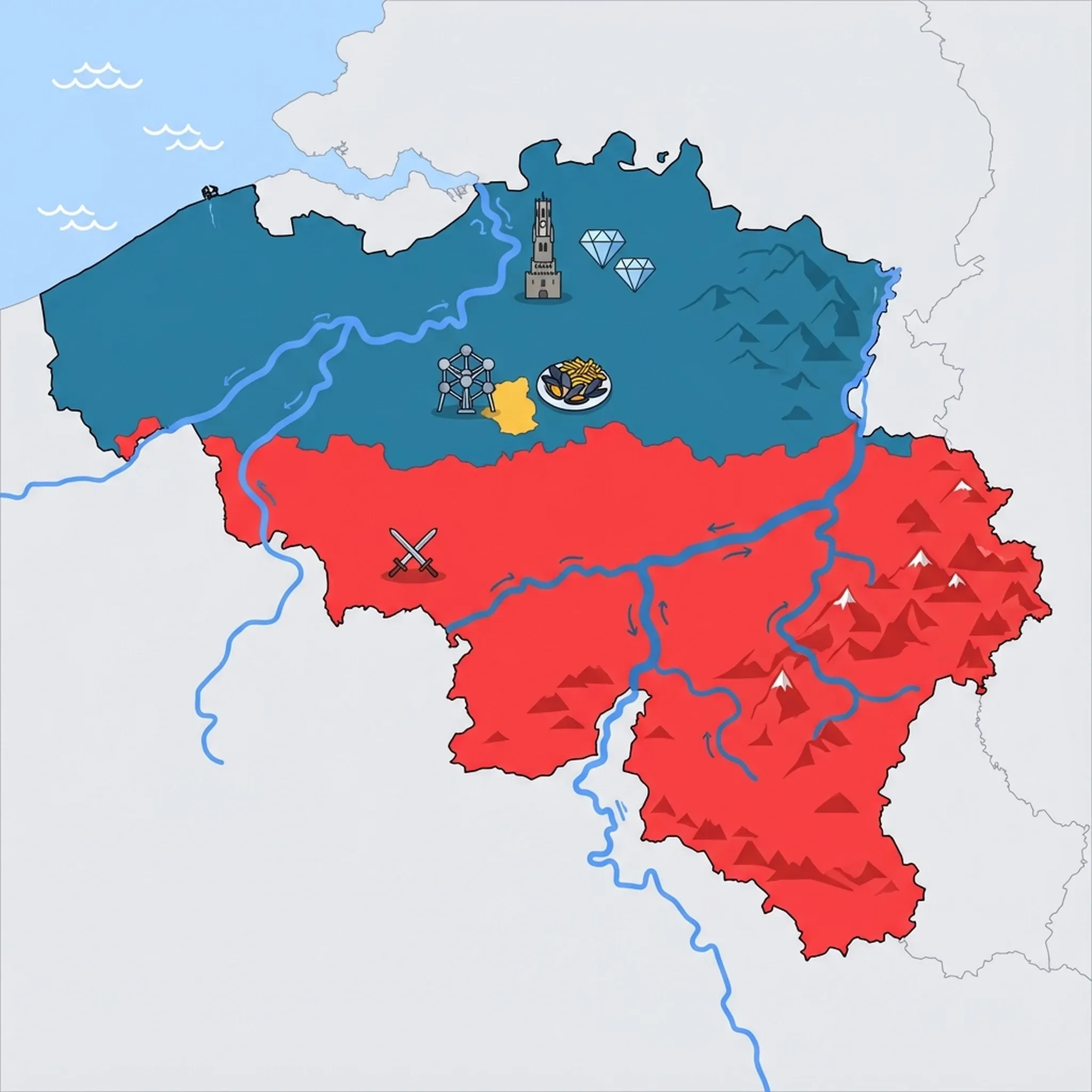
Brussels is far more than just the administrative heart of the European Union; it is a surreal, playful, and deeply historic city that feels tailor-made for families. Geographically positioned in the centre of Belgium, it serves as a cultural bridge between the Germanic north and Romance south, resulting in a fascinating bilingual atmosphere where street names appear in both French and Dutch. For visiting families, Brussels offers a manageable scale—most major sites are walkable or a short tram ride away—and a culture that doesn't take itself too seriously. The weather is temperate but often grey and rainy, similar to London, meaning indoor activities are plentiful and high-quality. The city's character is defined by 'Zwanze'—a local form of self-deprecating humor—which is evident in everything from the statues of peeing boys (and dogs!) to the gigantic comic strip murals adorning building facades.
What truly makes Brussels special for children is its dedication to visual storytelling. This is the birthplace of Tintin and the Smurfs, and the city celebrates this heritage everywhere. You can spend days just hunting for street art or visiting dedicated comic museums. Beyond the cartoons, the city boasts significant green spaces like the Sonian Forest on its perimeter, a UNESCO-protected beech forest perfect for burning off sugar-induced energy. The blend of Art Nouveau architecture, medieval cobbled streets, and futuristic structures like the Atomium creates a visual playground that keeps young travelers engaged.
Key Attractions
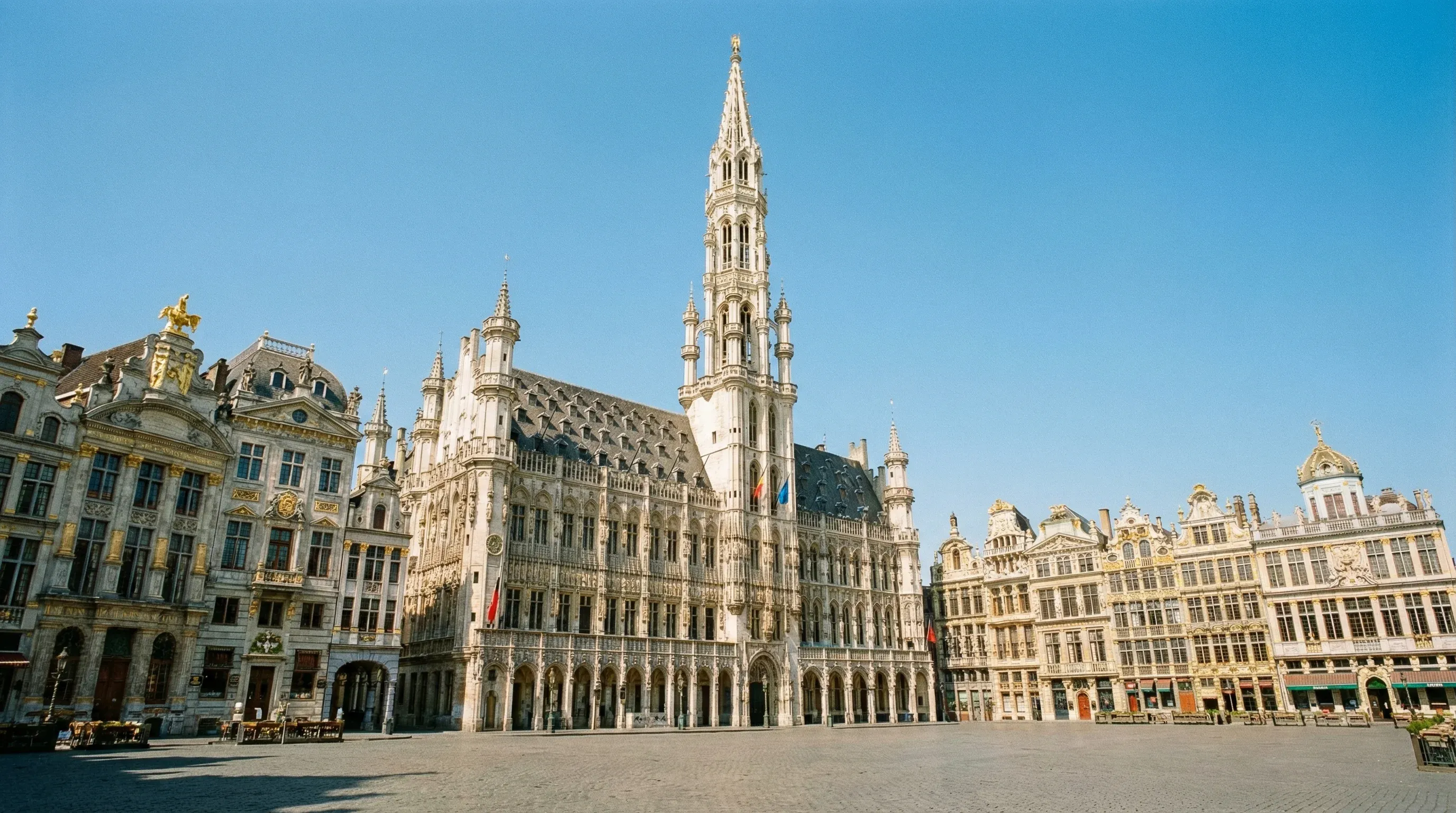
No visit to Brussels is complete without standing in the centre of the Grand-Place. Often cited as one of the most beautiful squares in the world, its guildhalls drip with gold leaf; if you visit in even-numbered years in August, the Brussels Flower Carpet covers the cobblestones in a breathtaking floral design. Just a few streets away, children will giggle at the Manneken Pis, the tiny but iconic statue of a urinating boy that is frequently dressed in elaborate costumes.
For a full day of family entertainment, head north to the Heysel plateau. Here you will find Mini-Europe, a delightful park where children can walk like giants among 350 detailed models of famous European landmarks, complete with moving trains and erupting volcanos. Back in the city centre, the Museum of Natural Sciences is an absolute must-do; it houses the Gallery of Dinosaurs, the largest in Europe, featuring an incredible herd of authentic Iguanodon skeletons found in a Belgian coal mine. Art-loving families should not miss the Magritte Museum, where the surrealist imagery (men in bowler hats, floating apples) often resonates intuitively with children's imaginations.
Practical Advice
The best time to visit is from May to September when the weather is mildest and outdoor festivals abound. However, December is magical due to the "Winter Wonders" Christmas market. Brussels is very stroller-friendly in the modern areas, but the historic center's cobblestones (called "kinderkopjes" or children's heads) can be bumpy; a carrier is better for infants. Public transport is free for children under 6, and museums often have excellent family discounts or free entry on the first Wednesday or Sunday of the month.
Food & Drink
Typical meal times: Lunch is generally served from 12:00 pm to 2:30 pm. Dinner service usually starts at 6:00 pm or 7:00 pm and runs until 10:00 pm. Brasseries often serve food continuously throughout the day.
Typical meal costs: Brussels can be pricey. A main course in a brasserie costs €18–30 (approx. $20–33 USD / £15–26 GBP). A quick street food meal (fries or waffle) costs €5–8 (approx. $5.50–9 USD / £4.25–7 GBP).
Dietary requirements: Vegetarian options are standard in almost all restaurants. Vegan options are common in the city center and hipster districts like Ixelles. Be aware that traditional fries are often fried in beef tallow (blanc de bœuf), so ask specifically if they are cooked in vegetable oil if you are vegetarian.
Signature dishes:
- Moules-frites – A steaming pot of mussels (usually 1kg per person) served with golden fries. White wine and celery is the classic broth.
- Gaufre de Bruxelles – The true Brussels waffle is rectangular, light, airy, and crispy, usually eaten with just icing sugar (unlike the denser, sugary Liège waffle).
- Stoemp – A comforting mash of potatoes and vegetables (carrots, leeks, or spinach), often served with sausages.
- Carbonnade Flamande – A rich, sweet-sour beef stew cooked with dark Belgian beer, mustard, and brown sugar.
Why this score?
The region is an entirely urbanized administrative enclave with virtually no rugged terrain or wilderness. Family activities are focused on museums, chocolate workshops, and manicured city parks rather than any form of outdoor adventure.
Why this score?
Brussels hosts world-class medical facilities and university hospitals like Cliniques Universitaires Saint-Luc. Given the high concentration of international diplomats and expats, English-speaking staff and high-end private care are the standard across the region.
Why this score?
As the capital of Belgium and the de facto capital of the European Union, Brussels is a major international hub receiving millions of business and leisure travelers annually. Iconic sites like the Grand-Place, the Atomium, and the comic strip murals ensure it remains a top-tier European city destination comparable to Prague or Edinburgh.

Brussels is a capital city and prices reflect that, particularly for accommodation near the EU institutions. A family room in a decent hotel costs €150–250 (approx. $165–275 USD / £130–215 GBP) per night. Museum entry is roughly €10–15 (approx. $11–16.50 USD / £8.50–13 GBP) for adults, though many offer free entry for children under 12 or 18.

Getting Here & Around
Getting Here
- Airports – Brussels Airport (BRU) is the main hub, located 20 minutes by train from the city center. Brussels Charleroi (CRL) serves budget airlines but is an hour away by shuttle bus.
- Train – Brussels is a major European rail hub. Eurostar connects London St Pancras to Brussels-Midi in under 2 hours. High-speed Thalys and ICE trains connect directly to Paris, Amsterdam, and Cologne.
- Driving – Brussels is encircled by the R0 ring road. Driving into the center is discouraged due to heavy congestion and the Low Emission Zone (LEZ) which requires registration.
Getting Around
- Public Transport – The STIB/MIVB network of metros, trams, and buses is excellent. A contactless bank card can be used directly on validators (capped daily). The tram routes are particularly scenic.
- Walking – The historic center (Pentagon) is best explored on foot. Landmarks like the Grand-Place and Manneken Pis are in a pedestrian zone.
- Train – For day trips to the outskirts, such as the Sonian Forest, local S-trains are fast and efficient.
No airports in this region. See the country flight map for nearby connections.
Official Links

Packing List
Brussels weather is notoriously changeable and gusty; flimsy umbrellas won't survive.
The historic center is paved with uneven medieval cobblestones that are tough on thin sneakers.
Plastic bags are banned or charged for in all supermarkets and shops.
Belgium uses a specific pin grounded plug that differs from some other EU sockets.
Public toilets ('Madame Pipi') and station turnstiles almost always charge a fee and often do not accept cards.
Supermarkets and shops in Belgium generally do not provide free bags; you must buy them or bring your own.
Weather changes rapidly; if you plan on cycling or walking in Flanders, wet legs are guaranteed without them.
Belgian hotels typically provide towels but rarely provide face cloths/flannels, which can be tricky for bathing small kids.
If you plan to buy Belgian chocolate in summer, it will melt instantly. A small cooler bag keeps your souvenirs safe.

Activities & Best Times

Urban tourism, museums, historical sites, architecture
As the capital of Europe, Brussels offers world-class museums like the Magritte and Oldmasters alongside the UNESCO-listed Grand-Place. Peak travel aligns with pleasant summer weather and the famous Winter Wonders festive markets in December.

Hiking, wildlife, outdoor exploration, ecotourism
The UNESCO-listed Sonian Forest and the 60km Promenade Verte provide exceptional wilderness immersion within an urban context. These natural sites are best experienced from late spring to early autumn before the heavy winter rains make trails muddy.

Learning experiences, scientific sites, historical education
The Museum of Natural Sciences, housing a world-renowned Iguanodon collection, and the iconic Atomium serve as primary educational draws. These facilities offer climate-controlled environments, but peak visitation coincides with the broader tourist season.

Scenic drives, countryside tours, route-based travel
Brussels is the central hub for the Belgian Art Cities Route and scenic circuits through the surrounding Green Belt. Optimal driving conditions and the best rural scenery occur during the brighter months from May through September.

Sport tourism, fitness activities, active recreation
The region features sophisticated cycling infrastructure, including sections of the EuroVelo 5, and specialized facilities like the Nemo33 diving pool. Outdoor active pursuits are most reliable during the drier summer and transition months.
Amusement parks, family entertainment venues
Mini-Europe and the LEGO Discovery Centre offer high-quality, internationally recognized family entertainment. Summer and school holiday windows provide the best experience, though several indoor venues remain viable during the shoulder seasons.

Events, celebrations, seasonal attractions
The biennial Flower Carpet in August and the Winter Wonders event in December are world-class attractions. Outside of these major international highlights, seasonal festivities are more domestically focused.

Attractions (21 total)



Public Holidays & Calendar Next 12 months
Public holidays, festivals, cultural celebrations, and seasonal natural phenomena coming up in Brussels over the next 12 months.
Loading holidays and events...

Travel Advisory
The majority of international agencies advise exercising increased caution (Level 2 or equivalent) primarily due to a heightened threat of terrorism and recent increases in urban crime and civil disruption. While the country remains a major tourist destination, situational awareness in crowded areas and transit hubs is strongly recommended.
Safety Topics
Traveller Advice (4 groups)

Solo female travelers should follow standard safety precautions, particularly in large transit hubs and poorly lit urban areas late at night.
Public transport in major cities is generally accessible, but check specific route accessibility ahead of time during strike actions which can limit staff availability.

Belgium is generally very inclusive, but travelers are encouraged to review standard guidance for European travel to ensure a safe trip.

Ensure you carry official photographic identification at all times as it is a legal requirement. Be prepared for delays at airports and train stations due to the implementation of the new Schengen Entry/Exit System (EES).
Agency Summaries
Increased vigilance is recommended due to the persistent risk of terrorist activity and a recent rise in violent incidents, including stabbings and shootings, within the Brussels-Capital Region and other urban centers.
Heightened caution is advised following recent security incidents. Travelers should monitor local media and avoid areas of known unrest or heavy police activity.
Travelers should remain alert because of the threat of terrorism. Attacks can occur with little warning, targeting locations frequented by tourists and public transportation infrastructure.
Due to the threat of terrorism and the possibility of civil unrest or strikes, visitors should maintain a high level of situational awareness, especially in Brussels.
While the overall advice is to take standard safety measures, travelers are reminded of the high domestic terror threat level and the recent implementation of new biometric entry/exit systems at borders.
Most visits are safe, but travelers should be prepared for potential transport disruption from strikes and remain aware of a general threat from international terrorism.
Information is provided for general guidance only and does not constitute travel, safety, medical, or legal advice. Conditions may change. Users are responsible for independently verifying information before travel.