
Abomey & Central
Where the legends of the Dahomey Kings come to life 🦁
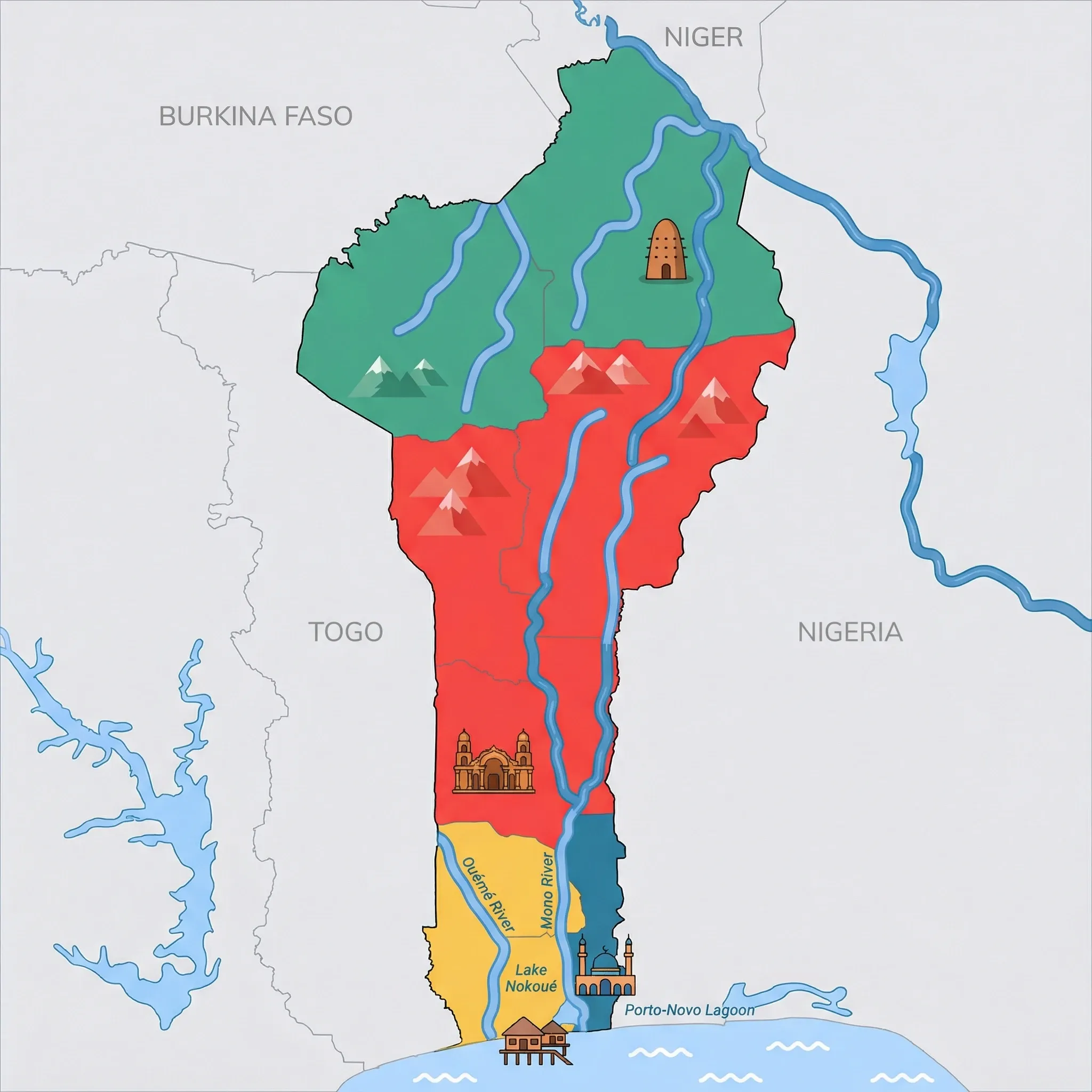
Click a region to explore
Central Benin serves as the country's historical spine, a region of red earth, rocky hills, and profound cultural heritage. For families, this is where the history books open up. The city of Abomey was the capital of the Kingdom of Dahomey, a powerful West African empire that stood for 300 years. The stories here—of powerful kings and the Agodjié (the female warriors who inspired the Dora Milaje in Black Panther)—captivate older children and teenagers. The landscape shifts dramatically as you move north towards Dassa-Zoumè, where huge granite boulders pile up to create natural playgrounds and hiking routes that offer a break from the humidity of the coast.
Life here moves at a slower, more traditional pace than in Cotonou. Families can witness voodoo ceremonies that are integral to daily life, not performed just for tourists. The region is also known for its artisans; you will see weavers, metalworkers, and woodcarvers practicing techniques passed down for generations. While the history is occasionally intense (involving stories of war and the slave trade), local guides are generally skilled at adapting narratives for younger audiences, focusing on the architecture and the resilience of the people.
Key Attractions
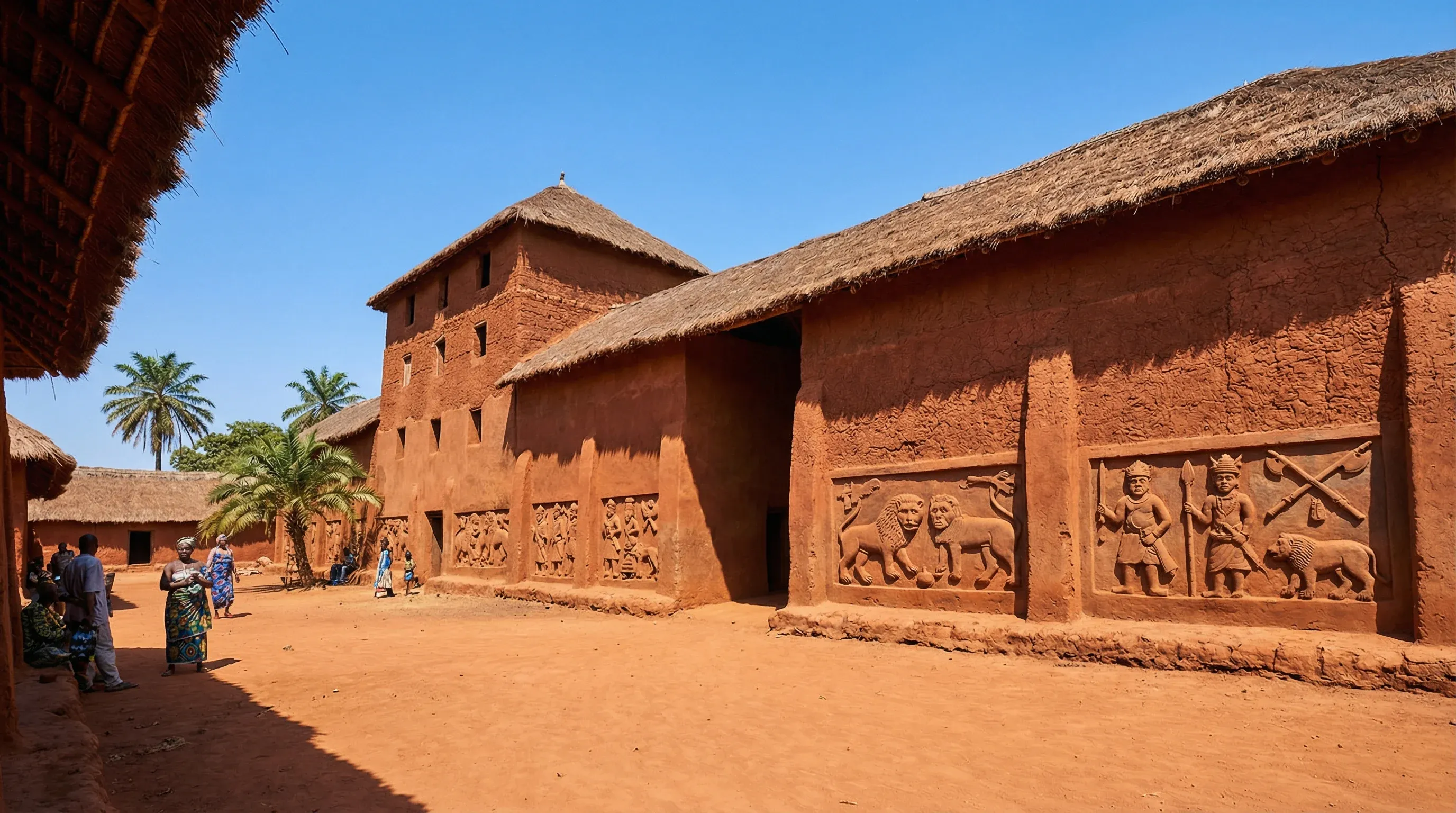
The undisputed highlight is the Royal Palaces of Abomey, a UNESCO World Heritage site. It consists of a cluster of earthen palaces built by successive kings. Kids are often fascinated by the bas-reliefs on the walls telling stories of battles and myths, and the museum houses authentic thrones and weapons. It is a tangible link to a powerful pre-colonial past.
Beyond the palaces, the natural geography of Dassa-Zoumè offers a refreshing change. The 41 Hills of Dassa are sacred to the local people but also provide excellent, manageable scrambling and hiking opportunities for active families. In nearby Savalou, the Musée de la Chasse (Hunting Museum) offers a smaller, quirky look at local traditions.
Practical Advice
The best time to visit is during the dry season (November to February) when the red dirt roads are passable and the temperature is slightly cooler. Guided tours of the palaces are essential to understand what you are looking at; French is the primary language, so ensure you hire an English-speaking guide in advance if needed.
Food & Drink
Typical meal times: Lunch is typically served from 12:30 pm to 2:30 pm, while dinner is a later affair, usually starting around 7:30 pm to 9:00 pm.
Typical meal costs: Local meals are very affordable, with street food costing 500–1,500 XOF (approx. $0.80–2.50 USD / €0.75–2.30 EUR). A sit-down dinner in a hotel restaurant costs 4,000–8,000 XOF (approx. $6.50–13.00 USD / €6.00–12.00 EUR).
Dietary requirements: Vegetarian options can be found, particularly yam and bean dishes, but meat is central to celebratory food. Peanuts and shrimp are common ingredients, so allergy sufferers must be vigilant.
Signature dishes:
- Igname Pilée (Pounded Yam) – The staple of the region, served as a smooth, dough-like ball accompanied by spicy peanut or tomato soup.
- Wagasi – A soft, cow's milk cheese with a red rind (dyed with sorghum leaves), often fried and served in sauce. It is a local favorite loved by children.
- Moyo – A sauce made from smoked fish, onions, and tomatoes, usually served with corn paste.
Why this score?
The granite hills around Dassa-Zoumè and the 41 Hills Circuit offer moderate hiking and climbing opportunities that are accessible to active families. While the terrain is somewhat rugged, the presence of established roads and towns like Bohicon keeps the adventure level from being extreme. It provides a good balance of cultural exploration and gentle outdoor recreation.
Why this score?
Medical facilities in Abomey and Bohicon are basic and often lack the specialized equipment and English-speaking staff required by international travelers. While emergency stabilization is possible, most serious health issues or complex pediatric needs would require transport to Cotonou. Pharmacies are available in larger towns but stock can be inconsistent.
Why this score?
The Royal Palaces of Abomey are a significant UNESCO World Heritage site that attracts cultural tourists, but the region lacks the volume of visitors seen in major global hubs. Most international travelers visit as part of a circuit rather than staying for extended periods, making it a niche destination. Infrastructure in cities like Dassa-Zoumè is developing but primarily serves domestic transit.

This region is generally cheaper than the coast. A decent family room in a guesthouse costs 15,000–30,000 XOF (approx. $25–50 USD / €23–45 EUR). Entrance fees to the <a data-attraction-id="46196">Royal Palaces of Abomey</a> are modest, around 2,500 XOF (approx. $4 USD / €3.80 EUR) for non-residents, plus a guide fee.

Getting Here & Around
Getting Here
- Bus – Comfortable coach services (like Baobab Express) run daily from Cotonou to Bohicon/Abomey, taking approximately 3–4 hours.
- Driving – The main paved road (RNIE2) connects Cotonou to the north, passing directly through Bohicon. Traffic can be heavy with trucks.
- Train – The passenger train service is currently suspended; road transport is the only reliable option.
Getting Around
- Zemidjan (Moto-taxi) – The most common way to get around towns. Drivers wear yellow shirts in this region. Always agree on a price before hopping on.
- Taxi – Shared taxis run between Abomey, Bohicon, and Dassa. Private hires are recommended for families for safety and comfort.
- Walking – The center of Abomey is walkable, but distances between the palaces and hotels can be significant in the heat.
No airports in this region. See the country flight map for nearby connections.
Official Links

Packing List
The omnipresent red laterite dust in Abomey will permanently stain white or light-colored fabrics.
Essential for wiping off red dust from faces and hands after riding in open vehicles or walking.
Required for scrambling up the granite hills in Dassa and protecting feet from red ants.
Street lighting is sporadic in smaller towns like Dassa-Zoumè, and power cuts can occur.
Mandatory for entry; you will likely be refused at the border without the original card.
Power cuts (load shedding) are common even in cities; street lighting is often inconsistent.
Benin is a high-risk zone year-round; bring enough paediatric medication for the whole trip.
ATMs are unreliable outside Cotonou; Euros are the easiest currency to exchange for XOF.
Public bins are rare; carry your own rubbish bag to avoid littering in nature or towns.
Dust and limited running water in rural areas make these essential for keeping kids clean.

Activities & Best Times

Hiking, wildlife, outdoor exploration, ecotourism
The region features unique inselberg landscapes like Les 41 Collines and Savalou Hills, providing authentic wilderness exploration and scenic trekking. The dry season (November to February) offers optimal visibility and trail access, while heavy rains from May to September make terrain difficult to navigate.

Urban tourism, museums, historical sites, architecture
Home to the UNESCO-listed Royal Palaces of Abomey and the underground village of Agongointo-Zoungoudo, this region offers world-class historical depth for sophisticated travelers. Peak visitation occurs during the dry months when cultural sites are easily accessible and local heritage is most vibrant.

Sport tourism, fitness activities, active recreation
Established hiking and cycling routes through the Savalou and Idan hills cater to active families seeking physically engaging cultural exploration. These activities are prioritized during the dry season for safety and comfort, as the granite domes become dangerously slippery during the peak rains.

Spa retreats, wellness centers, peaceful getaways
The thermal spring at Covè provides a natural restorative experience, though facilities are basic and lack the luxury infrastructure expected of international spa destinations. It is best enjoyed during the dry season to avoid the seasonal humidity and mud associated with the monsoon rains.

Scenic drives, countryside tours, route-based travel
The Route des Collines provides a scenic driving corridor through Benin's interior hills, offering authentic glimpses of rural life and natural beauty. Driving conditions are most reliable from November to February, as the rainy season can significantly impact unpaved road quality and visibility.




Public Holidays & Calendar Next 12 months
Public holidays, festivals, cultural celebrations, and seasonal natural phenomena coming up in Abomey & Central over the next 12 months.
Loading holidays and events...

Travel Advisory
Benin is generally assessed as requiring elevated caution due to common street crime and localized security instability. Major agencies highlight severe risks in northern border regions that contrast with the more stable southern tourist areas.
Safety Topics
Traveller Advice (3 groups)

Maintain a low profile, avoid carrying large amounts of cash, and be particularly vigilant in crowded markets and on beaches after dark. Always carry a copy of your identification and remain aware of local political developments.

While legal status is complex, same-sex relationships are not widely socially accepted. Discretion is strongly recommended, as public displays of affection may lead to harassment or negative attention.

Female travellers may experience verbal harassment or unwanted attention. It is advisable to dress modestly, especially in rural or conservative areas, and avoid walking alone at night.
Agency Summaries
New Zealand does not have a specific travel advisory for Benin but recommends that visitors maintain standard safety awareness and secure comprehensive travel insurance.
A high level of caution is required nationwide due to violent crime and the potential for civil unrest. Security remains sensitive following a thwarted coup attempt in early December 2025.
Increased caution is advised across Benin due to risks of civil unrest, crime, terrorism, and kidnapping. Certain northern border regions are designated as Level 4 (Do Not Travel) due to extreme safety threats.
Travellers should remain highly vigilant throughout Benin due to prevalent crime. Heightened security risks exist in northern border regions, where all travel should be avoided because of the threat of terrorism and kidnapping.
While general travel is permitted in the south, the UK advises against all travel to northern border parks and all but essential travel to several northern and eastern departments due to terrorist activity and rising criminality.
Irish citizens should exercise a high degree of caution. Following political instability in late 2025, travellers are urged to avoid large gatherings and remain alert to security updates.
Information is provided for general guidance only and does not constitute travel, safety, medical, or legal advice. Conditions may change. Users are responsible for independently verifying information before travel.