
Porto-Novo (capital)
The City of Three Names and Afro-Brazilian charm 🏛️
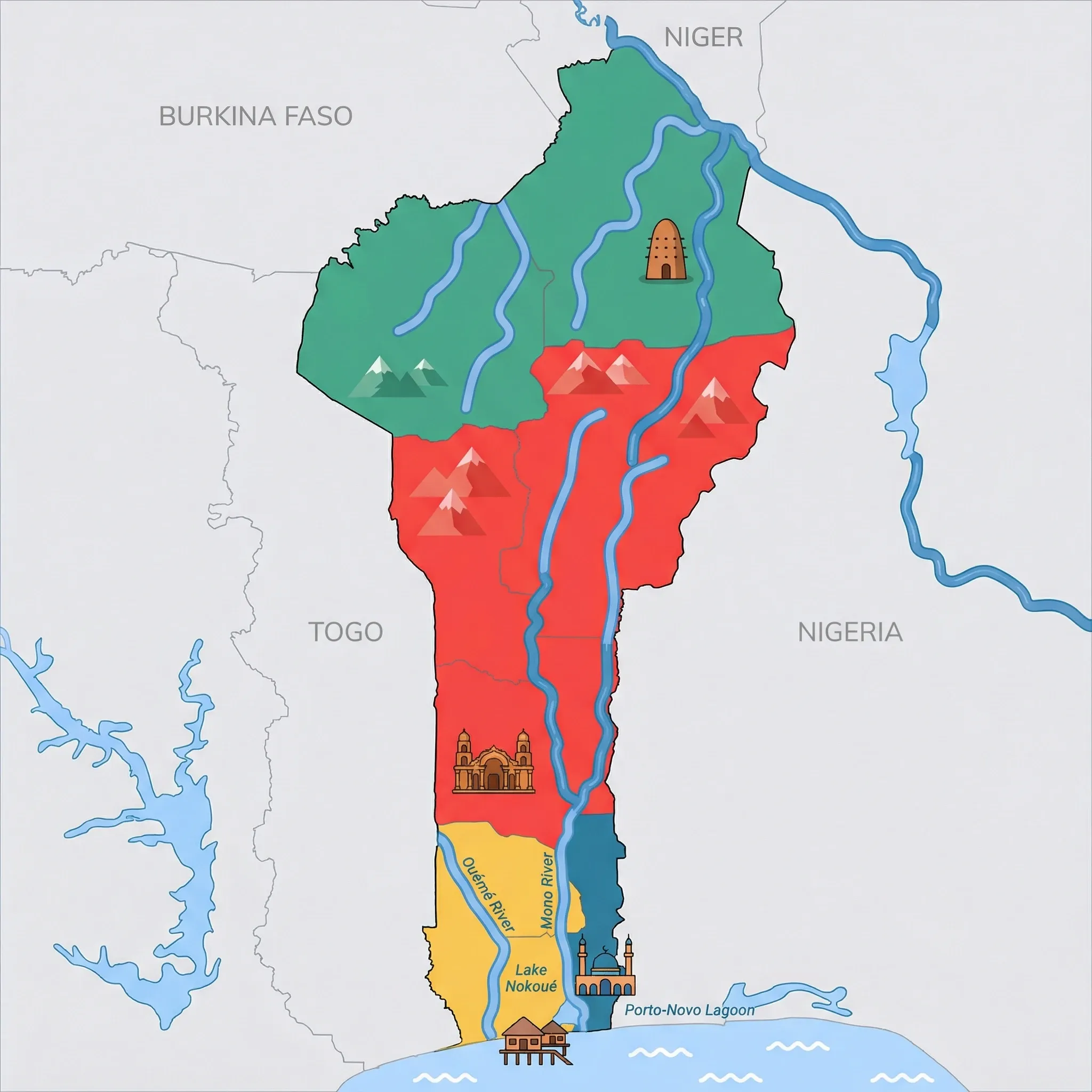
Click a region to explore
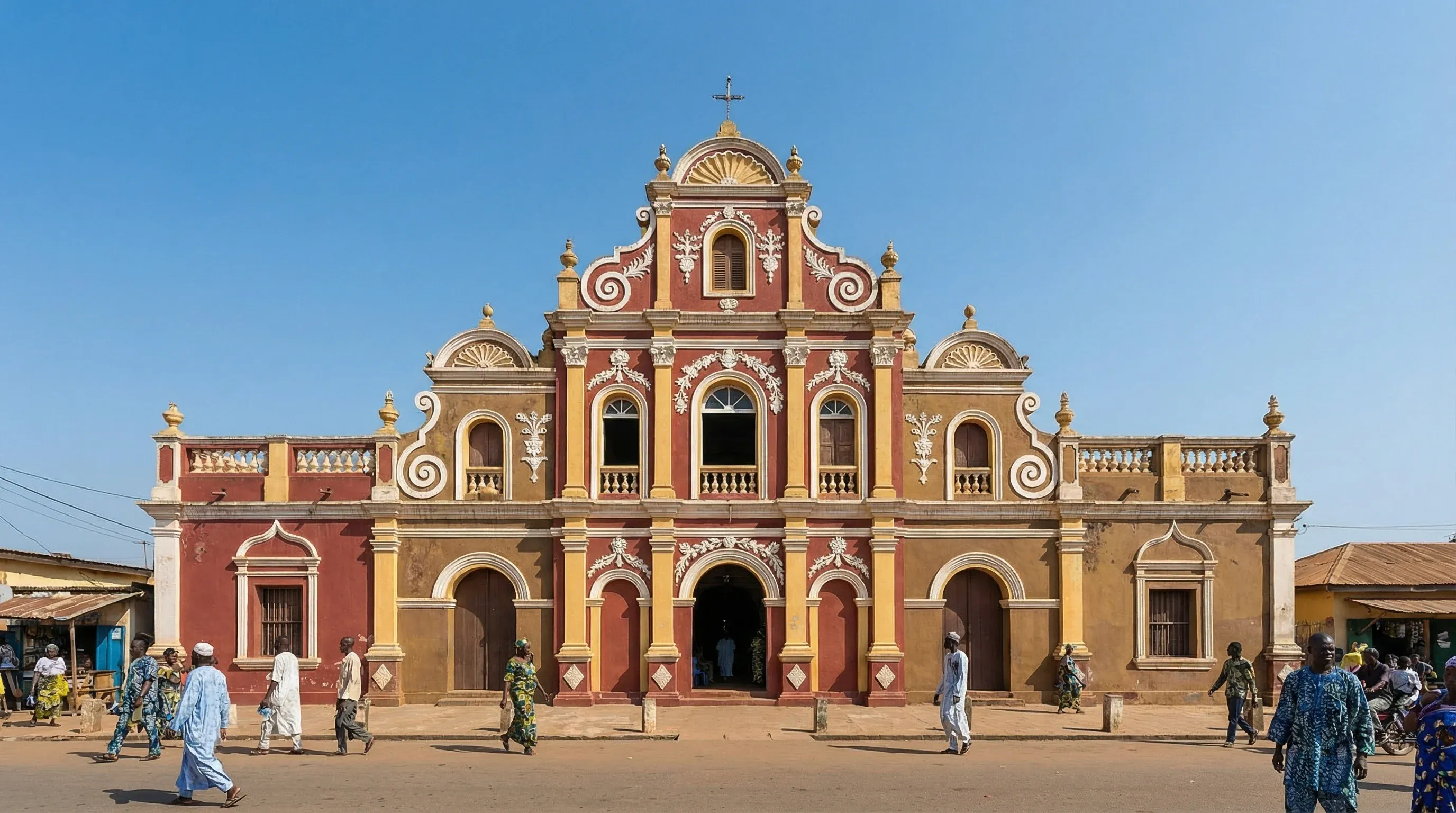
Often bypassed by tourists rushing to Cotonou, Porto-Novo (also known as Hogbonu and Adjatché) is the official capital and a hidden cultural gem. It has a distinctly different rhythm—leafier, older, and more relaxed. For families, this makes it a pleasant alternative base. The city is famous for its Afro-Brazilian architecture, built by Agudas (descendants of returned Afro-Brazilian slaves), giving the streets a colorful, colonial feel that is unique in West Africa.
Porto-Novo is a city of museums and greenery. It feels more walkable and less frantic than Cotonou. A highlight for nature-loving families is a trip to the Adjarra (Black River), located just outside the city. Here, you can take a silent canoe ride through mysterious, jungle-like waterways where raffia palms form tunnels over the water—a mini-adventure that feels miles away from civilization. The city is also a center for the Songhai heritage, offering a different historical perspective to the Abomey kingdom.
Key Attractions
The Jardin des Plantes et de la Nature (JPN) is a perfect respite for children. It's a sacred forest turned botanical garden where you can see monkeys and rare trees in a safe, enclosed environment. History comes alive at the Musée Honmè (King Toffa's Palace), a labyrinth of courtyards that is less imposing but more intimate than the palaces of Abomey.
Don't miss the Great Mosque of Porto-Novo. Its architecture is startling—it looks like a Brazilian church but is actually a mosque, perfectly encapsulating the city's mixed heritage. The Musée Ethnographique Alexandre Sènou Adandé is great for curious kids, packed with Gelede masks (worn during masquerades) and instruments that explain the local culture vividly.
Practical Advice
Porto-Novo is an easy day trip from Cotonou, but staying overnight allows you to enjoy the quiet evenings. The city is conservative; modest dress is appreciated, especially when visiting religious sites. Weekends are quiet, making it a safe time for walking tours.
Food & Drink
Typical meal times: Lunch is 12:30 pm to 2:30 pm. Dinner spots are more limited than in Cotonou and tend to close earlier, around 9:00 pm.
Typical meal costs: Very affordable. A good meal costs 3,000–6,000 XOF (approx. $5–10 USD / €4.50–9 EUR). Street snacks are pennies.
Dietary requirements: Pork is prominent in local dishes here (unlike in Muslim-majority areas), but fish is the staple due to the river delta. Vegetarian options are available but limited to standard sides like aloko and rice.
Signature dishes:
- Adjuevan – A fish stew made with palm oil, specific to the Ouémé region, rich and savory.
- Akassa – Fermented corn dough, usually served with a spicy sauce or grilled fish.
- Klouikloui – Crunchy peanut rings (kulikuli), a famous snack from this area, perfect for kids' lunchboxes.
Why this score?
The region is largely urbanized and flat, offering very little in the way of rugged adventure for families. Most activities involve walking through historical districts or visiting sustainable farms, which are educational rather than physically challenging. The Black River boat tours offer a peaceful nature experience but are conducted in calm, shallow waters with no technical difficulty.
Why this score?
Porto-Novo has several public and private medical facilities that provide a higher standard of care than rural areas, though they are generally less equipped than those in Cotonou. Its geographic proximity to Cotonou (approximately one hour by road) is its greatest medical advantage, allowing relatively quick access to the country's best hospitals. However, the local facilities themselves still have significant limitations in specialized care.
Why this score?
As the official capital, Porto-Novo draws tourists interested in its Afro-Brazilian architecture and the ethnographic museums, but it is often overshadowed by nearby Cotonou. Most visitors come for day trips to see the Great Mosque or the Songhai Centre rather than staying for multiple nights. It remains a quiet capital with a primarily domestic atmosphere and niche international interest.

Porto-Novo is significantly cheaper than Cotonou. A comfortable family suite in a colonial-style hotel costs around 25,000–45,000 XOF (approx. $40–75 USD / €38–68 EUR). Entry to museums like <a data-attraction-id="22032">Musée Honmè</a> is nominal, usually 1,000–2,000 XOF ($1.50–3.00) per person.

Getting Here & Around
Getting Here
- Driving – Only 30–45 minutes drive from Cotonou, though traffic on the bridge can add time.
- Taxi – Shared taxis leave constantly from Cotonou's Dantokpa market area to Porto-Novo.
Getting Around
- Walking – The old center is surprisingly walkable compared to other Beninese cities.
- Zemidjan – Motorbike taxis are the main transport; look for drivers with yellow shirts and specific ID numbers on their backs.
No airports in this region. See the country flight map for nearby connections.

Packing List
The city is surrounded by lagoon waters and the Black River, making mosquitoes very active in the evenings.
Respectful dress is appreciated in this conservative city, and it helps protect against insects near the river.
Great for spotting birds and monkeys in the Jardin des Plantes or along the Adjarra river.
English is spoken less here than in the commercial hubs of Cotonou; basic French helps with museums.
Mandatory for entry; you will likely be refused at the border without the original card.
Power cuts (load shedding) are common even in cities; street lighting is often inconsistent.
Benin is a high-risk zone year-round; bring enough paediatric medication for the whole trip.
ATMs are unreliable outside Cotonou; Euros are the easiest currency to exchange for XOF.
Public bins are rare; carry your own rubbish bag to avoid littering in nature or towns.
Dust and limited running water in rural areas make these essential for keeping kids clean.

Activities & Best Times

Urban tourism, museums, historical sites, architecture
Porto-Novo offers a unique fusion of Afro-Brazilian architecture and deep Voodoo heritage, preserved in high-quality museums like the Alexandre Sènou Adandé Ethnographic Museum. The dry season from November to February is ideal for exploring the historic quarters and vibrant cultural centers without the disruption of heavy tropical rains.

Hiking, wildlife, outdoor exploration, ecotourism
The world-renowned Songhai Center provides an authentic look at sustainable agro-ecology, while the Black River mangroves offer immersive boat-based wilderness experiences. These outdoor activities are most accessible during the peak dry months when water levels are stable and the river delta is most navigable.

Sport tourism, fitness activities, active recreation
The region features established cycling circuits between Porto-Novo and Adjarra and guided boat tours through the river networks. Visiting during the dry season ensures reliable trail conditions and safer river navigation, as heavy precipitation in the off-months can lead to localized flooding.

Beach resorts, marine activities: diving, snorkelling, kite surfing, wind surfing, sailing
Sèmè Beach provides a natural coastal escape, though it lacks the sophisticated resort amenities expected by discerning international families. Peak visitation aligns with the dry season when the Atlantic swell is more predictable and humidity is slightly lower.

Scenic drives, countryside tours, route-based travel
Scenic routes like the Boulevard Lagunaire and the Ouémé Valley drive offer views of the delta landscape and riverside life. While infrastructure is developing, the dry months are essential for clear visibility and safe passage along the unpaved sections of the rural scenic drives.




Public Holidays & Calendar Next 12 months
Public holidays, festivals, cultural celebrations, and seasonal natural phenomena coming up in Porto-Novo (capital) over the next 12 months.
Loading holidays and events...

Travel Advisory
Benin is generally assessed as requiring elevated caution due to common street crime and localized security instability. Major agencies highlight severe risks in northern border regions that contrast with the more stable southern tourist areas.
Safety Topics
Traveller Advice (3 groups)

Maintain a low profile, avoid carrying large amounts of cash, and be particularly vigilant in crowded markets and on beaches after dark. Always carry a copy of your identification and remain aware of local political developments.

While legal status is complex, same-sex relationships are not widely socially accepted. Discretion is strongly recommended, as public displays of affection may lead to harassment or negative attention.

Female travellers may experience verbal harassment or unwanted attention. It is advisable to dress modestly, especially in rural or conservative areas, and avoid walking alone at night.
Agency Summaries
New Zealand does not have a specific travel advisory for Benin but recommends that visitors maintain standard safety awareness and secure comprehensive travel insurance.
A high level of caution is required nationwide due to violent crime and the potential for civil unrest. Security remains sensitive following a thwarted coup attempt in early December 2025.
Increased caution is advised across Benin due to risks of civil unrest, crime, terrorism, and kidnapping. Certain northern border regions are designated as Level 4 (Do Not Travel) due to extreme safety threats.
Travellers should remain highly vigilant throughout Benin due to prevalent crime. Heightened security risks exist in northern border regions, where all travel should be avoided because of the threat of terrorism and kidnapping.
While general travel is permitted in the south, the UK advises against all travel to northern border parks and all but essential travel to several northern and eastern departments due to terrorist activity and rising criminality.
Irish citizens should exercise a high degree of caution. Following political instability in late 2025, travellers are urged to avoid large gatherings and remain alert to security updates.
Information is provided for general guidance only and does not constitute travel, safety, medical, or legal advice. Conditions may change. Users are responsible for independently verifying information before travel.