
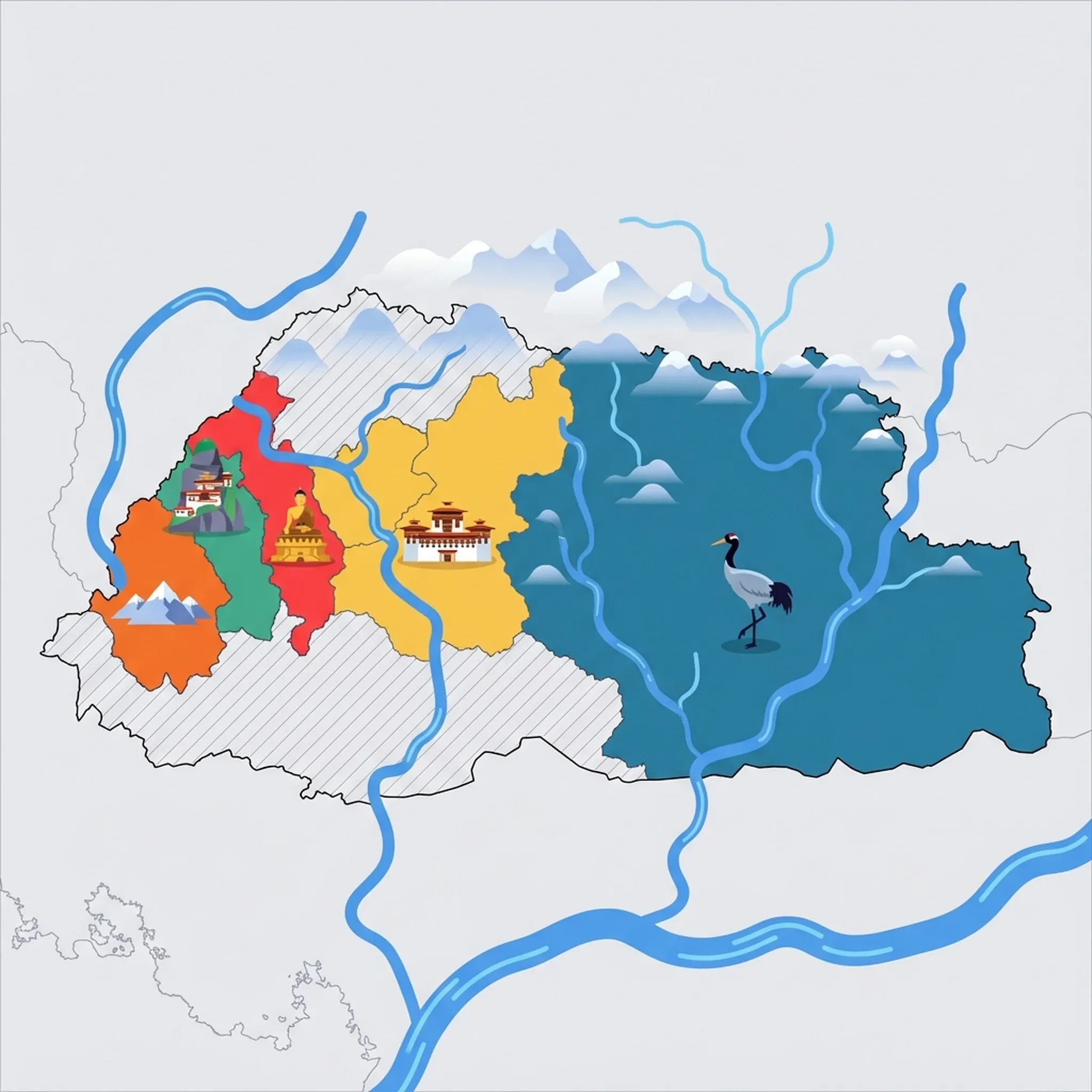
Click a region to explore
Safety Note: This region includes high-altitude passes. Families should be aware of altitude sickness symptoms, especially when crossing the Chele La Pass. Ensure you stay hydrated and ascend gradually.
Overview
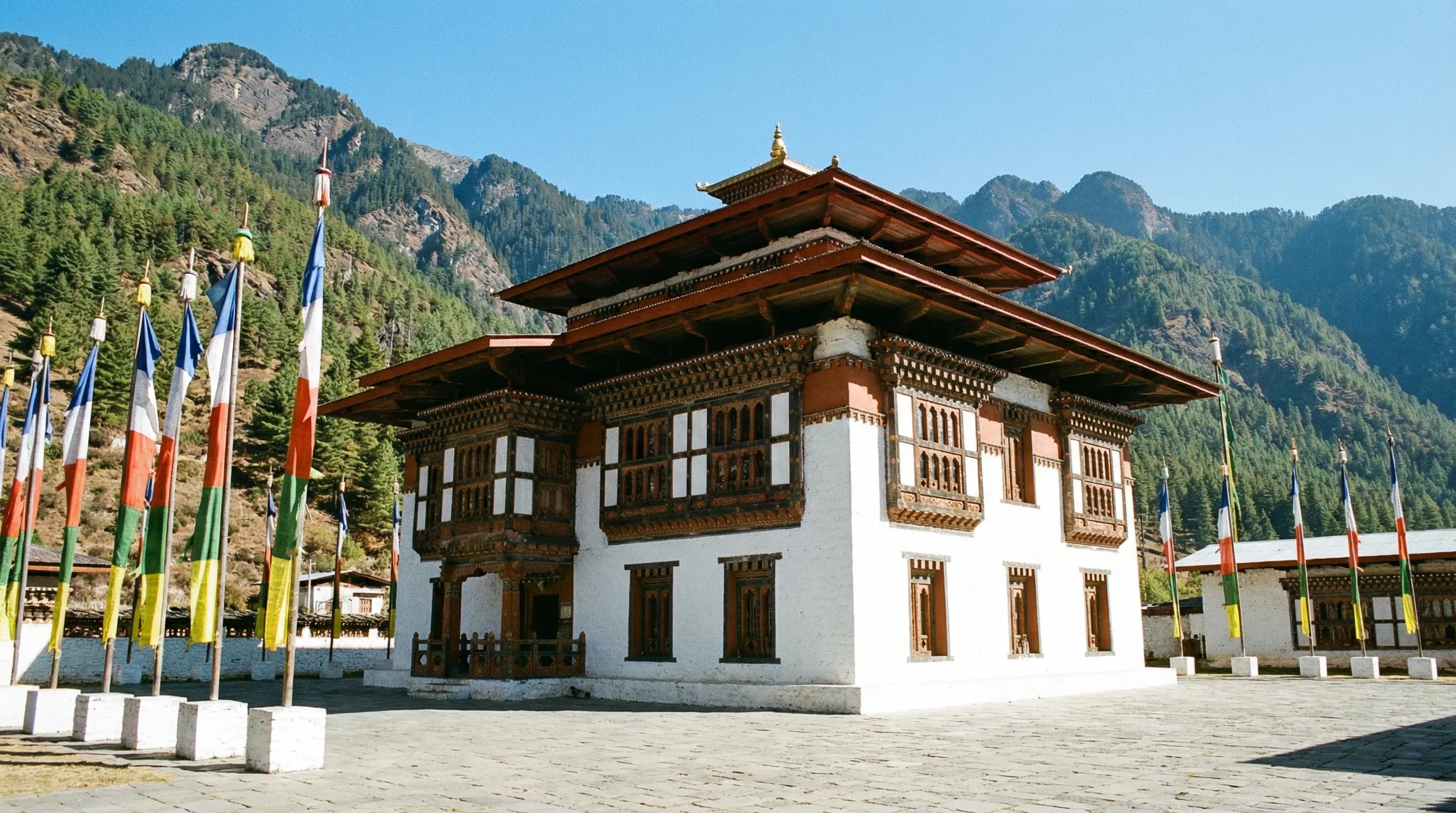
The Haa Valley is often described as a 'hidden gem' with good reason; it was one of the last areas in Bhutan to open to international tourism, retaining a rustic, unspoiled charm that is harder to find in the busier districts of Paro and Thimphu. Geographically, it is a steep, north-south valley bordering Tibet, guarded by the three distinct hills known as 'Meri Puensum' (The Three Brothers), representing the three Bodhisattvas. For families, Haa offers a respite from the 'temple fatigue' that can sometimes set in. Here, the focus is on the outdoors, the crisp alpine air, and the pastoral lifestyle of yak herders and buckwheat farmers.
Haa is an excellent destination for families who want to show their children a lifestyle that has remained largely unchanged for centuries. The valley floor is relatively flat and perfect for mountain biking or walking along the fast-flowing Haa Chhu river. The architecture here is distinct, with ornate wooden cornices and imposing farmhouses that often double as homestays. Staying in a farmstay allows children to see how butter is churned, how hot stone baths are prepared, and how the famous Haa dumplings are made. It is quieter, cooler, and wilder than neighboring valleys, offering a genuine sense of adventure without the crowds.
Key Attractions
The journey to Haa is an attraction in itself, primarily because it usually involves crossing the Chele La Pass. At nearly 4,000 meters, it is the highest motorable road in Bhutan. On a clear day, families can see the snowy dome of Mount Jomolhari and Jichu Drake. It is an exceptional spot for a family picnic; the ridges are covered in prayer flags fluttering in the wind, creating a magical, colorful playground for children (though run carefully due to the altitude!).
Down in the valley, the White Temple (Lhakhang Karpo) and Black Temple (Lhakhang Nagpo) are the cultural anchors. Legend has it that a Tibetan King released two pigeons, a white and a black one, to choose the sites for these temples. The White Temple is the main center for local festivals and is often bustling with monks, while the Black Temple is more mysterious and secluded. Exploring these sites feels less like a museum tour and more like stepping into a living community.
Practical Advice
Haa is high altitude and can be very cold. The best visiting window is late spring for the alpine flowers or October/November for clear skies. Winters are harsh. Accommodation is limited mostly to heritage lodges and farmstays, which are charming but may lack the luxury amenities of Paro hotels. It is an easy day trip from Paro, but an overnight stay is recommended to truly feel the silence of the valley.
Food & Drink
Typical meal times: Lunch 12:00 pm to 1:30 pm, Dinner 6:30 pm to 8:00 pm. Options are limited, so meals are usually taken at your lodge.
Typical meal costs: Usually part of the package. A la carte meals: BTN 350–600 (approx. $4.20–7.20 USD / €3.85–6.60 EUR).
Dietary requirements: Very limited restaurant scene; rely on your hotel or homestay. They can easily provide vegetarian meals but vegan options require advance notice (butter is everywhere).
Signature dishes:
- Hoentay – The absolute signature dish of Haa. These are buckwheat dumplings stuffed with turnip leaves, cheese, and spinach, either steamed or fried. Kids usually love them.
- Dried Yak Cheese – Hard cubes of cheese (chugo) are common here; they are incredibly hard and meant to be sucked on for hours—a local 'jawbreaker' candy.
Why this score?
Reaching the valley requires crossing the 3,988m Chele La Pass, the highest motorable road in Bhutan, providing a high-altitude adventure for visiting families. The region's isolation and lack of heavy tourist development encourage authentic trekking and interaction with traditional livestock-rearing communities.
Why this score?
The Haa district hospital offers only essential primary care, and specialized services are non-existent. While its proximity to Paro provides a slight safety net, any significant health issue would necessitate a multi-hour drive to the capital for adequate treatment.
Why this score?
The Haa Valley remains one of the least visited districts in western Bhutan, often bypassed by tourists sticking to the Paro-Thimphu-Punakha circuit. Despite its stunning alpine scenery and cultural heritage like the White Temple, it serves primarily as a quiet alternative for those seeking to avoid the main crowds.

Haa has fewer luxury hotels than Paro, so accommodation costs are generally lower. Farmstays offer great value. However, the SDF remains the same. A typical souvenir here is dried cheese or yak wool textiles. Extra meals/snacks: BTN 300–500 (approx. $3.60–6.00 USD / €3.30–5.50 EUR).

Getting Here & Around
Getting Here
- Driving – The primary access is via the Chele La Pass from Paro, taking about 2.5 hours. The road is steep and winding but offers some of the best views in the country. Alternatively, a road connects from Chhuzom (confluence) which is lower and less winding, taking about 3 hours from Thimphu.
Getting Around
- Car – Necessary for getting to the pass and moving between the town and remote farmstays.
- Walking & Cycling – Haa is one of the best valleys for mountain biking. The valley floor is gentle enough for older children to ride. Walking trails around the main temples are safe and scenic.
No airports in this region. See the country flight map for nearby connections.
Official Links

Packing List
Chele La Pass is freezing cold and windy even when the valley is warm.
To spot blood pheasants, yaks on ridges, and distant mountain peaks.
Wifi in Haa can be spotty or slow; bring books or cards for evenings.
The air is extremely dry and high-altitude sun burns quickly.
Roads are famously winding with endless hairpin turns; essential for kids even if they don't usually get car sick.
You must remove shoes at every temple and dzong. Laces become frustrating after the fifth stop of the day.
Stray dogs in towns bark incessantly at night; they sleep all day and guard the streets loudly after dark.
Currency exchange is strict; notes with any tears, marks, or folds are often rejected by banks and shops.
Street lighting is minimal and power cuts can occur; useful for evening walks or navigating hotel grounds.
Helps naturally with both mild altitude symptoms and motion sickness on long drives.

Activities & Best Times

Hiking, wildlife, outdoor exploration, ecotourism
Haa offers pristine wilderness and high-altitude trekking through the Trans Bhutan Trail, providing an authentic immersion into the Himalayas for adventurous families. Peak visitation aligns with clear skies and rhododendron blooms, while the heavy summer monsoon and freezing winters make the trails inaccessible or unpleasant.

Urban tourism, museums, historical sites, architecture
The valley preserves a deeply traditional Bhutanese lifestyle centered around the iconic Lhakhang Karpo and Nagpo temples, offering a high-quality cultural experience without the commercialization found elsewhere. Traveling during the dry spring and autumn months ensures comfortable conditions for exploring these historic sites and surrounding villages.

Scenic drives, countryside tours, route-based travel
The drive over Chele La Pass is one of Bhutan's most spectacular scenic routes, offering dramatic Himalayan vistas that appeal to sophisticated travelers. Visibility is best in the post-monsoon autumn and pre-monsoon spring; winter snow and summer rains often lead to road closures or obscured views.

Sport tourism, fitness activities, active recreation
The region features world-class trekking and cycling infrastructure, including the challenging Nub Tsonapata Trek and descent from Chele La. Activity is concentrated in the dry seasons to avoid the logistical hazards of the monsoon and the sub-zero temperatures of the high-altitude winter.




Public Holidays & Calendar Next 12 months
Public holidays, festivals, cultural celebrations, and seasonal natural phenomena coming up in Haa Valley over the next 12 months.
Loading holidays and events...

Travel Advisory
All major global agencies consistently rate Bhutan as a low-risk destination. Standard safety awareness is sufficient for travelers, though they must navigate a highly regulated tourism framework.
Safety Topics
Traveller Advice (5 groups)

Ensure all visas and Sustainable Development Fees (SDF) are paid in advance through licensed operators. Carry physical copies of your visa clearance and proof of insurance.

Accessibility is very limited throughout the country. Steep terrain and lack of specialized infrastructure make travel challenging for those with mobility impairments.

While same-sex activity was decriminalized in 2021, the society remains traditional. Public displays of affection may attract unwanted attention.

Be prepared for altitude sickness when traveling above 2,500 meters. Guides are mandatory for all treks, and emergency medical evacuation insurance is strongly recommended.

Bhutan is generally safe for women, but conservative dress (covering shoulders and knees) is required at all religious and official sites.
Agency Summaries
The security environment is comparable to New Zealand. Travelers should focus on health preparations, specifically for high altitudes, and ensure they have robust medical evacuation coverage.
The country is stable and safe for travelers. Standard security measures are sufficient. Visitors should be aware of the daily sustainable development fee and limited medical infrastructure in remote areas.
Bhutan maintains a low crime rate. Primary risks involve the physical environment, such as high altitude and seasonal monsoon weather. Visitors must comply with entry fee requirements and use licensed operators.
Travelers face no significant security threats but must adhere to strict entry rules, including pre-approved visas and environmental fees. Respect for local Buddhist customs and modest dress is expected.
Tourism is highly regulated. Irish citizens must secure a visa and a guide for travel beyond the main urban centers. Comprehensive medical insurance is essential due to limited local assistance.
Bhutan is considered a safe destination for visitors. All tourists must arrange their travel through approved agents and pay a daily sustainability fee. Travel outside major cities usually requires a government-authorized guide.
Information is provided for general guidance only and does not constitute travel, safety, medical, or legal advice. Conditions may change. Users are responsible for independently verifying information before travel.