
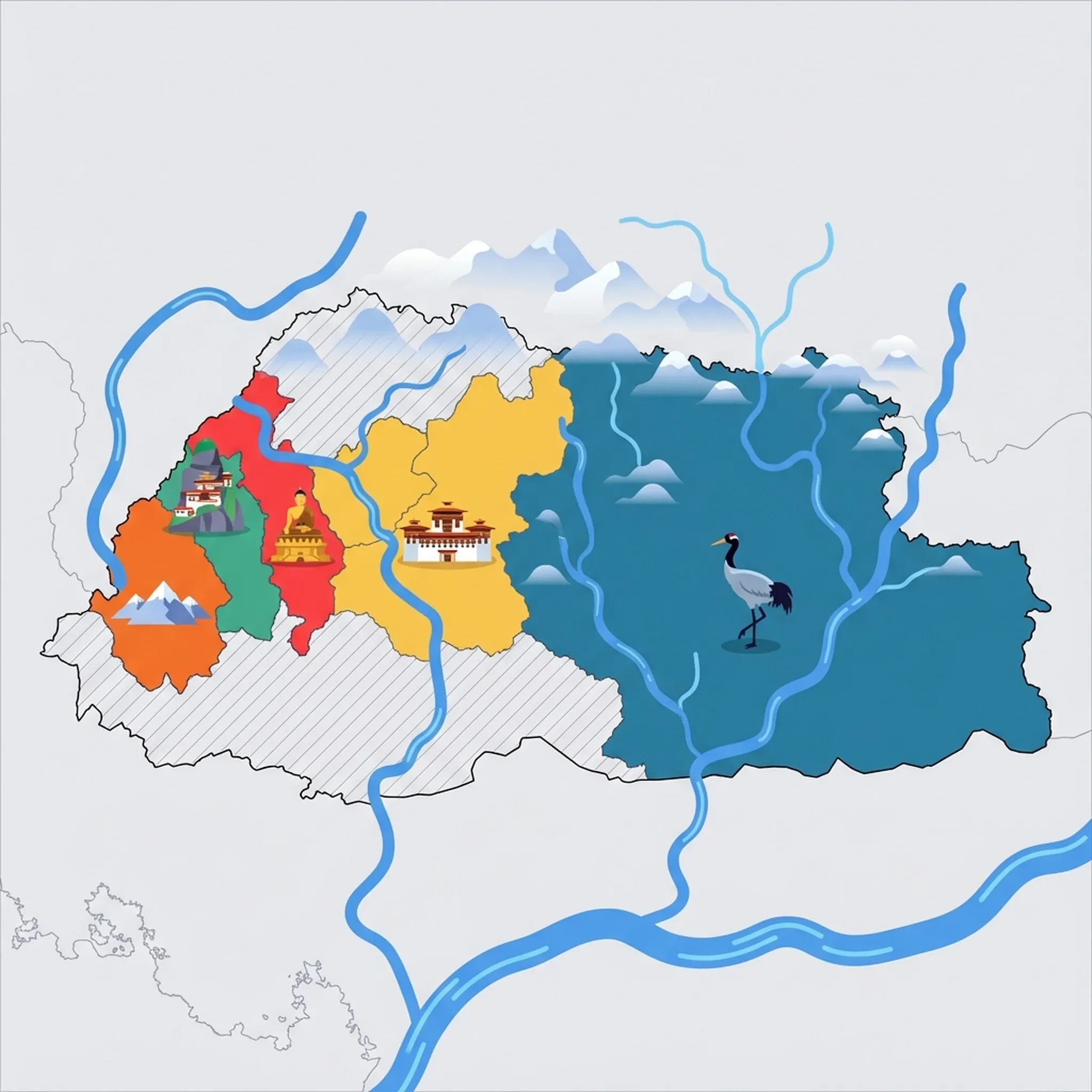
Click a region to explore
Safety Note: River currents in the Pho Chhu and Mo Chhu can be strong. While rafting is popular, ensure you use a certified operator with proper life jackets for children. Do not swim unattended.
Overview
Punakha offers a delightful change of pace and climate from the rest of western Bhutan. Sitting at a lower elevation of 1,200 meters (compared to Thimphu's 2,300m), it enjoys a subtropical climate with warm winters and hot summers. For families visiting in the cooler months, descending into Punakha feels like stepping into a warm garden. The valley produces abundant fruit—bananas, oranges, and guavas grow freely here—and the terraced rice fields turn a golden yellow before harvest. This was the old capital of Bhutan, and it retains a sense of regal grandeur without the urban bustle.
The landscape is dominated by the convergence of two rivers, the Mo Chhu (Mother River) and Pho Chhu (Father River). This geography allows for activities that kids adore, such as white-water rafting (gentle classes available for families) and picnicking by the riverbanks. The valley is also famous for the 'Divine Madman' (Lama Drukpa Kunley), a colorful historical figure known for his unorthodox teaching methods. While some of the phallic imagery associated with his temple (Chimi Lhakhang) is ubiquitous in the village, the walk through the rice paddies to reach it is one of the most pleasant short hikes in the country.
Key Attractions
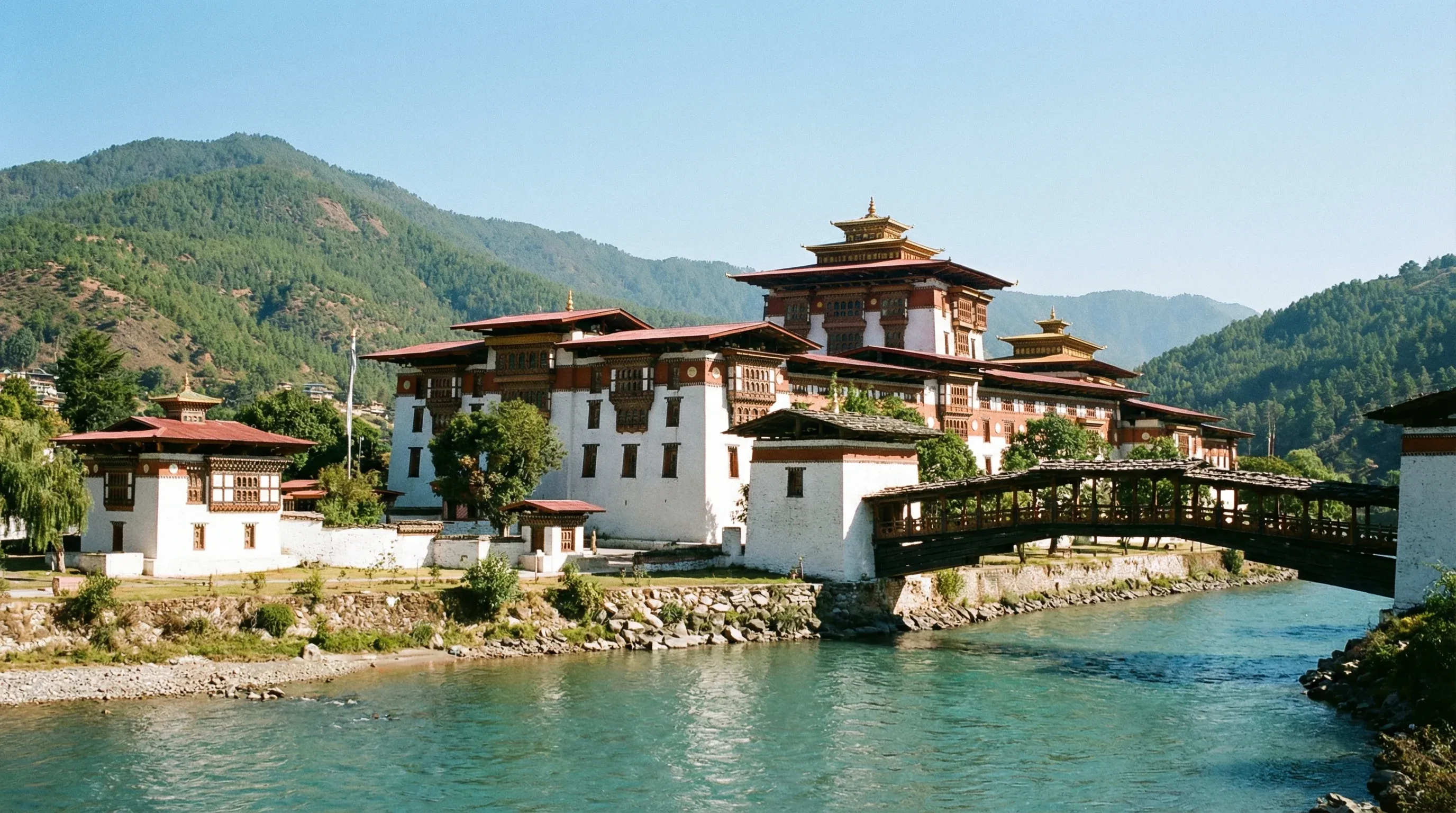
The crown jewel is undoubtedly Punakha Dzong. Widely considered the most beautiful fortress in the country, it sits like a giant ship at the confluence of the two rivers. In spring, the lilac jacaranda trees bloom against the whitewashed walls, creating a stunning scene. Inside, the intricate paintings and the sheer size of the assembly halls are awe-inspiring. Just behind the Dzong lies Bhutan's longest suspension bridge. Covered in prayer flags and swaying gently over the Pho Chhu river, running across this bridge is often a highlight for children.
Getting to Punakha requires crossing the Dochula Pass. This isn't just a road stop; it's a destination. On clear days, the 360-degree view of the Himalayan snow peaks is unmatched. The pass is adorned with 108 chortens (stupas), which form a spiral maze that kids enjoy walking through. It is the perfect spot for a hot chocolate break. For nature-loving families, the upper reaches of the valley touch the Jigme Dorji National Park, offering birdwatching opportunities where you might spot the White-bellied Heron.
Practical Advice
Punakha is warmer than Thimphu/Paro. Bring lighter clothing layers, t-shirts, and sun protection. Mosquitoes can be present here due to the lower elevation, so bring repellent. It is a year-round destination, but spring (March/April) is particularly spectacular for the jacaranda blossoms and festivals.
Food & Drink
Typical meal times: Lunch 12:30 pm to 2:00 pm, often served as a picnic by the river. Dinner 7:00 pm to 8:30 pm.
Typical meal costs: Similar to other regions, approx BTN 500–800 (approx. $6.00–9.60 USD / €5.50–8.80 EUR) per person for extra meals.
Dietary requirements: Abundance of fresh vegetables makes vegetarian dining easy. Fresh river weed soup is a local specialty often available.
Signature dishes:
- Fresh Fruits – Not a 'dish' but a signature of the region: local guavas, persimmons, and bananas are sold at roadside stalls and are safe to eat if peeled.
- Jaju – A soup made from milk and spinach or turnip leaves, often served as a mild side dish.
- Red Rice – Grown extensively in this fertile valley.
Why this score?
The region offers moderate adventure through river rafting on the Mo Chhu and crossing one of the country's longest suspension bridges. Its lower elevation and subtropical climate make for less strenuous hiking compared to the high-altitude passes of Paro or Haa, though the terrain remains hilly and rural.
Why this score?
The Punakha district hospital provides basic emergency and outpatient services but lacks the comprehensive diagnostic equipment found in Thimphu. While it can handle routine tourist needs, families with complex medical requirements would be far from international-standard care.
Why this score?
Punakha is a cornerstone of the 'Golden Triangle' of Bhutanese tourism, attracting nearly all visitors who stay longer than a few days. The majestic Punakha Dzong and the Chimi Lhakhang are major draws, though the absolute volume of visitors remains small compared to global regional destinations.

Punakha has a range of accommodation from luxury lodges (like Uma Punakha) to mid-range riverfront resorts. Rafting costs extra, typically BTN 10,000–15,000 (approx $120–180 USD / €110–165 EUR) per boat (fits 6-8 people). Entrance to the Dzong is covered by the daily fee/ticket system.

Getting Here & Around
Getting Here
- Driving – Punakha is a 2.5 to 3-hour drive from Thimphu via the Dochula Pass. The road is generally good but winding. Stops at the pass are essential for views and acclimatization.
Getting Around
- Car – Essential for moving between the Dzong, the suspension bridge, and Chimi Lhakhang.
- Rafting – Boats can be hired for trips down the Mo Chhu river, passing directly under the Punakha Dzong—a unique way to see the architecture.
No airports in this region. See the country flight map for nearby connections.
Official Links

Packing List
Lower elevation means mosquitoes and sandflies are present, unlike in Thimphu.
It can get quite hot (25°C+) during the day, even when Thimphu is cold.
Useful if you plan to go rafting or wading near the riverbanks.
The descent from Dochula Pass is very twisty.
Roads are famously winding with endless hairpin turns; essential for kids even if they don't usually get car sick.
You must remove shoes at every temple and dzong. Laces become frustrating after the fifth stop of the day.
Stray dogs in towns bark incessantly at night; they sleep all day and guard the streets loudly after dark.
Currency exchange is strict; notes with any tears, marks, or folds are often rejected by banks and shops.
Street lighting is minimal and power cuts can occur; useful for evening walks or navigating hotel grounds.
Helps naturally with both mild altitude symptoms and motion sickness on long drives.

Activities & Best Times

Hiking, wildlife, outdoor exploration, ecotourism
The region features the Trans Bhutan Trail and iconic valley hikes like Khamsum Yulley Namgyal Chorten, offering deep immersion in Himalayan landscapes. Peak months offer stable weather and clear mountain views, while the summer monsoon brings leeches and trail erosion.

Urban tourism, museums, historical sites, architecture
Punakha Dzong is a world-class architectural masterpiece located at a scenic river confluence, providing an authentic glimpse into Bhutanese heritage. The lower valley elevation makes winter a pleasant shoulder season for exploration compared to the colder Thimphu or Paro.

Events, celebrations, seasonal attractions
The Punakha Tshechu is described as 'a significant international draw' - this is incompatible with 'marginal' rating. Should be at least 'good' to reflect its authentic cultural significance.

Spa retreats, wellness centers, peaceful getaways
While rustic, Bhutan's hot springs are culturally significant wellness experiences embedded in traditional medicine practices. The rating should match Central & Eastern Bhutan's 'good' rating for similar tshachu facilities. 'Marginal' undervalues the authentic wellness tourism appeal.

Scenic drives, countryside tours, route-based travel
The drive from Thimphu over the Dochula Pass is one of the most celebrated scenic routes in the Himalayas. Clear skies in spring and autumn are essential for the 360-degree mountain views, which are frequently obscured by clouds during the monsoon.

Sport tourism, fitness activities, active recreation
Offers high-quality active infrastructure including sections of the Trans Bhutan Trail and river-based activities at the confluence. Conditions are optimal when dry, as heavy summer rains can make trails slippery and river currents too volatile for standard tourist rafting.



Public Holidays & Calendar Next 12 months
Public holidays, festivals, cultural celebrations, and seasonal natural phenomena coming up in Punakha over the next 12 months.
Loading holidays and events...

Travel Advisory
All major global agencies consistently rate Bhutan as a low-risk destination. Standard safety awareness is sufficient for travelers, though they must navigate a highly regulated tourism framework.
Safety Topics
Traveller Advice (5 groups)

Ensure all visas and Sustainable Development Fees (SDF) are paid in advance through licensed operators. Carry physical copies of your visa clearance and proof of insurance.

Accessibility is very limited throughout the country. Steep terrain and lack of specialized infrastructure make travel challenging for those with mobility impairments.

While same-sex activity was decriminalized in 2021, the society remains traditional. Public displays of affection may attract unwanted attention.

Be prepared for altitude sickness when traveling above 2,500 meters. Guides are mandatory for all treks, and emergency medical evacuation insurance is strongly recommended.

Bhutan is generally safe for women, but conservative dress (covering shoulders and knees) is required at all religious and official sites.
Agency Summaries
The security environment is comparable to New Zealand. Travelers should focus on health preparations, specifically for high altitudes, and ensure they have robust medical evacuation coverage.
The country is stable and safe for travelers. Standard security measures are sufficient. Visitors should be aware of the daily sustainable development fee and limited medical infrastructure in remote areas.
Bhutan maintains a low crime rate. Primary risks involve the physical environment, such as high altitude and seasonal monsoon weather. Visitors must comply with entry fee requirements and use licensed operators.
Travelers face no significant security threats but must adhere to strict entry rules, including pre-approved visas and environmental fees. Respect for local Buddhist customs and modest dress is expected.
Tourism is highly regulated. Irish citizens must secure a visa and a guide for travel beyond the main urban centers. Comprehensive medical insurance is essential due to limited local assistance.
Bhutan is considered a safe destination for visitors. All tourists must arrange their travel through approved agents and pay a daily sustainability fee. Travel outside major cities usually requires a government-authorized guide.
Information is provided for general guidance only and does not constitute travel, safety, medical, or legal advice. Conditions may change. Users are responsible for independently verifying information before travel.