
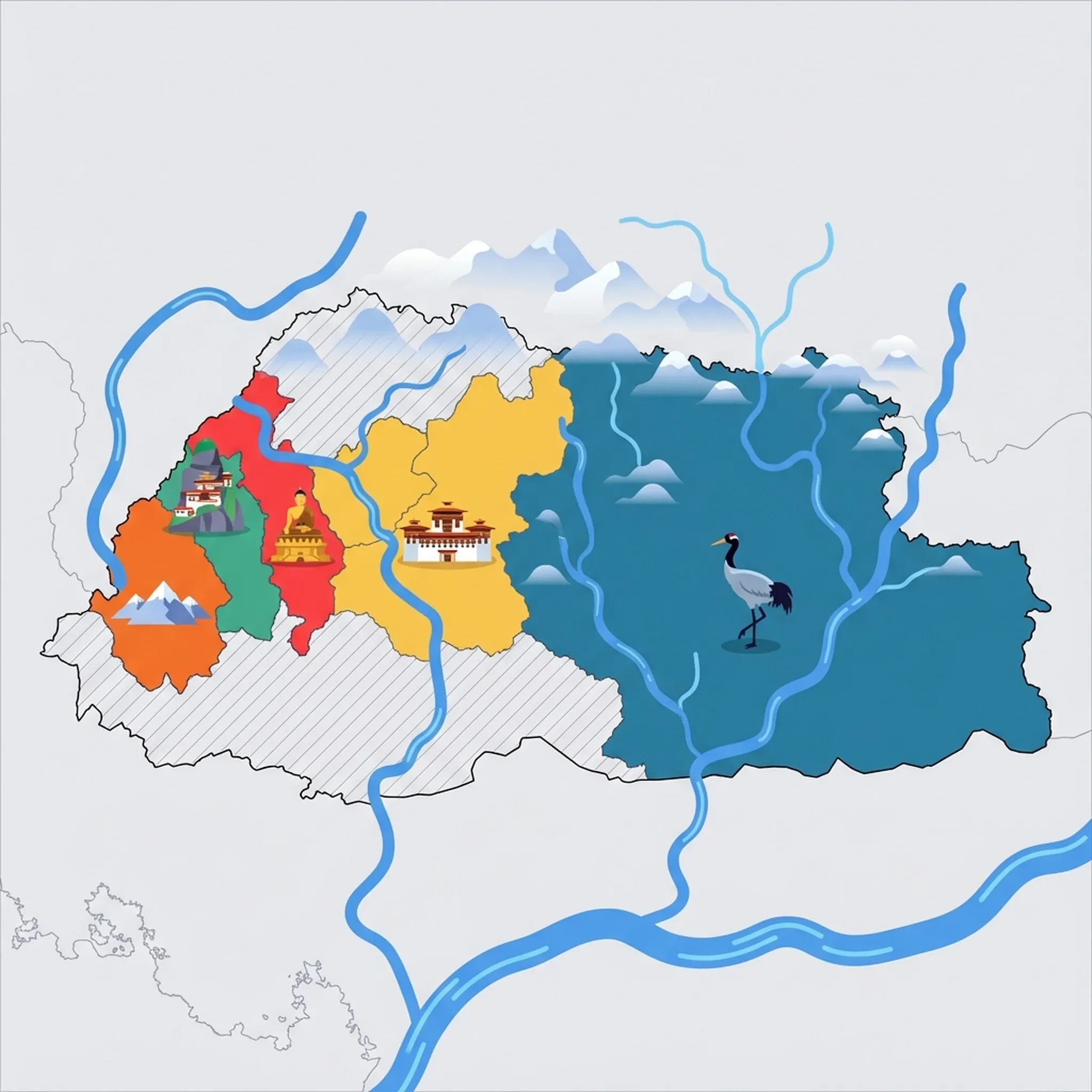
Click a region to explore
Safety Note: Traffic in Thimphu is busier than anywhere else in Bhutan. Watch children when crossing streets—although there are no traffic lights, cars move continuously. The altitude (2,300m) is significant; take it easy on your first day.
Overview
Thimphu is a capital city like no other. Nestled in a narrow valley, it is the only national capital in the world without traffic lights (traffic is directed by white-gloved policemen in a balletic display that kids find fascinating). For families, Thimphu is the best place to ease into Bhutanese culture. It offers the widest range of amenities, including western-style cafes, bookshops, and parks, while still being deeply traditional. Monks with smartphones, traditional archers playing near a football stadium, and ancient dzongs next to new buildings—Thimphu is a living juxtaposition.
This is the educational hub of the trip. The museums here are engaging and colorful. The city is walkable in the center, centered around the Clock Tower Square which often hosts open-air concerts or events where local children play. A short drive up the hill offers panoramic views of the valley, dominated by the massive Buddha statue. It is vibrant, slightly chaotic by Bhutanese standards (but calm by global ones), and full of character. It serves as the perfect base to understand how modern Bhutan navigates the 21st century while holding onto its roots.
Key Attractions
No family trip to Thimphu is complete without visiting the Motithang Takin Preserve. The Takin, a bizarre-looking creature often described as a mix between a goat and a cow, is Bhutan's national animal. The preserve allows kids to see these gentle giants up close in a forest setting. Afterward, head to the National Memorial Chorten. It is always buzzing with elderly Bhutanese spinning prayer wheels; walking around it (clockwise!) is a serene communal experience.
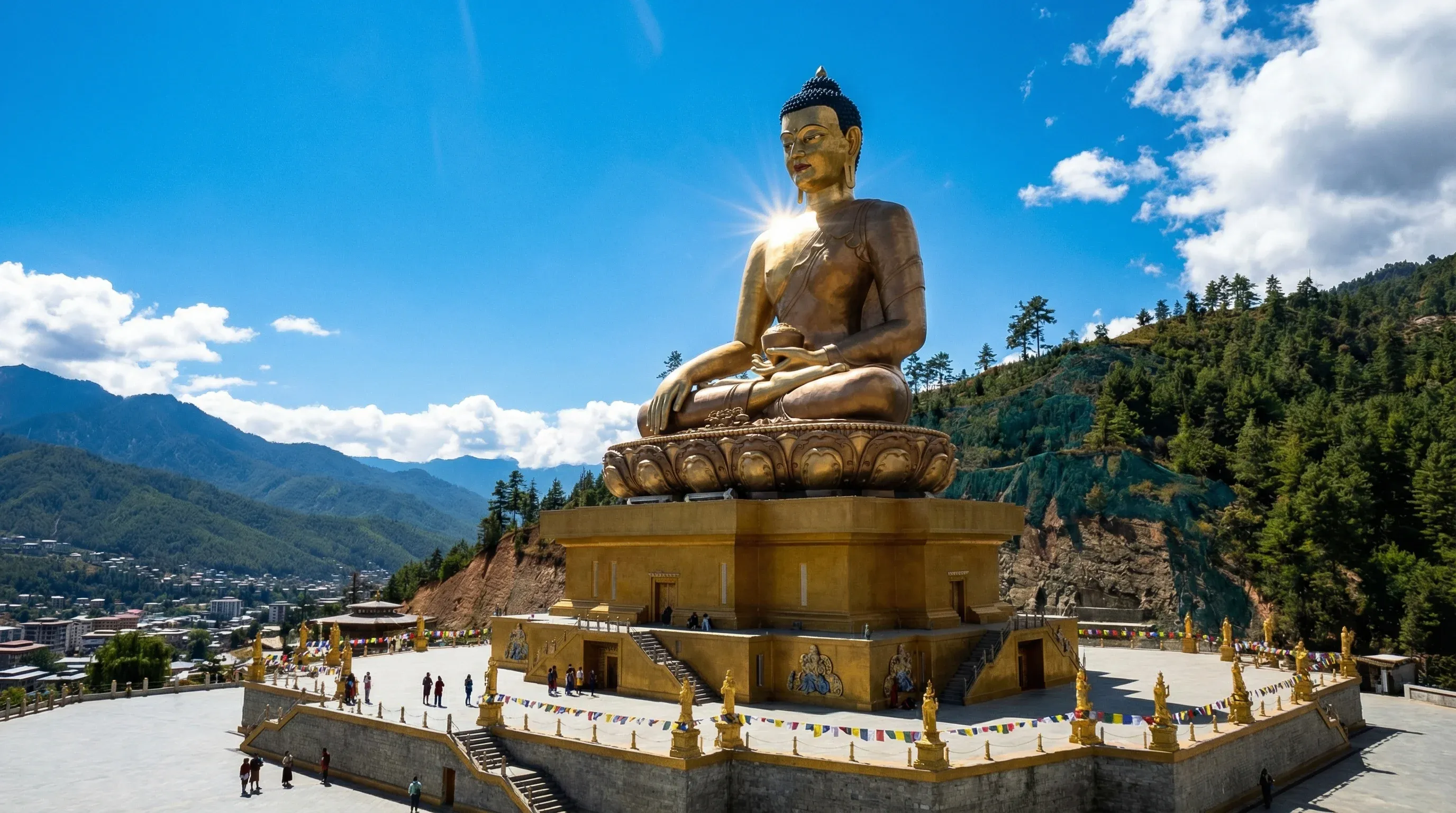
Dominating the skyline is the Buddha Dordenma (Buddha Point). At 51.5 meters tall, this bronze and gold statue is one of the largest in the world. The sheer scale impresses children, and the plaza offers space to run. For a dose of culture, the Royal Textile Academy is surprisingly engaging, showcasing the intricate royal garments and the art of weaving. Finally, visit the Tashichho Dzong in the late afternoon. This is the seat of government and the King's office. You can watch the flag-lowering ceremony, a precise and formal tradition that takes place at sunset.
Practical Advice
Thimphu is the coldest of the western valleys due to the wind funneling through. Evenings require a warm jacket. ATMs are most reliable here. Weekend markets (Fri-Sun) are a great place to see locals shopping for incense, dried fish, and cheese—a sensory adventure for kids.
Food & Drink
Typical meal times: Lunch 1:00 pm to 2:30 pm. Dinner 7:30 pm to 9:30 pm. Thimphu has the latest dining hours in the country.
Typical meal costs: A meal in a good cafe costs BTN 600–1,200 (approx. $7.20–14.40 USD / €6.60–13.20 EUR). High-end hotels charge more.
Dietary requirements: The best place for dietary needs. You can find pizza, burgers, Indian, and even Korean food here alongside Bhutanese staples. Gluten-free baked goods are rare but appearing.
Signature dishes:
- Momo – Tibetan-style dumplings (steamed or fried) filled with cheese, pork, or beef. Served with spicy ezay (chili paste). The 'fast food' of Bhutan.
- Shakam Ema Datshi – Dried beef with cheese and chilies, a rich and chewy version of the national dish.
- Suja – Butter tea. Salty and savory, it’s an acquired taste but worth trying.
Why this score?
Thimphu is the most urbanized part of Bhutan, featuring paved roads and modern amenities that reduce the overall sense of ruggedness. Adventure is found primarily on the city's outskirts through day hikes in the Jigme Dorji National Park or visiting the Motithang Takin Preserve.
Why this score?
Thimphu is home to the Jigme Dorji Wangchuck National Referral Hospital, the best-equipped medical facility in the country with the highest concentration of English-speaking specialists. While it does not reach the levels of a global medical hub, it is the only place in Bhutan where foreigners can receive a relatively high standard of emergency care.
Why this score?
As the nation's capital, Thimphu is a mandatory stop for almost all international tourists to Bhutan, though its total visitor count is restricted by the country's high-value, low-volume policy. It offers the most developed tourism infrastructure in the kingdom, including museums, hotels, and the massive Buddha Dordenma statue.

Thimphu has the highest concentration of shops, cafes, and luxury hotels (Taj Tashi, Le Méridien). While basic costs are covered by tour packages, you will likely spend more here on discretionary items like coffee, western meals, and high-end handicraft souvenirs. Taxi short hops: BTN 100–200 ($1.20–2.40 USD).

Getting Here & Around
Getting Here
- Driving – Thimphu is a 1-hour drive (50km) from Paro Airport. It is also the starting point for the drive east via the Dochula Pass. Access from the Indian border (Phuentsholing) is via the Phuentsholing-Thimphu Highway (AH48), a scenic 6-hour ascent.
Getting Around
- Car – The standard way to get between spread-out attractions like the Buddha Point and Takin Preserve.
- Walking – The Norzin Lam (main street) is great for walking. The National Memorial Chorten is best experienced on foot.
No airports in this region. See the country flight map for nearby connections.
Official Links

Packing List
Thimphu is the capital; locals dress well, and you'll want to look smart for dinner.
Hotels have varying socket types (Indian/Euro/British mix); a universal one is safest.
Useful after spinning public prayer wheels or handling money at the market.
Plastic bags are technically banned; a tote is useful for souvenir shopping.
Roads are famously winding with endless hairpin turns; essential for kids even if they don't usually get car sick.
You must remove shoes at every temple and dzong. Laces become frustrating after the fifth stop of the day.
Stray dogs in towns bark incessantly at night; they sleep all day and guard the streets loudly after dark.
Currency exchange is strict; notes with any tears, marks, or folds are often rejected by banks and shops.
Street lighting is minimal and power cuts can occur; useful for evening walks or navigating hotel grounds.
Helps naturally with both mild altitude symptoms and motion sickness on long drives.

Activities & Best Times

Urban tourism, museums, historical sites, architecture
Thimphu offers a world-class blend of living Buddhist heritage and striking traditional architecture, with iconic sites like the Buddha Dordenma. The dry, clear months of spring and autumn provide the best atmosphere for exploring the city's historic quarters and vibrant festivals.

Hiking, wildlife, outdoor exploration, ecotourism
Immersion in the high Himalayas is possible via major national parks and trekking routes like the Druk Path, home to unique species like the Takin. Peak conditions coincide with the dry seasons when trails are most accessible and mountain visibility is at its best.

Events, celebrations, seasonal attractions
The Thimphu Tshechu is described as 'one of Asia's most authentic and visually stunning festivals'. This is Bhutan's largest tshechu and a globally recognized cultural event. 'Marginal' is a severe underrating.

Scenic drives, countryside tours, route-based travel
Spectacular high-altitude drives like the highway via Dochula Pass offer world-class Himalayan panoramas and authentic rural transitions. Visibility is key, making the clear spring and autumn months ideal, while the summer monsoon brings significant travel disruption.

Sport tourism, fitness activities, active recreation
The region features internationally recognized trekking routes and adventure parks that cater to active travelers seeking high-altitude challenges. Optimal conditions occur during the stable weather windows of spring and autumn, while winter ice and summer rains pose barriers.

Attractions (14 total)



Public Holidays & Calendar Next 12 months
Public holidays, festivals, cultural celebrations, and seasonal natural phenomena coming up in Thimphu over the next 12 months.
Loading holidays and events...

Travel Advisory
All major global agencies consistently rate Bhutan as a low-risk destination. Standard safety awareness is sufficient for travelers, though they must navigate a highly regulated tourism framework.
Safety Topics
Traveller Advice (5 groups)

Ensure all visas and Sustainable Development Fees (SDF) are paid in advance through licensed operators. Carry physical copies of your visa clearance and proof of insurance.
Accessibility is very limited throughout the country. Steep terrain and lack of specialized infrastructure make travel challenging for those with mobility impairments.

While same-sex activity was decriminalized in 2021, the society remains traditional. Public displays of affection may attract unwanted attention.

Be prepared for altitude sickness when traveling above 2,500 meters. Guides are mandatory for all treks, and emergency medical evacuation insurance is strongly recommended.

Bhutan is generally safe for women, but conservative dress (covering shoulders and knees) is required at all religious and official sites.
Agency Summaries
The security environment is comparable to New Zealand. Travelers should focus on health preparations, specifically for high altitudes, and ensure they have robust medical evacuation coverage.
The country is stable and safe for travelers. Standard security measures are sufficient. Visitors should be aware of the daily sustainable development fee and limited medical infrastructure in remote areas.
Bhutan maintains a low crime rate. Primary risks involve the physical environment, such as high altitude and seasonal monsoon weather. Visitors must comply with entry fee requirements and use licensed operators.
Travelers face no significant security threats but must adhere to strict entry rules, including pre-approved visas and environmental fees. Respect for local Buddhist customs and modest dress is expected.
Tourism is highly regulated. Irish citizens must secure a visa and a guide for travel beyond the main urban centers. Comprehensive medical insurance is essential due to limited local assistance.
Bhutan is considered a safe destination for visitors. All tourists must arrange their travel through approved agents and pay a daily sustainability fee. Travel outside major cities usually requires a government-authorized guide.
Information is provided for general guidance only and does not constitute travel, safety, medical, or legal advice. Conditions may change. Users are responsible for independently verifying information before travel.