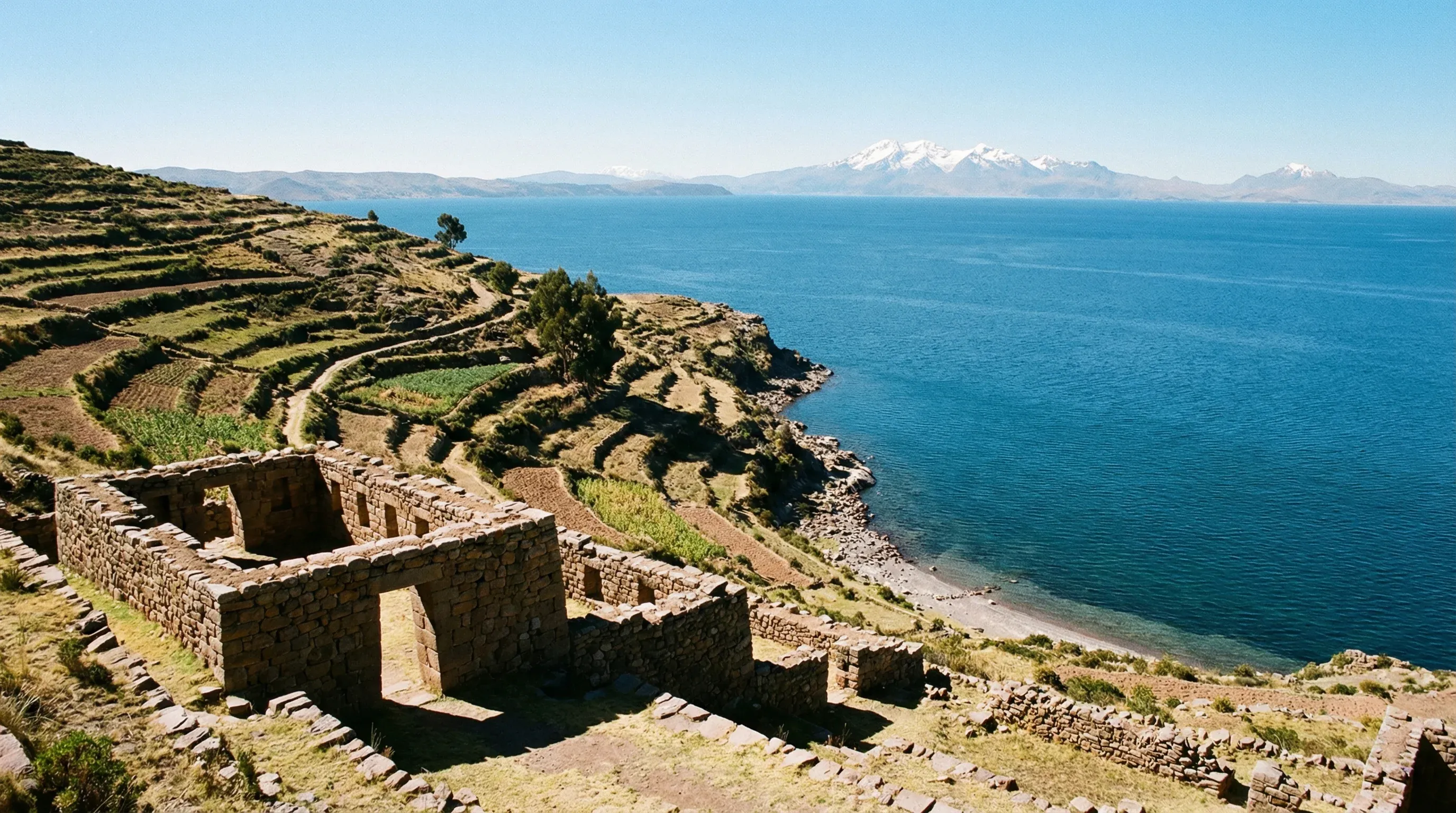

Lake Titicaca (Copacabana)
Sail the world's highest lake where Inca legends come alive 🛥️☀️
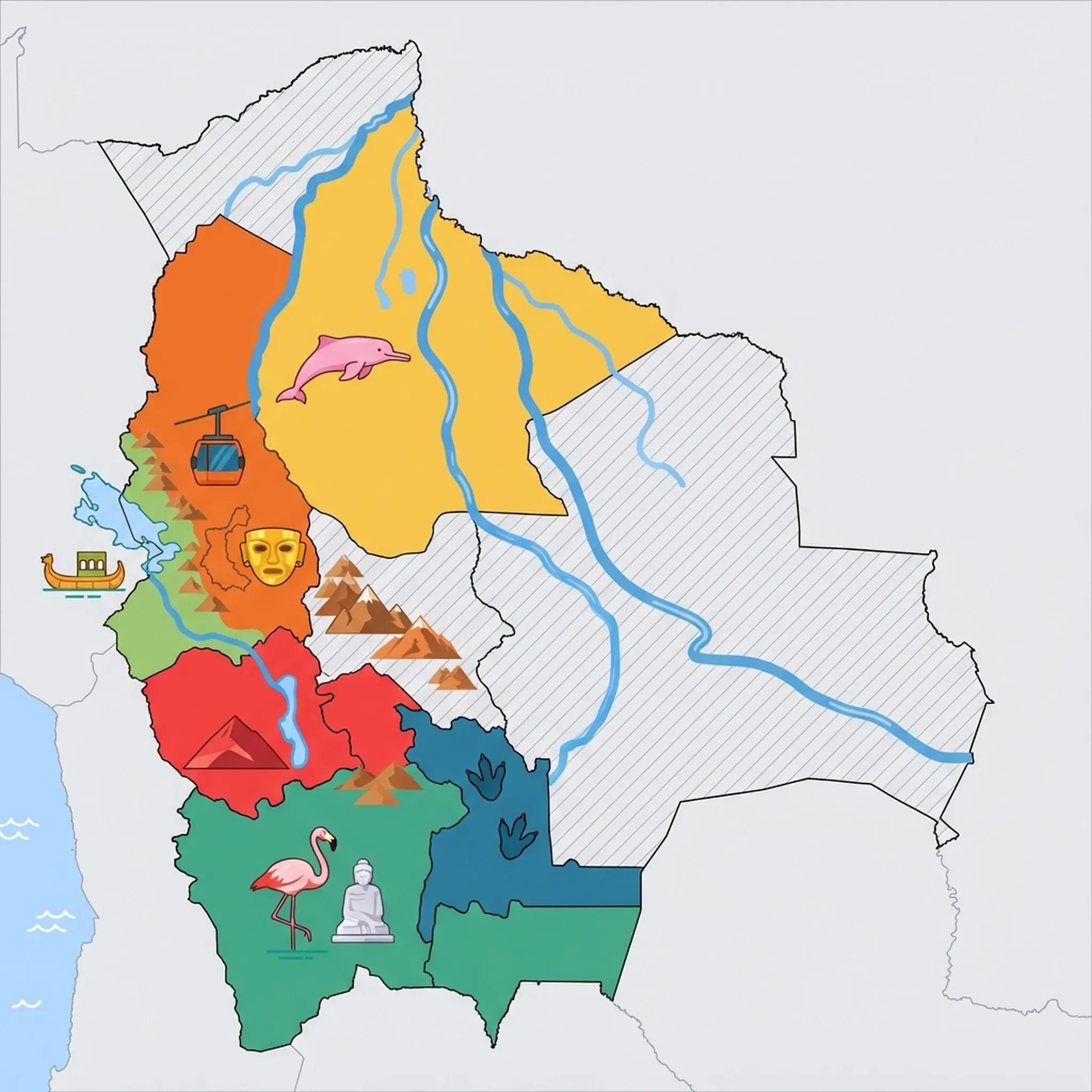
Click a region to explore
Lake Titicaca is more than just a body of water; it is the legendary birthplace of the Inca civilization and a place of stunning, high-altitude beauty. The Bolivian side is anchored by the town of Copacabana, a small, walkable hub with a backpacker vibe and deep spiritual roots. For families, the sheer vastness of the deep blue lake against the backdrop of snow-capped Andean peaks is awe-inspiring. The air is thin and crisp here at 3,800 meters (12,500 feet), so the pace of life naturally slows down, allowing for a relaxing family itinerary focused on nature and history.
The town itself is a mix of local market life and tourism. The waterfront is lined with paddle boats shaped like swans—a kitschy but fun activity for younger kids—and stalls selling fresh trout. However, the real magic lies in the boat trips to the islands. Isla del Sol (Sun Island) is a car-free paradise where families can hike along ancient Inca trails, passing llamas and donkeys carrying goods. The lack of traffic makes it safe for children to explore, though parents must be mindful of the altitude and steep paths. The cultural blend of Catholic tradition and indigenous Aymara beliefs is visible everywhere, particularly in the blessing of cars with flowers and alcohol outside the main basilica, a ceremony that fascinates visitors of all ages.
Key Attractions
The town is dominated by the gleaming white Basilica of Our Lady of Copacabana. This 17th-century shrine houses the famous Dark Virgin and is a riot of color and devotion. Families will be intrigued by the 'Benediction of the Automobiles' that happens daily in front of the church, where vehicles are decorated like parade floats. It's a unique cultural slice of life that is visually engaging for children.
A boat ride away lies the Pilko Kaina (Inca Palace) on the southern tip of Isla del Sol. This two-story stone structure is one of the best-preserved Inca ruins in the area. It feels like a genuine castle to explore, perched right on the water's edge. Hiking from the Yumani port to the ruins gives kids a sense of adventure, following in the footsteps of the Incas. The views across the lake from here are unmatched, often stretching all the way to the Cordillera Real mountains.
Practical Advice
Best time to visit: April to October offers clear blue skies and sunny days, though nights are freezing. The rainy season (November to March) can make boat crossings choppy and hiking muddy.
Logistics: The altitude is the main challenge. Ideally, visit Titicaca after spending a few days in La Paz or Cusco to acclimatize. Sun protection is non-negotiable; the UV rays at this altitude burn skin in minutes. Bring high-factor sunscreen and hats for everyone. Strollers are difficult to use on the cobbled streets and island trails; a baby carrier is essential for toddlers.
Food & Drink
Typical meal times: Lunch is the primary meal, usually 12:00 pm to 2:00 pm. Dinner is available from 6:30 pm, with many tourist restaurants staying open until 9:00 pm or 10:00 pm.
Typical meal costs: Dining is affordable. A fresh trout meal costs 35–60 BOB (approx. $5–9 USD / €4.50–8 EUR). A set lunch menu (almuerzo) can be found for as little as 20–30 BOB (approx. $3–4.50 USD / €2.50–4 EUR).
Dietary requirements: Vegetarians will find plenty of options, including pizza, pasta, and quinoa soups. Trout (trucha) is the main protein. Vegan cheese is rare, but vegetable-based dishes are easy to find.
Signature dishes:
- Trucha a la plancha – Fresh rainbow trout from the lake, grilled and served with rice, french fries, and salad. It's the region's must-eat dish.
- Sopa de Quinoa – A hearty, warming soup made from locally grown quinoa, potatoes, and vegetables, perfect for cold evenings.
- Pasankalla – Huge, puffed white corn kernels (like giant sweet popcorn) often sold in big bags on the street; a perfect snack for kids.
Why this score?
The region offers moderate adventure through high-altitude hiking on Isla del Sol and boat transit across the world's highest navigable lake. The physical challenge is largely driven by the 3,800-meter altitude rather than technical terrain or extreme isolation.
Why this score?
Healthcare in Copacabana is limited to small local clinics and basic pharmacies that can handle minor ailments or altitude sickness. For any trauma or serious illness, the closest reliable hospitals are several hours away by road in La Paz.
Why this score?
Copacabana is a staple of the South American 'gringo trail,' serving as the primary gateway for travelers crossing between Peru and Bolivia. While it sees a high volume of international backpackers, the infrastructure remains relatively low-capacity and focused on short-term transit visits to the islands.

Lake Titicaca is a high-value destination. Accommodation is cheaper than La Paz; a nice family room with lake views costs 250–450 BOB (approx. $35–65 USD / €30–60 EUR). Transport to islands is cheap, with boat tickets around 30–40 BOB (approx. $4–6 USD / €3.50–5 EUR) per person return.

Getting Here & Around
Getting Here
- Bus – Frequent tourist buses run from La Paz (3.5–4 hours). The journey includes a quirky crossing at the Strait of Tiquina where passengers hop on a small boat while the bus floats across on a wooden barge—kids usually find this exciting.
- Private Transfer – A more flexible option for families, allowing stops for photos and toilet breaks. Costs are higher but offer comfort.
Getting Around
- Walking – Copacabana town is small and best explored on foot, though the hills can be breathless work.
- Boat – Essential for visiting Pilko Kaina and Isla del Sol. Public boats leave at 8:30 am and 1:30 pm. Private boats can be hired for more flexibility, which is often worth it for families to avoid waiting.
No airports in this region. See the country flight map for nearby connections.

Packing List
The combination of cold wind, dry air, and high-altitude sun causes chapped lips very quickly.
The lake can get choppy during boat crossings to the islands.
Evenings drop to freezing rapidly; buying a local alpaca hat is also a fun souvenir.
The extremely dry high-altitude air can cause itchy, dry eyes for children and adults.
The high-altitude air is extremely dry and often causes nosebleeds, especially in children.
Budget hotels and hostels rarely have plugs in the sinks, making it hard to wash hands or clothes.
Heating is rare in hotels, and nights on the Altiplano drop well below freezing.
Power cuts can occur in remote areas like the Salt Flats; useful for nighttime bathroom trips.

Activities & Best Times

Hiking, wildlife, outdoor exploration, ecotourism
Offers world-class high-altitude trekking on Isla del Sol and unique ecological features like the endemic Giant Frog. The dry winter months (May-September) provide the clear skies and stable trail conditions necessary for safe exploration of this rugged Andean landscape.

Urban tourism, museums, historical sites, architecture
A deeply authentic spiritual destination featuring the historic Basilica of Copacabana and significant Inca archaeological sites. While the dry season is optimal for visiting island ruins, the significant cultural festivities in February maintain interest despite seasonal rains.

Sport tourism, fitness activities, active recreation
Boasts internationally recognized high-altitude hiking routes and adventure infrastructure like the Copacabana zipline. Physical activities are best undertaken during the dry season to ensure visibility and avoid the treacherous mud common during the summer rainfall period.

Learning experiences, scientific sites, historical education
Features a specialized research aquarium for the Titicaca Giant Frog, offering a unique but niche scientific experience. Access is most reliable during the dry months when regional transport infrastructure is not impacted by heavy Altiplano storms.

Scenic drives, countryside tours, route-based travel
The scenic drive from La Paz includes a unique ferry crossing and dramatic mountain vistas along Ruta Nacional 2. Peak travel is restricted to the dry season to ensure road safety and clear panoramic views of the lake and Cordillera Real.

Attractions (8 total)



Public Holidays & Calendar Next 12 months
Public holidays, festivals, cultural celebrations, and seasonal natural phenomena coming up in Lake Titicaca (Copacabana) over the next 12 months.
Loading holidays and events...

Travel Advisory
All six major agencies recommend a baseline level of elevated caution for Bolivia. While most of the country is open for travel, there is a strong consensus on the risks posed by frequent civil unrest and roadblocks, as well as high-risk pockets like the Chapare region where crime levels are critical.
Safety Topics
Traveller Advice (4 groups)

Stay informed via local media regarding roadblocks and strikes which can strand travellers for days. Always carry extra food, water, and warm clothing on long road trips. Avoid any large gatherings or protests, as they can turn violent unexpectedly.

Information on accessibility is limited; travellers with physical or sensory disabilities should prepare for infrastructure challenges and research medical facility locations in advance.

Be aware of local attitudes and social norms; travellers are encouraged to review specific advice regarding safety and legal considerations for the LGBTQ+ community in Bolivia.

Female travellers should consult gender-specific safety guides and take standard precautions, especially when travelling solo or at night in urban centres.
Agency Summaries
Heightened caution is necessary because of the potential for violent crime and sudden civil unrest. New Zealanders should avoid all protests and avoid the Chapare region for any non-essential purposes due to kidnapping and extortion risks.
Australians are encouraged to be particularly careful due to the dual threats of violent crime and civil instability. Demonstrations and roadblocks are common and unpredictable, potentially leading to significant travel delays or violence.
The UK government advises against any non-essential travel to the Chapare region in Cochabamba. Across the country, visitors should prepare for disruptions caused by political demonstrations and marches, which can emerge with very little notice and block major transport routes.
Irish citizens should be aware of a continuous risk of social unrest and strikes that can impact tourist infrastructure and domestic travel. Vigilance is required near large crowds, and travellers are warned not to attempt to bypass road blockades.
Increased caution is advised nationwide because of civil unrest, which often manifests as sudden strikes and demonstrations. Specifically, the Chapare region is designated as 'Do Not Travel' due to high levels of violent crime and limited emergency support for foreign nationals.
Travellers should remain highly vigilant due to persistent political and social tensions that frequently result in roadblocks throughout the country. While the general advice is to be cautious, there is a specific warning to avoid non-essential travel to the Chapare region because of risks related to drug trafficking and kidnapping.
Information is provided for general guidance only and does not constitute travel, safety, medical, or legal advice. Conditions may change. Users are responsible for independently verifying information before travel.