
Uyuni Salt Flats
Walk on clouds and play with perspective in a world of white ☁️📸
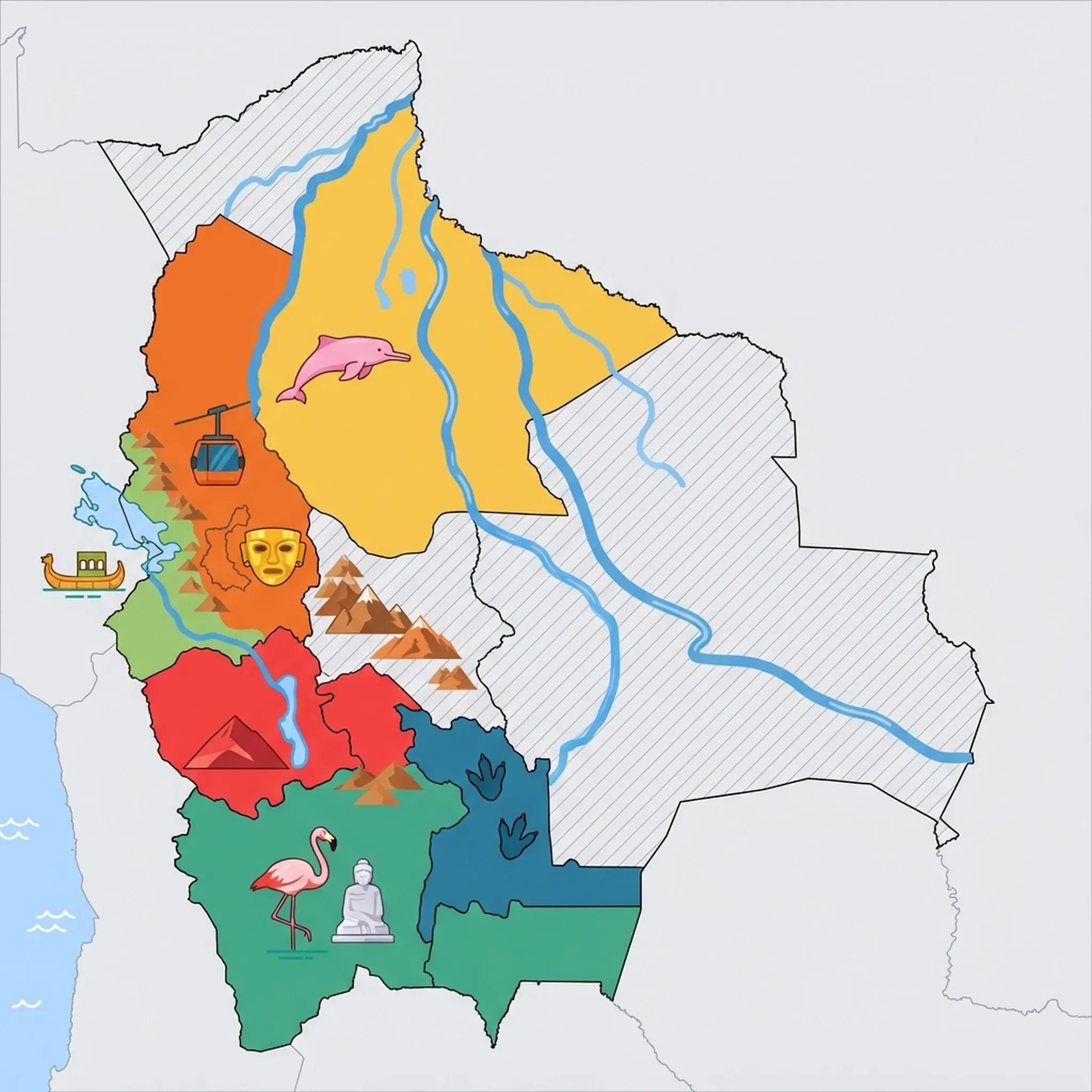
Click a region to explore
WARNING: Extreme Environment. This region involves high altitude (3,600m to 5,000m), extreme cold at night, and long hours in a 4x4. It is an adventure best suited for children aged 6+ who are comfortable with car travel.
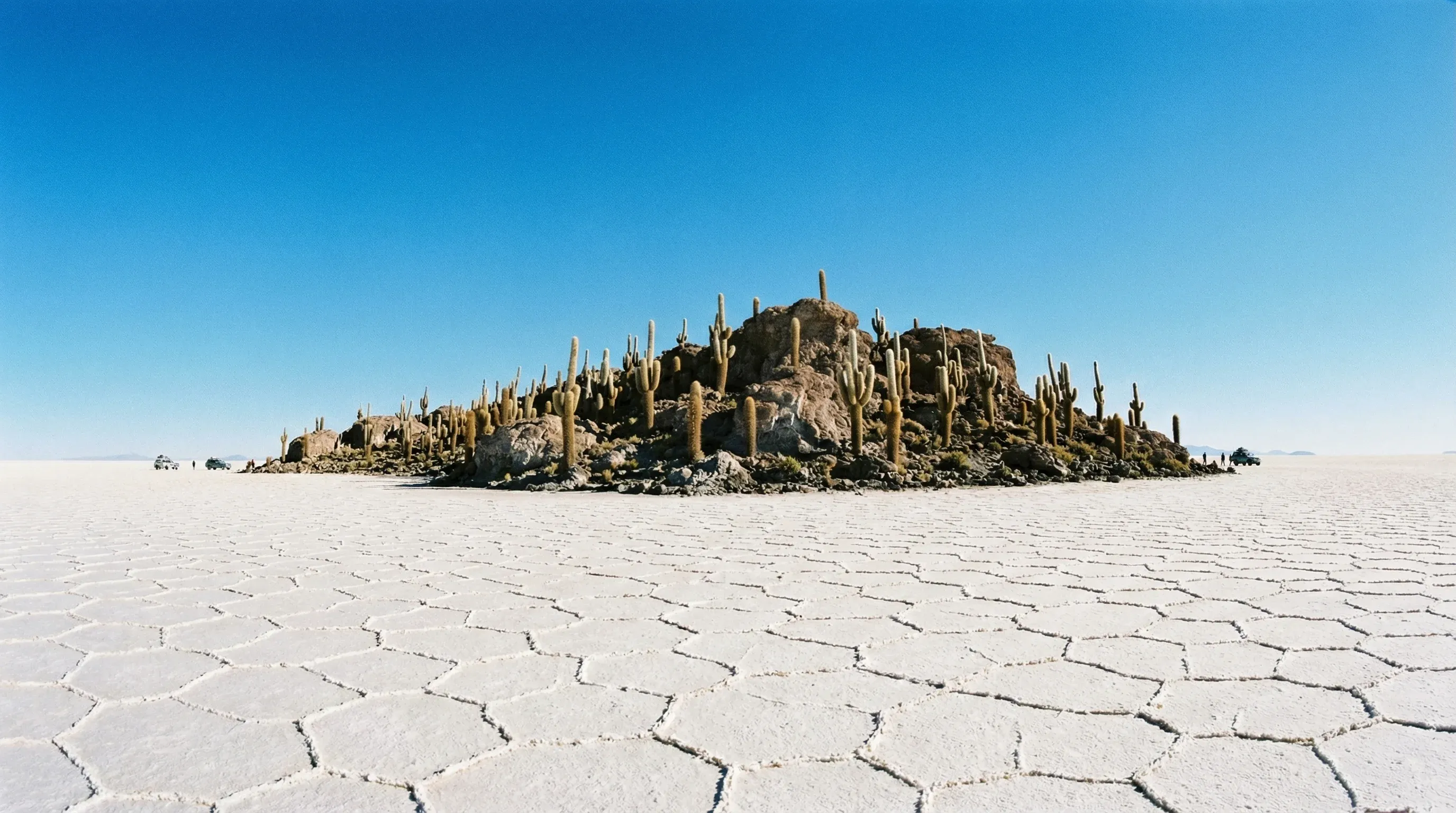
The Uyuni Salt Flats are otherworldly. For a family, visiting this vast expanse of blindingly white salt crust is like landing on another planet. It is the world's largest salt flat, and during the dry season, the hexagonal patterns of salt stretch endlessly. In the wet season, it becomes a giant mirror reflecting the sky. The most famous activity here is taking "perspective photos"—using the lack of depth perception to make it look like a toy dinosaur is eating your children, or that they are climbing out of a shoe. It’s hours of creative fun that kids absolutely love.
Most families visit via a 3-day jeep tour that goes beyond just the salt. You venture into the high Andean deserts to see volcanoes, geysers, and lakes filled with pink flamingos. It is a raw, rugged adventure. Facilities are basic, and the driving days are long, but the scenery is unmatched. Seeing thousands of flamingos at Laguna Colorada or watching steam rise from the Termas de Polques hot springs provides endless lessons in geology and nature.
Key Attractions
The Salar de Uyuni itself is the main event. Stops usually include the original Salt Hotel (now a museum) and the cactus-covered Isla Incahuasi. This rocky island in the middle of the white sea is covered in giant cacti, some hundreds of years old. A short hike to the top offers 360-degree views.
Just outside Uyuni town is the Train Cemetery (Cementerio de Trenes). It’s a collection of rusted 19th-century steam locomotives abandoned in the desert. Unlike most museums, climbing is allowed here (at your own risk), making it a giant, rusty jungle gym for kids. It’s great for photos and exploration.
Further south in the reserve, Laguna Colorada (Red Lagoon) is a highlight. The water is a deep brick-red due to algae, contrasting with the white borax islands and pink flamingos. It’s a National Geographic moment come to life.
Practical Advice
Best time to visit: April to October (dry season) allows access to the whole Salar and Incahuasi Island. January to March (wet season) offers the mirror effect, but some areas may be flooded and inaccessible.
Logistics: Choose a tour operator carefully. Pay extra for a private 4x4 so you can control the schedule, stop for bathroom breaks, and return early if the kids get tired. "Salt Hotels" are fun places to stay where beds and walls are made of salt blocks.
Food & Drink
Typical meal times: On tours, meals are prepared by the driver/cook. Lunch is usually a picnic on the salt flat or out of the back of the jeep around 1:00 pm. Dinner is served in the lodgings around 7:30 pm.
Typical meal costs: Usually included in tour prices. In Uyuni town, pizza is popular, costing 50–80 BOB (approx. $7–11.50 USD / €6.50–10.50 EUR) for a large pie.
Dietary requirements: Tour cooks can accommodate vegetarians if notified in advance (usually eggs, pasta, and vegetables). Gluten-free can be harder on tours; bring your own bread/snacks to be safe.
Signature dishes:
- Llama meat – Often served as a steak or in a stew. It’s lean and healthy, similar to beef but richer.
- Quinoa – This region is the heartland of royal quinoa. You will eat it in soups, salads, and as a side dish frequently.
Why this score?
Tours involve multi-day expeditions in 4x4 vehicles across vast, uninhabited salt crusts and volcanic deserts at altitudes exceeding 4,000 meters. The environment is extreme, with sub-zero night temperatures, very limited communication, and rugged off-road travel.
Why this score?
The town of Uyuni has very limited medical facilities, and once out on the salt flats, visitors are hours away from even basic help. Serious medical incidents in the Eduardo Avaroa Reserve often require long, difficult evacuations across unpaved terrain to reach a hospital.
Why this score?
The Salar de Uyuni is Bolivia's most iconic international landmark, drawing a significant majority of the country's foreign tourists. It is a world-renowned bucket-list destination, though its remote location prevents it from reaching the mega-destination status of places like Bali.

Costs depend on the tour type. A shared budget 3-day tour is cheap (approx. 800–1,000 BOB / $115–145 USD per person) but basic. A private family tour with better hotels and a dedicated guide costs significantly more, typically 5,000–8,000 BOB (approx. $720–1,150 USD / €660–1,060 EUR) per vehicle for 3 days.

Getting Here & Around
Getting Here
- Airports – Joya Andina Airport (UYU) has daily flights from La Paz (1 hour). This is the easiest way for families to arrive, saving a grueling bus ride.
- Bus – Overnight buses from La Paz take 10 hours. The road is paved, but it's a long, bumpy night for kids.
Getting Around
- 4x4 Jeep – The only way to see the salt flats. Tours are conducted in Toyota Land Cruisers. Ensure your operator has seatbelts in the back (not always guaranteed in budget tours).
- Walking – Only at specific stops like Isla Incahuasi or the Train Cemetery.
No airports in this region. See the country flight map for nearby connections.

Packing List
Toy dinosaurs, Pringles cans, or action figures make the photo sessions much more fun.
Basic shelters often have no heating; rented bags can be dirty. Essential for warmth.
The reflection of the sun off the white salt is blinding and can damage children's eyes.
Bathroom facilities in the desert are basic or non-existent; you must carry your own.
Long driving days mean hungry kids; shops are non-existent in the desert.
The high-altitude air is extremely dry and often causes nosebleeds, especially in children.
Budget hotels and hostels rarely have plugs in the sinks, making it hard to wash hands or clothes.
Heating is rare in hotels, and nights on the Altiplano drop well below freezing.
Power cuts can occur in remote areas like the Salt Flats; useful for nighttime bathroom trips.
The dry, dusty air at altitude can be very irritating to eyes, particularly for contact lens wearers.

Activities & Best Times

Hiking, wildlife, outdoor exploration, ecotourism
A globally unique wilderness featuring high-altitude lagoons, volcanoes, and the world's largest salt flat. Peak dry season ensures full accessibility to remote trails and deep-desert landscapes that become impassable during summer rains.

Urban tourism, museums, historical sites, architecture
Offers distinctive Andean heritage sites like the Train Cemetery and salt-processing villages which provide an authentic glimpse into the region's industrial and cultural history. Visits are best during the dry season when outdoor heritage sites are easily accessible.

Learning experiences, scientific sites, historical education
Specialized facilities like the Llama and Salt Museum offer unique geological and anthropological insights into the Altiplano. These facilities are primarily visited during the dry season as part of broader regional expeditions.

Scenic drives, countryside tours, route-based travel
The salt flat crossing and Southwest Circuit are iconic scenic drives through surreal, high-contrast landscapes. Driving conditions are only viable for the full circuit during the dry season when the salt crust is solid.

Sport tourism, fitness activities, active recreation
The Lagunas Route and volcano ascents offer world-class endurance challenges for high-altitude cycling and trekking. Optimal conditions require the stable, clear weather and dry tracks found between May and October.

Events, celebrations, seasonal attractions
The world-renowned mirror effect occurs exclusively during the rainy season when a thin layer of water covers the salt flats. While spectacular, this phenomenon is highly time-specific and restricts travel to the edges of the Salar.

Spa retreats, wellness centers, peaceful getaways
Natural thermal springs at Polques offer a rustic restorative experience in a dramatic high-altitude setting. The coldest winter months provide the most atmospheric contrast for bathing, though logistics remain challenging.

Attractions (7 total)



Public Holidays & Calendar Next 12 months
Public holidays, festivals, cultural celebrations, and seasonal natural phenomena coming up in Uyuni Salt Flats over the next 12 months.
Loading holidays and events...

Travel Advisory
All six major agencies recommend a baseline level of elevated caution for Bolivia. While most of the country is open for travel, there is a strong consensus on the risks posed by frequent civil unrest and roadblocks, as well as high-risk pockets like the Chapare region where crime levels are critical.
Safety Topics
Traveller Advice (4 groups)

Stay informed via local media regarding roadblocks and strikes which can strand travellers for days. Always carry extra food, water, and warm clothing on long road trips. Avoid any large gatherings or protests, as they can turn violent unexpectedly.
Information on accessibility is limited; travellers with physical or sensory disabilities should prepare for infrastructure challenges and research medical facility locations in advance.

Be aware of local attitudes and social norms; travellers are encouraged to review specific advice regarding safety and legal considerations for the LGBTQ+ community in Bolivia.

Female travellers should consult gender-specific safety guides and take standard precautions, especially when travelling solo or at night in urban centres.
Agency Summaries
Heightened caution is necessary because of the potential for violent crime and sudden civil unrest. New Zealanders should avoid all protests and avoid the Chapare region for any non-essential purposes due to kidnapping and extortion risks.
Australians are encouraged to be particularly careful due to the dual threats of violent crime and civil instability. Demonstrations and roadblocks are common and unpredictable, potentially leading to significant travel delays or violence.
The UK government advises against any non-essential travel to the Chapare region in Cochabamba. Across the country, visitors should prepare for disruptions caused by political demonstrations and marches, which can emerge with very little notice and block major transport routes.
Irish citizens should be aware of a continuous risk of social unrest and strikes that can impact tourist infrastructure and domestic travel. Vigilance is required near large crowds, and travellers are warned not to attempt to bypass road blockades.
Increased caution is advised nationwide because of civil unrest, which often manifests as sudden strikes and demonstrations. Specifically, the Chapare region is designated as 'Do Not Travel' due to high levels of violent crime and limited emergency support for foreign nationals.
Travellers should remain highly vigilant due to persistent political and social tensions that frequently result in roadblocks throughout the country. While the general advice is to be cautious, there is a specific warning to avoid non-essential travel to the Chapare region because of risks related to drug trafficking and kidnapping.
Information is provided for general guidance only and does not constitute travel, safety, medical, or legal advice. Conditions may change. Users are responsible for independently verifying information before travel.