
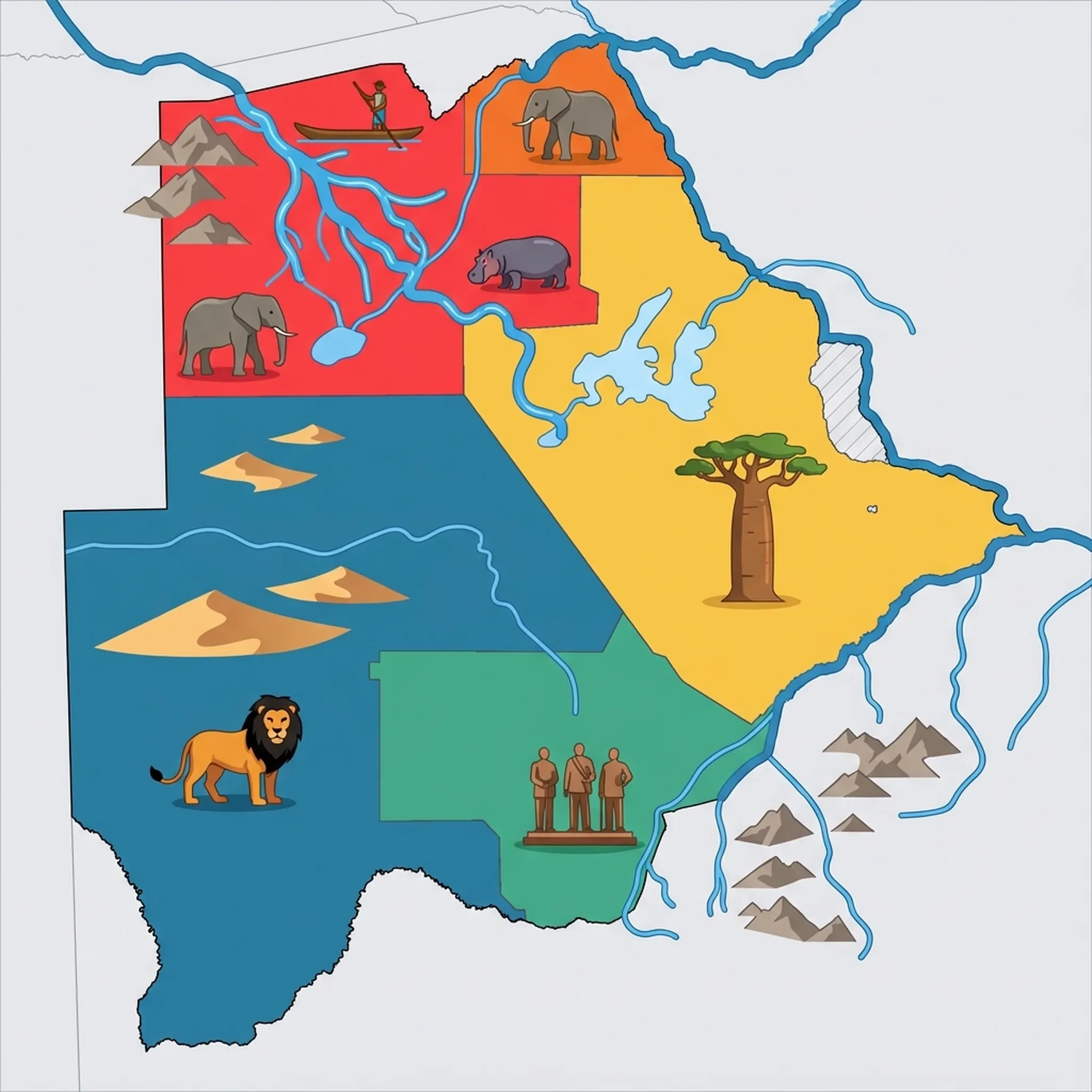
Click a region to explore
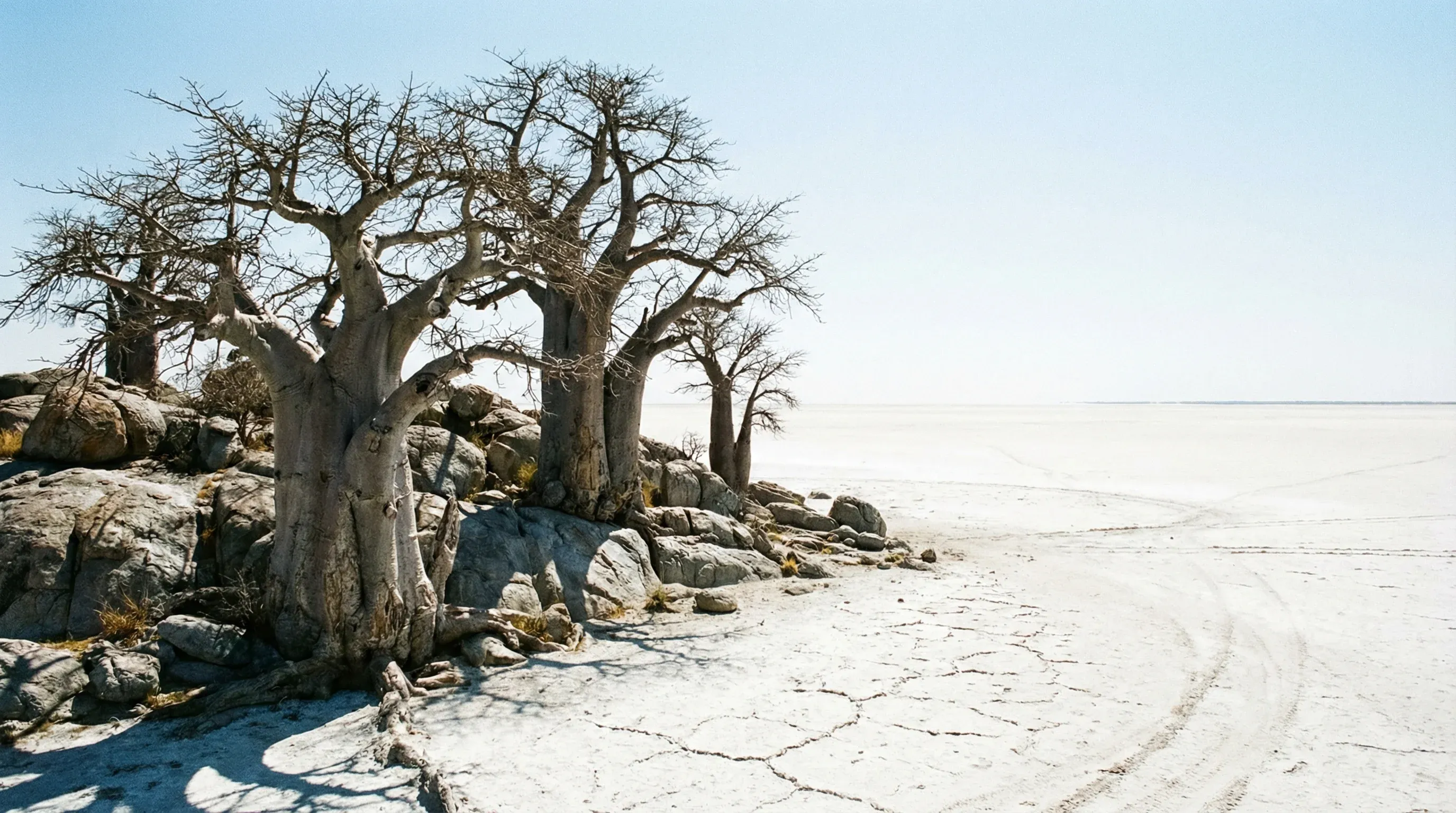
The Makgadikgadi Pans are the remnants of a super-lake that dried up thousands of years ago, leaving behind a landscape so flat you can see the curvature of the earth. For children, this is a giant natural playground. In the dry season, the hard salt crust is perfect for quad biking adventures, where older kids and parents can race across the nothingness. One of the most enchanting experiences here is a "sleep-out" under the stars—lying on bedrolls in the middle of the pans with nothing but the Milky Way above. It’s an adventure that feels daring but is safe and deeply memorable.
When the rains come, the pans transform. They fill with water, attracting huge flocks of flamingos and triggering the zebra migration—the second largest in Africa. Thousands of zebras move towards the Boteti River, followed by lions and cheetahs. The area is also famous for its meerkat colonies. Unlike other wildlife that runs away, these meerkats are habituated to humans and might even use a sitting child as a lookout post! It’s a hilarious and heartwarming interaction that is unique to this part of the world.
Key Attractions
Makgadikgadi Pans National Park allows you to access the western edge of the pans and the Boteti River, where animals congregate in the dry season. Just north is Nxai Pan National Park, which is generally more accessible and grassy, home to cheetahs and the famous Baines' Baobabs (often accessed from here or the south). The meerkat interactions usually happen on the edges of the pans near Gweta and are an absolute highlight for families.
Practical Advice
The dry season (May–October) is best for quad biking and sleeping on the pans. The wet season (November–April) is best for the migration and flamingos, but the salt pans become sticky mud traps—do not attempt to drive on them when wet! Nata is a good refueling stop.
Food & Drink
Typical meal times: Lodges serve lunch around 1:00 pm. Dinner is often a communal affair around 7:30 pm.
Typical meal costs: Lodge dining is standard (approx. BWP 250–400 / $19–30 USD). Roadside meals in Nata are cheaper, around BWP 80–120 (approx. $6–9 USD / €5.50–8.50 EUR).
Dietary requirements: Lodges cater to all diets. In Nata or Gweta, options are basic (meat and chips), so vegetarians should carry snacks.
Signature dishes:
- Pan-roasted Guinea Fowl – Often served in lodges as a local game bird dish (tastes like dark meat chicken).
- Mopane Worms – A daring try for brave kids! These dried caterpillars are a major local protein source, often fried with onions.
Why this score?
The salt pans offer a surreal and rugged environment where activities include quad biking across white crusts and sleeping under the stars at Kubu Island. The landscape is seasonally volatile, transforming from parched salt to impassable mud, demanding high levels of preparation. It is a significant outdoor challenge for families due to the harsh sun and lack of landmarks.
Why this score?
Nearby settlements like Nata and Gweta have very limited medical outposts that can only provide the most basic first aid. Most lodges have emergency protocols, but the nearest reliable hospital is several hours away in Maun or Francistown. The remote nature of the salt pans makes rapid medical response extremely difficult.
Why this score?
While famous for its unique lunar landscapes and meerkat colonies, the region attracts a smaller, more specific segment of the tourist market. It is often a secondary stop on a broader Botswana circuit rather than a standalone destination. Infrastructure is concentrated in a few luxury lodges and the village of Gweta.

Accommodations range from budget camping at places like Planet Baobab to luxury lodges. Camping costs approx. BWP 150–250 (approx. $11–19 USD / €10–17 EUR) per person. Mid-range lodges cost BWP 2,000–3,500 (approx. $150–260 USD / €140–240 EUR) per night. Activities like quad biking are extra.
Family Travel Notice
Minors under 18 must present a certified copy of their full unabridged birth certificate at the border. If traveling with only one parent, a signed affidavit from the absent parent is mandatory.

Getting Here & Around
Getting Here
- Driving – Situated on the main road between Maun and Nata. Accessible by 2WD to the gate, but 4x4 is needed for the pans.
- Airports – Fly into Maun (MUB) and drive approx. 2–3 hours east to the pans.
Getting Around
- Quad Bike – A popular way to cross the pans in the dry season; many lodges offer guided family tours.
- Car – 4x4 is essential for exploring Makgadikgadi Pans National Park and Nxai Pan National Park.
No airports in this region. See the country flight map for nearby connections.

Packing List
Essential for quad biking to keep fine alkaline dust out of nose and mouth.
Protects eyes from the intense glare and dust on the white salt pans.
Scorpions are common on the pans; never walk barefoot, especially at night.
Nights on the pans during sleep-outs can be surprisingly cold.
Light aircraft flights to the Delta have strict luggage rules: no hard shells or wheels allowed.
Many campsites and eco-lodges are unfenced and very dark at night; essential for hands-free safety.
Avoid dark blue and black, which attract painful tsetse flies in the bush. Wear khaki or tan.
Sharing frustrates kids. Having their own pair keeps them engaged in spotting wildlife.
The air in Botswana is incredibly dry; lips and skin crack quickly without frequent application.
Morning game drives are freezing (often near 0°C) even in shoulder seasons due to open vehicles.

Activities & Best Times

Hiking, wildlife, outdoor exploration, ecotourism
Offers a surreal landscape of ancient salt pans and seasonal wetlands, providing unique wildlife encounters including meerkats and desert-adapted species. Peak dry months (Jun-Aug) ensure full pan accessibility and milder temperatures, while the wet season (Nov-Mar) brings mud that limits travel.

Urban tourism, museums, historical sites, architecture
Rich in geological and ancient history, featuring iconic landmarks like Kubu Island and Baines' Baobabs that hold significant spiritual and historical value. Best visited in the dry winter months (Jun-Aug) for comfortable exploration of these exposed sites, with summer heat and rain posing significant challenges.

Events, celebrations, seasonal attractions
Africa's second-largest wildlife migration is a globally significant natural spectacle that draws international visitors specifically for this seasonal event. While not a human-organized festival, this natural phenomenon functions as a major seasonal attraction and deserves 'good' rather than 'marginal'.

Scenic drives, countryside tours, route-based travel
Renowned for challenging 4x4 expeditions across the vast, crusty salt flats and scenic stretches along the Boteti River. Driving is only safe during the dry season (May-Oct) when the pans are hard; the wet season (Nov-Apr) makes the terrain impassable for even experienced drivers.

Sport tourism, fitness activities, active recreation
Provides unique terrain for specialized adventure activities like quad biking across the salt crust and guided walking safaris. Optimal conditions coincide with the dry season (Jun-Aug) for stable ground and bearable daytime temperatures; wet months are unsuitable due to unstable surfaces.




Public Holidays & Calendar Next 12 months
Public holidays, festivals, cultural celebrations, and seasonal natural phenomena coming up in Makgadikgadi Pans over the next 12 months.
Loading holidays and events...

Travel Advisory
A majority of international agencies classify Botswana as safe for travel under standard security awareness, though North American agencies advise elevated caution specifically regarding crime.
Safety Topics
Traveller Advice (2 groups)

Minors under 18 must present a certified copy of their full unabridged birth certificate at the border. If traveling with only one parent, a signed affidavit from the absent parent is mandatory.

While legal protections exist, social attitudes remain conservative. Travelers are advised to be discreet regarding public displays of affection.
Agency Summaries
While the overall security situation is stable, visitors should be cautious of petty crime in urban centers and take health precautions against malaria in the north.
Most visits are safe, but travelers should take basic precautions against street crime and be aware of limited medical facilities in remote areas.
Irish citizens are encouraged to follow standard safety protocols, especially regarding personal belongings and avoiding ATMs after dark.
There are no significant security warnings for the country, but travelers should maintain comprehensive insurance and stay informed on local health risks.
Heightened awareness is recommended due to frequent crimes of opportunity, such as muggings and 'smash-and-grab' thefts from vehicles at intersections and shopping centers.
Travelers are advised to remain highly vigilant due to prevalent criminal activity, including home burglaries and carjackings, though tourists are not the primary targets.
Information is provided for general guidance only and does not constitute travel, safety, medical, or legal advice. Conditions may change. Users are responsible for independently verifying information before travel.