
Central Balkan Mountains & Rose Valley
Where mountain legends guard the Valley of Roses 🌹⛰️
Click a region to explore
Overview
The Central Balkan Mountains and the adjacent Rose Valley represent the soul of Bulgarian heritage. This region is a dramatic landscape of contrasts: the formidable, often mist-covered peaks of the Stara Planina range act as a shield for the gentle, fragrant valleys below. For families, this is the best region to understand what it means to be Bulgarian. It is an area steeped in the history of the 19th-century National Revival, where revolutionaries fought for independence and artisans perfected their crafts. The air here is cleaner and cooler than the plains, and the pace of life is refreshingly slow. In late May and early June, the air in the valley around Kazanlak is literally heavy with the scent of millions of oil-bearing roses blooming at once, a sensory experience children will never forget.
Beyond the flowers, this is a massive outdoor playground. The Central Balkan National Park offers some of Europe's last primeval beech forests, home to bears, wolves, and deer (though you are unlikely to see the shy predators). The trails range from serious alpine treks to gentle forest paths suitable for energetic toddlers. The region also boasts a unique concentration of "living history" museums, where kids aren't just looking at glass cases but watching blacksmiths, potters, and weavers at work, often using technology unchanged for centuries.
Key Attractions
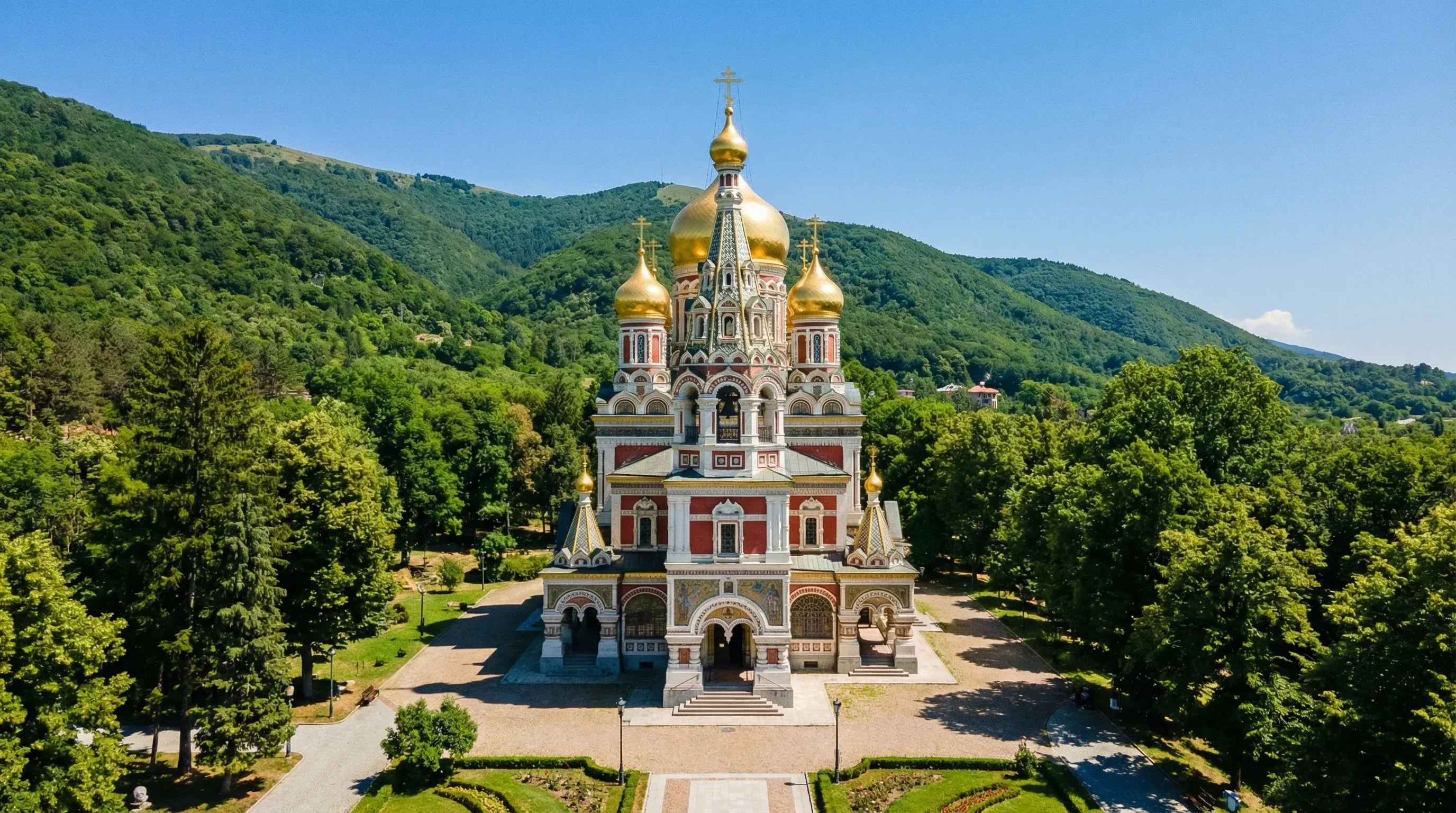
A highlight for any family is the Etar Regional Ethnographic Open-Air Museum near Gabrovo. It’s a recreated village where water from the river powers washing machines, saws, and lathes in a display of 18th-century engineering that fascinates children. You can buy sweets made on-site and watch craftsmen work. High above on the mountain pass stands the Shipka Monument, a stone tower commemorating the pivotal battle for Bulgaria's liberation. Climbing the hundreds of steps to the top is a rite of passage, rewarded with 360-degree views of Northern and Southern Bulgaria. Nearby, the golden domes of the Shipka Memorial Church shine against the forest backdrop, offering a lesson in architecture and history.
In the valley below, the Thracian Tomb of Kazanlak (a UNESCO site) offers a glimpse into the ancient past. While visitors enter an exact replica to preserve the original frescoes, the experience of seeing the chariot races and funeral feasts painted millennia ago is striking. For a lighter experience, visit the Damascena Ethnographic Complex, where families can learn about rose oil production, smell the roses, and explore beautiful gardens filled with quirky sculptures.
Practical Advice
The Rose Festival (early June) is the peak time to visit, but accommodation must be booked months in advance. Summer is pleasant for hiking, while winters can be harsh with heavy snow on the passes. If driving across Shipka Pass in winter, snow chains are often mandatory.
Food & Drink
Typical meal times: Lunch 12:00 pm to 2:00 pm; Dinner 7:00 pm to 9:30 pm.
Typical meal costs: Very affordable. A hearty family meal in a traditional tavern (mehana) costs 50–80 BGN (approx. $27–44 USD / €25–40 EUR).
Dietary requirements: This is meat-and-dairy country. Vegetarians will rely on Shopska salad, grilled peppers, and fried cheese. Vegan options are limited in rural taverns.
Signature dishes:
- Buffalo Yoghurt – The region is famous for its thick, creamy buffalo yoghurt, often served with honey or berry jam.
- Kavarma – A slow-cooked stew of pork or chicken with onions, mushrooms, and savory, often served in an earthenware pot.
- Rose Jam – A sweet delicacy made from the petals of the Damask rose, perfect on toast or pancakes.
Why this score?
The Central Balkan National Park offers extensive hiking trails, including the challenging ascent to Botev Peak, providing a good level of outdoor recreation. The terrain is mountainous and forested, offering a more rugged experience than the coastal plains, though the most popular spots like the Etar are very accessible. It provides a moderate adventure profile suitable for active families seeking nature and folklore.
Why this score?
Medical facilities in towns like Gabrovo and Kazanlak are basic and primarily serve the local population with limited English-speaking staff. While adequate for minor issues, the rural and mountainous nature of the region means that emergency response times for outdoor incidents can be slow. Significant medical needs would require transport to Plovdiv or Sofia.
Why this score?
This region primarily attracts domestic tourists and niche international visitors interested in the Rose Festival or cultural heritage at the Etar Museum. While iconic within Bulgaria, it lacks the massive international volume seen on the coast or in the capital. It serves as a secondary destination for those exploring beyond the main tourist trail.

This is one of the best-value regions in Bulgaria. Entrance fees to museums like Etar are nominal (around 5–10 BGN per adult). Guesthouses are cheap and offer great hospitality, often costing 60–100 BGN (approx. $33–55 USD / €30–50 EUR) for a family room.
Family Travel Notice
Ensure children have individual travel documents. If travelling with only one parent, carry notarized consent from the absent parent to meet potential border requirements.

Getting Here & Around
Getting Here
- Driving – The most practical way to explore. Kazanlak is about a 3-hour drive from Sofia via the A1 highway and secondary roads.
- Bus – Regular buses run from Sofia to Gabrovo and Kazanlak. The journey takes about 3.5 to 4 hours.
- Train – The train line to Kazanlak offers scenic views but is significantly slower than driving.
Getting Around
- Car – Essential for moving between the mountain sites like Etar Regional Ethnographic Open-Air Museum and the valley towns. Mountain roads are winding.
- Walking – Within towns like Gabrovo or Kazanlak, walking is easy. Hiking is the primary mode of transport within the Central Balkan National Park.
No airports in this region. See the country flight map for nearby connections.
Official Links

Packing List
The road over Shipka Pass is extremely winding and can cause car sickness.
Temperatures at the top of the pass and Botev Peak drop significantly.
Great for spotting birds of prey and deer in the national park.
Many Black Sea beaches have rocky sections or extremely hot sand in summer.
Public toilets and rest stops are frequently out of toilet paper.
Mosquitoes can be aggressive in summer, especially near the Danube and coastal wetlands.
Many small shops, guesthouses, and rural museums do not accept credit cards.
Mountain resorts like Bansko and Borovets get surprisingly cold at night, even in July.
Street lighting in smaller villages and rural guesthouse paths can be non-existent.

Activities & Best Times

Hiking, wildlife, outdoor exploration, ecotourism
Offers rugged Balkan mountain trekking and unique ethnographic experiences like the Etar farm park. Peak months provide optimal trail conditions and lush landscapes, while winter brings heavy snow and limited accessibility in the high mountains.

Urban tourism, museums, historical sites, architecture
Rich in UNESCO Thracian heritage and unique Bulgarian National Revival architecture in Bozhentsi and the Kazanlak region. Summer is the peak for outdoor ethnographic museums and cultural life, while winter is often too cold for comfortable walking tours.

Sport tourism, fitness activities, active recreation
Features internationally recognized paragliding in Sopot and the iconic Kom-Emine long-distance trekking trail. Peak summer provides stable thermal conditions for flying and clear mountain ridges for high-altitude activities.

Learning experiences, scientific sites, historical education
Home to specialized sites like the Museum of Roses and the Interactive Museum of Industry. May and June are peak to align with the rose harvest season and associated scientific and agricultural displays.

Events, celebrations, seasonal attractions
The Festival of Roses is internationally famous and represents one of Bulgaria's most distinctive cultural exports. While the narrow peak season limits it to marginal in the current notes, the international significance warrants good rating. The classification should reflect cultural importance, not just season length.

Spa retreats, wellness centers, peaceful getaways
Centered on the thermal mineral springs of Pavel Banya and Shipkovo, offering authentic restorative experiences. Summer is peak for outdoor mineral beaches, while spring and autumn offer quiet retreats; winter is less appealing for family transit.

Scenic drives, countryside tours, route-based travel
Iconic crossings like the Shipka Pass and the scenic Sub-Balkan Rose Valley road offer spectacular vistas. Best visited in late spring for rose blooms or summer for clear mountain passes, as winter often sees closures or hazardous ice.

Amusement parks, family entertainment venues
Includes high-quality ethnographic complexes and aqua parks that offer immersive family entertainment. These facilities are best experienced in warm months when outdoor craft demonstrations and water-based attractions are fully operational.

Winter sports, ski resorts, snow activities
Provides modest winter sports at Uzana and Beklemeto with a low-key, local atmosphere. Snow reliability is best in January and February, but infrastructure is limited compared to major international alpine destinations.

Attractions (18 total)



Public Holidays & Calendar Next 12 months
Public holidays, festivals, cultural celebrations, and seasonal natural phenomena coming up in Central Balkan Mountains & Rose Valley over the next 12 months.
Loading holidays and events...

Travel Advisory
Bulgaria is widely assessed as a safe destination with no major security threats. All major agencies advise that standard safety precautions and vigilance against petty crime are sufficient for visitors.
Safety Topics
Traveller Advice (4 groups)

General safety advice for solo female travellers applies; be cautious when walking alone at night and use reputable transportation services.

Ensure children have individual travel documents. If travelling with only one parent, carry notarized consent from the absent parent to meet potential border requirements.

Maintain standard personal security awareness and safeguard valuables in tourist-heavy areas. Ensure travel insurance is comprehensive and includes medical evacuation.

While same-sex relationships are legal, they are not always socially accepted in all regions. It is advisable to be discrete regarding public displays of affection to avoid negative attention.
Agency Summaries
Bulgaria is generally considered safe for visitors. Canadian travellers should maintain standard personal security awareness. Entry and exit are governed by Schengen area regulations.
British citizens can travel to Bulgaria with standard precautions. Key considerations include road safety, petty crime in resorts, and adhering to Schengen visa-free stay limits.
The country is a safe destination for tourists. Safety efforts should focus on avoiding petty crimes like pickpocketing in crowded areas and being alert to financial fraud at ATMs.
Bulgaria is assessed as having a low crime rate and a stable security environment. Irish citizens should ensure they have comprehensive insurance and follow basic safety routines.
No specific security concerns are currently identified for Bulgaria. New Zealanders should practice standard self-awareness and ensure they have adequate medical evacuation coverage.
Australia recommends standard safety habits in Bulgaria. Travellers should remain vigilant in crowded spaces and be aware of risks related to stray animals and occasional public demonstrations.
Information is provided for general guidance only and does not constitute travel, safety, medical, or legal advice. Conditions may change. Users are responsible for independently verifying information before travel.