
Danubian Plain (Central North)
Medieval tsars, limestone canyons, and waterfalls 🏰🦇
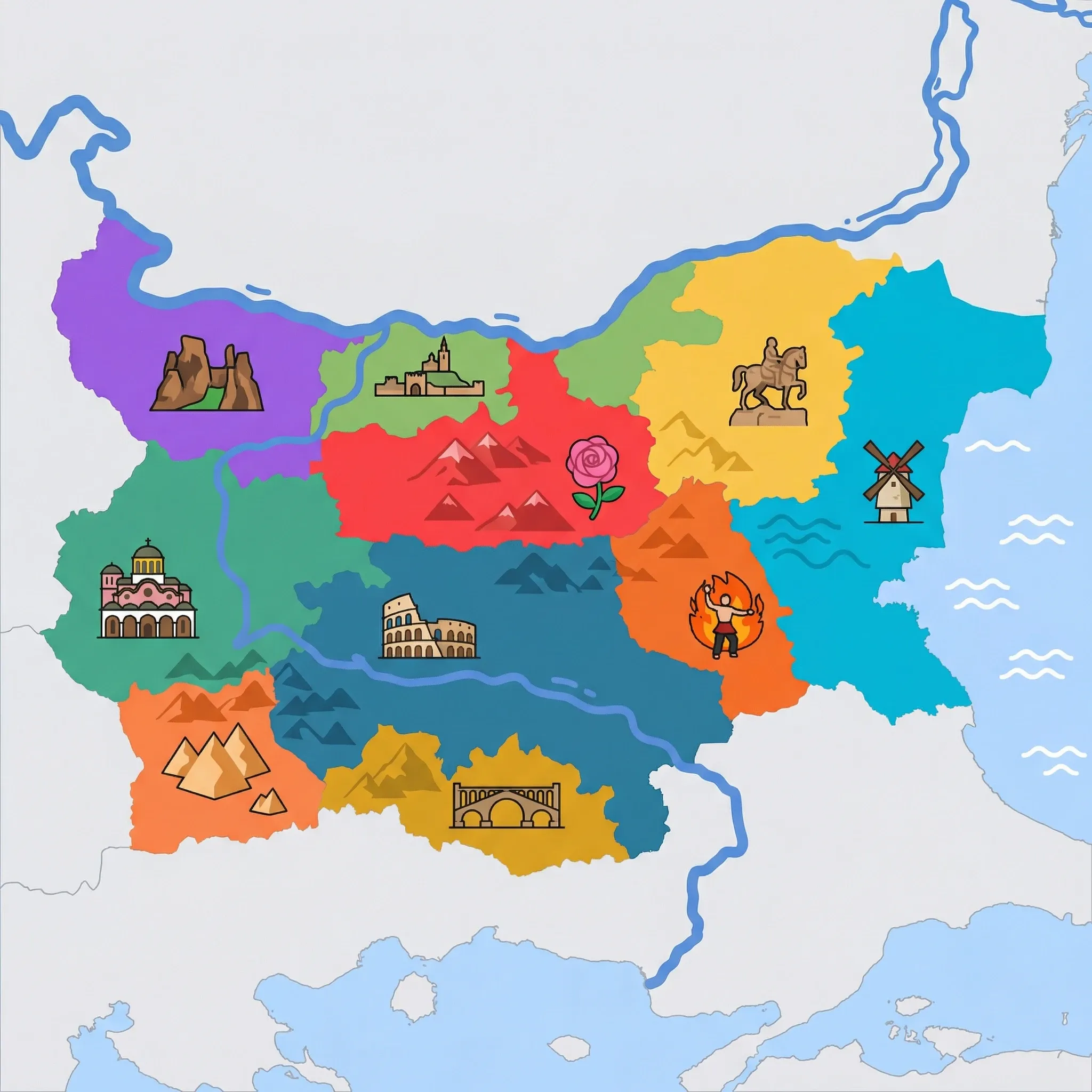
Click a region to explore
Overview
The Central North of Bulgaria is the cradle of the Second Bulgarian Empire, a region where history is carved into the limestone cliffs. For families, the immediate appeal is the geography: this is a land of plateaus and canyons, where rivers have cut deep gorges creating natural fortresses and spectacular caves. The star of the region is Veliko Tarnovo, a city stacked precariously on the steep banks of the Yantra River. It is visually stunning and exciting for children to explore, with its winding streets and fortress walls. The climate here is continental—hot summers and cold, snowy winters—so spring and autumn are the most comfortable times to explore the outdoor sites.
Beyond the cities, the nature here is accessible and dramatic. The region is famous for its karst landscape, meaning it is riddled with caves and waterfalls. Unlike high mountain trekking, the walks here are generally flat but visually impressive, winding through river canyons or into massive cavern mouths. It’s an area that feels adventurous without requiring extreme physical fitness, making it ideal for school-aged children. The influence of the Danube River to the north brings a different pace of life, with wider horizons and significant Roman history scattered among the fields.
Key Attractions
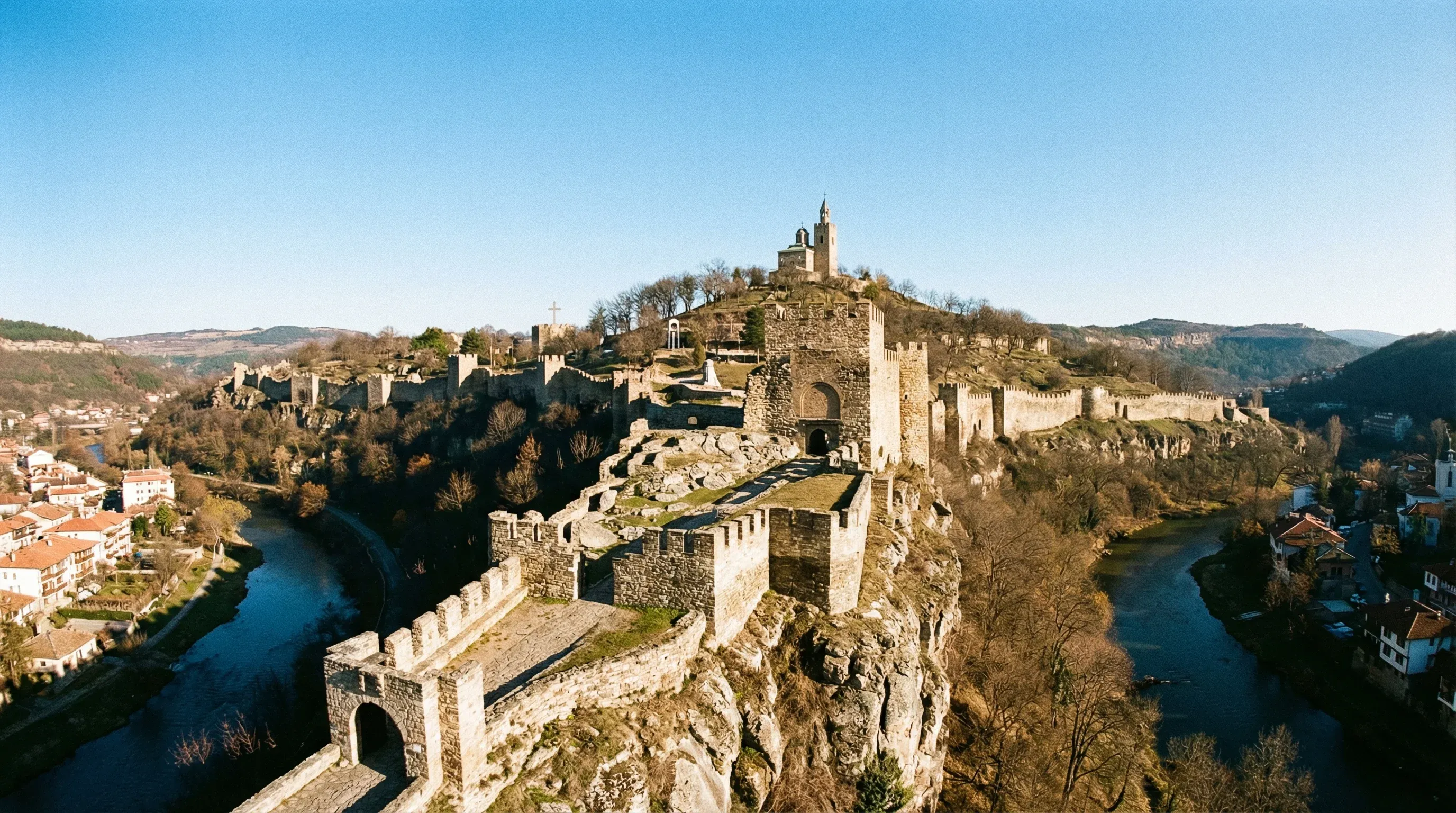
The must-visit landmark is Tsarevets Fortress in Veliko Tarnovo. This massive stronghold dominates the skyline. Kids love scrambling over the ruined walls and climbing up to the patriarchal church at the summit. In the evenings, the "Sound and Light" show illuminates the hill in a dramatic display of lasers and bells (check schedules). Nearby, the village of Arbanasi Archaeological-Museum Reserve offers fortress-like houses with hidden courtyards that capture the imagination.
For a nature adventure, head west to the Devetashka Cave. This cavern is colossal—the entrance alone is 35 meters high—and it gained fame as a filming location for "The Expendables 2." Its skylights (large holes in the ceiling) let in shafts of light that create a mystical atmosphere. Just a short drive away are the Krushuna Waterfalls, a series of travertine cascades with turquoise pools that look tropical. The eco-trail there is well-maintained and short enough for young legs. In the city of Pleven, the Pleven Panorama is a unique immersive museum; it's a 360-degree painting depicting a major battle, and the sheer scale of it leaves children awestruck.
Practical Advice
Veliko Tarnovo is very hilly; strollers can be a challenge on the cobbled, steep streets—a baby carrier is better. Summers can be scorching (35°C+), so plan cave visits for the hottest part of the day to stay cool.
Food & Drink
Typical meal times: Lunch 12:00 pm to 2:30 pm; Dinner 7:00 pm to 10:00 pm.
Typical meal costs: 60–90 BGN (approx. $33–50 USD / €30–45 EUR) for a family meal. Tourist spots in Arbanasi charge a premium.
Dietary requirements: Standard Bulgarian fare. Salads and potato dishes are available for vegetarians. Nut allergies should be communicated clearly as walnuts are common in desserts and salads.
Signature dishes:
- Gornooryahovski Sudzhuk – A protected geographical indication sausage from Gorna Oryahovitsa, made of beef and spices.
- Elena Fillet (Elenski but) – A dry-cured ham similar to prosciutto, produced in the nearby Elena Balkan.
- Lyutenitsa – A thick relish of peppers, tomatoes, and aubergines, beloved by Bulgarian children on toast with cheese.
Why this score?
Adventure here is centered on river-based activities on the Danube and light hiking in the Rusenski Lom Nature Park or Emen Canyon. The terrain is largely agricultural and rolling hills, making it less physically demanding than the southern mountain ranges. Most major sites, like the Tsarevets Fortress, are well-developed with paved paths for visitors.
Why this score?
Veliko Tarnovo and Ruse have established regional hospitals and several private clinics that provide a decent standard of care for the region. While better equipped than more remote mountain areas, the infrastructure is still dated in many places, and finding English-speaking specialists can be a challenge outside of the main city centers.
Why this score?
The region is home to Veliko Tarnovo, one of Bulgaria's most famous historical cities and a staple on most international tour itineraries. Beyond this anchor, the region sees moderate traffic from river cruise passengers at Ruse and visitors to the Ivanovo Rock Churches. It maintains a steady flow of international cultural tourists but lacks the high-volume stay-over capacity of the coast.

Accommodation in Veliko Tarnovo is excellent value, with boutique guesthouses overlooking the fortress costing 80–120 BGN (approx. $44–66 USD / €40–60 EUR). Dining is cheaper than in Sofia or the Black Sea coast.
Family Travel Notice
Ensure children have individual travel documents. If travelling with only one parent, carry notarized consent from the absent parent to meet potential border requirements.

Getting Here & Around
Getting Here
- Train – Veliko Tarnovo is on a major rail line (Gorna Oryahovitsa station is a major hub nearby). Trains from Sofia take about 4.5 hours and are scenic but slow.
- Bus – Frequent buses connect Sofia to Veliko Tarnovo (3 hours) and Pleven.
- Driving – The Hemus Highway (A2) covers half the distance from Sofia, then two-lane roads take over. It’s a 3-hour drive to Veliko Tarnovo.
Getting Around
- Car – Necessary to visit scattered sites like Devetashka Cave and Rusenski Lom Nature Park efficiently.
- Taxi – In Veliko Tarnovo, taxis are cheap and useful for avoiding steep climbs back to your hotel.
- Walking – The centers of Veliko Tarnovo and Pleven are pedestrian-friendly, though hilly in Tarnovo.
No airports in this region. See the country flight map for nearby connections.
Official Links

Packing List
The cobblestones in Veliko Tarnovo become incredibly slippery when wet.
Useful for exploring the darker corners of caves and fortress ruins.
Veliko Tarnovo is a city of stairs; strollers are often impractical.
Many Black Sea beaches have rocky sections or extremely hot sand in summer.
Public toilets and rest stops are frequently out of toilet paper.
Mosquitoes can be aggressive in summer, especially near the Danube and coastal wetlands.
Many small shops, guesthouses, and rural museums do not accept credit cards.
Mountain resorts like Bansko and Borovets get surprisingly cold at night, even in July.
Street lighting in smaller villages and rural guesthouse paths can be non-existent.

Activities & Best Times

Hiking, wildlife, outdoor exploration, ecotourism
Features the dramatic Devetashka Cave and Rusenski Lom Nature Park, offering authentic karst landscapes and wildlife immersion. Best experienced in late spring and early autumn to avoid the harsh Danubian summer heat and winter freezes.

Urban tourism, museums, historical sites, architecture
The medieval capital of Veliko Tarnovo and the rock-hewn churches of Ivanovo offer world-class heritage and unique architectural history. Peak conditions occur during cultural festival seasons when temperatures are ideal for urban exploration.

Sport tourism, fitness activities, active recreation
Home to the major Dunav Ultra cycling route and multiple eco-trails, providing significant infrastructure for active tourists. High summer is often too hot for strenuous sport, making late spring and September the optimal windows.

Spa retreats, wellness centers, peaceful getaways
Authentic thermal mineral baths in Chiflik and Shipkovo provide genuine restorative experiences in a rustic setting. These facilities are most enjoyable during the cooler months when the contrast with the thermal waters is most therapeutic.

Scenic drives, countryside tours, route-based travel
Established routes like the Rusenski Lom Heritage Route offer scenic drives through canyons and historical sites. Roads are most accessible and scenic during the green months of spring and the golden tones of autumn.

Winter sports, ski resorts, snow activities
The Uzana and Beklemeto centers provide modest, authentic winter sports options in the Balkan foothills. Reliable snow coverage is limited to a short peak window in January and February.

Attractions (10 total)



Public Holidays & Calendar Next 12 months
Public holidays, festivals, cultural celebrations, and seasonal natural phenomena coming up in Danubian Plain (Central North) over the next 12 months.
Loading holidays and events...

Travel Advisory
Bulgaria is widely assessed as a safe destination with no major security threats. All major agencies advise that standard safety precautions and vigilance against petty crime are sufficient for visitors.
Safety Topics
Traveller Advice (4 groups)

General safety advice for solo female travellers applies; be cautious when walking alone at night and use reputable transportation services.

Ensure children have individual travel documents. If travelling with only one parent, carry notarized consent from the absent parent to meet potential border requirements.

Maintain standard personal security awareness and safeguard valuables in tourist-heavy areas. Ensure travel insurance is comprehensive and includes medical evacuation.

While same-sex relationships are legal, they are not always socially accepted in all regions. It is advisable to be discrete regarding public displays of affection to avoid negative attention.
Agency Summaries
Bulgaria is generally considered safe for visitors. Canadian travellers should maintain standard personal security awareness. Entry and exit are governed by Schengen area regulations.
British citizens can travel to Bulgaria with standard precautions. Key considerations include road safety, petty crime in resorts, and adhering to Schengen visa-free stay limits.
The country is a safe destination for tourists. Safety efforts should focus on avoiding petty crimes like pickpocketing in crowded areas and being alert to financial fraud at ATMs.
Bulgaria is assessed as having a low crime rate and a stable security environment. Irish citizens should ensure they have comprehensive insurance and follow basic safety routines.
No specific security concerns are currently identified for Bulgaria. New Zealanders should practice standard self-awareness and ensure they have adequate medical evacuation coverage.
Australia recommends standard safety habits in Bulgaria. Travellers should remain vigilant in crowded spaces and be aware of risks related to stray animals and occasional public demonstrations.
Information is provided for general guidance only and does not constitute travel, safety, medical, or legal advice. Conditions may change. Users are responsible for independently verifying information before travel.