
Northeast Bulgaria
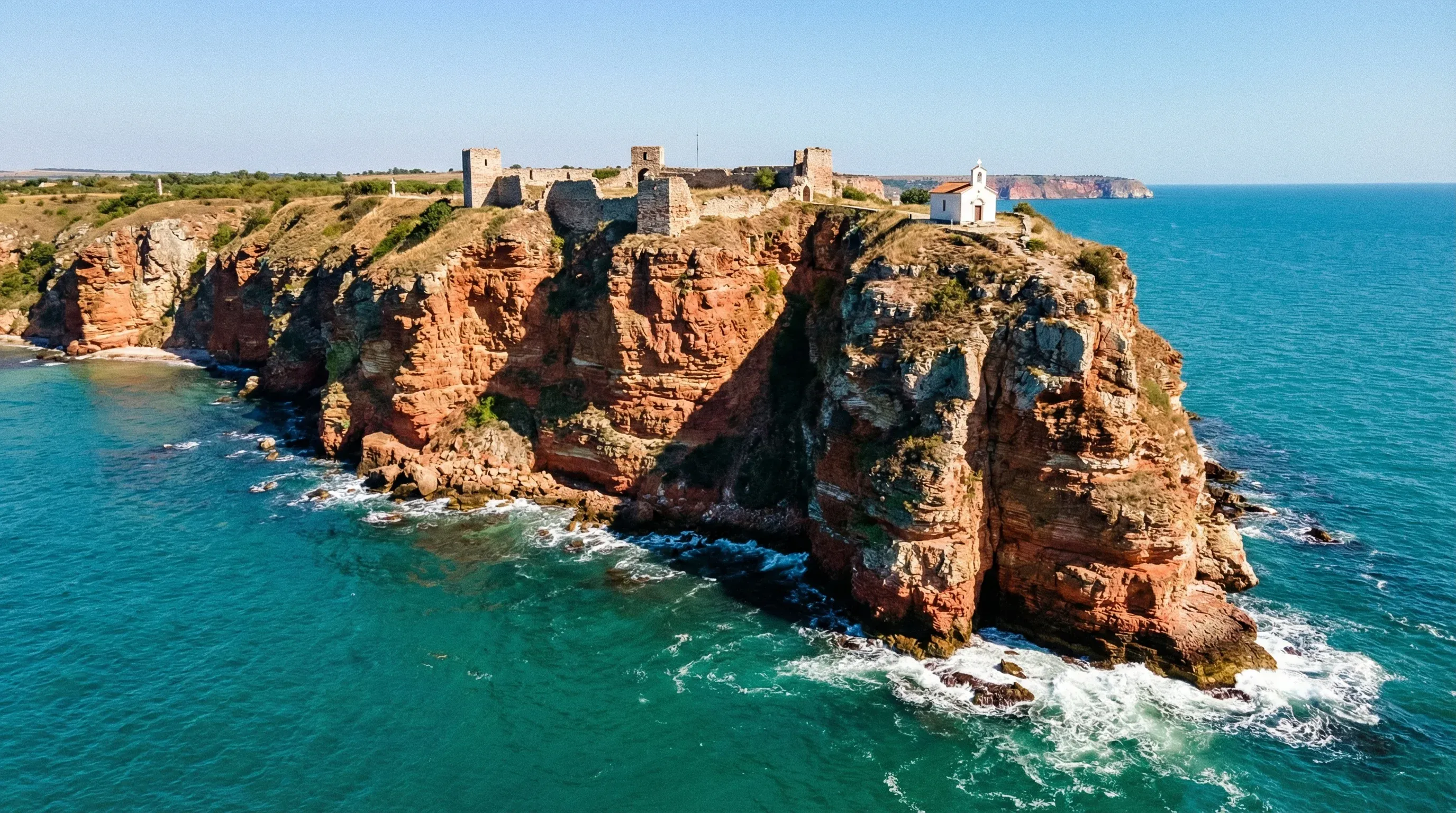
Where the steppe meets the sea in dramatic cliffs 🌊🦅
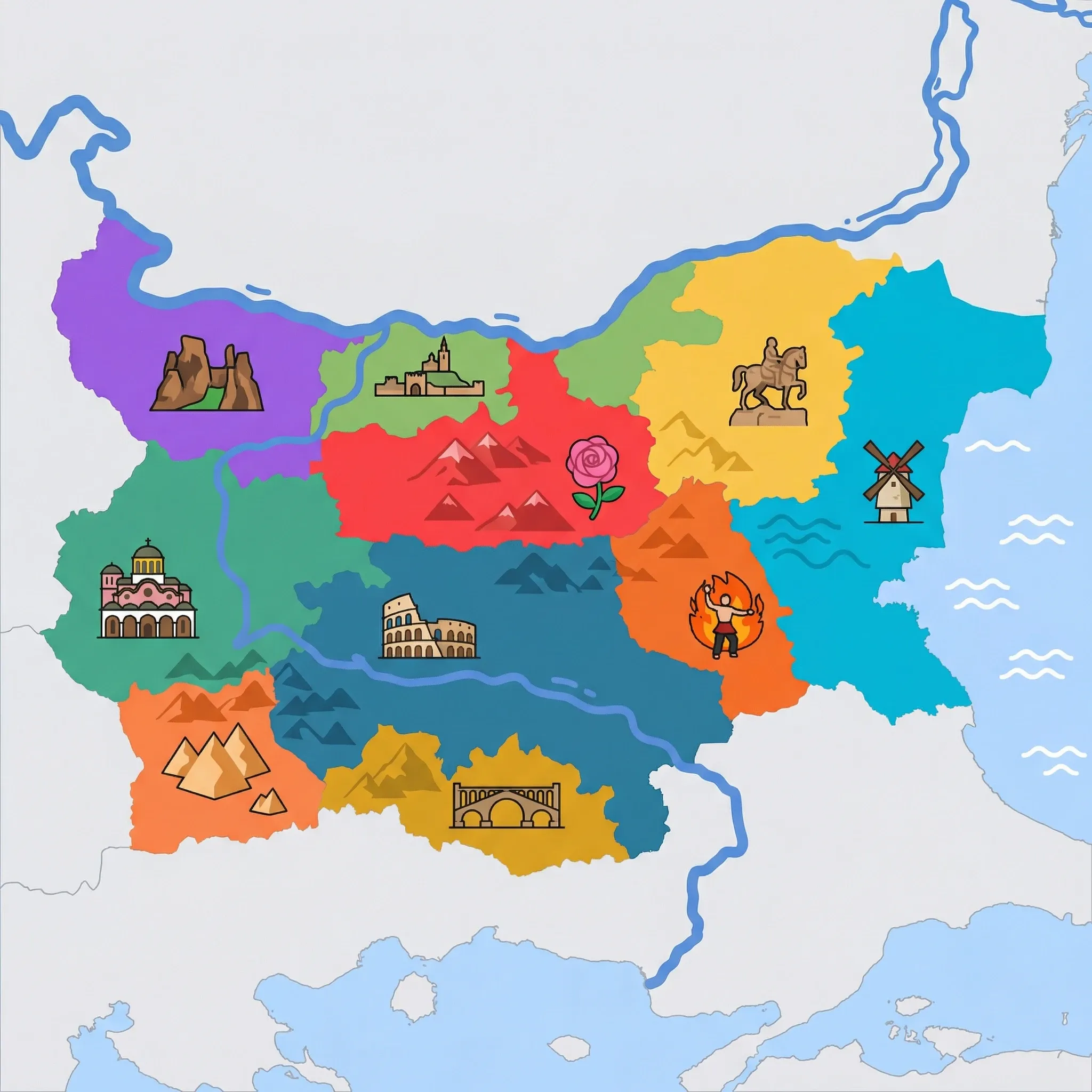
Click a region to explore
Overview
Northeast Bulgaria, often referred to as Dobrudzha, offers a distinct landscape that feels vaster and more open than the rest of the country. This is a region of flat, fertile horizons that suddenly drop into the sea via dramatic red and white limestone cliffs. For families, the Northeast provides a unique mix of "seaside" and "nature expedition." It is less developed and commercialized than the southern coast, making it perfect for families who prefer nature reserves and history over noisy resorts. The wind here is a constant companion—harnessed by huge wind turbines that dot the landscape—keeping the summer heat manageable. The coastline here is rocky and spectacular, home to legends of ancient fortresses and hidden caves.
Inland, the geography shifts to interesting geological phenomena. It is one of the few places in Europe where you can find a desert-like landscape. The birdlife is exceptional, particularly around the wetlands near the Danube and the coastal migration flyway (Via Pontica), making it a fantastic destination for introducing children to wildlife watching. The cultural mix is also fascinating, with a strong history of diverse populations leaving their mark on the food and architecture.
Key Attractions
A surreal highlight for children is Pobiti Kamani (The Stone Forest) near Varna. It looks like the ruins of a giant temple, but it is a natural geological formation of hollow stone columns rising from the sand. Kids love running through this sandy "desert" and hiding in the stone pillars. It is a great spot for photos and imagination play. On the coast, Cape Kaliakra is a long, narrow headland jutting into the sea. It features the ruins of a medieval fortress and offers one of the best chances to spot dolphins playing in the waves below. The sheer drop of the cliffs is breathtaking (hold hands with little ones!).
Further north, the Balchik Palace and its Botanical Gardens are a peaceful retreat. The palace was the summer residence of Queen Marie of Romania and is built in a mix of Oriental and Balkan styles, complete with a minaret. The surrounding gardens are a maze of waterfalls, giant cacti, and flower beds that feel like a secret garden. For a true nature immersion, the Srebarna Nature Reserve (a UNESCO site near the Danube) is a haven for pelicans and other water birds, with a dedicated Srebarna Nature Reserve Museum that explains the ecosystem to young visitors.
Practical Advice
The northern coast is windier than the south, so the sea can be choppier—check flags on beaches. Public transport to places like Kaliakra is scarce; a rental car is highly recommended. The "golden hour" at the Stone Forest is magical for photography.
Food & Drink
Typical meal times: Lunch 12:00 pm to 2:00 pm; Dinner 7:30 pm to 9:30 pm.
Typical meal costs: 60–100 BGN (approx. $33–55 USD / €30–50 EUR) for a family meal. Seafood restaurants with a sea view in Balchik charge more.
Dietary requirements: Typical Bulgarian options. The region produces excellent flatbreads and pastries.
Signature dishes:
- Dobrudzhanska Banitsa – A variation of the national pastry, often made with crumbled cheese and topped with heavy cream, making it softer and richer.
- Mussel Soup – Often made with mussels harvested directly from the farms near Kavarna and Balchik.
- Apricot Rakia – While not for the kids, the region is famous for its apricots, and the local jam/nectar is delicious for everyone.
Why this score?
The landscape features dramatic coastal cliffs at Cape Kaliakra and unique geological formations like the Stone Forest, offering some outdoor exploration. However, the infrastructure is mostly geared toward sightseeing via car or bus rather than high-adventure sports. It is a developed region where nature is experienced through well-maintained parks and accessible viewpoints.
Why this score?
Varna is a major medical hub for the country, featuring university hospitals and modern private clinics with experience treating international patients. Access to pharmacies and 24-hour medical centers is excellent compared to the rest of the country. English is commonly spoken among younger medical professionals in the city's private sector.
Why this score?
Centrally anchored by Varna, the 'Maritime Capital,' this region sees significant international arrivals for both business and leisure. Major attractions like the Balchik Botanical Garden and the Madara Rider attract consistent crowds, and the proximity to northern coastal resorts keeps visitor numbers high. It is well-recognized on the European tourism map, particularly for budget-conscious families.

Prices are generally lower than the southern Black Sea coast, though boutique hotels in Balchik can be pricey. Entrance fees to the Palace and Botanical Garden are separate and total around 20 BGN (approx. $11 USD / €10 EUR) per adult.
Family Travel Notice
Ensure children have individual travel documents. If travelling with only one parent, carry notarized consent from the absent parent to meet potential border requirements.

Getting Here & Around
Getting Here
- Airports – Varna Airport (VAR) is the main hub, located just 20–40 minutes from the main coastal sites.
- Driving – From Varna, a scenic coastal road leads north to Balchik and Kaliakra. Driving is the best way to see the scattered sights.
- Bus – Regular buses connect Varna to Balchik and Kavarna, but reaching the Stone Forest or Kaliakra by bus is difficult.
Getting Around
- Car – Essential for the Northeast. The roads are generally straight and flat across the plateau but can be potholed in rural areas.
- Walking – Balchik Palace requires a lot of walking on slopes and stairs. Cape Kaliakra is a flat walk but exposed to the sun.
No airports in this region. See the country flight map for nearby connections.
Official Links

Packing List
Cape Kaliakra is famous for its strong, constant winds.
Essential for spotting dolphins at Kaliakra and birds at Srebarna.
The wind will blow away loose hats; you need something that stays on.
Many Black Sea beaches have rocky sections or extremely hot sand in summer.
Public toilets and rest stops are frequently out of toilet paper.
Mosquitoes can be aggressive in summer, especially near the Danube and coastal wetlands.
Many small shops, guesthouses, and rural museums do not accept credit cards.
Mountain resorts like Bansko and Borovets get surprisingly cold at night, even in July.
Street lighting in smaller villages and rural guesthouse paths can be non-existent.

Activities & Best Times

Hiking, wildlife, outdoor exploration, ecotourism
Home to the Golden Sands Nature Park and proximity to the UNESCO-listed Srebarna Nature Reserve, offering high-quality birdwatching and hiking opportunities. May, June, and September provide the most comfortable climate for outdoor exploration away from the humid peak summer heat.

Urban tourism, museums, historical sites, architecture
Varna and Balchik offer a sophisticated mix of ancient history, including the Madara Rider and Roman baths, alongside elegant royal architecture. Late spring and early autumn are ideal for exploring historic sites without the congestion of the coastal holiday crowds.

Sport tourism, fitness activities, active recreation
Access to the EuroVelo 6 Danube Cycle Path and dedicated hiking routes in Golden Sands makes this a strong choice for active families. The shoulder seasons offer the best physical conditions for long-distance cycling and trail activities compared to the extreme cold of winter or heat of mid-summer.

Beach resorts, marine activities: diving, snorkelling, kite surfing, wind surfing, sailing
Features dramatic coastal cliffs at Cape Kaliakra and refined seaside gardens at Balchik Palace, though the swimming season is relatively short compared to Mediterranean benchmarks. Peak summer offers warm waters and full facility access, while shoulder months provide a quieter experience for discerning families.

Learning experiences, scientific sites, historical education
The Varna Aquarium and Festa Dolphinarium provide significant marine education, while the Srebarna Nature Reserve Museum offers unique ecological insights. These sites are most accessible during the main tourism season when guided programs and full exhibits are available.

Spa retreats, wellness centers, peaceful getaways
The region utilizes natural thermal springs and therapeutic muds at Tuzlata and the Roman Baths of Odessos for a historic wellness experience. Late spring and early autumn provide a tranquil atmosphere conducive to restorative travel away from the peak beach tourism rush.

Scenic drives, countryside tours, route-based travel
The Northern Black Sea coastal road and the First Bulgarian Capitals route offer scenic drives through diverse landscapes and historic plateaus. Driving conditions are optimal during the dryer, milder months of spring and autumn when visibility is high and coastal traffic is manageable.

Amusement parks, family entertainment venues
Several high-quality water parks like Aquapolis and Aquamania serve the region, providing modern family entertainment. These facilities are seasonal, operating exclusively during the warm summer months with peak demand in July and August.

Attractions (20 total)



Public Holidays & Calendar Next 12 months
Public holidays, festivals, cultural celebrations, and seasonal natural phenomena coming up in Northeast Bulgaria over the next 12 months.
Loading holidays and events...

Travel Advisory
Bulgaria is widely assessed as a safe destination with no major security threats. All major agencies advise that standard safety precautions and vigilance against petty crime are sufficient for visitors.
Safety Topics
Traveller Advice (4 groups)

General safety advice for solo female travellers applies; be cautious when walking alone at night and use reputable transportation services.

Ensure children have individual travel documents. If travelling with only one parent, carry notarized consent from the absent parent to meet potential border requirements.

Maintain standard personal security awareness and safeguard valuables in tourist-heavy areas. Ensure travel insurance is comprehensive and includes medical evacuation.

While same-sex relationships are legal, they are not always socially accepted in all regions. It is advisable to be discrete regarding public displays of affection to avoid negative attention.
Agency Summaries
Bulgaria is generally considered safe for visitors. Canadian travellers should maintain standard personal security awareness. Entry and exit are governed by Schengen area regulations.
British citizens can travel to Bulgaria with standard precautions. Key considerations include road safety, petty crime in resorts, and adhering to Schengen visa-free stay limits.
The country is a safe destination for tourists. Safety efforts should focus on avoiding petty crimes like pickpocketing in crowded areas and being alert to financial fraud at ATMs.
Bulgaria is assessed as having a low crime rate and a stable security environment. Irish citizens should ensure they have comprehensive insurance and follow basic safety routines.
No specific security concerns are currently identified for Bulgaria. New Zealanders should practice standard self-awareness and ensure they have adequate medical evacuation coverage.
Australia recommends standard safety habits in Bulgaria. Travellers should remain vigilant in crowded spaces and be aware of risks related to stray animals and occasional public demonstrations.
Information is provided for general guidance only and does not constitute travel, safety, medical, or legal advice. Conditions may change. Users are responsible for independently verifying information before travel.