
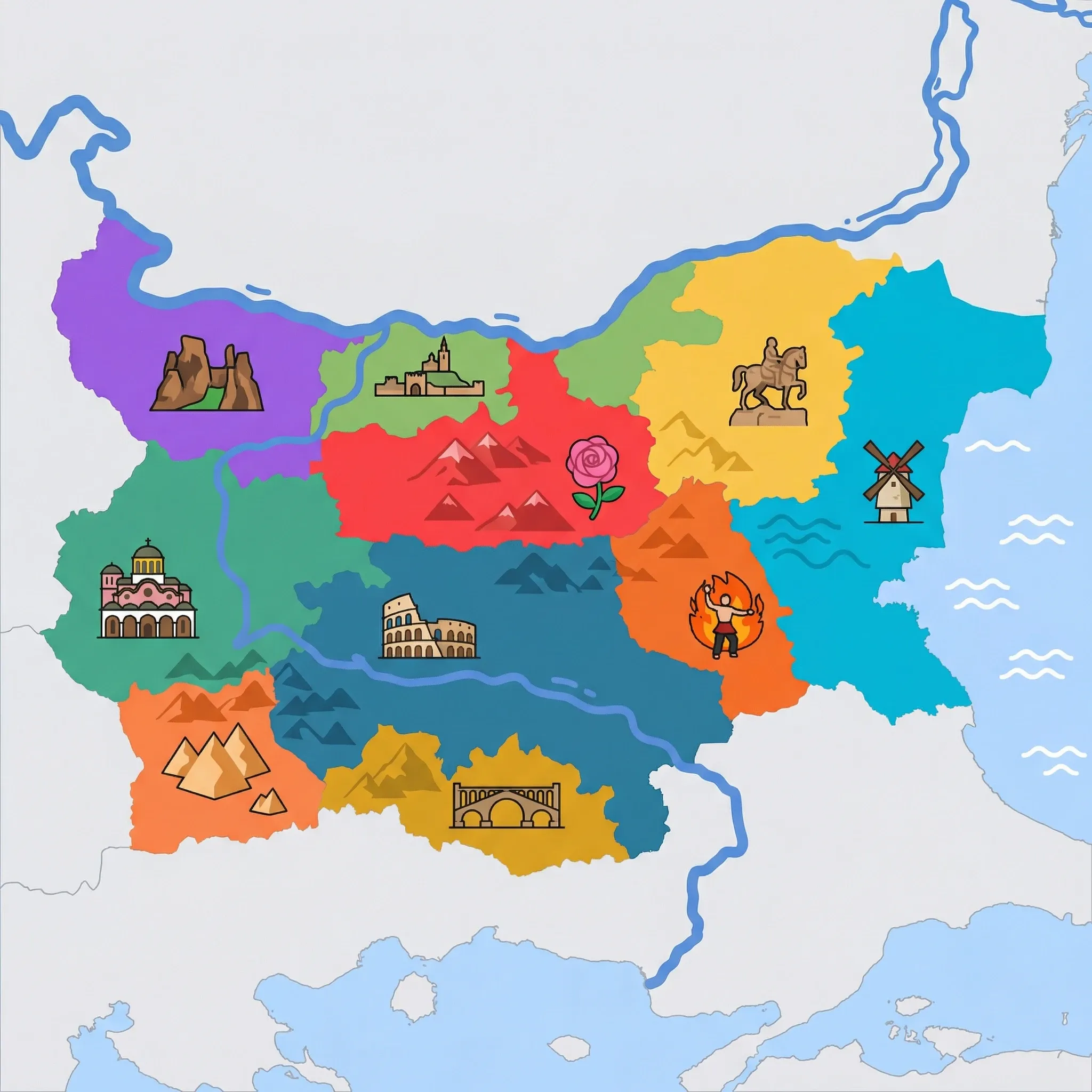
Click a region to explore
Overview
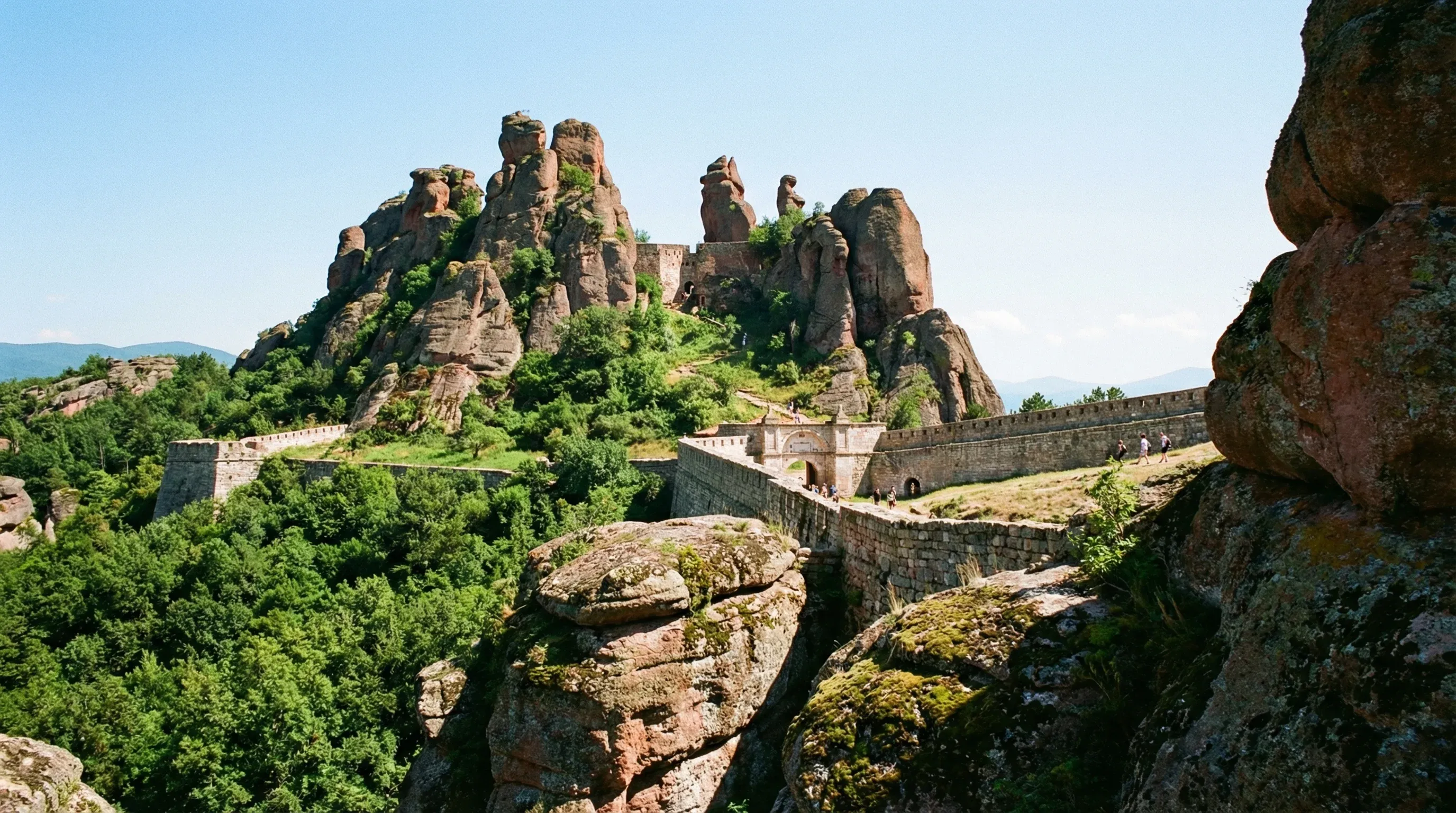
Northwest Bulgaria is the country's hidden frontier. Economically the poorest region in the EU, it is paradoxically one of the richest in terms of dramatic natural beauty and lack of crowds. For families willing to venture here, the reward is a landscape that looks like it belongs in a fantasy movie. The region is dominated by the red sandstone giants of Belogradchik and the majestic flow of the Danube River at Vidin. It is a quiet, slower-paced part of the world where you can visit world-class attractions without fighting for a parking space or queuing for tickets.
The vibe here is rustic and authentic. The Vratsa Balkan offers imposing limestone cliffs that tower over the town of Vratsa, providing excellent hiking and easy nature walks for families. The history is deep, stretching from prehistoric cave dwellers to Roman legions guarding the Danube frontier. While the tourist infrastructure is less polished than on the coast, the hospitality is warm, and the sense of discovery is genuine. It is an ideal destination for families with school-aged children who are studying history or geology, as the lessons here are tangible and massive in scale.
Key Attractions
The absolute highlight is the Belogradchik Rocks. These reddish rock formations rise up to 200 meters high and span 30 km, shaped by erosion into figures resembling people, animals, and castles. Nestled seamlessly among them is the Belogradchik Fortress; walls were built between the natural rock pillars, creating a stronghold that looks impregnable. Kids love exploring the nooks and crannies and climbing to the top for views that are truly other-worldly.
A short drive away is Magura Cave, one of the largest in Bulgaria. It is famous for its prehistoric cave paintings (now shown via replicas/interactive displays to preserve originals) and its massive chambers. The exit of the cave leads to Rabisha Lake, a nice spot for a picnic. Further north on the Danube bank lies the Baba Vida Fortress in Vidin. It is the only fully preserved medieval castle in Bulgaria, complete with a moat and towers that children can climb. It feels like a proper "knight's castle" and offers great views over the wide Danube river to Romania.
Practical Advice
The region is best visited by car. Public transport is infrequent. Winters can be grey and foggy near the Danube, while summers are hot. Spring (May-June) is the most beautiful time when the rocks are surrounded by fresh greenery.
Food & Drink
Typical meal times: Lunch 12:00 pm to 2:00 pm; Dinner 7:00 pm to 9:30 pm.
Typical meal costs: Very cheap. 40–70 BGN (approx. $22–38 USD / €20–35 EUR) for a full family feast.
Dietary requirements: Traditional country food. Lots of grilled meats, river fish, and salads. Vegetarian options are basic (potatoes, cheese, salad).
Signature dishes:
- Fish Soup (Ribena chorba) – Vidin is famous for its Danube fish soups, often made with several types of river fish and lovage.
- Vlach Kachamak – A cornmeal porridge similar to polenta, often served with cheese and pork crackling.
- Belmuzh – A simple, high-energy shepherd's dish made from fresh unsalted cheese melted with flour.
Why this score?
The rugged karst landscape and extensive cave systems provide excellent opportunities for hiking, climbing, and exploration. The lack of heavy tourism infrastructure adds a layer of 'off-the-beaten-path' authenticity that requires more self-sufficiency from visitors. Families will find the terrain exciting but must be prepared for fewer guided services.
Why this score?
This is one of the most economically challenged regions in the European Union, reflected in its limited medical infrastructure. Hospitals in Vidin and Vratsa are often under-resourced and may lack modern diagnostic equipment or English-speaking staff. Travelers with chronic conditions or serious injuries should exercise caution and have robust evacuation insurance.
Why this score?
Despite having world-class attractions like the Belogradchik Rocks and Magura Cave, this remains the least visited region in Bulgaria by international standards. Infrastructure is underdeveloped compared to the rest of the country, and it is often skipped by mainstream tour operators. It is very much an emerging or niche destination for dedicated travelers.

The cheapest region in Bulgaria. You can find family guesthouses for 50–80 BGN (approx. $27–44 USD / €25–40 EUR). Entry to the fortress is minimal (approx 6 BGN per adult).
Family Travel Notice
Ensure children have individual travel documents. If travelling with only one parent, carry notarized consent from the absent parent to meet potential border requirements.

Getting Here & Around
Getting Here
- Driving – The main way to reach the region. From Sofia to Belogradchik takes about 3.5 hours via the mountain pass or the international road E79.
- Train – A scenic train line runs through the Iskar Gorge to Vratsa and Vidin, but it is slow (4–5 hours to Vidin).
- Bus – Regular buses run from Sofia to Vidin and Vratsa.
Getting Around
- Car – Highly recommended. Attractions like Magura Cave and Belogradchik Rocks are hard to connect via public transport.
- Walking – The sites themselves require walking. The rocks involve stairs and uneven terrain.
No airports in this region. See the country flight map for nearby connections.
Official Links

Packing List
The sandstone at Belogradchik can be sandy and slippery; flip-flops are dangerous here.
Magura Cave is a constant 12°C (53°F) year-round, which feels cold in summer.
GPS signal can be spotty in the deep gorges of Vratsa Balkan.
Many Black Sea beaches have rocky sections or extremely hot sand in summer.
Public toilets and rest stops are frequently out of toilet paper.
Mosquitoes can be aggressive in summer, especially near the Danube and coastal wetlands.
Many small shops, guesthouses, and rural museums do not accept credit cards.
Mountain resorts like Bansko and Borovets get surprisingly cold at night, even in July.
Street lighting in smaller villages and rural guesthouse paths can be non-existent.

Activities & Best Times

Hiking, wildlife, outdoor exploration, ecotourism
Home to the world-class Belogradchik Rocks and Magura Cave, offering a unique blend of karst landscapes and deep caves. Peak months offer ideal hiking weather and autumn colors, while winter snow makes mountain trails and cave access difficult.

Urban tourism, museums, historical sites, architecture
Features the impeccably preserved Baba Vida medieval fortress and the Belogradchik stronghold. Spring and autumn provide the best atmosphere for exploring these historic sites, avoiding the peak summer heat and winter's gray, cold dampness.

Spa retreats, wellness centers, peaceful getaways
Centered on the historic spa town of Varshets, which offers mineral-rich thermal waters in a tranquil mountain setting. While indoor facilities are open year-round, the experience is best when mountain air is fresh and gardens are in bloom.

Scenic drives, countryside tours, route-based travel
The Iskar Gorge and Petrohan Pass offer dramatic, high-quality scenic driving routes through the Balkan Mountains. Travel is best in late spring and autumn for visibility, whereas winter months bring dangerous ice and fog to high mountain passes.

Sport tourism, fitness activities, active recreation
Offers significant infrastructure for the EuroVelo 6 Danube cycle route and world-class limestone rock climbing near Vratsa. Activity is best in mild months; July and August can be intensely hot for strenuous exercise like cycling or climbing.
Amusement parks, family entertainment venues
Regional aquatic complexes and the Ledenika amusement park provide family-oriented entertainment during the warm summer season. Most outdoor water-based attractions and amusement facilities operate on a strictly seasonal summer schedule.
Beach resorts, marine activities: diving, snorkelling, kite surfing, wind surfing, sailing
Restricted to freshwater river beaches like Baba Vida on the Danube and local dam reservoirs. These provide a unique local charm in the height of summer but do not meet international standards for coastal beach resorts.

Learning experiences, scientific sites, historical education
Features specialized natural history and cave geology centers, most notably at the Ledenika Visitor Centre. While scientifically interesting, these are small-scale regional facilities rather than primary destination-level educational draws.

Winter sports, ski resorts, snow activities
Local ski centers like Kom and Parshevitsa offer basic winter sport facilities in the Balkan Mountains. Reliable snow cover is generally limited to mid-winter, and the infrastructure is modest compared to major European ski destinations.

Attractions (11 total)



Public Holidays & Calendar Next 12 months
Public holidays, festivals, cultural celebrations, and seasonal natural phenomena coming up in Northwest Bulgaria over the next 12 months.
Loading holidays and events...

Travel Advisory
Bulgaria is widely assessed as a safe destination with no major security threats. All major agencies advise that standard safety precautions and vigilance against petty crime are sufficient for visitors.
Safety Topics
Traveller Advice (4 groups)

General safety advice for solo female travellers applies; be cautious when walking alone at night and use reputable transportation services.

Ensure children have individual travel documents. If travelling with only one parent, carry notarized consent from the absent parent to meet potential border requirements.

Maintain standard personal security awareness and safeguard valuables in tourist-heavy areas. Ensure travel insurance is comprehensive and includes medical evacuation.

While same-sex relationships are legal, they are not always socially accepted in all regions. It is advisable to be discrete regarding public displays of affection to avoid negative attention.
Agency Summaries
Bulgaria is generally considered safe for visitors. Canadian travellers should maintain standard personal security awareness. Entry and exit are governed by Schengen area regulations.
British citizens can travel to Bulgaria with standard precautions. Key considerations include road safety, petty crime in resorts, and adhering to Schengen visa-free stay limits.
The country is a safe destination for tourists. Safety efforts should focus on avoiding petty crimes like pickpocketing in crowded areas and being alert to financial fraud at ATMs.
Bulgaria is assessed as having a low crime rate and a stable security environment. Irish citizens should ensure they have comprehensive insurance and follow basic safety routines.
No specific security concerns are currently identified for Bulgaria. New Zealanders should practice standard self-awareness and ensure they have adequate medical evacuation coverage.
Australia recommends standard safety habits in Bulgaria. Travellers should remain vigilant in crowded spaces and be aware of risks related to stray animals and occasional public demonstrations.
Information is provided for general guidance only and does not constitute travel, safety, medical, or legal advice. Conditions may change. Users are responsible for independently verifying information before travel.