
Pirin & Southwest Mountains
Alpine peaks, ancient monasteries, and sunny valleys 🏔️⛷️
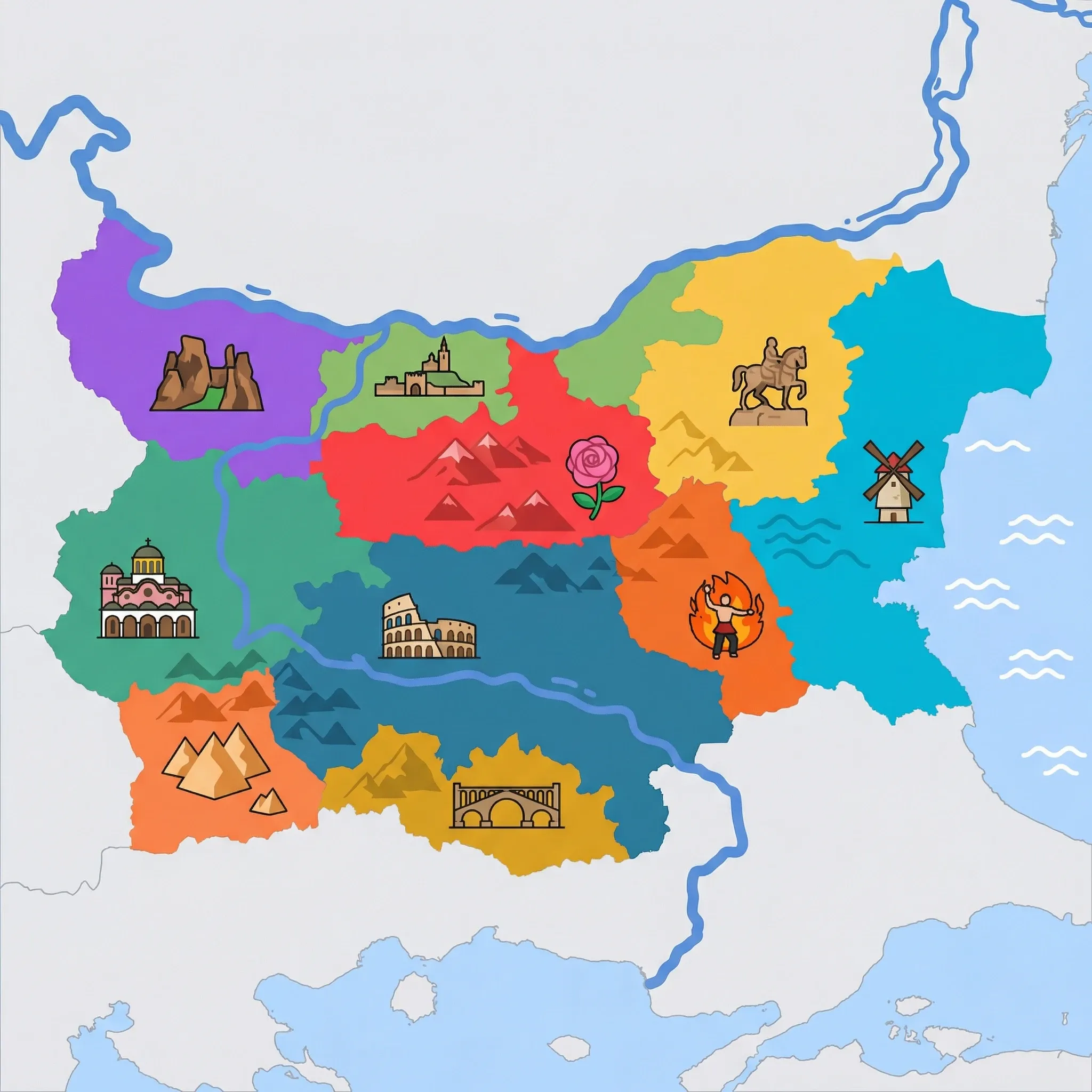
Click a region to explore
Overview
This region is the roof of the Balkans. Dominated by the Rila and Pirin mountain ranges, it offers the most dramatic high-altitude scenery in the country. For families, this is a year-round destination: a winter wonderland for skiing and snowboarding from December to March, and a hiking paradise of crystal-clear lakes and pine forests in the summer. The infrastructure here is well-developed, with Bansko and Borovets offering modern hotels, chairlifts, and family-friendly amenities. The air is remarkably clean, and the town of Sandanski is famously known as a health resort for its healing climate.
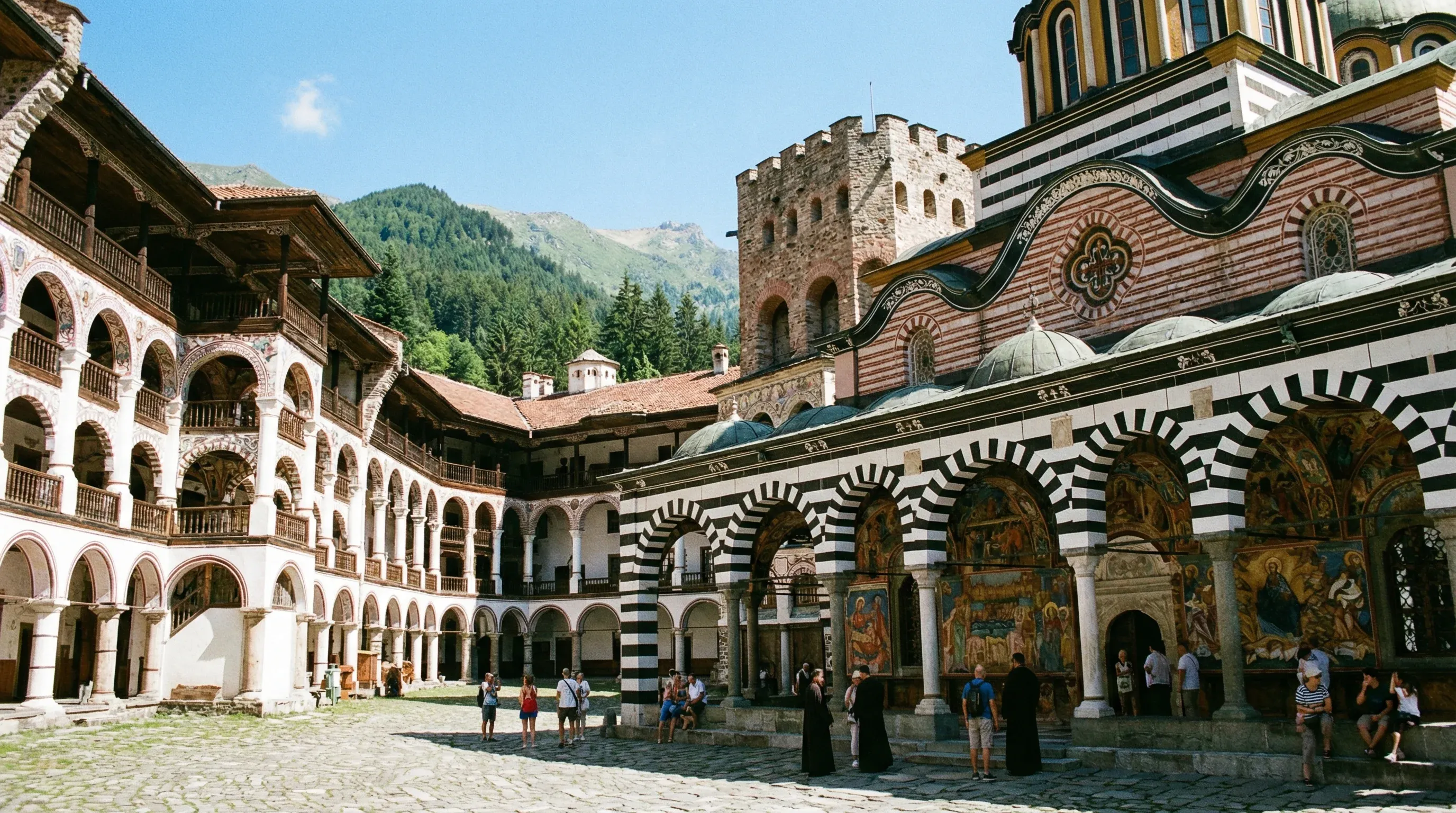
Beyond the sports, the Southwest is the spiritual heart of Bulgaria. It is home to the Rila Monastery, a site of immense cultural importance that looks like a fortress on the outside and a jewelry box on the inside. The region also stretches south towards the Greek border, where the climate becomes Mediterranean. Here lies Melnik, the smallest town in Bulgaria, famous for its unique sand pyramids and wine cellars carved into the soft rock. The contrast between the snowy peaks of Pirin and the warm, vine-covered hills of Melnik makes for a diverse family road trip.
Key Attractions
The undeniable icon is the Rila Monastery. Tucked deep in a forested valley, its black-and-white striped arches and colorful frescoes of demons and angels fascinate children. It’s a great place to teach kids about history in a visually engaging way. Nearby, the Seven Rila Lakes offer one of the most famous hikes in Bulgaria. A chairlift takes you most of the way up, making the hike to the lower lakes accessible for active families with older children (though it's still high-altitude, so take care).
For winter sports, Borovets Ski Resort and Bansko are the main hubs. They offer ski schools for kids, kindergartens, and plenty of après-ski options like swimming pools and bowling. In the south, the Melnik Architectural Reserve is a hit with families. The town is tiny, filled with historic houses, and surrounded by giant "sand pyramids"—eroded earth formations that look like giant termite mounds. The hike to the Rozhen Monastery nearby is gentle and scenic.
Practical Advice
The Seven Rila Lakes lift can have massive queues on summer weekends—go on a weekday or arrive at 8:00 am. In winter, Bansko can get crowded during school holidays (February). The road to Rila Monastery is winding.
Food & Drink
Typical meal times: Lunch 12:30 pm to 2:30 pm; Dinner 7:00 pm to 10:00 pm.
Typical meal costs: 70–120 BGN (approx. $38–66 USD / €35–60 EUR) in ski resorts (higher in winter). Melnik and rural areas are cheaper.
Dietary requirements: Bansko restaurants cater to international tourists, so vegan and gluten-free options are easier to find there than in the rest of the country.
Signature dishes:
- Banska Kapama – A rich dish of sauerkraut, rice, and several types of meat (chicken, pork, veal, sausage) slow-cooked in a clay pot for hours.
- Chomlek – Another slow-cooked specialty, usually veal shank with potatoes, onions, and wine.
- Green figs jam – A specialty of the southern Struma valley, often sold in roadside jars.
Why this score?
Featuring some of the highest peaks in the Balkans, this region is a haven for high-altitude hiking, rock climbing, and expert-level skiing. The Pirin National Park offers truly alpine conditions and rugged trails that provide a significant physical challenge. While family-friendly hubs like Bansko exist, the surrounding wilderness is genuine and vast.
Why this score?
Bansko and Borovets have good emergency medical centers and private clinics focused on sports injuries and tourist care during peak seasons. However, the permanent medical infrastructure in the smaller mountain towns is basic. For serious medical emergencies, patients are typically transported to the high-level facilities in Sofia, which is relatively accessible by road from this region.
Why this score?
Bansko is a premier international ski destination in the winter, and Rila Monastery is one of the country's most visited cultural landmarks year-round. The region has a well-developed tourism industry that caters to British, Israeli, and Balkan visitors. It is recognized globally for winter sports and religious tourism, though it stays quieter in the shoulder seasons.

Prices vary by season. In winter, Bansko and Borovets are 'mid-to-high' for Bulgaria (lift passes are approx 90 BGN / $50 USD per day). In summer, accommodation prices drop significantly, making it a budget-friendly hiking destination. Food is generally good value.
Family Travel Notice
Ensure children have individual travel documents. If travelling with only one parent, carry notarized consent from the absent parent to meet potential border requirements.

Getting Here & Around
Getting Here
- Driving – The Struma Highway (A3) connects Sofia to the Greek border, making access to Blagoevgrad, Bansko, and Sandanski fast (2–2.5 hours). Rila Monastery is a detour off the main road.
- Bus – Frequent buses run from Sofia to Bansko, Blagoevgrad, and Rila Monastery.
- Shuttle – During ski season, many tour operators run direct shuttles from Sofia Airport to Borovets Ski Resort and Bansko.
Getting Around
- Car – Best for flexibility, especially to reach the Rila Monastery or move between Melnik and Sandanski.
- Gondola/Lifts – Essential transport in the mountains for reaching hiking trails and ski slopes in Pirin National Park.
No airports in this region. See the country flight map for nearby connections.
Official Links

Packing List
The high altitude (2000m+) means UV radiation is much stronger, even in winter.
The region is full of thermal mineral springs (Banya, Sandanski) open year-round.
Required for the Seven Rila Lakes chairlift ride, even in August.
Many Black Sea beaches have rocky sections or extremely hot sand in summer.
Public toilets and rest stops are frequently out of toilet paper.
Mosquitoes can be aggressive in summer, especially near the Danube and coastal wetlands.
Many small shops, guesthouses, and rural museums do not accept credit cards.
Mountain resorts like Bansko and Borovets get surprisingly cold at night, even in July.
Street lighting in smaller villages and rural guesthouse paths can be non-existent.

Activities & Best Times

Hiking, wildlife, outdoor exploration, ecotourism
Home to two UNESCO-listed mountain ranges (Rila and Pirin) offering world-class trekking and unique conservation projects like the Belitsa Dancing Bears Park. High-altitude trails are best accessed in summer, while late autumn and winter bring heavy snow and avalanche risks to the back-country.

Urban tourism, museums, historical sites, architecture
Anchored by the world-famous Rila Monastery and the historic wine-growing town of Melnik, the region offers authentic Orthodox heritage and unique architecture. Late spring and early autumn provide the best conditions for exploring, while mid-summer can be uncomfortably hot in the Struma Valley.
Winter sports, ski resorts, snow activities
Bansko and Borovets are premier Eastern European ski hubs with modern lift infrastructure and vibrant alpine atmospheres that rival mid-tier Alpine resorts. The core season runs from January to March, with early snow and late spring conditions providing variable shoulder opportunities.

Sport tourism, fitness activities, active recreation
Exceptional infrastructure for active families, including the Seven Rila Lakes circuit and the peak ascent of Musala, the highest point in the Balkans. These activities require stable summer weather, as high-altitude conditions in the off-season are suitable only for professional mountaineers.

Spa retreats, wellness centers, peaceful getaways
The region is famous for thermal mineral springs in Sapareva Banya and Sandanski, offering authentic Balkan spa culture. Thermal bathing is most appealing during the cooler winter and shoulder months, whereas the intense summer heat in the southwest makes hot springs less attractive.

Scenic drives, countryside tours, route-based travel
The drive to Rila Monastery and the winding passes through the Pirin mountains offer spectacular scenery and well-maintained arterial roads. Winter travel can be treacherous due to snow and ice on high-altitude passes like Predel, making the warmer months far more suitable for touring.
Amusement parks, family entertainment venues
Features several high-quality aquatic centers and summer adventure hubs like Rila Fun Park which offer great mountain-based entertainment for families. These outdoor-focused facilities are strictly seasonal, operating primarily during the warm summer months and closing for the winter season.

Learning experiences, scientific sites, historical education
While featuring several high-quality visitor centers for national parks and regional history, these sites serve as supplementary enrichment rather than primary travel motivators. Accessibility is best during the standard tourism seasons when facilities are fully staffed for international visitors.

Attractions (19 total)



Public Holidays & Calendar Next 12 months
Public holidays, festivals, cultural celebrations, and seasonal natural phenomena coming up in Pirin & Southwest Mountains over the next 12 months.
Loading holidays and events...

Travel Advisory
Bulgaria is widely assessed as a safe destination with no major security threats. All major agencies advise that standard safety precautions and vigilance against petty crime are sufficient for visitors.
Safety Topics
Traveller Advice (4 groups)

General safety advice for solo female travellers applies; be cautious when walking alone at night and use reputable transportation services.

Ensure children have individual travel documents. If travelling with only one parent, carry notarized consent from the absent parent to meet potential border requirements.

Maintain standard personal security awareness and safeguard valuables in tourist-heavy areas. Ensure travel insurance is comprehensive and includes medical evacuation.

While same-sex relationships are legal, they are not always socially accepted in all regions. It is advisable to be discrete regarding public displays of affection to avoid negative attention.
Agency Summaries
Bulgaria is generally considered safe for visitors. Canadian travellers should maintain standard personal security awareness. Entry and exit are governed by Schengen area regulations.
British citizens can travel to Bulgaria with standard precautions. Key considerations include road safety, petty crime in resorts, and adhering to Schengen visa-free stay limits.
The country is a safe destination for tourists. Safety efforts should focus on avoiding petty crimes like pickpocketing in crowded areas and being alert to financial fraud at ATMs.
Bulgaria is assessed as having a low crime rate and a stable security environment. Irish citizens should ensure they have comprehensive insurance and follow basic safety routines.
No specific security concerns are currently identified for Bulgaria. New Zealanders should practice standard self-awareness and ensure they have adequate medical evacuation coverage.
Australia recommends standard safety habits in Bulgaria. Travellers should remain vigilant in crowded spaces and be aware of risks related to stray animals and occasional public demonstrations.
Information is provided for general guidance only and does not constitute travel, safety, medical, or legal advice. Conditions may change. Users are responsible for independently verifying information before travel.