
Southeast Bulgaria
Mysterious mountains, fire-walkers, and wild beaches 🌳🔥
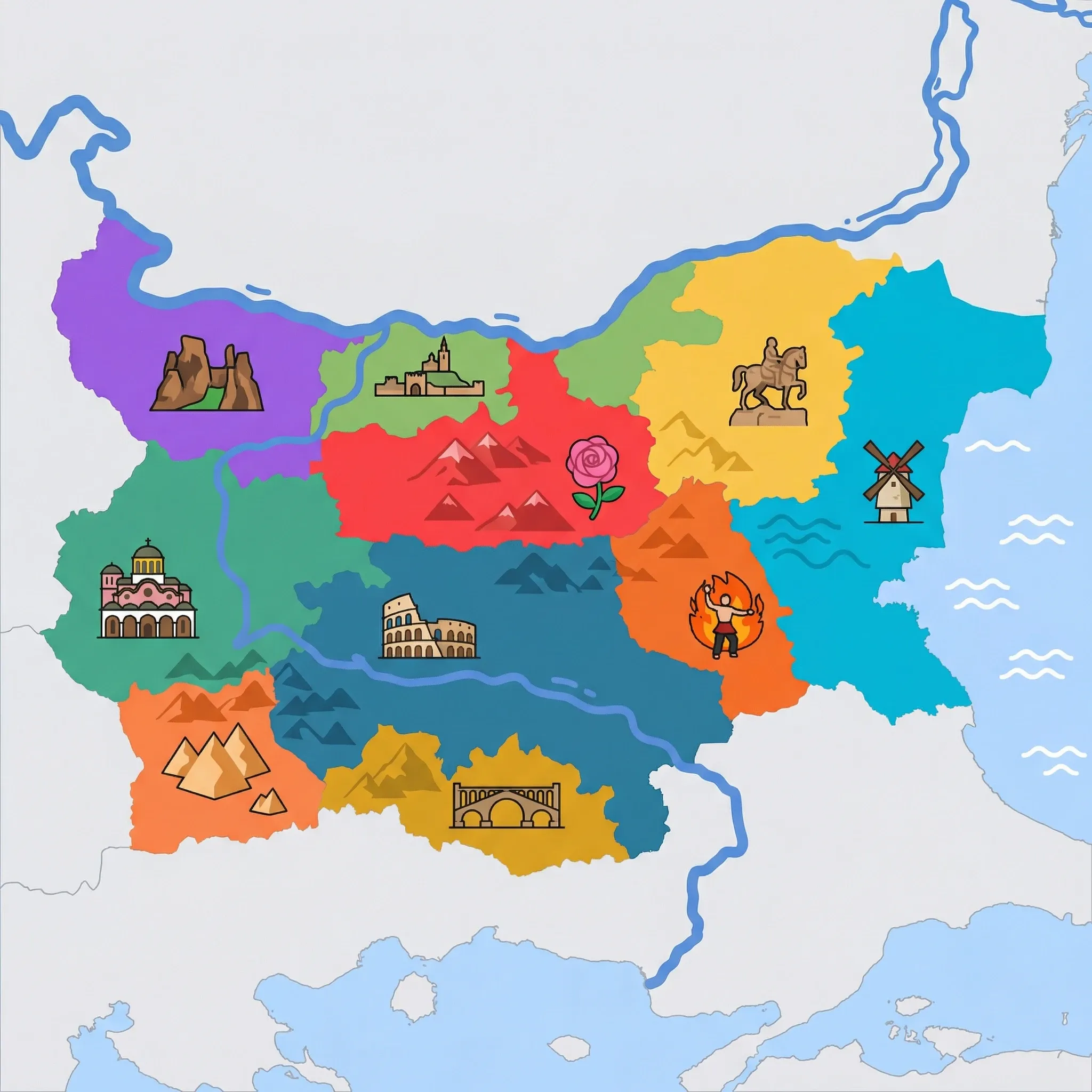
Click a region to explore
Overview
The Southeast is the wildest and most exotic corner of Bulgaria. Dominated by the Strandzha Mountain, it is a region of thick, ancient forests that tumble down into the Black Sea. For families, this area offers a perfect antidote to the commercialism of the northern resorts. The vibe here is eco-centric and mysterious. This is the land of the "Nestinari"—fire-walkers who dance on glowing embers in a trance (a ritual you might catch if you visit around June 3rd). The villages here preserve a unique folklore and architecture, while the coast offers some of the cleanest water in the country.
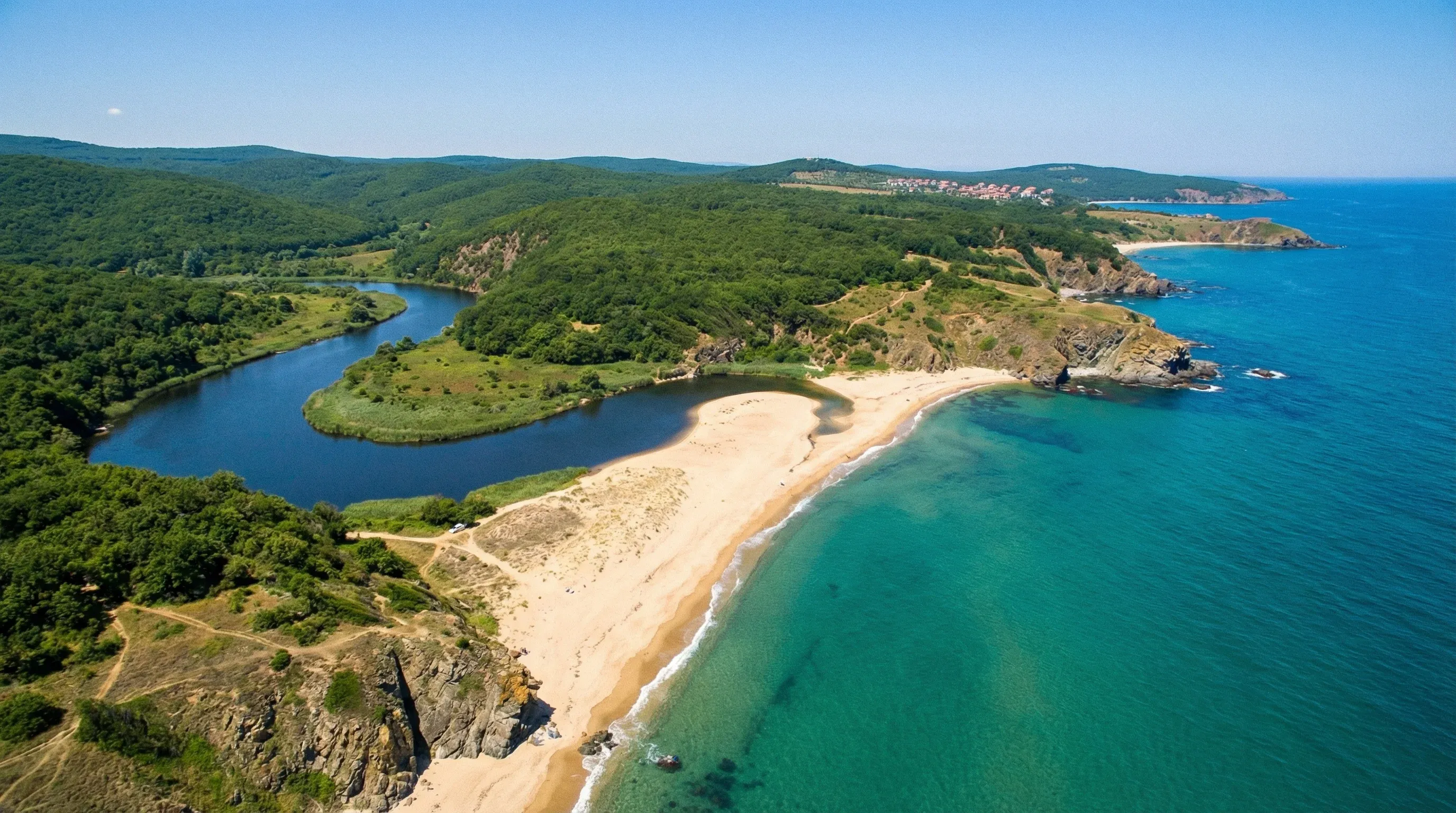
Nature is the main attraction. The rivers Veleka and Ropotamo flow gently into the sea, creating estuaries that are teeming with turtles, water snakes, and rare birds. Boat trips here are like mini jungle cruises. The beaches, such as Silistar and Veleka, are less developed, backed by forests rather than concrete hotels. It is a fantastic region for families who love camping, kayaking, or simply being in nature without giving up the beach holiday experience.
Key Attractions
A polarizing but undeniable hit with children is the Castle of Ravadinovo "In Love with the Wind" near Sozopol. It is a modern construction, not a historical one, built in a fantastical, kitsch style with spires, knights in armor, and peacocks roaming the grounds. Parents might find it eccentric, but kids absolutely love the fairytale atmosphere. In contrast, the Ropotamo Nature Reserve offers pure nature. You can take a slow boat ride along the river to see the "Lion's Head" rock formation and spot terrapins sunbathing on logs.
Further south, Strandzha Nature Park is the largest protected area in Bulgaria. It’s a great place for easy forest walks in the shade of ancient oaks. The village of Architectural Reserve Brashlyan allows you to see 300-year-old wooden houses and learn about local life. At the very south, Veleka Beach in Sinemorets is a stunning sight—a sandbar separating the river from the sea, where you can swim in salt water one minute and fresh water the next (safely, of course!).
Practical Advice
You need a car here. Public transport to villages like Brashlyan or beaches like Silistar is non-existent. There are few ATMs in the deep Strandzha villages, so carry cash.
Food & Drink
Typical meal times: Lunch 12:30 pm to 2:30 pm; Dinner 7:30 pm to 10:00 pm.
Typical meal costs: 60–100 BGN (approx. $33–55 USD / €30–50 EUR). Fish restaurants in Sozopol can be pricey; inland villages are cheap.
Dietary requirements: Fresh fish and game meat (wild boar) are staples. Vegetarians can rely on salads and cheese dishes.
Signature dishes:
- Strandzha Manna Honey – A rare, dark honey producing only in this region, known for its strong flavor and health benefits.
- Zelnik – A pastry similar to banitsa but filled with leafy greens (dock, spinach, or nettles) and cheese.
- Bonfire bread – In rural guesthouses, you might find bread baked directly in the embers.
Why this score?
The Strandzha Nature Park offers a unique mix of dense forests and mystical historical sites like Beglik Tash, providing a moderate adventure level. The coastline here is more rugged and less built-up, allowing for activities like kayaking and birdwatching in the Ropotamo Reserve. It appeals to families seeking a balance between beach time and nature exploration.
Why this score?
Medical infrastructure is relatively limited once you move south of Burgas into the Strandzha area or the small coastal villages. Local clinics are equipped only for minor treatments, and there is a significant distance to the nearest major hospital in Burgas. During the off-season, medical services in the tourist-reliant coastal towns can be even more restricted.
Why this score?
The southern coast and Strandzha Mountains are much quieter than the northern Black Sea resorts, attracting those looking for wilder beaches and nature. While towns like Sozopol are very popular, the further south you go, the more the crowds thin out. It is a niche destination for eco-tourism and those avoiding the mass-market resorts of the north.

Sozopol and the Castle of Ravadinovo have 'tourist' prices (Castle entry is ~20 BGN / $11 USD). However, camping and dining in the southern villages (Sinemorets, Varvara) is very affordable.
Family Travel Notice
Ensure children have individual travel documents. If travelling with only one parent, carry notarized consent from the absent parent to meet potential border requirements.

Getting Here & Around
Getting Here
- Airports – Burgas Airport (BOJ) is the gateway, located just 30–60 minutes north of the main sites.
- Driving – From Burgas, the road heads south along the coast to Sozopol and Tsarevo. The road into the Strandzha mountains is winding and narrow.
Getting Around
- Car – Absolutely essential for this region to move between the coast and the mountains.
- Boat – Small tourist boats are the only way to see the Ropotamo Nature Reserve properly.
No airports in this region. See the country flight map for nearby connections.
Official Links

Packing List
Strandzha forests and river mouths have plenty of bugs.
Wild beaches like Veleka often don't have sunbeds for hire.
If hiking in the grassy woodlands of Strandzha, ticks are a possibility.
Many Black Sea beaches have rocky sections or extremely hot sand in summer.
Public toilets and rest stops are frequently out of toilet paper.
Many small shops, guesthouses, and rural museums do not accept credit cards.
Mountain resorts like Bansko and Borovets get surprisingly cold at night, even in July.
Street lighting in smaller villages and rural guesthouse paths can be non-existent.

Activities & Best Times

Hiking, wildlife, outdoor exploration, ecotourism
Boasts significant biodiversity within the Strandzha Nature Park and unique river-to-sea ecosystems at Ropotamo. Peak months provide optimal weather for wildlife observation and trekking, while high summer can be humid and winter months see reduced accessibility in the mountain interior.

Beach resorts, marine activities: diving, snorkelling, kite surfing, wind surfing, sailing
Offers high-quality, 'wilder' beach experiences at Silistar and Veleka Mouth that appeal to families seeking authenticity over mass-market resorts. Seasonal peak is limited to the warm summer months when water temperatures are suitable for swimming and coastal reserves like Ropotamo are fully operational.

Urban tourism, museums, historical sites, architecture
Features authentic Thracian heritage sites and the preserved rural architecture of Brashlyan, providing a deep sense of Balkan history. Visitation is best in the temperate shoulder seasons; high summer heat makes inland archaeological sites less comfortable for families.

Sport tourism, fitness activities, active recreation
Provides access to the EuroVelo 13 (Iron Curtain Trail) and organized hiking routes through Strandzha's unique oak forests. Optimal for active families in late spring and early autumn; July and August are often too hot for strenuous cycling or hiking activities.

Scenic drives, countryside tours, route-based travel
The scenic drive through Strandzha's forest roads and the southern coastal route offer pleasant touring, though the network is limited in scale. Best driven in spring or autumn when the landscape is most vibrant and coastal traffic is manageable.

Amusement parks, family entertainment venues
Includes several regional water parks like Aqua Planet Primorsko which serve the summer family market well but lack international destination-level status. These facilities operate strictly according to the summer beach season and are closed for the majority of the year.

Attractions (9 total)



Public Holidays & Calendar Next 12 months
Public holidays, festivals, cultural celebrations, and seasonal natural phenomena coming up in Southeast Bulgaria over the next 12 months.
Loading holidays and events...

Travel Advisory
Bulgaria is widely assessed as a safe destination with no major security threats. All major agencies advise that standard safety precautions and vigilance against petty crime are sufficient for visitors.
Safety Topics
Traveller Advice (4 groups)

General safety advice for solo female travellers applies; be cautious when walking alone at night and use reputable transportation services.
Ensure children have individual travel documents. If travelling with only one parent, carry notarized consent from the absent parent to meet potential border requirements.

Maintain standard personal security awareness and safeguard valuables in tourist-heavy areas. Ensure travel insurance is comprehensive and includes medical evacuation.

While same-sex relationships are legal, they are not always socially accepted in all regions. It is advisable to be discrete regarding public displays of affection to avoid negative attention.
Agency Summaries
Bulgaria is generally considered safe for visitors. Canadian travellers should maintain standard personal security awareness. Entry and exit are governed by Schengen area regulations.
British citizens can travel to Bulgaria with standard precautions. Key considerations include road safety, petty crime in resorts, and adhering to Schengen visa-free stay limits.
The country is a safe destination for tourists. Safety efforts should focus on avoiding petty crimes like pickpocketing in crowded areas and being alert to financial fraud at ATMs.
Bulgaria is assessed as having a low crime rate and a stable security environment. Irish citizens should ensure they have comprehensive insurance and follow basic safety routines.
No specific security concerns are currently identified for Bulgaria. New Zealanders should practice standard self-awareness and ensure they have adequate medical evacuation coverage.
Australia recommends standard safety habits in Bulgaria. Travellers should remain vigilant in crowded spaces and be aware of risks related to stray animals and occasional public demonstrations.
Information is provided for general guidance only and does not constitute travel, safety, medical, or legal advice. Conditions may change. Users are responsible for independently verifying information before travel.