
Battambang & Northwest
Ride the rails and watch millions of bats take flight 🦇🚂
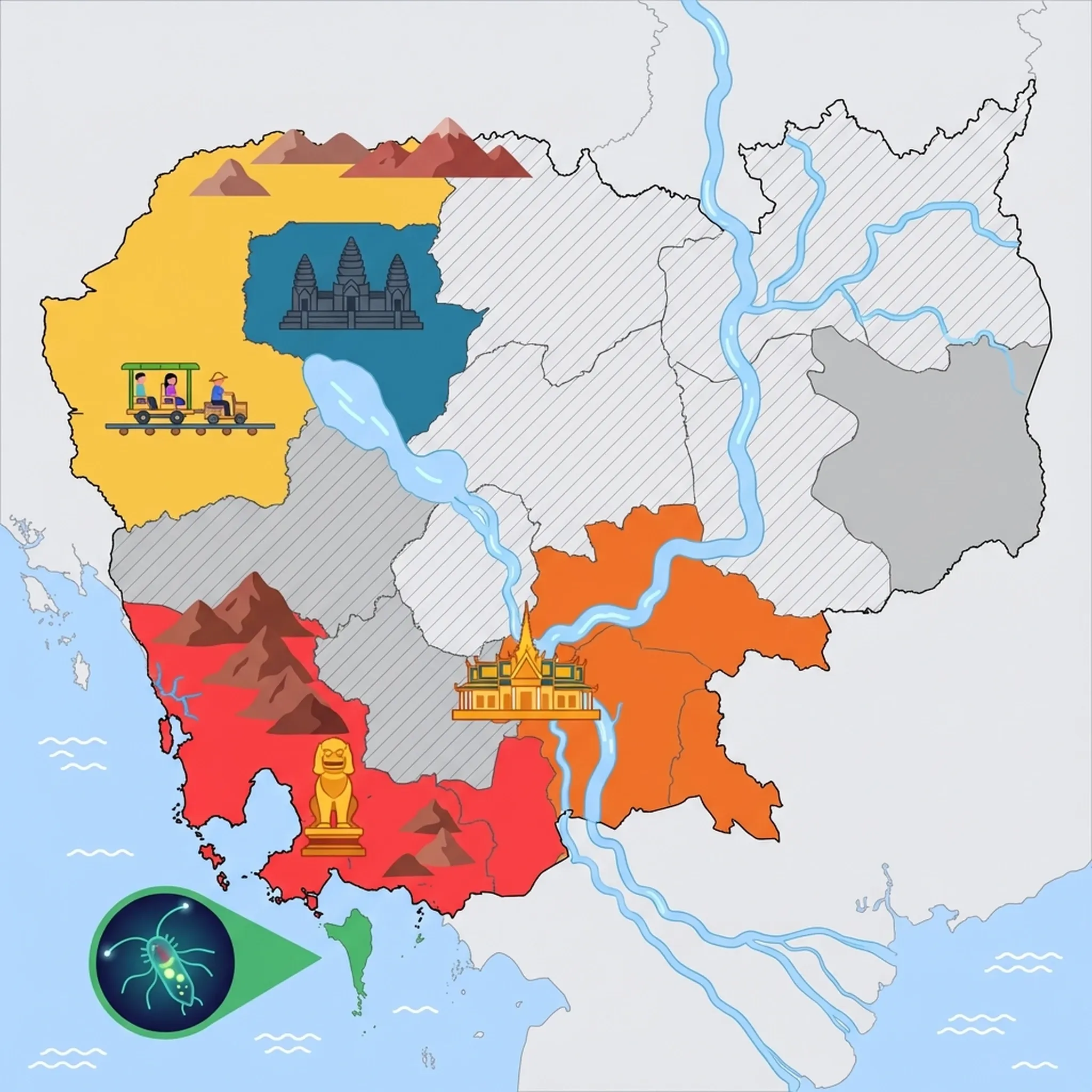
Click a region to explore
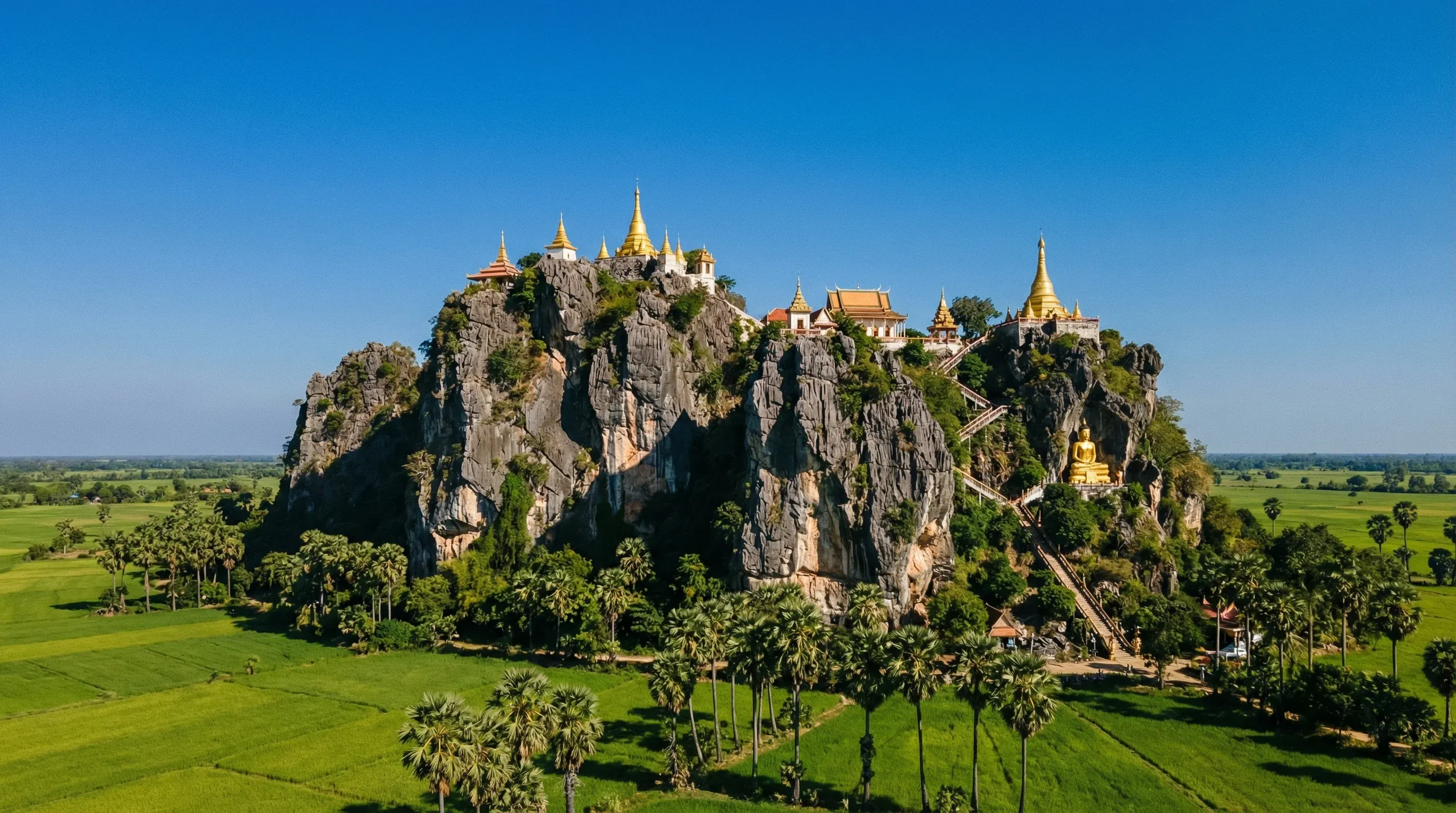
Battambang is often cited by families as their favourite stop in Cambodia because it balances authenticity with accessibility. Unlike the frenetic energy of the capital or the tourist crush of Angkor, Battambang feels lived-in and calm. The region is defined by the lazy Sangkae River winding through the city and the vast, flat rice paddies that stretch to the horizon, punctuated by dramatic limestone mountains. The climate here follows the national tropical monsoon pattern, but the open countryside often catches a pleasant breeze in the late afternoons. For children, the appeal lies in the lack of rigid itineraries; days are best spent cycling through villages where locals dry rice paper on bamboo racks, or watching the mesmerising nightly exodus of millions of bats from the caves at Phnom Sampeau.
Culturally, this is the heart of Cambodian arts. The city hosts the famous Phare Ponleu Selpak, a non-profit art school and circus (animal-free) that provides vocational training to disadvantaged youth. Seeing a show here is a highlight for children of all ages, combining high-energy acrobatics with local folklore. The architecture is also distinct, featuring some of the best-preserved French colonial shop-houses in the country. Families visiting this region find a welcoming, safe atmosphere where the pace is slow enough to truly engage with local people.
Key Attractions
The undisputed highlight for any child visiting the northwest is the Bamboo Train (Norry). These improvised rail vehicles—essentially bamboo platforms powered by small engines—hurtle along warped tracks through the rice paddies. It is a noisy, windy, and utterly exhilarating experience that offers a unique perspective on the rural landscape. If an oncoming 'train' approaches, the drivers simply dismantle the lighter vehicle to let the other pass, a mechanical curiosity that fascinates kids.
For a mix of history and exercise, families should head to Wat Banan. Often called 'Mini Angkor', this 11th-century temple requires a climb of over 300 steps, but the panoramic views from the top are rewarding. The ruins are compact enough for children to explore without getting exhausted. Further afield, the Banteay Chhmar Temple offers a 'Tomb Raider' vibe similar to the famous temples of Siem Reap but with zero crowds. It is massive, overgrown, and atmospheric, allowing families to wander through collapsed galleries and face-towers in near solitude.
Practical Advice
The best time to visit is during the dry season (November to February) when temperatures are cooler. However, visiting in the 'green season' (June to October) means the rice paddies are at their most vibrant green. Getting around is best done by hiring a remork (Cambodian tuk-tuk) for the day; drivers often double as excellent guides. The city is flat and compact, making it one of the few places in Cambodia where renting bicycles for the whole family is safe and enjoyable.
Food & Drink
Typical meal times: Lunch is typically served from 11:30 am to 2:00 pm, and dinner from 6:00 pm to 9:00 pm.
Typical meal costs: Street food snacks cost 4,000–8,000 KHR (approx. $1–2 USD / €0.90–1.80 EUR). A meal in a family restaurant costs 20,000–40,000 KHR (approx. $5–10 USD / €4.50–9 EUR) per person.
Dietary requirements: Vegetarian food is easy to find here due to the local Chinese influence. Vegan options are available in the expat-friendly cafes in Battambang city, but less so in rural areas. Peanuts are common in garnishes, so alert staff to allergies.
Signature dishes:
- Mee Kola – A vegetarian noodle dish specific to the Kola minority in the region, featuring rice noodles, soy sauce, pickled papaya, and crushed peanuts.
- Kralan – Sticky rice, coconut milk, and black beans roasted inside a bamboo tube, sold by roadside vendors and perfect for a travel snack.
- Battambang Oranges – Technically grown in the surrounding provinces, these small green oranges are famous nationwide for their sweet, intense juice.
Why this score?
The region offers moderate adventure through its rural limestone cave systems, unique local transport like the 'Norry' bamboo train, and extensive cycling through rice paddies. The proximity to the Cardamom Mountains and the remote temple of Banteay Chhmar provides a more rugged experience than the highly developed tourist circuits.
Why this score?
Medical facilities in Battambang are limited to provincial hospitals and basic clinics that may not meet international standards for complex emergencies. Most serious cases require transport to Phnom Penh or even across the border to Thailand, which is geographically close but requires logistical coordination.
Why this score?
While Battambang is Cambodia's second-largest city, it remains a secondary destination compared to Siem Reap and Phnom Penh, primarily attracting cultural tourists and backpackers. Its famous Bamboo Train and bat caves draw a steady flow of international visitors, but it lacks the massive hotel infrastructure and direct flight connectivity of the country's primary hubs.

Battambang is significantly cheaper than Siem Reap or Phnom Penh. A high-quality boutique hotel with a pool can cost 160,000–320,000 KHR (approx. $40–80 USD / €35–70 EUR) per night. Local transport is inexpensive, with short tuk-tuk rides costing 4,000–8,000 KHR (approx. $1–2 USD / €0.90–1.80 EUR).

Getting Here & Around
Getting Here
- Bus – Comfortable express buses and minivans run daily from Phnom Penh (approx. 5–6 hours) and Siem Reap (approx. 3 hours). Operators like Giant Ibis are recommended for families due to safety standards.
- Boat – In the wet season, a scenic but long (6–8 hours) boat journey connects Siem Reap to Battambang via the Sangkae River, passing floating villages. It can be tiring for very young children.
- Driving – Private taxis can be hired from Siem Reap or Phnom Penh, offering the flexibility to stop at pottery villages en route.
Getting Around
- Remork (Tuk-tuk) – The standard way to see the countryside. Hiring a driver for a full day is affordable and allows you to visit the Bamboo Train (Norry) and bat caves easily.
- Bicycle – Battambang city has low traffic and flat roads, making it ideal for family cycling tours.
- Walking – The colonial center is compact and best explored on foot, particularly along the riverfront in the early evening.
No airports in this region. See the country flight map for nearby connections.
Official Links

Packing List
Essential for exploring the killing caves at Phnom Sampeau or walking back from the bat viewing area after dusk.
The Bamboo Train engines can be extremely loud and deafening for sensitive young ears.
Rural roads are unpaved and very dusty in the dry season; essential for open-air tuk-tuk rides.
If visiting village schools or homestays (common here), small practical gifts like pencils are appreciated.
Old, torn, or marked US notes are frequently rejected by shops and banks; bring pristine small denominations.
You will remove your shoes constantly at temples and pagodas; laces become very frustrating.
Essential for sunrise temple walks (which start in total darkness) and navigating frequent island power cuts.
The humidity is extreme; water alone often isn't enough to prevent heat exhaustion in children.
Shoulders and knees must be covered at Angkor Wat; scarves are sometimes not accepted as sufficient cover.

Activities & Best Times

Hiking, wildlife, outdoor exploration, ecotourism
Home to the world-class Prek Toal Bird Sanctuary and the unique Bamboo Train, this region offers authentic immersion into Cambodia's riverine and rural ecosystems. Peak season coincides with the dry, cooler months when migratory birds congregate and river travel is most comfortable.

Urban tourism, museums, historical sites, architecture
Battambang is a hub of preserved French colonial architecture and home to major archaeological sites like Banteay Chhmar and Wat Banan. The cool, dry winter months are ideal for walking tours and exploring the vibrant local art scene before the extreme heat of April or the heavy monsoons of September.

Scenic drives, countryside tours, route-based travel
Scenic routes like National Road 55 through the Cardamom Mountains offer spectacular landscape views and well-maintained surfaces for exploring rural Cambodia. Travel is best in the dry season to ensure clear vistas and safe driving conditions, while the height of the monsoon can lead to road hazards.

Sport tourism, fitness activities, active recreation
Established cycling routes and social enterprise tours like Soksabike provide high-quality, active ways to engage with the countryside. Peak months offer the lower temperatures necessary for strenuous physical activity, whereas the extreme humidity and heat of the pre-monsoon period are unsuitable.

Amusement parks, family entertainment venues
Local-scale water and amusement parks like Green Park provide basic family entertainment but lack the world-class infrastructure sophisticated travelers expect. These facilities are most utilized during the peak heat months of the dry season as a way to cool down.




Public Holidays & Calendar Next 12 months
Public holidays, festivals, cultural celebrations, and seasonal natural phenomena coming up in Battambang & Northwest over the next 12 months.
Loading holidays and events...

Travel Advisory
The majority of major travel agencies recommend exercising a high degree of caution or increased vigilance when visiting Cambodia. This assessment is driven by persistent petty and violent crime in urban areas and significant regional security risks near international land borders.
Safety Topics
Traveller Advice (3 groups)

While same-sex relationships are not illegal, there are no specific legal protections against discrimination, and public displays of affection may draw unwanted negative attention.

There have been reports of harassment and sexual assault targeting foreigners. Female travellers should avoid walking alone after dark, particularly in isolated beach areas or quiet city streets.

Travellers are advised to stay on well-used paths in rural areas to avoid unexploded landmines and to use reputable transport services to minimize the risk of theft.
Agency Summaries
New Zealanders should be more cautious than usual due to the frequency of violent crime and potential for civil unrest. All travel to the Thailand-Cambodia border is discouraged.
The U.S. government recommends heightened awareness due to crime and the presence of landmines. A high-risk warning is in effect for regions bordering Thailand due to potential armed conflict.
Canadians are urged to be very vigilant due to a rise in opportunistic street crime. Specific areas near the Thai border should be avoided entirely because of territorial disputes and military activity.
Australia advises a high level of vigilance across the country due to unpredictable security conditions and crime. Reconsider travel to border provinces affected by recent military tensions.
While general travel is permitted, the FCDO warns against visiting the land border with Thailand. Crime is a concern in tourist hubs, and visitors should be aware of lower health and safety standards.
Irish citizens are advised to be cautious of violent crime and civil unrest. The border region with Thailand is considered dangerous and should be avoided.
Information is provided for general guidance only and does not constitute travel, safety, medical, or legal advice. Conditions may change. Users are responsible for independently verifying information before travel.