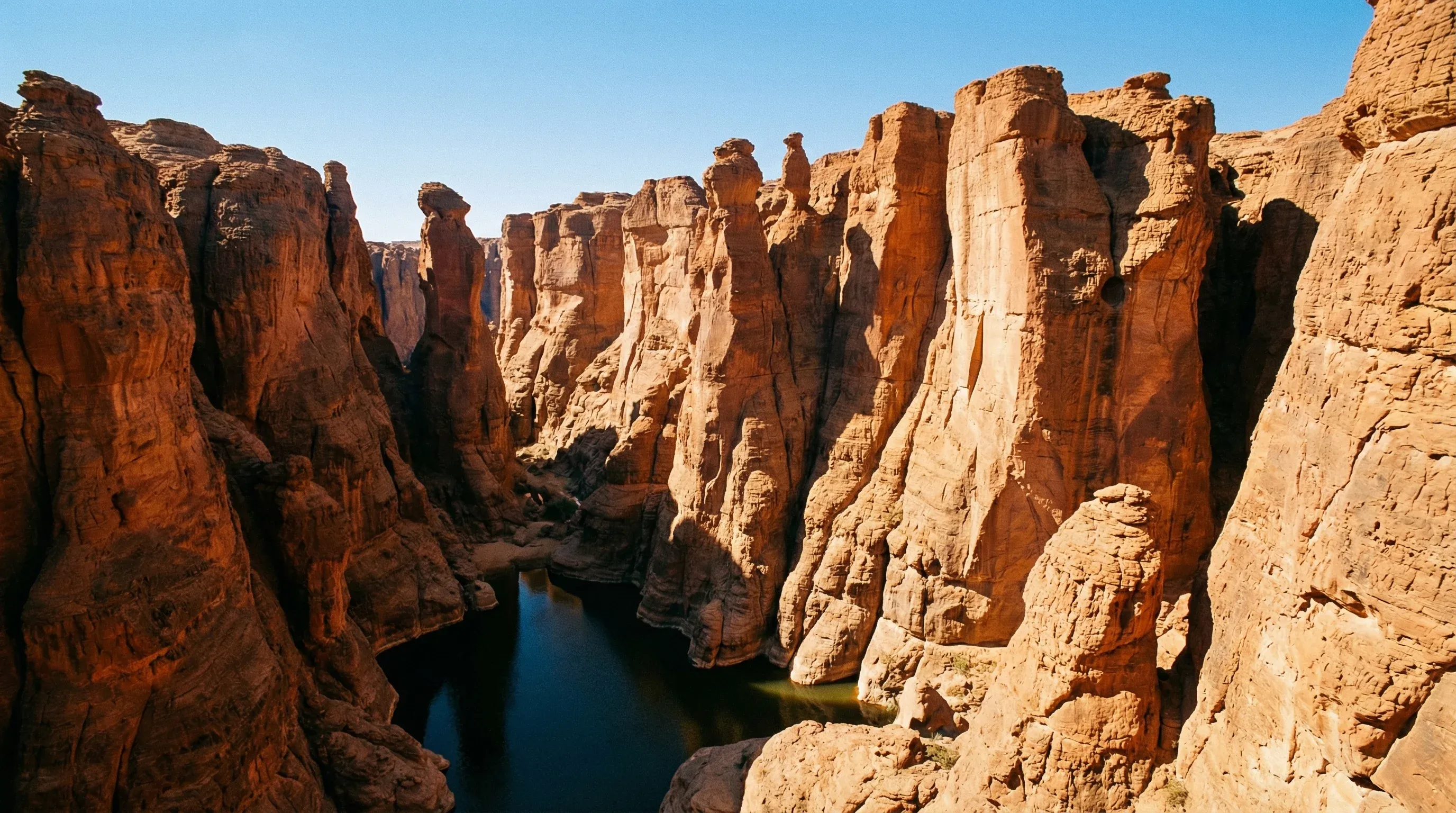

Tibesti & Ennedi (north)
A prehistoric landscape of rock arches and desert lakes 🏜️
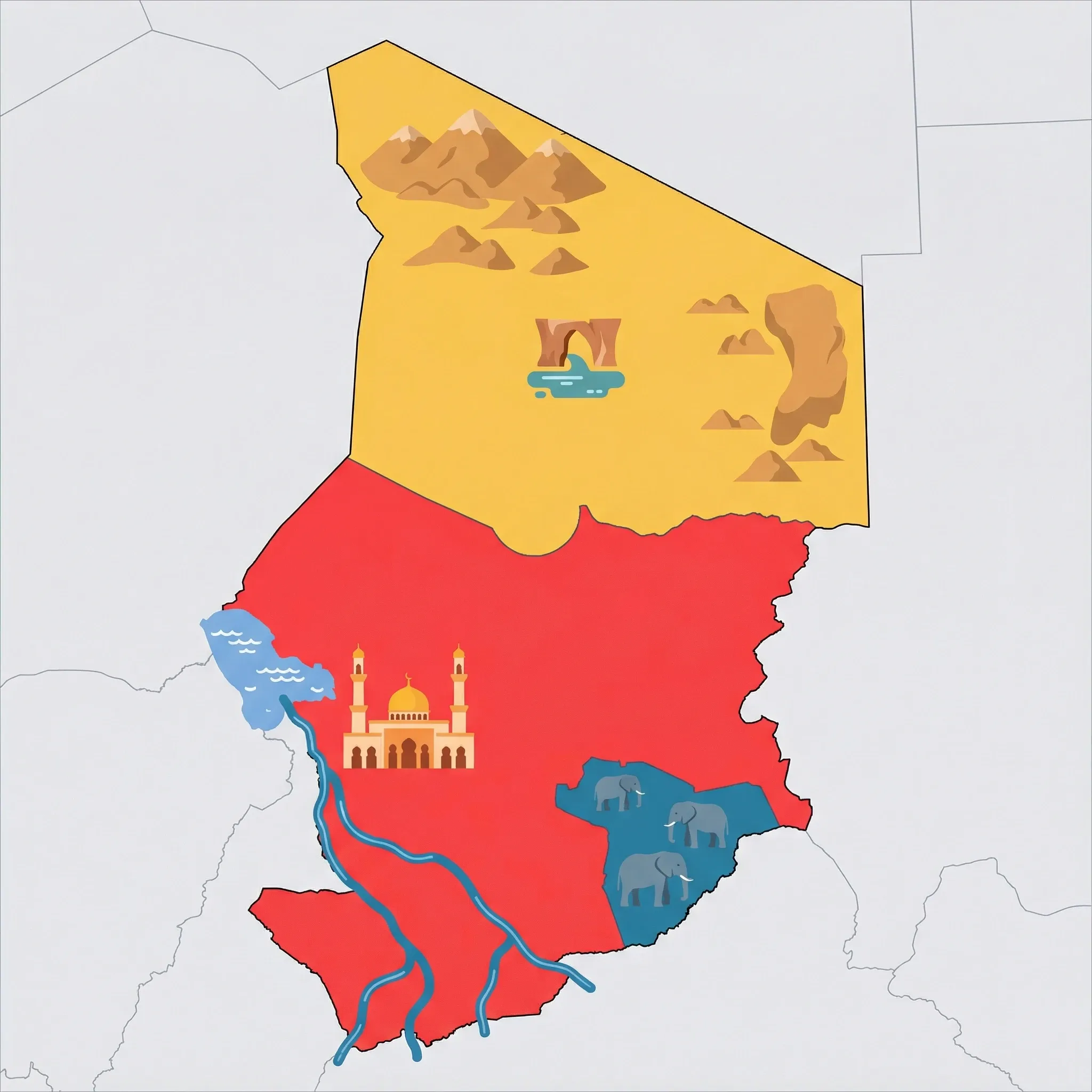
Click a region to explore
⚠️ SAFETY WARNING: Due to high risks of terrorism, kidnapping, and landmines, government agencies (including the UK, AU, and USA) advise against all travel to the Tibesti and Ennedi regions. Emergency consular assistance is extremely limited or non-existent here. Families should only consider this region if part of a high-security professional expedition and after consulting their government's strictest travel advisories.
Overview
The Tibesti and Ennedi regions offer a landscape so surreal it feels like another planet. This is the Sahara at its most dramatic: a vast expanse of silence, wind, and rock. For the few families who venture here under strict professional guidance, it offers an education in geology and deep time. The terrain is defined by massive sandstone cathedrals, wind-sculpted arches, and the dark volcanic peaks of the Tibesti mountains. It is a place of profound isolation where the modern world vanishes completely.
The region is not just empty desert; it is a cultural archive. Hidden within the caves and overhangs are thousands of rock paintings dating back millennia, showing a time when this desert was green and teeming with giraffes and elephants. The silence of the desert night, under a canopy of stars untouched by light pollution, is a profound experience for children and adults alike. This is an expedition-style destination, requiring camping, 4x4 travel, and a resilience to heat and dust.
Key Attractions
The crown jewel of the region is the Ennedi Natural and Cultural Reserve, a UNESCO World Heritage site. Here, families can walk among towering rock formations and natural arches like the massive Aloba Arch. Inside the reserve lies the famous Guelta d'Archei, a zoological miracle where one of the last surviving populations of Saharan crocodiles lives. Children will be mesmerized by the sight of hundreds of camels gathering to drink at this ancient watering hole, their bellows echoing off the canyon walls.
Further north, the Lakes of Ounianga defy logic. These eighteen interconnected lakes float in the middle of the hyper-arid desert, bordered by palm trees and sand dunes. The contrast between the blue water and the orange sand is visually shocking and provides a unique lesson in hydrology and climate. Exploring these sites involves walking through soft sand and rocky paths, so sturdy footwear is essential.
Practical Advice
Travel here is only possible via fully self-sufficient expeditions organized by specialized tour operators. The season runs from November to February; outside these months, the heat is dangerous. There are no hotels; accommodation is exclusively bivouac camping. Families must be prepared for "wild toilet" situations and no running water for days.
Food & Drink
Typical meal times: Meals are dictated by the expedition schedule. Breakfast is at sunrise (6:00 am), lunch during the midday rest (12:00 pm to 2:00 pm), and dinner after camp setup (7:00 pm to 8:00 pm).
Typical meal costs: Food is almost always included in the expedition price. If buying supplies in local oases, costs are high due to transport. A simple meal of pasta and sauce in a remote outpost might cost 5,000–8,000 XAF (approx. $8–13 USD / €7–12 EUR).
Dietary requirements: Expedition cooks can usually accommodate basic vegetarian diets (pasta, rice, vegetables) if notified in advance. Gluten-free options are very difficult to maintain as bread is a staple.
Signature dishes:
- Thé Tchadien – A very strong, sweet, frothy green tea served in small glasses, central to all social interactions in the desert.
- Pain de Sable (Taguella) – A traditional bread baked in the hot sand and embers of the campfire, often eaten with a meat sauce.
- Dates – The dates from the northern oases are prized for their quality and provide essential energy for desert travel.
Why this score?
This region offers an ultimate wilderness experience, featuring the Saharan volcanic peaks of Tibesti and the dramatic sandstone labyrinths of Ennedi. Traveling here requires self-sufficient expeditions across roadless desert terrain, making it a benchmark for extreme global adventure.
Why this score?
There is virtually no medical infrastructure across this vast northern expanse, with only the most rudimentary dispensaries in small settlements like Faya-Largeau. In the event of an emergency, there is no reliable access to professional care, and even a satellite-dispatched evacuation would be logistically harrowing.
Why this score?
This region is one of the most isolated and least-visited places on the planet, with visitor numbers limited to a few hundred extreme expedition travelers each year. The high cost of logistics and the extreme distance from the capital make it inaccessible to all but the most dedicated desert explorers.

This is one of the most expensive adventure destinations in Africa due to logistics. A 2-week expedition typically costs between 2,500,000–4,000,000 XAF (approx. $4,100–6,600 USD / €3,800–6,100 EUR) per person. This includes vehicles, drivers, permits, food, and camping gear. There are no budget options.

Getting Here & Around
Getting Here
- Driving – The primary access is a multi-day 4x4 expedition from N'Djamena, taking 3-4 days just to reach the Ennedi Massif.
- Airports – Charter flights to Faya-Largeau are possible but extremely expensive and irregular. Most travelers arrive via the long overland route to acclimatize.
Getting Around
- Car – Travel is exclusively by 4x4 convoy (minimum two vehicles) with experienced desert drivers. The terrain includes deep sand, rocks, and wadis.
- Walking – Once at camp, exploring the Ennedi Natural and Cultural Reserve is done on foot. Hikes can range from short walks to strenuous climbs.
No airports in this region. See the country flight map for nearby connections.
Official Links

Packing List
Essential for covering face and head against driving sand and sun.
There are no showers for days; this is your only method of bathing.
No electricity exists in the desert; essential for charging cameras/phones.
The air is extremely dry and dusty; helps prevent nosebleeds in children.
Essential for protecting your face and airways from the intense Saharan dust and sand.
A physical yellow booklet is mandatory for entry; you will be refused entry without it.
Dehydration is a major risk in the 40°C+ heat; water alone is often not enough.
ATMs are unreliable and often empty. New, crisp Euro notes are the easiest currency to exchange.
GPS signals can be spotty in the desert, and electronics may fail in the extreme heat.
Water is scarce in the north; these will be your primary method of washing on expedition.

Activities & Best Times

Urban tourism, museums, historical sites, architecture
Home to globally significant prehistoric rock art sites and ancient cultural landscapes like Niola Doa. The profound authenticity of the Toubou nomadic culture and archaeological heritage is exceptional for sophisticated travelers.

Hiking, wildlife, outdoor exploration, ecotourism
Features the world-class sandstone labyrinths of the Ennedi Massif and the unique UNESCO-listed Ounianga Lakes. Exploration is strictly seasonal, limited to cooler months to avoid extreme Saharan heat.

Sport tourism, fitness activities, active recreation
Offers world-class expedition-style trekking and the challenging volcanic ascent of Emi Koussi. Peak visitation is restricted to the winter window when physical exertion is safe in the arid desert environment.

Spa retreats, wellness centers, peaceful getaways
Natural volcanic hot springs at Soborom offer unique restorative properties in a raw, dramatic desert setting. A lack of modern spa infrastructure and extreme isolation makes this suitable only for highly adventurous families.




Public Holidays & Calendar Next 12 months
Public holidays, festivals, cultural celebrations, and seasonal natural phenomena coming up in Tibesti & Ennedi (north) over the next 12 months.
Loading holidays and events...

Travel Advisory
Most global agencies recommend reconsidering or avoiding all non-essential travel to Chad due to persistent threats of terrorism, kidnapping, and violent crime. Extreme danger exists in border regions and northern provinces.
Safety Topics
Traveller Advice (2 groups)

All visitors should avoid moving after dark, vary their routines, and stay clear of political demonstrations or large public gatherings.

Humanitarian and aid staff are specifically targeted by kidnapping groups, especially in remote areas and the Lake Chad region.
Agency Summaries
New Zealanders are urged to avoid non-essential travel due to significant threats from terrorism and violent crime. Many regions carry the highest level of warning.
Travel is discouraged due to crime, terrorism, and kidnapping. Notably, the local government has suspended visa issuance for private US citizens, and entry for them is currently restricted.
British citizens are advised to limit travel to essential purposes only. High threats of terrorism and kidnapping exist, and the UK's ability to provide assistance is extremely limited.
Ireland advises against unnecessary travel due to the risk of political unrest and kidnapping. Border areas are considered particularly dangerous and should be avoided entirely.
Canadian authorities suggest avoiding all non-essential visits due to risks from extremist groups, violent offences, and public instability. Stricter warnings are in place for border regions and the northern provinces.
Australia recommends avoiding all travel to Chad because of the dangerous security environment, including frequent violent crime and terrorism. Consular help is severely restricted.
Information is provided for general guidance only and does not constitute travel, safety, medical, or legal advice. Conditions may change. Users are responsible for independently verifying information before travel.