
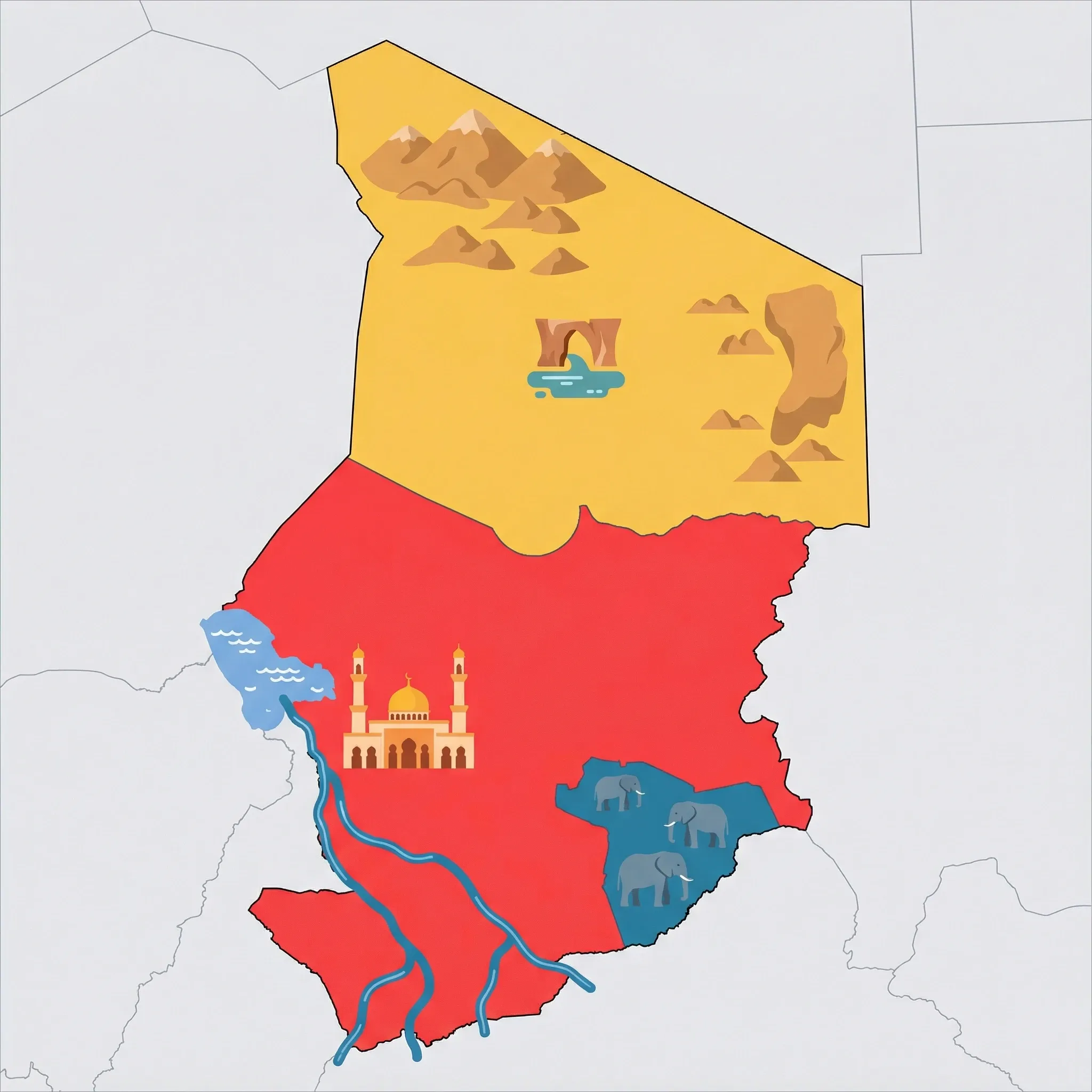
Click a region to explore
⚠️ SAFETY WARNING: While the park itself is well-guarded and considered secure, the surrounding regions can be volatile. Government agencies (including the US and UK) advise travelers to reconsider travel to this area due to general regional instability and isolation. Travel should only be undertaken with established park operators who manage all logistics and security from arrival to departure.
Overview
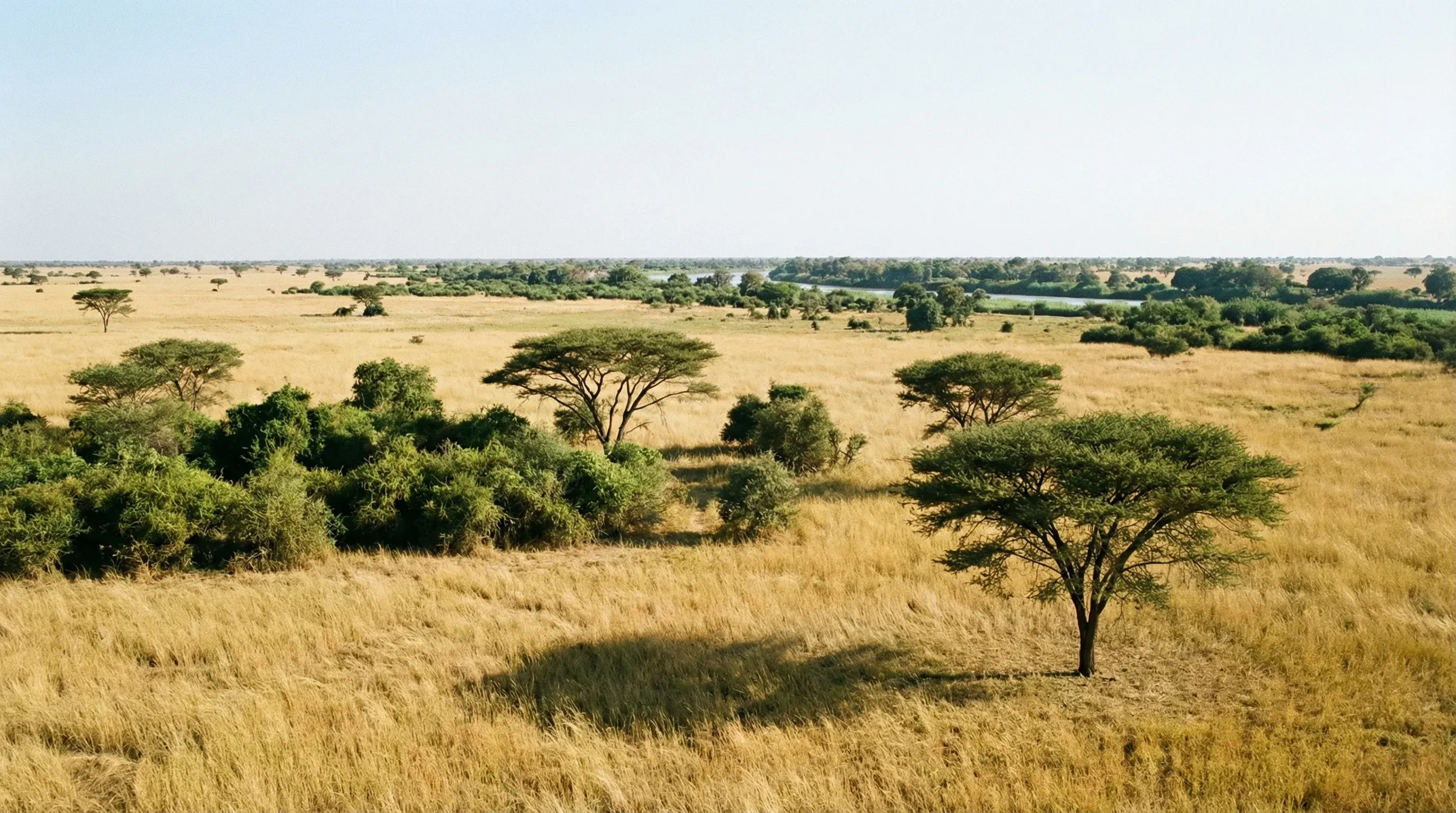
Zakouma National Park is widely regarded as one of the greatest conservation success stories on the planet. Once decimated by poaching, the park has been restored to a thriving ecosystem under the management of African Parks. For families, this is not just a safari; it is an inspiring lesson in resilience and nature's ability to recover. The park feels wild and undiscovered, lacking the crowds of East African reserves. The landscape changes from dry bush to lush wetlands, supporting a density of wildlife that is breathtaking.
The experience here is intimate. Camps are small, guides are exceptional, and the focus is on true immersion in nature. Children can witness the "super-herds" of elephants—hundreds strong—that have learned to feel safe again. The skies are clouded with millions of quelea birds, and the nights are filled with the sounds of lions and hyenas. It is a destination for families who love wildlife and want to support high-impact conservation directly.
Key Attractions
The primary attraction is, of course, Zakouma National Park itself. Game drives here are spectacular, offering sightings of the "Big Five" (minus the rhino) alongside unique species like the Kordofan giraffe and the Lelwel hartebeest. The park is also one of the best places in Africa to see roan antelope and tiang in large numbers. Unlike other parks where sightings can be fleeting, the water sources in Zakouma concentrate game during the dry season, making for easy and frequent viewing for children.
Beyond the vehicle safaris, the park offers walking safaris for older children and visits to the local markets on the park periphery (security permitting). These visits help families understand the crucial link between community development and wildlife conservation. The sheer abundance of birdlife, including cranes and raptors, turns even casual observers into avid birdwatchers.
Practical Advice
The park is closed during the wet season and only operates from mid-November to May. The best viewing months are March and April when water is scarce, though it is very hot (often exceeding 40°C/104°F). Families should book at least 6-12 months in advance as accommodation is extremely limited. The park is managed by African Parks, and booking directly or through their accredited agents is mandatory.
Food & Drink
Typical meal times: Breakfast is served early (5:30 am) before the morning drive. Brunch/Lunch is at 11:30 am. Afternoon tea is at 3:30 pm, and Dinner is served at 7:30 pm after the evening drive.
Typical meal costs: Meals are included in the all-inclusive lodge rates. For reference, a casual meal in a nearby town (not recommended for tourists) would cost 3,000–6,000 XAF (approx. $5–10 USD / €4.50–9 EUR).
Dietary requirements: The lodges (Tinga and Camp Nomade) are well-versed in international hospitality and can cater to vegetarian, gluten-free, and allergy-specific diets if informed at the time of booking.
Signature dishes:
- Grilled Capitaine – Fresh fish from the Salamat river, often served at the lodge with light lemon sauces.
- Peanut Soup – A staple of Chadian cuisine often adapted for the lodge menu, creamy and rich.
- Fresh Mangoes – In season (March/April), the local mangoes are incredibly sweet and served daily.
Why this score?
Visiting this park involves significant travel through remote southeastern Chad, often via small bush planes or arduous overland routes. The experience is wild and uncrowded, offering a raw safari environment where travelers are deep within an active, rugged conservation zone.
Why this score?
While the park management and luxury camps maintain basic first-aid kits and can handle minor ailments, there are no hospital facilities nearby. Any serious medical emergency would require an expensive and time-consuming air evacuation back to N'Djamena.
Why this score?
Zakouma is Chad's premier wildlife destination and a world-renowned conservation success, yet it remains a niche destination due to its remote location. While it attracts high-end safari-goers, its total visitor volume remains a tiny fraction of what more accessible African parks receive.

Zakouma is a premium destination. The standard lodge (Tinga Camp) costs approximately 120,000–150,000 XAF (approx. $200–250 USD / €180–230 EUR) per person per night, full board. The exclusive Camp Nomade is significantly more expensive. Charter flights add roughly 300,000–400,000 XAF (approx. $500–660 USD / €450–610 EUR) per person return.

Getting Here & Around
Getting Here
- Airports – Access is almost exclusively via private charter flights operated by African Parks from N'Djamena directly to the park's airstrip (approx. 2 hours).
- Driving – Overland travel from N'Djamena takes 12-15 hours in the dry season. It is exhausting and carries higher security risks, so it is rarely recommended for families.
Getting Around
- Car – Inside Zakouma National Park, transport is in open-sided 4x4 safari vehicles provided by the lodge.
- Walking – Walking safaris are available with armed rangers, offering a chance to track wildlife on foot (usually age-restricted for safety).
No airports in this region. See the country flight map for nearby connections.
Official Links

Packing List
Bright colors attract tsetse flies and startle wildlife; stick to khaki/olive.
Essential for appreciating the vast birdlife and distant herds on the floodplain.
Dehydration is a major risk in 40°C heat; water alone is sometimes insufficient.
Fine dust permeates everything during game drives.
Essential for protecting your face and airways from the intense Saharan dust and sand.
A physical yellow booklet is mandatory for entry; you will be refused entry without it.
ATMs are unreliable and often empty. New, crisp Euro notes are the easiest currency to exchange.
GPS signals can be spotty in the desert, and electronics may fail in the extreme heat.
Water is scarce in the north; these will be your primary method of washing on expedition.

Activities & Best Times

Hiking, wildlife, outdoor exploration, ecotourism
Zakouma National Park is internationally recognized as one of Africa's greatest wildlife conservation success stories, with world-class elephant populations and authentic wilderness safari experiences. This warrants 'very_good' rating under international calibration.

Urban tourism, museums, historical sites, architecture
Remote settlements like Am Timan offer highly authentic, uncommercialized market experiences for intrepid families seeking to understand local Chadian trade and culture. Access is heavily dependent on the dry season, as summer rains make the primitive road infrastructure in this region virtually impassable.



Public Holidays & Calendar Next 12 months
Public holidays, festivals, cultural celebrations, and seasonal natural phenomena coming up in Zakouma NP over the next 12 months.
Loading holidays and events...

Travel Advisory
Most global agencies recommend reconsidering or avoiding all non-essential travel to Chad due to persistent threats of terrorism, kidnapping, and violent crime. Extreme danger exists in border regions and northern provinces.
Safety Topics
Traveller Advice (2 groups)

All visitors should avoid moving after dark, vary their routines, and stay clear of political demonstrations or large public gatherings.

Humanitarian and aid staff are specifically targeted by kidnapping groups, especially in remote areas and the Lake Chad region.
Agency Summaries
New Zealanders are urged to avoid non-essential travel due to significant threats from terrorism and violent crime. Many regions carry the highest level of warning.
Travel is discouraged due to crime, terrorism, and kidnapping. Notably, the local government has suspended visa issuance for private US citizens, and entry for them is currently restricted.
British citizens are advised to limit travel to essential purposes only. High threats of terrorism and kidnapping exist, and the UK's ability to provide assistance is extremely limited.
Ireland advises against unnecessary travel due to the risk of political unrest and kidnapping. Border areas are considered particularly dangerous and should be avoided entirely.
Canadian authorities suggest avoiding all non-essential visits due to risks from extremist groups, violent offences, and public instability. Stricter warnings are in place for border regions and the northern provinces.
Australia recommends avoiding all travel to Chad because of the dangerous security environment, including frequent violent crime and terrorism. Consular help is severely restricted.
Information is provided for general guidance only and does not constitute travel, safety, medical, or legal advice. Conditions may change. Users are responsible for independently verifying information before travel.