
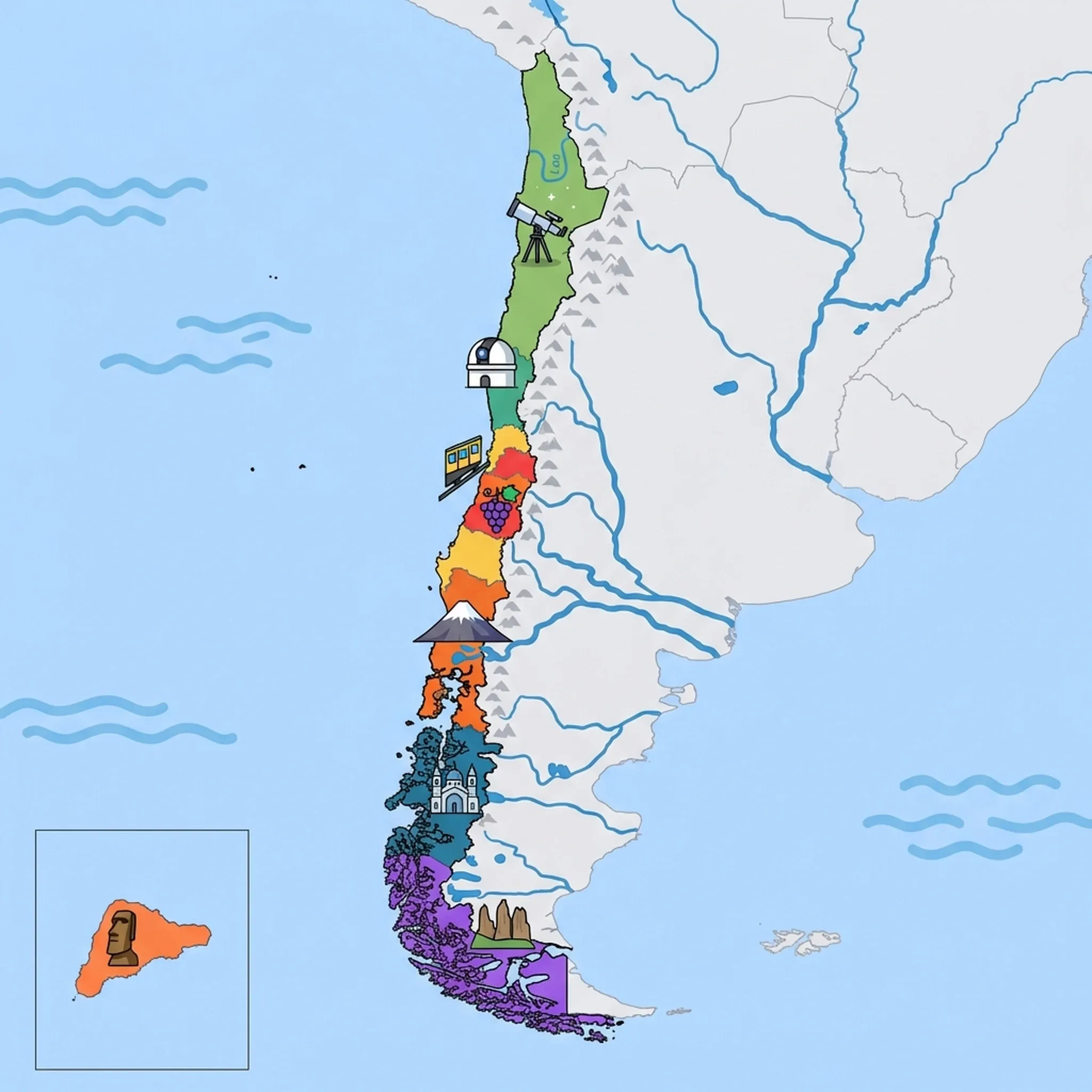
Click a region to explore
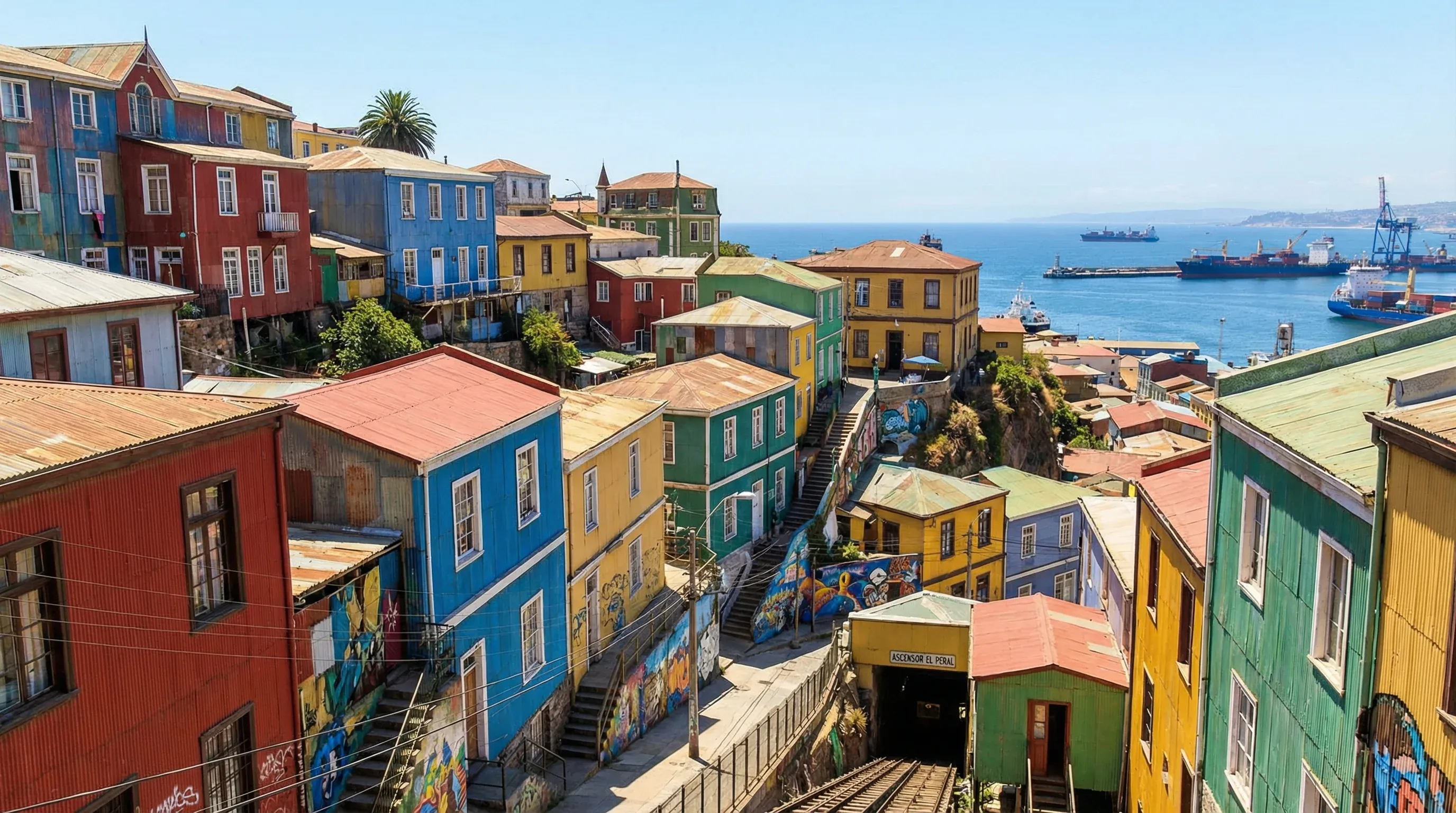
Just 90 minutes from Santiago, the Central Coast offers two very different cities side-by-side. Valparaíso is a bohemian, grit-and-glory port city famous for its labyrinth of colourful houses stacked on steep hills. For kids, it's a giant playground; the historic 'ascensores' (funiculars) are like creaky fairground rides that save you the walk up, and the street art provides endless 'I Spy' opportunities. It's a sensory overload of colours, cats, and ocean views. Next door, Viña del Mar is the 'Garden City'—clean, orderly, and filled with beaches and parks. It feels more like a resort, with a long promenade perfect for strollers.
Beyond the cities, the region is rich in nature. To the north, the sand dunes of Concón offer sandboarding adventures, while the Casablanca Valley (on the way from Santiago) offers family-friendly wineries where kids can pet llamas while parents taste Sauvignon Blanc. The coast here is cold—the Humboldt Current keeps the water chilly—so it's more about sandcastles and wading than swimming, but the energy and fresh sea air make it a favourite weekend escape.
Key Attractions
In Valparaíso, the Historic Quarter is the main draw. Take the Artillería or El Peral funiculars for the best views. A visit to La Sebastiana, the eccentric house of poet Pablo Neruda, is fun for kids due to its quirky, dollhouse-like architecture and narrow stairs. In Viña del Mar, the Fonck Museum is excellent, featuring a genuine Moai statue from Easter Island outside and big insect collections inside. For a full day of nature, Parque Tricao (a bit further south) is an incredible private park with a giant free-flight aviary and raft trips that kids absolutely adore.
Practical Advice
Valparaíso is hilly and has uneven pavements—leave the stroller at the hotel and use a baby carrier. Safety is a concern in Valparaíso; stick to the tourist hills (Alegre and Concepción) and avoid walking in the port area at night. Viña del Mar is generally safer and flatter.
Food & Drink
Typical meal times: Lunch 1:00 pm to 3:30 pm. Dinner 8:00 pm to 10:00 pm.
Typical meal costs: Viña del Mar is pricier than Valparaíso. Lunch costs CLP 10.000–15.000 (approx. $10–16 USD / €9–14 EUR). Empanadas are cheap and huge at CLP 2.500 (approx. $2.50 USD / €2.50 EUR).
Dietary requirements: Excellent. As a major tourist hub, vegetarian and gluten-free options are common. Seafood is the specialty.
Signature dishes:
- Chorrillana – A mountain of french fries topped with sautéed beef, onions, and fried eggs. A Valparaíso invention meant for sharing.
- Empanadas de Mariscos – Fried pastry turnovers filled with cheese and shrimp, razor clams, or crab.
- Reineta – A popular local white fish (Pomfret), usually pan-fried with butter, safe and mild for children.
Why this score?
Most activities are focused on urban exploration of the historic hills, wine tasting, and beach relaxation, which involve minimal physical risk. While the sand dunes of Concón offer some light recreation, the region lacks the rugged wilderness found in other parts of the country.
Why this score?
The Valparaíso-Viña del Mar metropolitan area is highly developed and features several excellent private hospitals with modern equipment and specialists. Foreigners have easy access to high-quality healthcare that is nearly on par with the facilities found in Santiago.
Why this score?
Valparaíso's UNESCO status and the popular beaches of Viña del Mar make this a massive destination for both domestic vacationers and international cruise passengers. Its proximity to Santiago ensures it remains one of the most visited coastal areas on the continent.

Accommodation in the 'Cerro Alegre' tourist zone is priced for international visitors (CLP 80.000+ / $85 USD). Eating out can be cheap if you stick to 'picadas' (local diners) where a menu costs CLP 6.000 ($6 USD). Transport is very cheap; funicular rides are less than a dollar.
Family Travel Notice
Chile enforces very strict border controls for minors. Parents travelling alone with children must carry notarized authorization from the other parent and an original birth certificate.

Getting Here & Around
Getting Here
- Bus – Frequent buses run from Santiago (Pajaritos or Alameda terminals) to Valparaíso/Viña. The trip takes 1.5 hours and is very cheap.
- Car – Route 68 from Santiago is a modern highway. Parking in Valparaíso is difficult and risky; it's better to park in a hotel garage and walk.
- Cruise – Many families arrive via cruise ship; the terminal is in Valparaíso, connected to the metro.
Getting Around
- Public Transport – The 'Merval' metro connects Valparaíso, Viña, and inner towns. It's clean and safe along the coast.
- Funiculars – The historic 'Ascensores' are the best way to get up the hills in Valparaíso. Cheap and fun.
- Trolleybus – Valparaíso has historic electric trolleybuses that are a novelty to ride in the flat plan of the city.
No airports in this region. See the country flight map for nearby connections.

Packing List
Valparaíso is all stairs and steep hills; strollers are a nightmare here.
You will walk kilometers on uneven cobblestones and steep inclines.
The coastal breeze is cold even in summer; evenings get chilly fast.
The ozone layer is thinner over Chile; UV radiation is extreme even on cloudy days.
The Atacama Desert is one of the driest places on Earth and can cause nosebleeds.
Many hostels, cabins, and older hotels in remote areas lack plugs for sinks/baths.
Chile uses Type L (3 pins in a row) or Type C. Standard US/UK plugs won't fit.
Essential for the winding Andes mountain roads and boat trips in the south.
Even in summer, desert nights and Patagonian winds are freezing cold.

Activities & Best Times

Hiking, wildlife, outdoor exploration, ecotourism
Features diverse nature experiences including the world-class aviaries of Parque Tricao and the biosphere reserve of La Campana. Optimal visiting occurs during the dry spring and summer months when trails are accessible and wildlife activity is high.

Urban tourism, museums, historical sites, architecture
Valparaíso's UNESCO-listed historic quarter and Viña del Mar's grand palaces offer a unique blend of gritty street art and coastal elegance. Peak months align with the high-energy summer season and iconic New Year's celebrations, while winter rain can diminish the walking experience.

Sport tourism, fitness activities, active recreation
Strong infrastructure for niche sports like paragliding in Maitencillo and world-class cycling through the Casablanca Valley vineyards. Activity is highly seasonal, peaking when consistent winds and dry conditions support outdoor athletics.
Beach resorts, marine activities: diving, snorkelling, kite surfing, wind surfing, sailing
Upscale beach enclaves like Zapallar and Reñaca provide sophisticated coastal leisure, though the Humboldt Current keeps water temperatures low. The international tourism peak is strictly limited to the hot summer months of January and February.

Learning experiences, scientific sites, historical education
Significant sites like the Fonck Museum (housing an original Easter Island Moai) and the Valparaíso Natural History Museum offer strong scientific value. These indoor facilities remain accessible year-round, peaking during local and international school holiday windows.

Events, celebrations, seasonal attractions
Viña del Mar Song Festival is 'internationally renowned' per notes. Marginal rating is too conservative.
Amusement parks, family entertainment venues
Regional water parks like Aviva and Curunina offer family entertainment but are highly weather-dependent. These venues are primarily summer destinations, remaining closed or inactive during the cooler, wetter months.

Scenic drives, countryside tours, route-based travel
The 'Poets' Coast' route offers a charming scenic drive connecting the former homes of Pablo Neruda. Best experienced in clear weather from late spring to early autumn to enjoy coastal vistas and rural landscapes.

Attractions (20 total)



Public Holidays & Calendar Next 12 months
Public holidays, festivals, cultural celebrations, and seasonal natural phenomena coming up in Valparaíso & Central Coast over the next 12 months.
Loading holidays and events...

Travel Advisory
Four out of six major agencies recommend exercising increased caution or a high degree of vigilance. The primary concerns are civil unrest, frequent public demonstrations that may turn violent, and prevalent street crime. While the country is generally safe for travel, specific southern regions face emergencies due to wildfires.
Safety Topics
Traveller Advice (3 groups)
Chile enforces very strict border controls for minors. Parents travelling alone with children must carry notarized authorization from the other parent and an original birth certificate.

Always carry a copy of your identification and keep original documents in a secure location. Avoid all large gatherings, particularly on Friday afternoons when protests are most common in urban centers.

While Santiago is relatively safe for solo women, dressing conservatively is suggested to avoid unwanted attention. Be cautious in rural areas where solo foreign women are less common.
Agency Summaries
The U.S. government advises heightened awareness due to rising rates of violent crime and the unpredictability of large-scale public protests.
Australia recommends extra vigilance due to security threats from civil disturbances and violent criminal activity, including specialized theft tactics.
While no general travel restriction is in place, the assessment suggests a likely threat of terrorism and warns of severe environmental hazards like wildfires.
New Zealanders are warned of significant security concerns regarding theft and potential violence during urban civil unrest.
Travellers should be extremely vigilant in Chile because of persistent civil unrest, frequent demonstrations, and high levels of street crime.
Standard safety measures are recommended, though visitors must avoid all political gatherings as participation can lead to immediate deportation.
Information is provided for general guidance only and does not constitute travel, safety, medical, or legal advice. Conditions may change. Users are responsible for independently verifying information before travel.