
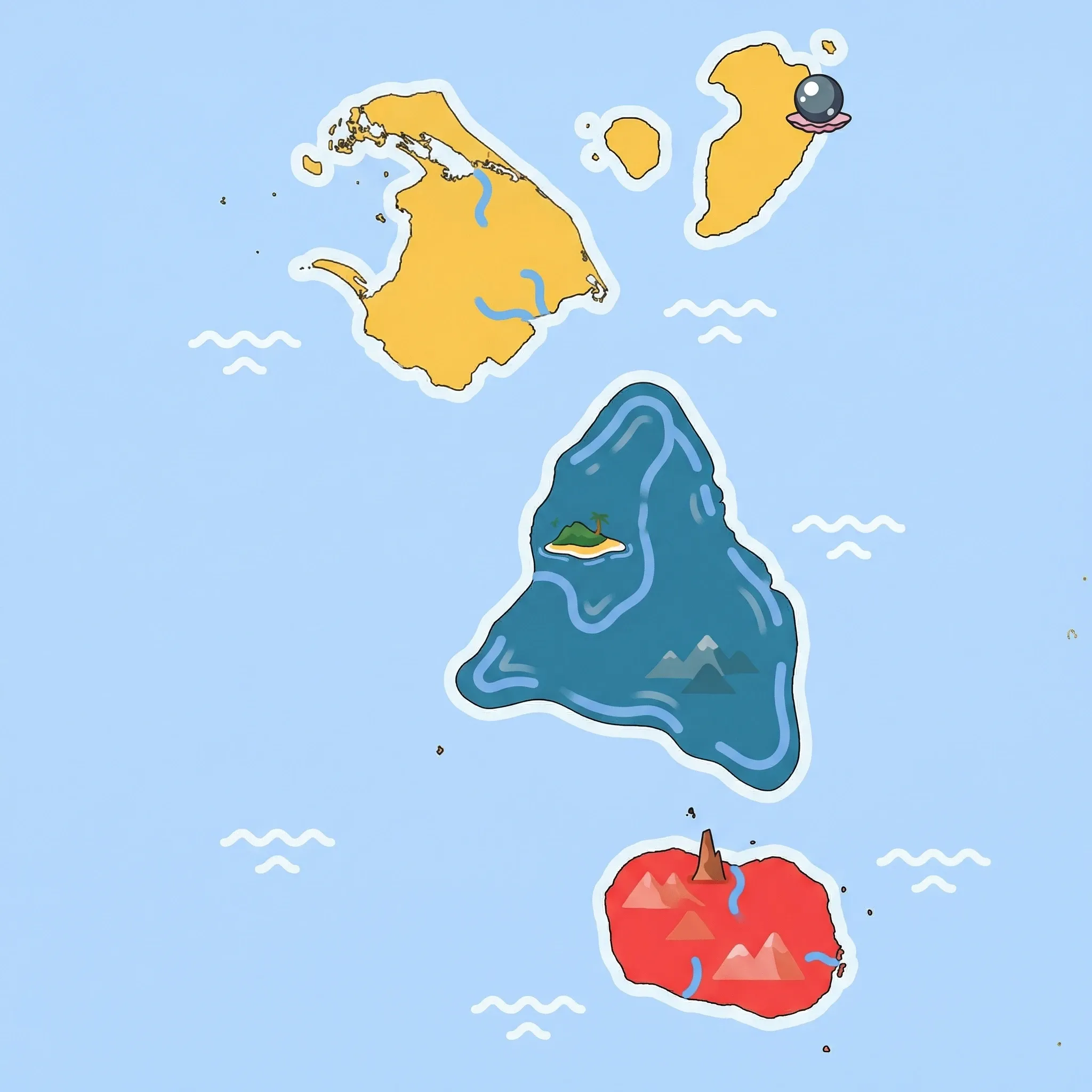
Click a region to explore
WARNING: This region is extremely remote. Medical facilities are basic or non-existent, and transport is irregular. It is recommended only for experienced traveling families who are self-sufficient and prepared for logistical challenges.
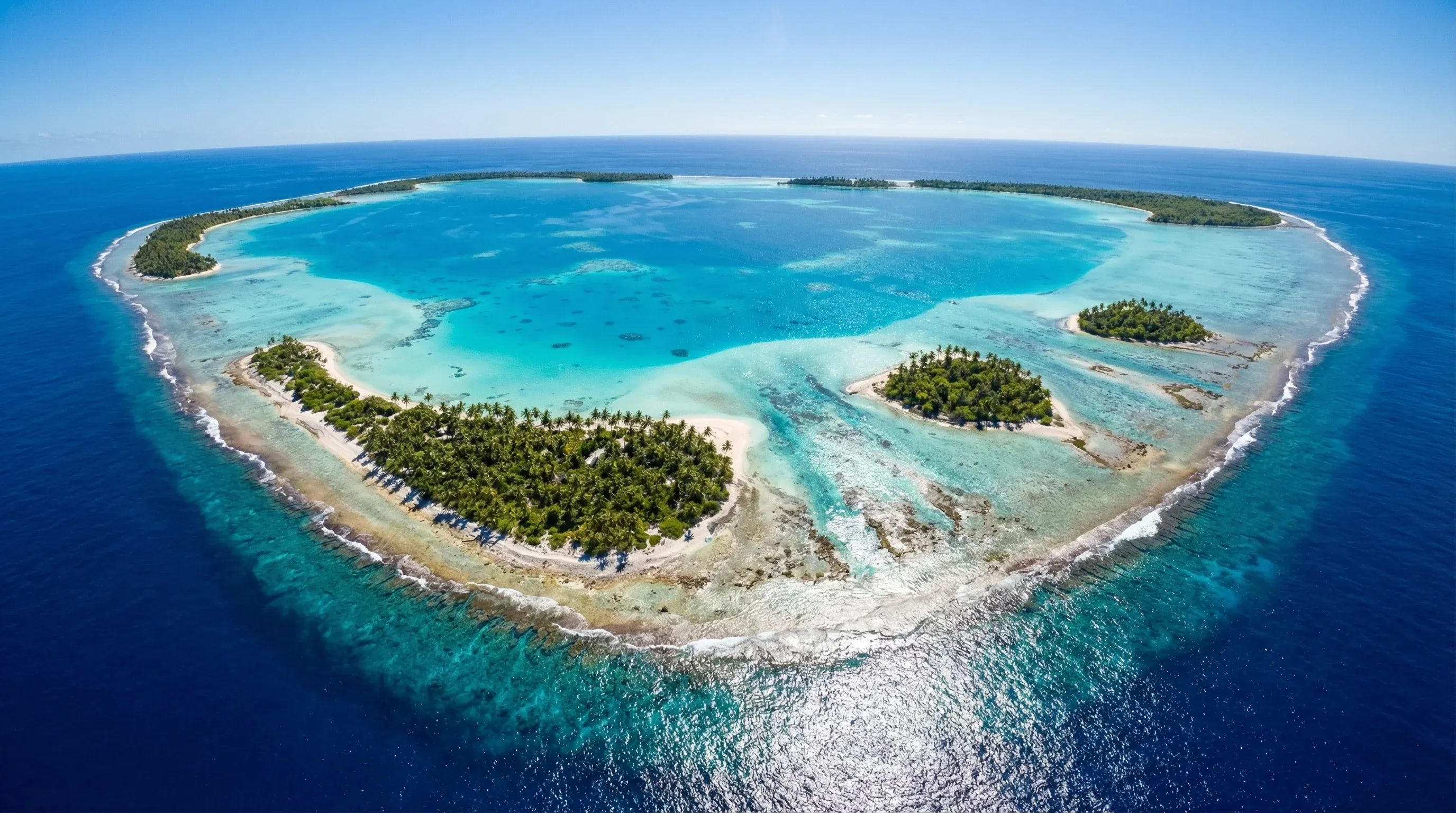
The Northern Group of the Cook Islands is a world apart from the lush volcanic peaks of the south. Here, the land is flat, composed entirely of coral atolls that barely rise above sea level, encircling massive, nutrient-rich lagoons. For families, this is not a destination of kids' clubs and resort pools, but one of raw adventure and cultural immersion. The pace of life is dictated not by clocks but by the arrival of the supply ship and the tides. The climate is hotter and more humid than in the south, and the isolation means that visitors are a rare novelty, often welcomed into local homes as honored guests.
Visiting these islands requires careful planning. Manihiki is famous for its black pearl industry, where platforms dot the lagoon and families can witness the harvesting of these precious gems. Penrhyn (Tongareva) has the largest lagoon in the group, shark-infested in the deeper parts but teeming with fish. Pukapuka is known for its distinct language and untouched traditional culture. While not for toddlers or families needing modern conveniences, for teenagers and older children, a trip here is a profound education in geography, sustainability, and the resilience of island communities.
Key Attractions
Unlike the southern islands, the Northern Group does not have built 'attractions' or ticketed sites. The attraction here is the environment itself. Families visiting Manihiki can arrange visits to local Pearl Farms, where they can see how oysters are seeded and harvested—a fascinating biology lesson in real life. The lagoons themselves offer unparalleled snorkeling in waters that have seen very few tourists, though care must be taken regarding currents and marine life. In Suwarrow, a designated National Park, the birdlife is extraordinary, with thousands of seabirds nesting on the ground, unafraid of humans—a spectacle that delights nature-loving children.
Practical Advice
Travel here is expensive and unpredictable. Flights are infrequent and can be cancelled due to weather. There are no hotels; accommodation is exclusively in small guesthouses or homestays, which must be arranged in advance. Pack absolutely everything you need, including all medications, snacks, and entertainment.
Food & Drink
Typical meal times: Meals are communal and informal. Breakfast is typically 7:00 am to 8:30 am, Lunch 12:00 pm to 1:30 pm, and Dinner 6:30 pm to 8:00 pm.
Typical meal costs: Commercial restaurants do not exist. Meals are usually included in guesthouse rates or arranged with hosts, generally costing NZD 30–50 (approx. $18–30 USD / €17–28 EUR) per person per day for full board.
Dietary requirements: Extremely difficult to cater for. The diet is heavily reliant on fish, coconut, rice, and tinned goods. Fresh vegetables are rare and depend on the supply ship. Vegetarians and vegans will struggle without bringing their own protein sources.
Signature dishes:
- Utu – A traditional dish in Penrhyn made from coconut pathways and fish, often prepared in an earth oven (umukai).
- Kura – In the northern atolls, various preparations of stunned reef fish or shellfish are common, often eaten raw or lightly seared.
- Coconut Crab – A delicacy in these parts, the massive crabs are caught locally and steamed or boiled, offering rich, sweet meat.
Why this score?
Visiting this region is a true expedition requiring self-sufficiency and resilience to isolation. The terrain consists of low-lying coral atolls with minimal modern amenities, where families must adapt to traditional lifestyles and unpredictable transport links.
Why this score?
Infrastructure is minimal, typically consisting of small health clinics with limited supplies and no permanent doctors on most islands. Emergency medical evacuation from these remote atolls is incredibly difficult, time-consuming, and weather-dependent.
Why this score?
These atolls are among the most remote inhabited places on Earth, receiving almost no international tourists outside of a few intrepid sailors and pearl trade professionals. The lack of scheduled transport and tourist infrastructure keeps visitor numbers extremely low.

While the lifestyle is simple, the cost of reaching the Northern Group makes it a luxury destination. Return flights cost NZD 2,500–3,500 (approx. $1,500–2,150 USD / €1,400–2,000 EUR) per person. Accommodation (homestays) is reasonable at NZD 80–150 (approx. $50–90 USD / €45–85 EUR) per night, but freight costs mean any purchased imported food is very expensive.

Getting Here & Around
Getting Here
- Airports – Air Rarotonga flies to Manihiki (MHX) and Penrhyn (PYE) on a limited schedule (usually once a week or fortnight). Flights are on small pressurized aircraft and take about 4 hours from Rarotonga.
- Cargo Ship – Inter-island cargo ships take passengers, but the journey takes several days, accommodation is basic (often sleeping on deck), and schedules are notoriously unreliable. Not recommended for most families.
Getting Around
- Walking – The villages are small and compact; walking is the primary mode of transport on land.
- Small Boat – Travel between islets within an atoll is done by small aluminium dinghies owned by locals. Hosts will transport you across the lagoon.
No airports in this region. See the country flight map for nearby connections.
Official Links

Packing List
There are no pharmacies or hospitals; you must be self-sufficient for minor injuries and illnesses.
Mobile coverage is non-existent or unreliable in many areas; essential for emergency contact.
Rainwater is the main source; treatment is recommended for sensitive stomachs.
Electricity supply can be intermittent or solar-only in some homestays.
Village stores have very limited stock; bring your children's favourite snacks from Rarotonga.
Essential for protecting feet from sharp coral and stonefish in the lagoons, which can be camouflaged in the sand.
Crucial for protecting the fragile lagoon ecosystem while avoiding sunburn in the strong tropical UV.
Required to rent a car or to apply for a visitor scooter license at the police station; digital copies are often not accepted.
Mosquitoes can be active day and night, and dengue fever outbreaks do occur occasionally.
Highly useful for keeping cameras and phones dry during lagoon cruises, kayaking trips, or sudden tropical showers.

Activities & Best Times

Hiking, wildlife, outdoor exploration, ecotourism
Features internationally significant wilderness at Suwarrow Atoll National Park, providing an authentic 'castaway' experience for adventurous families. Visitation is restricted by extreme isolation and is only viable during the drier months when park wardens are present and cyclone risk is low.
Beach resorts, marine activities: diving, snorkelling, kite surfing, wind surfing, sailing
The region offers pristine, untouched lagoon environments such as Penrhyn, but extreme remoteness and a total lack of conventional tourism infrastructure limit its appeal to highly specialized travelers. Peak season offers the best sea visibility and calmer waters for the difficult boat or air transfers required.

Urban tourism, museums, historical sites, architecture
Showcases unique atoll heritage and WWII relics, offering a deeply authentic look at remote Pacific life far from commercial centers. Travel to these isolated communities is best during the dry season, as heavy summer rains frequently disrupt the very limited and expensive transportation links.


Public Holidays & Calendar Next 12 months
Public holidays, festivals, cultural celebrations, and seasonal natural phenomena coming up in Northern Group (remote) over the next 12 months.
Loading holidays and events...

Travel Advisory
All six major agencies agree on the lowest risk level for the Cook Islands, citing a stable security environment. Primary concerns are limited medical infrastructure and seasonal natural hazards rather than human-caused threats.
Safety Topics
Traveller Advice (3 groups)

Some official sources warn that same-sex acts are legally prohibited and social attitudes can be conservative, potentially leading to discrimination.

Visitors should dress modestly when in local villages and are advised not to leave bags or valuables unattended on public beaches.

Individuals participating in marine activities should be extremely cautious of strong currents in reef passages, which pose a significant risk to swimmers and divers.
Agency Summaries
A standard level of caution is recommended. Major considerations include opportunistic petty crime in tourist hubs and natural risks like tropical storms and tsunamis. Medical resources are particularly limited outside the main island.
The security landscape is largely comparable to that of New Zealand. Visitors should focus on protecting personal property from theft and remaining prepared for seasonal tropical storms and marine hazards.
The United States government suggests visitors maintain standard safety measures as the country is characterized by a stable security environment and low crime rates.
Travelers should maintain standard safety awareness. The country is generally secure, though visitors should be mindful of limited healthcare infrastructure and the potential for severe weather during the cyclone season. Same-sex relations are legally restricted.
No elevated safety warnings are currently active. Travelers are advised to ensure they have robust travel insurance that includes emergency medical flights to New Zealand, as local hospitals lack specialized equipment.
General safety measures are sufficient for Irish citizens. Short-term visitors typically enter without a visa. Assistance is provided via the Irish embassy located in New Zealand.
Information is provided for general guidance only and does not constitute travel, safety, medical, or legal advice. Conditions may change. Users are responsible for independently verifying information before travel.