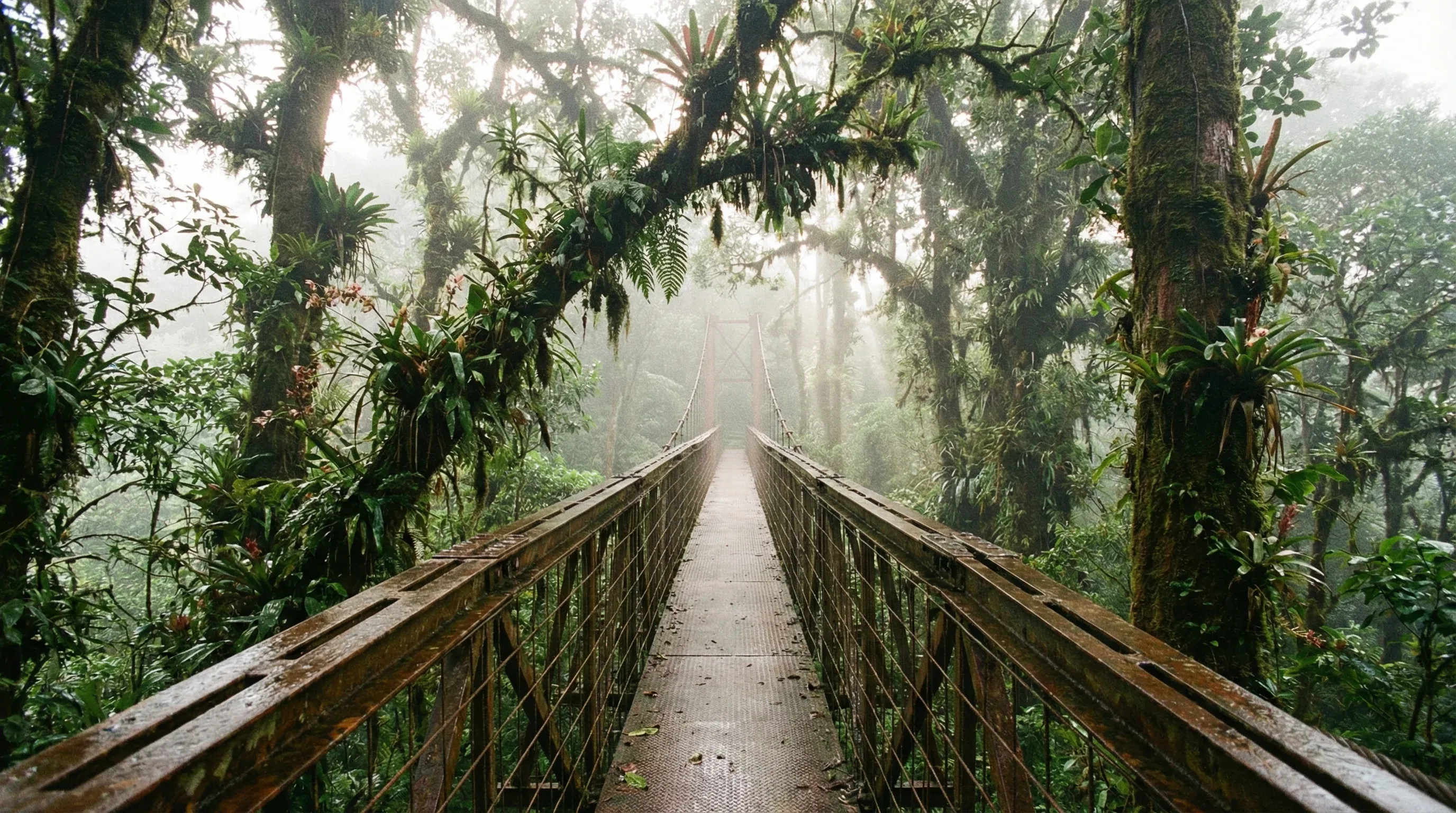

Monteverde Cloud Forest
Walk among the clouds in a mystical green world ☁️🌿
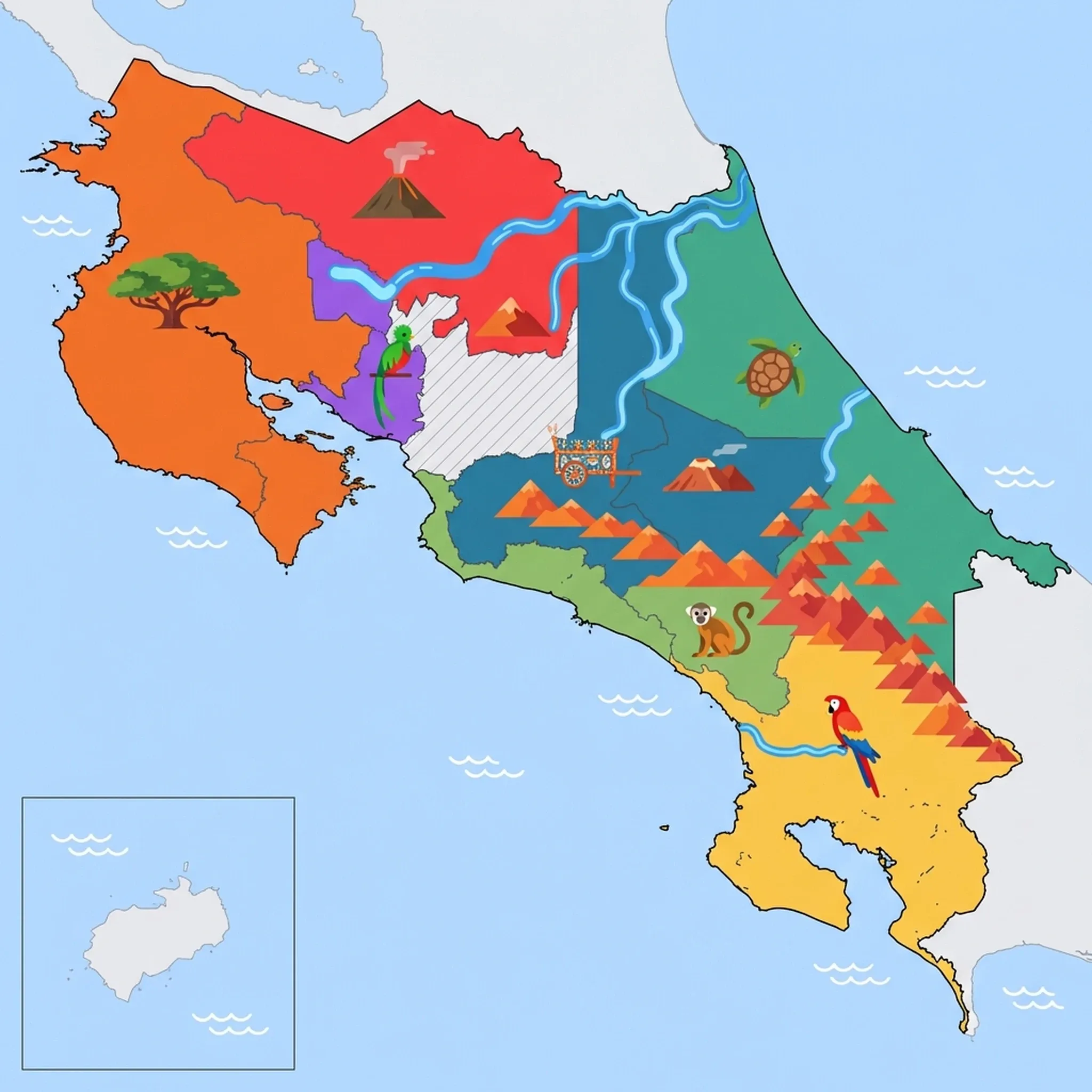
Click a region to explore
Overview
Monteverde is a destination that captures the imagination. Located at a high altitude along the Continental Divide, this region is famous for its cloud forests—rare ecosystems where atmospheric moisture condenses onto the trees, creating a dripping, lush green world filled with orchids, bromeliads, and mosses. The air here is crisp and cool, a refreshing break from the coastal heat. The community was founded by Quakers in the 1950s, and a strong ethos of conservation and peace permeates the area.
For families, Monteverde is the place to see the forest from a different perspective. It is the birthplace of the canopy tour; zip-lines and hanging bridges allow children to explore the tree tops safely. The wildlife here is elusive but rewarding; patience is often repaid with sightings of the Resplendent Quetzal, bellbirds, or hummingbirds. The town of Santa Elena is charming and walkable, filled with cafes, art galleries, and sloth sanctuaries, making it a cozy base for exploration.
Key Attractions
The crown jewel is the Monteverde Cloud Forest Biological Reserve. Its well-maintained trails are perfect for families, and a guided tour is highly recommended to spot hidden wildlife. For a less crowded alternative with equally stunning mossy forests, the Santa Elena Cloud Forest Reserve offers views that, on a clear day, stretch all the way to Arenal Volcano.
Adventure seekers should head to Selvatura Park, which features one of the most extensive hanging bridge systems in the country (stroller accessible in parts!) and a thrilling zip-line course. They also house a massive butterfly garden and sloth sanctuary. For a gentler pace, the Monteverde Orchid Garden showcases hundreds of microscopic orchid species that children can examine with magnifying glasses, turning botany into a treasure hunt.
Practical Advice
It is windy and cool here. Temperatures can drop to 13°C (55°F). Rain is often a fine mist ("pelo de gato"). Roads leading up to Monteverde are winding and formerly unpaved (though much improved recently); take motion sickness precautions for kids.
Food & Drink
Typical meal times: Lunch 12:00 pm to 2:00 pm; Dinner 6:00 pm to 8:30 pm.
Typical meal costs: ₡6,000–12,000 (approx. $12–23 USD / €11–21 EUR) per person.
Dietary requirements: Excellent. The Quaker influence means good cheese and dairy, and the tourism focus ensures plenty of vegetarian and gluten-free options.
Signature dishes:
- Monteverde Cheese – Locally produced gouda and cheddar style cheeses, famous throughout the country.
- Sopa Negra – Black bean soup with a poached egg and corn tortillas, perfect for the chilly weather.
- Homemade Ice Cream – Made with local dairy, a treat found in the chilling mountain air.
Why this score?
The region is famous for high-altitude adventure, including some of the world's most extensive zip-line circuits and hanging bridge systems. The terrain is steep and often shrouded in mist, requiring a higher level of physical engagement and preparation for cool, wet weather. Night walks and hiking through the Children's Eternal Rainforest provide a genuine sense of wilderness exploration.
Why this score?
Medical services in Santa Elena are limited to basic clinics and pharmacies capable of handling minor injuries or illnesses. The steep, winding roads make emergency transport to larger hospitals in Puntarenas or San José time-consuming and difficult. Most high-adventure operators have basic first-aid protocols, but the region lacks any significant hospital infrastructure for complex emergencies.
Why this score?
Monteverde is a globally recognized center for cloud forest conservation and is a staple on most Costa Rican itineraries. However, its mountainous location and smaller capacity mean it receives fewer total visitors than the major beach regions or Arenal. It maintains a distinct identity as an eco-tourism pioneer, attracting a steady flow of international families and researchers.

Monteverde offers a good range of options. Entry fees to reserves are pricey ($25+ USD per adult), which adds up for families. Accommodation ranges from budget hostels at ₡15,000 (approx. $29 USD / €27 EUR) to luxury lodges at ₡150,000+ (approx. $290+ USD / €270+ EUR). Food prices are moderate.
Family Travel Notice
Minors who hold dual citizenship (Canadian and Costa Rican) require specific departure approval from Costa Rican immigration authorities to leave the country. This permission must be requested by both parents in advance.

Getting Here & Around
Getting Here
- Driving – Roughly 3–4 hours from San José. The final stretch is steep and winding; a car with decent clearance is preferred but 4x4 is not strictly mandatory on the main road anymore.
- Shuttle – The "Jeep-Boat-Jeep" service connects Monteverde with Lake Arenal / La Fortuna, a scenic and popular transfer for families.
- Bus – Direct buses run from San José (Transmonteverde) twice daily.
Getting Around
- Taxi – Taxis are the easiest way to get between Santa Elena town and reserves like Monteverde Cloud Forest Biological Reserve.
- Shuttle – Most adventure parks like Selvatura Park offer free shuttle pick-up from local hotels.
- Walking – Santa Elena town is small and walkable, but the reserves are too far to walk to from town.
No airports in this region. See the country flight map for nearby connections.
Official Links

Packing List
Temperatures drop significantly in the evening; it feels much colder than the coast.
Trails can be muddy and slippery; sandals are not suitable for cloud forest hikes.
The wind and mist are constant; a poncho is okay but a jacket is better for warmth.
Essential for spotting birds high in the dense canopy.
High humidity can damage cameras and phones; keep these in your electronics bag to absorb moisture.
Essential for night walks and turtle watching tours to avoid disturbing wildlife with bright white light.
Protects gear during boat transfers (wet landings) and sudden tropical downpours.
Protect feet from sharp rocks and slipping during waterfall hikes; flip-flops often float away.
Roads to Monteverde and the coast are notoriously winding and hilly.

Activities & Best Times

Hiking, wildlife, outdoor exploration, ecotourism
A world-class destination for cloud forest immersion and biodiversity, specifically the Resplendent Quetzal. Peak months offer optimal trail conditions and wildlife visibility, while the heaviest rains in September and October can significantly impede wilderness exploration.

Sport tourism, fitness activities, active recreation
Boasts world-leading infrastructure for canopy tours and zip-lining, alongside challenging gravel cycling routes. Safe operation of high-altitude adventure facilities is most consistent during the dry season; high winds and heavy rain in peak autumn months often disrupt these activities.

Urban tourism, museums, historical sites, architecture
The Quaker heritage and artisanal cooperatives are charming and authentic, but Monteverde is a small mountain community, not a cultural destination by international standards. 'Good' recognizes the unique cultural character without overstating its scale compared to global cultural centers.

Learning experiences, scientific sites, historical education
Features internationally recognized centers for entomology and forest ecology, such as the Monteverde Butterfly Gardens. Peak periods align with both the dry season and the northern hemisphere summer holidays when educational programming is most frequent.

Scenic drives, countryside tours, route-based travel
The drive to Monteverde via Route 606 is legendary for its views and rugged terrain, requiring 4WD expertise. Best visited in the driest months (Jan-Mar) for safety and visibility, as heavy rains in September and October create high risks of road washouts and landslides.




Public Holidays & Calendar Next 12 months
Public holidays, festivals, cultural celebrations, and seasonal natural phenomena coming up in Monteverde Cloud Forest over the next 12 months.
Loading holidays and events...

Travel Advisory
Most major agencies recommend exercising increased vigilance or a high degree of caution primarily due to the risk of crime. While the country is generally stable, petty theft is pervasive and violent crime is a significant concern in certain urban and coastal regions.
Safety Topics
Traveller Advice (4 groups)

There has been an increase in reports of sexual harassment and assault targeting foreign visitors. Women should be particularly cautious in bars, avoid leaving drinks unattended, and refrain from walking alone in poorly lit or isolated areas at night.

Minors who hold dual citizenship (Canadian and Costa Rican) require specific departure approval from Costa Rican immigration authorities to leave the country. This permission must be requested by both parents in advance.

While Costa Rica is generally more progressive than some regional neighbors, travellers should still be mindful of local attitudes and consult specific safety guides regarding public displays of affection in less urbanized areas.

Adventure seekers should ensure their insurance covers medical evacuation. Be extremely cautious of dangerous rip currents on both coasts, as most beaches lack lifeguards. Check local alerts before visiting volcanic regions, particularly Poás Volcano.
Agency Summaries
Increased caution is advised due to the prevalence of crime. Both petty theft and violent incidents, such as armed robberies and sexual assaults, affect tourists. Staying alert in isolated areas and avoiding displays of wealth is recommended.
Vigilance is necessary due to the threat of violent crime. Criminals frequently target transit hubs and tourist resorts for robberies, carjackings, and 'express kidnappings.'
There are no specific restrictions against travel to any part of the country, but visitors should be aware of significant levels of mugging and theft, particularly on the Atlantic coast and in urban centers.
General safety awareness is required, with specific focus on risks from natural hazards like hurricanes and volcanic activity, as well as maintaining personal security against crime.
Travellers should be extremely vigilant because of high crime rates. Common issues include petty theft, vehicle break-ins, and passport theft, which are especially prevalent in San José and popular coastal provinces like Puntarenas.
Heightened security concerns exist compared to domestic safety standards. Violent crime, including home invasions and gang-related muggings, are notable risks alongside widespread petty theft.
Information is provided for general guidance only and does not constitute travel, safety, medical, or legal advice. Conditions may change. Users are responsible for independently verifying information before travel.