
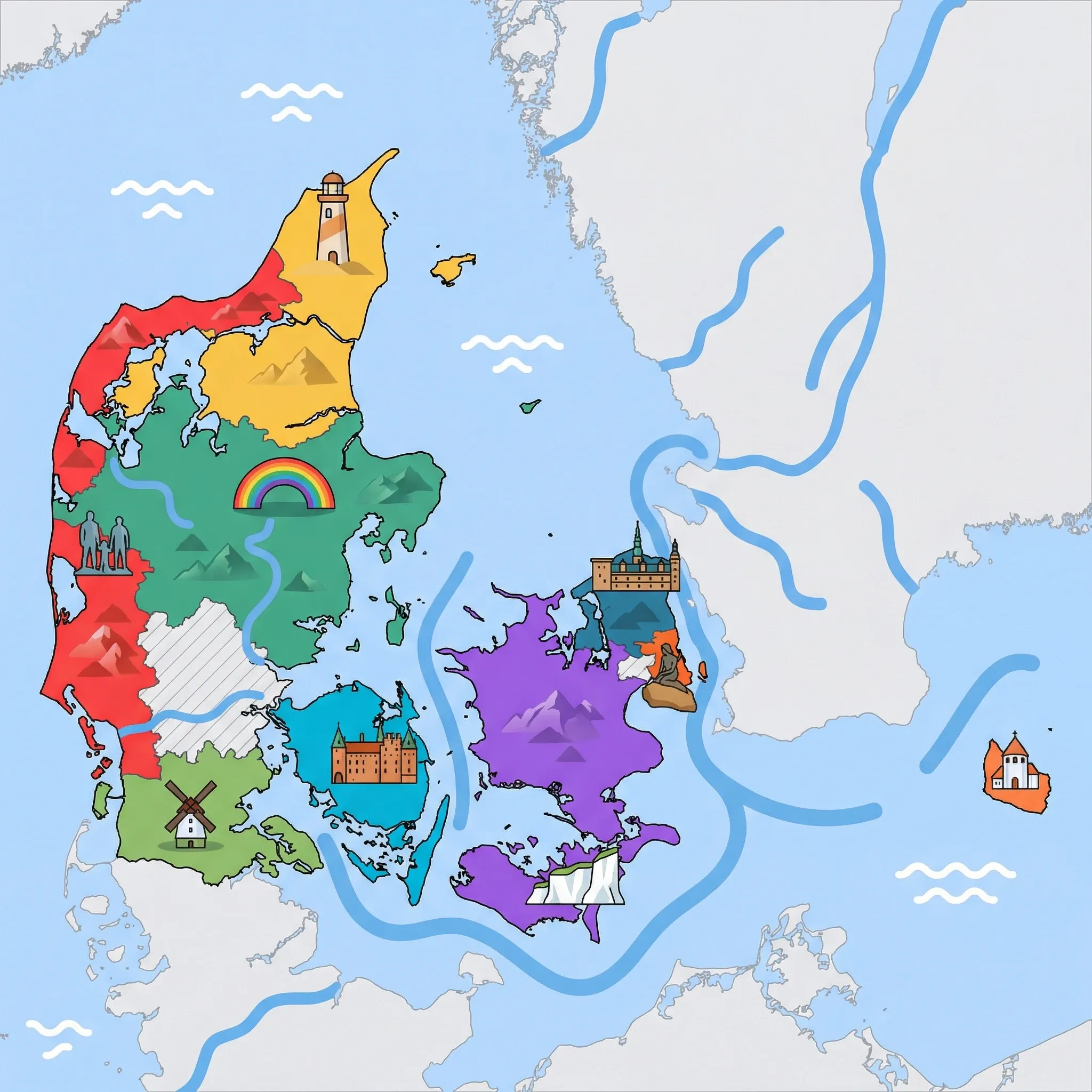
Click a region to explore
North Zealand serves as the playground for Copenhageners, and it is easy to see why. The coast is lined with some of Denmark's most exclusive seaside towns, featuring calm waters, dunes, and ice cream kiosks. Inland, the landscape is dominated by deep forests and sprawling royal estates. For families, this is an easy region to navigate: the trains are reliable, the distances are short, and the attractions are grand. It offers a mix of sophisticated relaxation (think seaside hotels and art museums) and rugged history (cannons, dungeons, and Viking lore).
The region is historically significant as the hunting grounds of Danish kings. This legacy has left behind a triangle of spectacular castles that are surprisingly engaging for children. Beyond the history, the "Riviera" coast from Hornbæk to Tisvildeleje offers a classic beach holiday vibe with lifeguard-patrolled swimming spots and crab-fishing jetties. Whether you are picnicking in the baroque gardens or taking a dip in the Kattegat sea, the atmosphere here is one of historic luxury made accessible.
Key Attractions
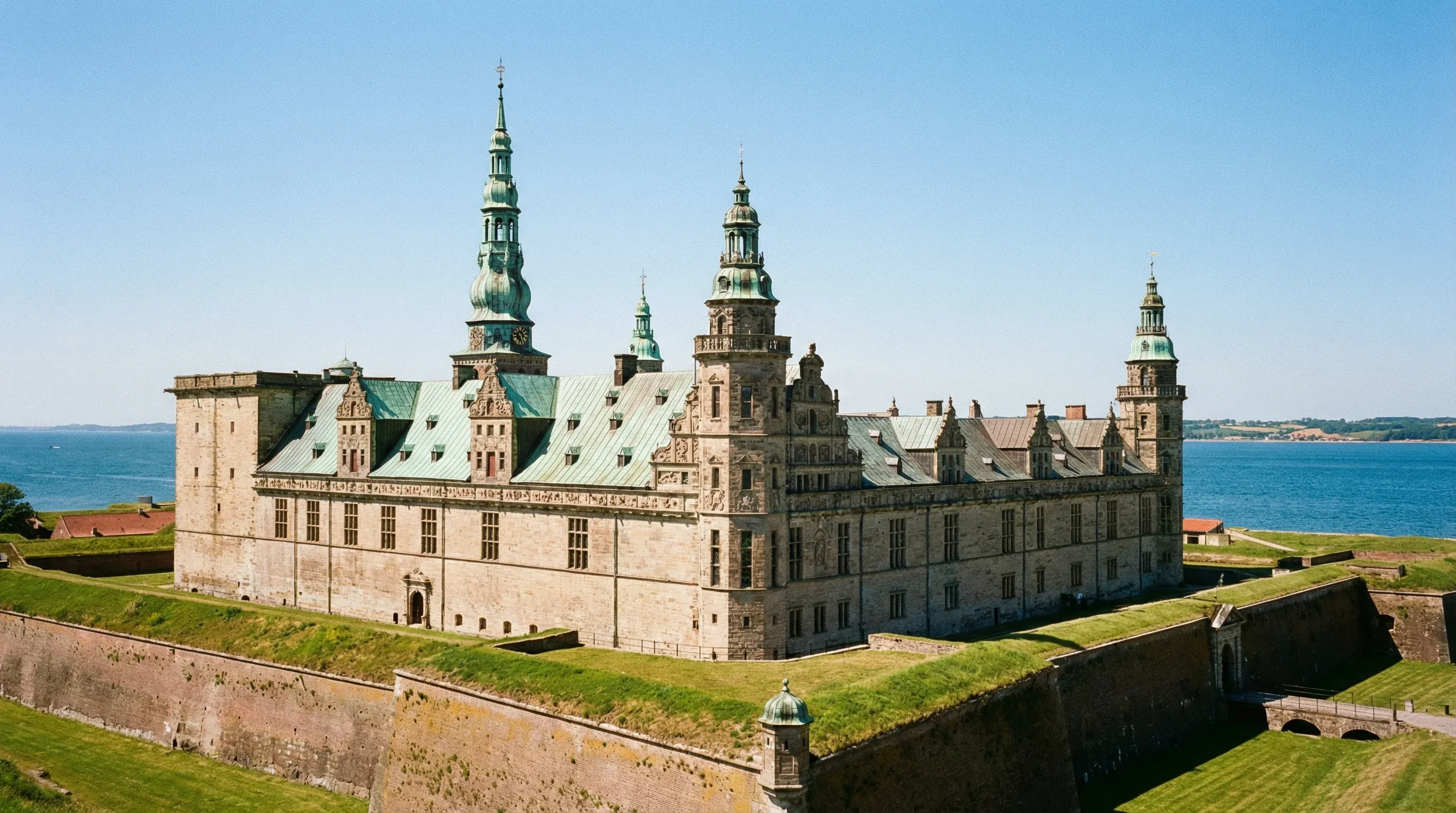
The big draw is Kronborg Castle in Helsingør. Known worldwide as Hamlet's castle, it offers "Hamlet Live" performances in summer where actors roam the halls. Kids love the dark, damp casemates (underground tunnels) where the statue of Holger Danske sleeps. Just nearby is the M/S Maritime Museum of Denmark, an architectural award-winner built into an old dry dock. It is interactive and hands-on, perfect for little sailors.
In Hillerød, Frederiksborg Castle is situated on three islands in a lake and houses the Museum of National History. It is visually stunning, and the small ferry boat on the lake is a hit with toddlers. For art lovers, Louisiana Museum of Modern Art is a must. It is famous for its "Children's Wing" where kids can sculpt and paint, and its sculpture park is a safe place to run around with views of Sweden across the water. For tech-obsessed kids, the Danish Museum of Science and Technology offers planes, vintage cars, and steam engines to climb on.
Practical Advice
You can buy a "Royal North Sealand" ticket for castle entry. The beaches are crowded on hot weekends; arrive early (before 10:00 am) to park. The local train "Lokaltog" is a charming way to beach-hop along the coast.
Food & Drink
Typical meal times: Lunch 12:00 pm to 2:00 pm. Dinner 6:00 pm to 8:30 pm.
Typical meal costs: This is a wealthy area. A cafe lunch is DKK 120–160 (approx. $17–23 USD / €16–21 EUR). Ice cream cones are huge and cost DKK 40–60 (approx. $6–9 USD / €5–8 EUR).
Dietary requirements: Very high standard. Gluten-free and vegan options are standard in museum cafes (which are often excellent quality) and seaside towns.
Signature dishes:
- Seaside Waffle Ice Cream – The towns of Liseleje and Hornbæk are famous for massive waffle cones with "guf" (marshmallow fluff).
- Smoked Fish – While Bornholm is famous for it, North Zealand also has excellent smokehouses, particularly in Havnebyen.
- Open-faced Potato Sandwich – A rye bread classic: boiled potatoes, mayonnaise, chives, and roasted onions. Simple and beloved.
Why this score?
The region is dominated by royal estates, manicured forests, and upscale beach resorts. It is one of the most developed and least rugged parts of the country, focusing on history and leisure over adventure.
Why this score?
Benefitng from its proximity to Copenhagen, this region features very high-quality medical clinics and hospitals. The local population is affluent, ensuring that medical facilities are maintained to an exceptional standard.
Why this score?
Home to UNESCO sites like Kronborg Castle and the world-renowned Louisiana Museum, this region sees heavy international traffic from Copenhagen day-trippers. Its coastal 'Riviera' towns also draw a high-end international crowd in summer.

This is one of the most affluent parts of Denmark. Hotel prices and restaurant bills reflect this. Expect to pay DKK 1,500+ (approx. $215 USD / €200 EUR) for a family room. However, beaches and forest walks are free, and picnics are a popular way to keep costs down.

Getting Here & Around
Getting Here
- Train – The "Kystbanen" (Coast Line) runs from Copenhagen Central to Helsingør in 45 minutes, offering sea views. S-train line A goes to Hillerød.
- Ferry – The ferry from Helsingborg (Sweden) to Helsingør takes just 20 minutes, making a two-country day trip easy.
- Driving – 30-45 minutes drive north of Copenhagen via the E47 or the scenic Strandvejen coastal road.
Getting Around
- Train – The "Lokaltog" network connects the coastal towns (Hornbæk, Gilleleje) with Hillerød and Helsingør.
- Bicycle – The North Coast Path is a beautiful route. You can take bikes on the local trains.
- Car – Useful for reaching beaches, but parking at Louisiana Museum of Modern Art and beaches can be difficult in peak summer.
No airports in this region. See the country flight map for nearby connections.
Official Links

Packing List
Danes use low fabric windscreens on the beach to block the breeze while sunbathing; worth buying or bringing.
The royal castle gardens (Frederiksborg, Fredensborg) are perfect picnic spots.
You will transition from cobblestones at castles to sandy beaches in the same day.
Ticks (skovflåt) are common in Danish forests and tall grass; quick removal is important.
Summer days are very long with sunrise as early as 4:00 am, which can disrupt kids' sleep.
Essential for playgrounds and forest walks; Danish kids wear these over clothes to play outside in wet weather.
Many Danish beaches have pebbles, and harbor bath ladders can be slippery or have sharp barnacles.
Denmark is flat and often breezy, even on sunny summer days, so a windbreaker is more useful than a heavy coat.

Activities & Best Times

Urban tourism, museums, historical sites, architecture
Home to world-class landmarks including the UNESCO-listed Kronborg Castle and the Louisiana Museum of Modern Art, which is globally recognized for its architecture and collection. The region offers a high-end, authentic cultural experience that peaks in the summer but remains attractive in December for traditional Danish Christmas markets.

Hiking, wildlife, outdoor exploration, ecotourism
Features the UNESCO-listed Par Force Hunting Landscape and Gribskov forest, offering authentic immersion in ancient woodlands and coastal trails. The peak season provides long daylight hours for exploring diverse ecosystems, while the winter months see significant closures and reduced accessibility for nature-based attractions.

Sport tourism, fitness activities, active recreation
Boasts purpose-built infrastructure for cycling through the UNESCO Par Force landscape and elite sailing facilities along the coast. The active season is constrained by weather, with the best infrastructure availability and competition schedules occurring between late spring and early autumn.

Beach resorts, marine activities: diving, snorkelling, kite surfing, wind surfing, sailing
Known as the 'Danish Riviera', this region offers high-quality sandy beaches like Hornbæk with a sophisticated atmosphere, though the swimming season is brief due to northern water temperatures. Peak visitation aligns with the warmest sea temperatures in mid-summer, while shoulder months are ideal for brisk coastal walks and sailing.

Scenic drives, countryside tours, route-based travel
The scenic 'Strandvejen' coastal road and the Marguerite Route offer exceptional driving experiences past historic mansions and sea views. Peak months provide the best visibility and lush greenery, while winter conditions and shorter days significantly detract from the scenic touring experience.
Amusement parks, family entertainment venues
Features Bakken (Dyrehavsbakken), the world's oldest amusement park, providing a unique and authentic historical entertainment experience. The parks operate seasonally, typically opening in April and closing in September, which strictly dictates the peak and shoulder windows for international families.

Learning experiences, scientific sites, historical education
Offers specialized learning at the Danish Museum of Science and Technology and the Øresund Aquarium, though these are typically secondary activities for international visitors. These facilities provide excellent indoor options during the shoulder seasons but lack the global standalone draw of major scientific centers.

Events, celebrations, seasonal attractions
The Shakespeare Festival at Kronborg is an internationally significant event that draws sophisticated travelers specifically in August. Outside of this and the traditional Christmas 'Hygge' period in December, the region lacks high-profile events that serve as primary international travel motivators.

Attractions (18 total)



Public Holidays & Calendar Next 12 months
Public holidays, festivals, cultural celebrations, and seasonal natural phenomena coming up in North Zealand (Nordsjælland) over the next 12 months.
Loading holidays and events...

Travel Advisory
The majority of international agencies suggest that standard safety measures are sufficient for travel to Denmark. However, travelers should be aware of elevated security warnings from North American agencies regarding terrorism and localized gang activity.
Safety Topics
Traveller Advice (4 groups)

Maintain awareness in crowded areas and on public transportation to prevent falling victim to petty theft. Always carry travel documents when crossing internal European borders.

Those visiting remote areas in Greenland or the Faroe Islands must prepare for extreme weather conditions and recognize that medical and rescue infrastructure is extremely limited.

The social climate is highly progressive and the country is consistently ranked as one of the safest and most welcoming destinations for the community.

Female visitors should follow standard safety protocols, particularly when traveling alone at night in large metropolitan areas like Copenhagen.
Agency Summaries
No specific travel restrictions are in place, though visitors are encouraged to review security guidelines and prepare for standard European travel risks.
General safety risks are considered low, though visitors are advised to avoid protests and keep an eye on personal belongings in transit hubs.
Visitors should maintain standard safety awareness and ensure they have valid identification for movement within the Schengen area.
The safety environment is stable, though petty crime remains a factor in popular tourist areas and travelers should stay informed about the local terror threat level.
Officials recommend a heightened state of vigilance due to the threat of terrorist activities and incidents of gang-related violence in specific urban districts.
Travelers should remain alert to their surroundings because of persistent plans by extremist groups to target public and tourist locations.
Information is provided for general guidance only and does not constitute travel, safety, medical, or legal advice. Conditions may change. Users are responsible for independently verifying information before travel.