
South Zealand, Lolland-Falster & Møn (Sydsjælland, Lolland-Falster & Møn)
White cliffs, wild safari, and island fun 🦁🧗♂️
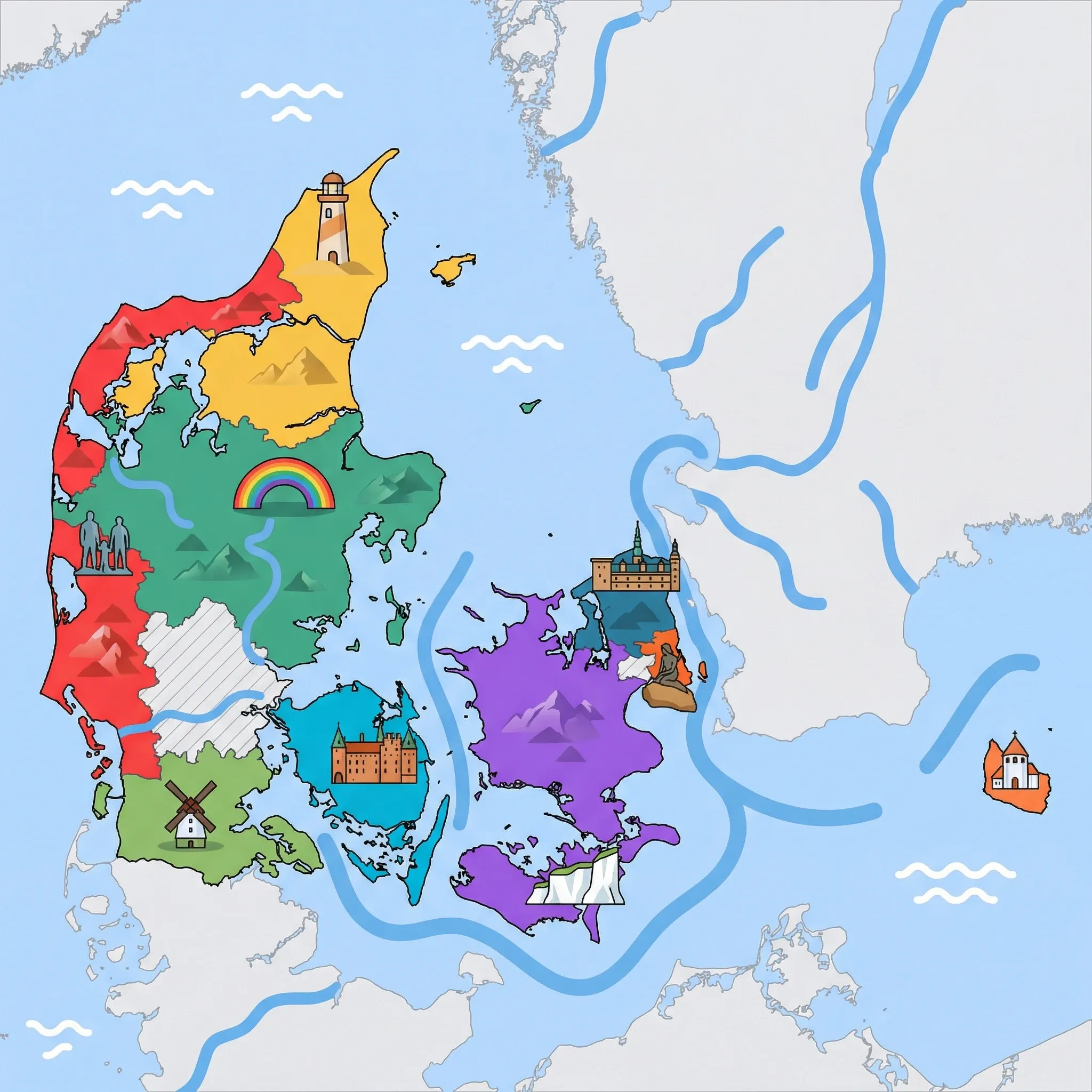
Click a region to explore
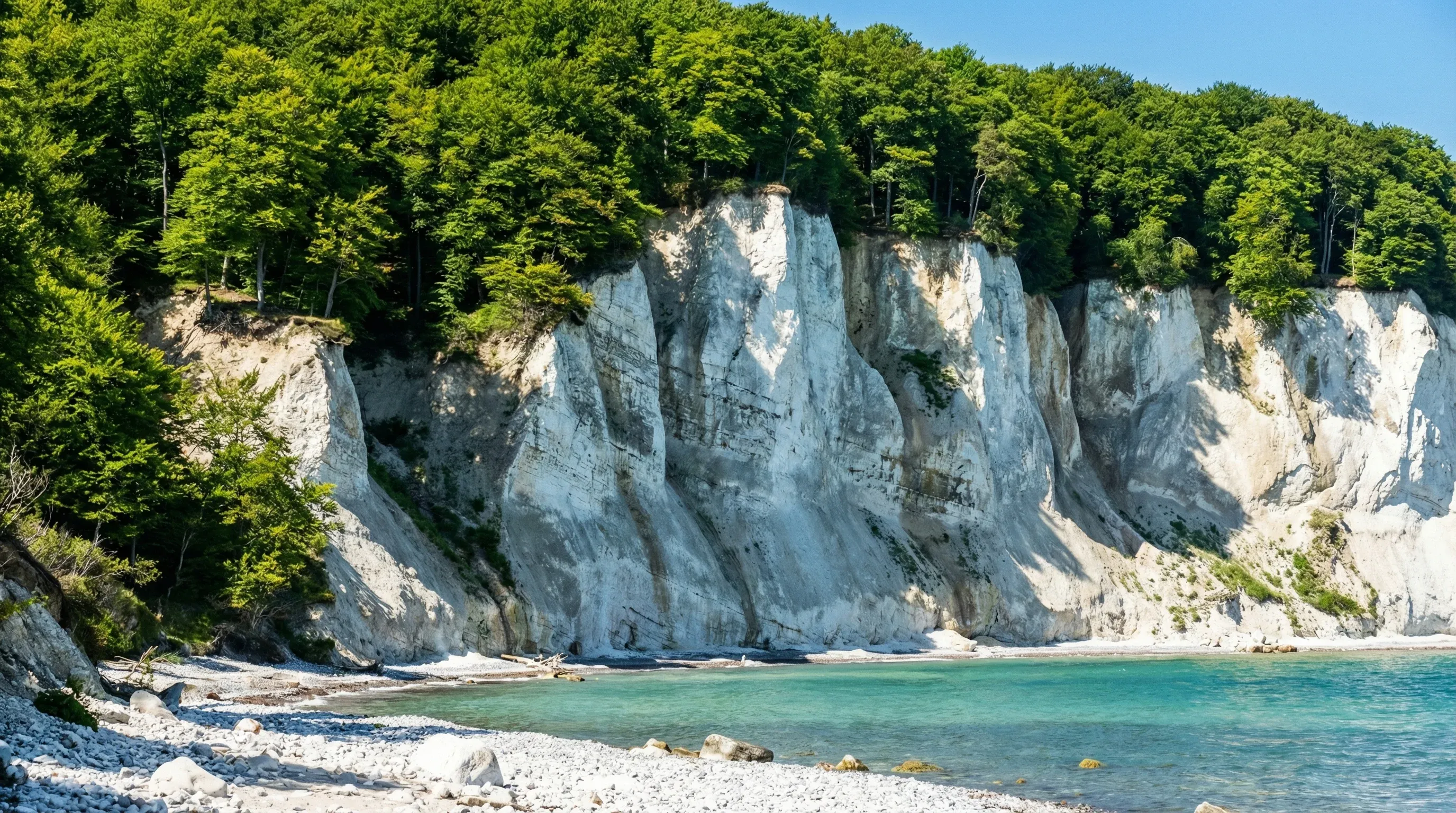
If you are looking for nature that packs a punch, this is the region. While much of Denmark is flat, the island of Møn offers the dramatic white chalk cliffs of Møns Klint, rising sheer from the turquoise sea. It is one of the few places in the country that feels truly wild. The neighboring islands of Lolland and Falster offer a different kind of charm: miles of family-friendly sandy beaches, flat cycling routes, and major family attractions. It is a region of contrasts, linked together by impressive bridges that make island-hopping with a car seamless.
This area is often called the "pantry of Denmark" due to its rich soil, producing outstanding apples, sugar beets, and vegetables. For families, the draw is the space and the activities. You can hunt for 70-million-year-old fossils on the beach in the morning and drive among tigers and rhinos in the afternoon. The vibe is unpretentious and relaxed, with a strong focus on outdoor living. The coastline of Falster, particularly Marielyst, is one giant summer holiday resort, buzzing with life, mini-golf, and ice cream stands during the school holidays.
Key Attractions
The star attraction is Møns Klint. You can walk along the top of the cliffs through the forest or descend the 497 steps to the beach to hunt for fossils (belemnites and sea urchins are common). At the top, GeoCenter Møns Klint explains the geology with cool 3D movies and dinosaur exhibits. On the island of Lolland, Knuthenborg Safaripark is Northern Europe's largest safari park. You drive your own car through enclosures with tigers, wolves, and giraffes—it is thrilling and safe. They also have a huge dinosaur forest and a water playground.
For adrenaline, Camp Adventure near Næstved is home to the famous Forest Tower (Skovtårnet), a stunning spiral architectural structure that takes you above the treetops for a 360-degree view. Nearby is BonBon-Land, a uniquely Danish theme park famous for its wacky and slightly gross humor (the "Farting Dog" roller coaster is a legend). On Falster, Marielyst Strand offers 20km of white sand, consistently voted Denmark's best beach.
Practical Advice
Møns Klint involves a lot of stairs; it is not stroller-friendly at the cliffs themselves (use a carrier for babies), though the GeoCenter is accessible. Accommodation in Marielyst books up fast in July. If driving from Germany, this is the first region you hit via the Rødby ferry.
Food & Drink
Typical meal times: Lunch 12:00 pm to 1:30 pm. Dinner 6:00 pm to 8:30 pm.
Typical meal costs: Moderate. A family dinner at a pizzeria or burger place is DKK 400–600 (approx. $58–87 USD / €53–80 EUR). Fine dining is cheaper here than in Copenhagen.
Dietary requirements: Generally good. Most family attractions have modern cafeterias with veggie options.
Signature dishes:
- Møn Apples – The island of Møn is famous for its apple orchards. Apple juice and cider from here are top tier.
- Lolland Sugar Beets – You won't eat them raw, but the syrup is used in local baking and distinct brown cakes.
- Æbleflæsk – Fried pork belly served with a mush of onions and apples, a savory-sweet classic often found in country inns.
Why this score?
The white chalk cliffs of Møn offer dramatic verticality and fossil hunting, providing a moderately adventurous experience for families. Safari parks and treetop walks add to the outdoor appeal without being truly rugged.
Why this score?
While healthcare is reliable, the medical infrastructure is less dense than in Jutland or Greater Copenhagen. Regional hospitals in Næstved and Nykøbing Falster handle most needs, but some travel may be required for specialist care.
Why this score?
Møns Klint and Knuthenborg Safari Park are significant draws, but the region primarily serves as a secondary destination for those staying in the capital. It sees a mix of domestic weekenders and international nature lovers.

A mix of budget-friendly camping and mid-range holiday homes. Entrance fees to major parks like <a data-attraction-id="48835">Knuthenborg Safaripark</a> and <a data-attraction-id="48853">BonBon-Land</a> are the biggest expense (approx. DKK 250–300 / $36–43 USD / €33–40 EUR per person). Food and accommodation are generally good value compared to the capital.

Getting Here & Around
Getting Here
- Ferry – The Rødby-Puttgarden ferry connects Lolland directly to Germany (45 mins). The Gedser-Rostock ferry connects Falster to Germany (2 hours).
- Driving – Connected to Copenhagen via the E47 motorway (approx. 1 hour 15 mins).
- Train – Trains run from Copenhagen to Næstved and Nykøbing Falster.
Getting Around
- Car – Essential for island hopping. The islands are linked by bridges (Farø, Storstrøm) which are free to cross.
- Bicycle – Berlin-Copenhagen Cycle Route (N9) passes through here. It is very flat and wind-protected in many areas.
- Bus – Local buses exist but can be infrequent; check Rejseplanen app.
No airports in this region. See the country flight map for nearby connections.
Official Links

Packing List
The 497 steps at Møns Klint are impossible with a stroller; a carrier is mandatory for small kids.
Allowed on the beach at Møns Klint for cracking open chalk rocks to find fossils.
You will be doing a fair amount of driving between islands; sun protection in the back seat is helpful.
Ticks (skovflåt) are common in Danish forests and tall grass; quick removal is important.
Summer days are very long with sunrise as early as 4:00 am, which can disrupt kids' sleep.
Essential for playgrounds and forest walks; Danish kids wear these over clothes to play outside in wet weather.
Many Danish beaches have pebbles, and harbor bath ladders can be slippery or have sharp barnacles.
Denmark is flat and often breezy, even on sunny summer days, so a windbreaker is more useful than a heavy coat.

Activities & Best Times

Hiking, wildlife, outdoor exploration, ecotourism
Features world-class nature experiences like the Forest Tower at Camp Adventure and Northern Europe's largest safari park at Knuthenborg. Best explored during the long days of summer; many major nature-based attractions have seasonal closures during the dark winter months.

Urban tourism, museums, historical sites, architecture
Rich in Danish heritage with sites like Gavnø Castle and the authentic Medieval Centre providing high-quality cultural immersion. Summer is peak due to garden blooms and full-scale historical reenactments, while winter sees many historic sites close or reduce hours.

Sport tourism, fitness activities, active recreation
Boasts significant cycling infrastructure including the Berlin-Copenhagen route and major aerial adventure parks. Summer provides the most reliable conditions for long-distance cycling and outdoor climbing, while shoulder months offer cooler, manageable active weather.

Beach resorts, marine activities: diving, snorkelling, kite surfing, wind surfing, sailing
Unique white chalk cliffs at Møns Klint and the broad sands of Marielyst provide a distinctive Baltic coastal experience. Peak summer offers the only viable swimming window, while shoulder months are better suited for scenic coastal hiking than water immersion.

Learning experiences, scientific sites, historical education
GeoCenter Møns Klint and the Medieval Centre offer destination-level scientific and historical learning experiences for families. These centers are most active in summer with full educational programming, whereas they largely close for the winter season.

Scenic drives, countryside tours, route-based travel
The Marguerite Route and island-hopping across the Farø bridges provide scenic driving through rolling landscapes and coastal cliffs. Optimal touring occurs when daylight is maximum and roadside farm shops and attractions are open, which is rare in the cold, dark winter months.

Amusement parks, family entertainment venues
Features BonBon-Land, famous for its unique Danish humor, and the large-scale Lalandia indoor water park. Most outdoor parks are strictly seasonal, operating from late spring through the October autumn break, with maximum services in mid-summer.

Attractions (17 total)



Public Holidays & Calendar Next 12 months
Public holidays, festivals, cultural celebrations, and seasonal natural phenomena coming up in South Zealand, Lolland-Falster & Møn (Sydsjælland, Lolland-Falster & Møn) over the next 12 months.
Loading holidays and events...

Travel Advisory
The majority of international agencies suggest that standard safety measures are sufficient for travel to Denmark. However, travelers should be aware of elevated security warnings from North American agencies regarding terrorism and localized gang activity.
Safety Topics
Traveller Advice (4 groups)

Maintain awareness in crowded areas and on public transportation to prevent falling victim to petty theft. Always carry travel documents when crossing internal European borders.

Those visiting remote areas in Greenland or the Faroe Islands must prepare for extreme weather conditions and recognize that medical and rescue infrastructure is extremely limited.

The social climate is highly progressive and the country is consistently ranked as one of the safest and most welcoming destinations for the community.

Female visitors should follow standard safety protocols, particularly when traveling alone at night in large metropolitan areas like Copenhagen.
Agency Summaries
No specific travel restrictions are in place, though visitors are encouraged to review security guidelines and prepare for standard European travel risks.
General safety risks are considered low, though visitors are advised to avoid protests and keep an eye on personal belongings in transit hubs.
Visitors should maintain standard safety awareness and ensure they have valid identification for movement within the Schengen area.
The safety environment is stable, though petty crime remains a factor in popular tourist areas and travelers should stay informed about the local terror threat level.
Officials recommend a heightened state of vigilance due to the threat of terrorist activities and incidents of gang-related violence in specific urban districts.
Travelers should remain alert to their surroundings because of persistent plans by extremist groups to target public and tourist locations.
Information is provided for general guidance only and does not constitute travel, safety, medical, or legal advice. Conditions may change. Users are responsible for independently verifying information before travel.