
Santa Ana & West
Ancient ruins, emerald lakes, and volcanic peaks 🌋🏛️
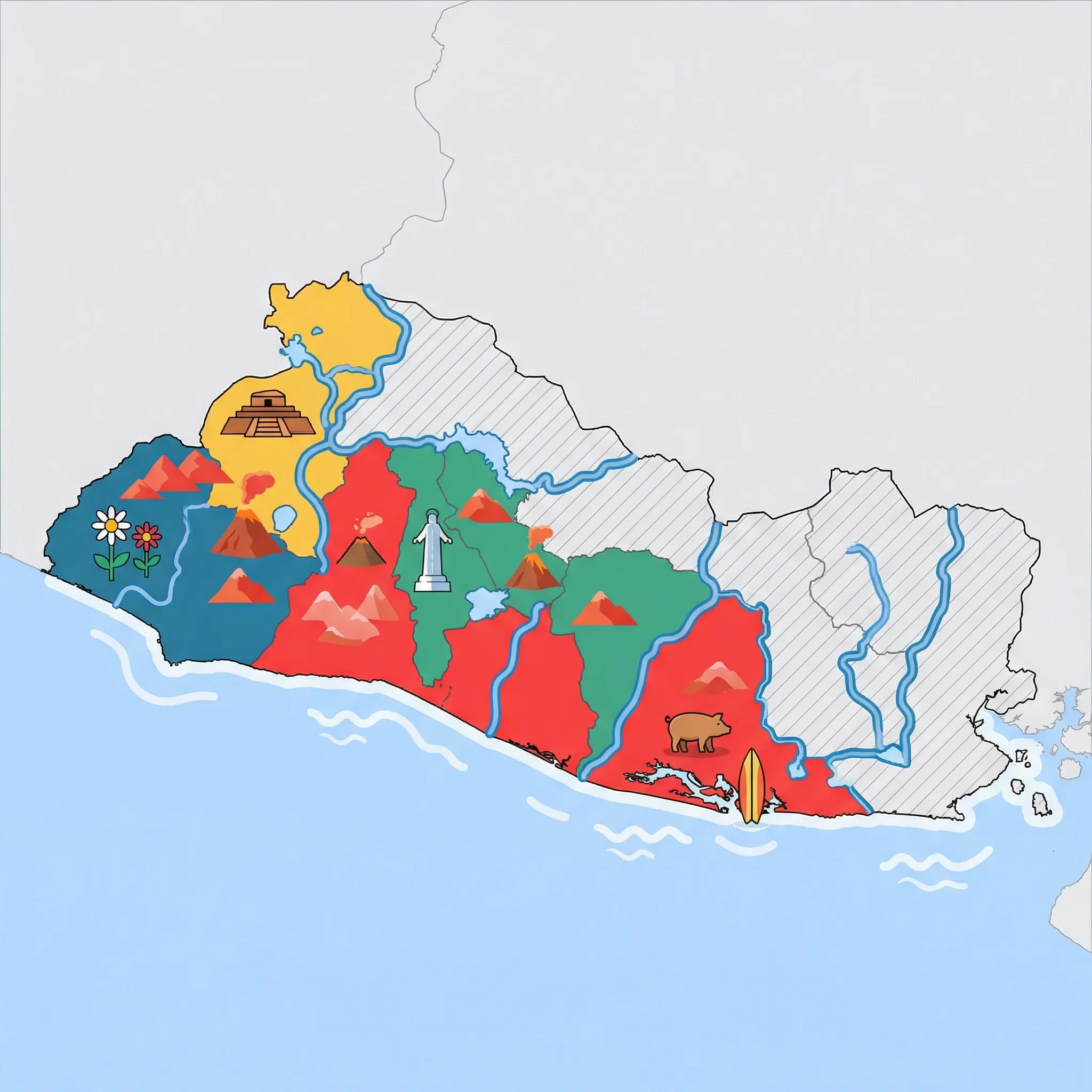
Click a region to explore
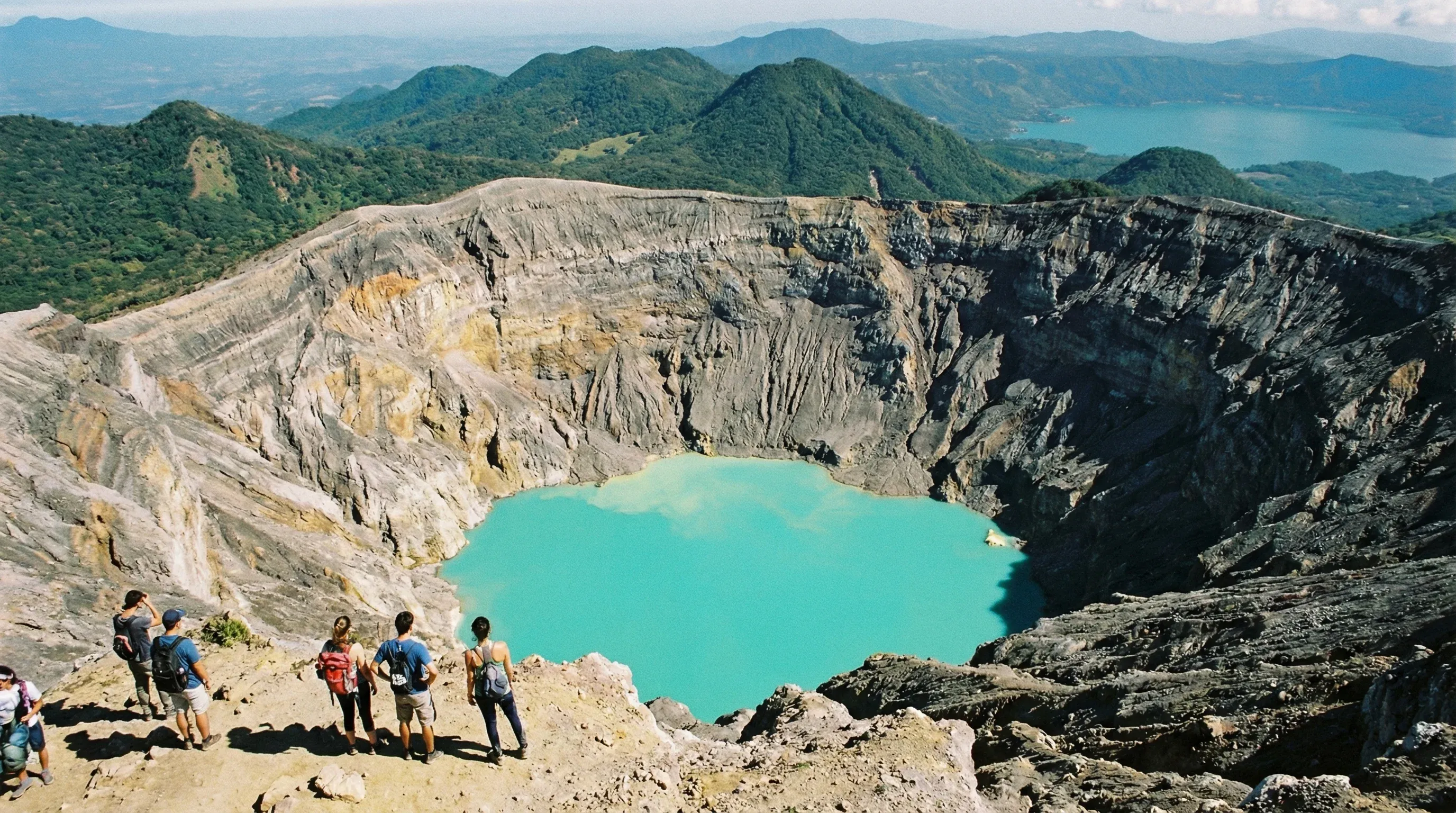
Western El Salvador is a playground for families who love history and dramatic landscapes. This region is home to the country's most iconic natural feature: the Lake Coatepeque. This massive crater lake changes color from deep blue to turquoise and offers calm waters perfect for swimming, jet-skiing, or simply lunching on a dock with a view. Looming above the lake is the complex of volcanoes that includes Cerro Verde and the majestic Santa Ana Volcano. The cool air of the national parks here provides a refreshing break from the tropical heat of the lower lands.
Culturally, this is the most significant region in the country. It houses the most important archaeological sites in El Salvador, offering a window into the Maya civilization that is far less crowded than sites in Mexico or Guatemala. Exploring these ruins is manageable for children—the sites are compact, flat, and full of grassy areas to run around. The city of Santa Ana itself features Gothic architecture and a bustling local market atmosphere. It feels authentic and lived-in, providing a genuine slice of Salvadoran life away from the beach resorts.
Key Attractions
History comes alive at the Joya de Cerén Archaeological Site. Designated a UNESCO World Heritage site, it preserves a pre-Hispanic farming village buried by volcanic ash. unlike temples where kings lived, this site shows how regular families lived, slept, and ate 1,400 years ago—a concept that resonates well with children. Nearby, the Tazumal Archaeological Site features the tallest pyramid in the country and a small but interesting museum.
For nature lovers, Lake Coatepeque is the highlight. Families can rent a boat for a tour of the lake, seeing the "island" (Teopan) which was sacred to the Maya, or simply swim in the mineral-rich waters. If you have active teenagers, climbing the Santa Ana Volcano is unforgettable, but if you prefer a view without the sweat, the viewpoints at Cerro Verde National Park offer stunning vistas of the volcano and lake with very little hiking required.
Practical Advice
The archaeological sites are closed on Mondays—plan accordingly. When visiting the volcano or Cerro Verde, arrive early (before 9:00 am) as clouds often roll in by midday, obscuring the view. The lake is a popular weekend destination for locals, so expect music and jet skis on Sundays; weekdays are serene.
Food & Drink
Typical meal times: Lunch 12:00 pm to 2:30 pm. Dinner 6:00 pm to 8:30 pm.
Typical meal costs: Lakefront dining is pricier, around $15–25 USD (approx. €14–23 EUR / £12–20 GBP) per person. In Santa Ana city or near ruins, meals are $6–12 USD (approx. €5.50–11 EUR / £4.50–9.50 GBP).
Dietary requirements: Basic. Lake restaurants serve grilled meats and seafood which are safe for gluten-free diets. Vegetarians can rely on bean, cheese, and vegetable sides.
Signature dishes:
- Torrejas – Sweet bread soaked in panela (unrefined cane sugar) syrup, often served during Easter but available in traditional bakeries.
- Sopa de Pata – A rich, hearty soup made from cow's feet, tripe, yucca, and corn—an adventurous try for foodies.
- Carne Asada – Grilled beef is a staple at the lake restaurants, usually served with chirmol (fresh salsa) and tortillas.
Why this score?
Hiking the active Santa Ana Volcano (Ilamatepec) is a highlight for adventurous families, involving steep terrain and dramatic volcanic views. Lake Coatepeque offers water sports in a deep crater setting, and the proximity to El Imposible National Park adds a layer of genuine wilderness and rugged hiking opportunities. The physical demands and dramatic landscapes here represent the peak of Salvadoran outdoor adventure.
Why this score?
The city of Santa Ana is the second-largest in the country and possesses several decent hospitals and clinics that can handle most non-critical medical issues. While better equipped than the rural Ruta de las Flores, it lacks the high-end private medical infrastructure found in the capital. Foreigners may encounter language barriers and may still be referred to San Salvador for complex surgeries or specialized trauma care.
Why this score?
This region contains some of El Salvador's most iconic landmarks, including the Santa Ana Volcano and the Mayan ruins of Tazumal. It is a major draw for day-trippers and those interested in archaeology or natural history, yet it lacks high-density international hotel clusters. It is an emerging destination that remains secondary to the coastal surf regions for most Western travelers.

Accommodation varies from budget hostels in Santa Ana city ($30–50 USD / €27–46 EUR / £23–39 GBP) to luxury lakefront villas at Coatepeque ($150–300 USD / €140–275 EUR / £115–235 GBP). Entry to archaeological parks is very cheap for foreigners, typically $3–5 USD (approx. €2.75–4.50 EUR / £2.30–4 GBP).

Getting Here & Around
Getting Here
- Driving – About 1 to 1.5 hours west of San Salvador. The Pan-American Highway is excellent. Access to Lake Coatepeque involves a steep, winding descent.
- Bus – Route 201 connects San Salvador to Santa Ana city. From there, local buses go to the lake or ruins, but these connections can be time-consuming for families.
Getting Around
- Car – Essential for combining the lake, the volcano, and the ruins in one or two days efficiently.
- Boat – At Lake Coatepeque, boat taxis and private rentals are the primary way to explore the water.
- Taxi – Available in Santa Ana city to get to Tazumal Archaeological Site (in Chalchuapa).
No airports in this region. See the country flight map for nearby connections.
Official Links

Packing List
Great for spotting birds at Cerro Verde or seeing details across the massive crater lake.
It can be very windy at the viewpoints and on the lake boats.
Useful for visiting ruins where you might want to shake out sand/dust afterwards.
Important if swimming in the volcanic lake to protect the water quality.
Beaches like El Tunco are rocky (stones, not sand) and river waterfalls can be slippery.
Evenings in mountain towns like Apaneca and Ataco can get surprisingly chilly (down to 15°C/60°F).
Fireworks are very common year-round for celebrations, often late at night or early morning.
Street lighting in smaller colonial towns can be dim or sporadic during power fluctuations.
The tropical heat and humidity deplete you quickly; local options aren't always kid-friendly flavors.

Activities & Best Times

Hiking, wildlife, outdoor exploration, ecotourism
Home to the iconic Santa Ana Volcano and the high-biodiversity El Imposible National Park. The dry season (Nov-Apr) is peak for safe trekking and clear vistas, while heavy rains in June and September degrade trail safety.

Urban tourism, museums, historical sites, architecture
Features UNESCO-listed Joya de Cerén and the impressive Tazumal ruins alongside Santa Ana's neo-Gothic cathedral. Outdoor exploration of these heritage sites is best during the dry months to avoid tropical downpours.

Scenic drives, countryside tours, route-based travel
The Ruta de las Flores is a celebrated scenic drive through colonial coffee towns. It is most spectacular from November to February during the flower blooming season and when road visibility is highest.

Sport tourism, fitness activities, active recreation
Significant volcanic ascent routes and adventure park infrastructure cater well to active families. Peak months align with the dry season for optimal hiking traction, while peak rain months present mud hazards on steep slopes.

Amusement parks, family entertainment venues
Café Albania offers internationally unique adventure rides like the rainbow slide and bike zipline. Operations are best in the dry season when mountain weather is stable and outdoor family attractions are most accessible.

Beach resorts, marine activities: diving, snorkelling, kite surfing, wind surfing, sailing
Los Cóbanos features rare volcanic reefs for snorkeling while Barra de Santiago offers mangrove scenery. Best visited in mid-dry season for maximum water visibility and calmer Pacific swells.

Learning experiences, scientific sites, historical education
Joya de Cerén provides a unique scientific look at pre-Hispanic life, often called the 'Pompeii of the Americas.' While internationally significant, it is a focused site best paired with other cultural activities in the dry season.

Spa retreats, wellness centers, peaceful getaways
Natural thermal springs at Santa Teresa and Alicante provide a rustic wellness experience. These open-air baths are most enjoyable during the cooler and drier months of the year.




Public Holidays & Calendar Next 12 months
Public holidays, festivals, cultural celebrations, and seasonal natural phenomena coming up in Santa Ana & West over the next 12 months.
Loading holidays and events...

Travel Advisory
Most major agencies recommend exercising a high degree of caution or increased vigilance. While the security situation regarding gang violence has significantly improved since 2022, the ongoing 'State of Exception' allows for expanded police powers and the suspension of certain constitutional rights.
Safety Topics
Traveller Advice (4 groups)

Female travellers should consult specific safety guidance regarding solo travel and remain vigilant in public spaces.

Ensure you carry valid identification at all times as security checkpoints and searches are common. Avoid displaying wealth or travelling alone at night, especially in rural or less populated areas.

When visiting volcanoes or remote hiking trails, it is highly recommended to use certified local guides and conduct activities during daylight hours to ensure safety.

Specific resources are available for sexual and gender minority travellers to navigate local social norms and legal differences.
Agency Summaries
While the security environment has gotten better and crime rates have dropped, a state of emergency persists, and travellers are advised to stay alert to their surroundings.
Travellers are encouraged to be careful and avoid areas where security operations are active, as the country continues to operate under a national state of emergency.
Due to concerns regarding violent crime, travellers should exercise a higher level of awareness than they normally would, particularly in urban centers.
Safety conditions have improved notably as gang-related activity and homicides have decreased; however, a state of exception remains in effect which limits certain rights.
High levels of caution are recommended due to the persistent threat of violent crime, even though security measures have led to some reductions in gang activity.
Visitors should maintain heightened vigilance because of the ongoing risk of crime and the potential for arbitrary enforcement of local laws under current emergency measures.
Information is provided for general guidance only and does not constitute travel, safety, medical, or legal advice. Conditions may change. Users are responsible for independently verifying information before travel.