
Massawa & Coast
Ancient port cities and untouched Red Sea islands 🐢⚓
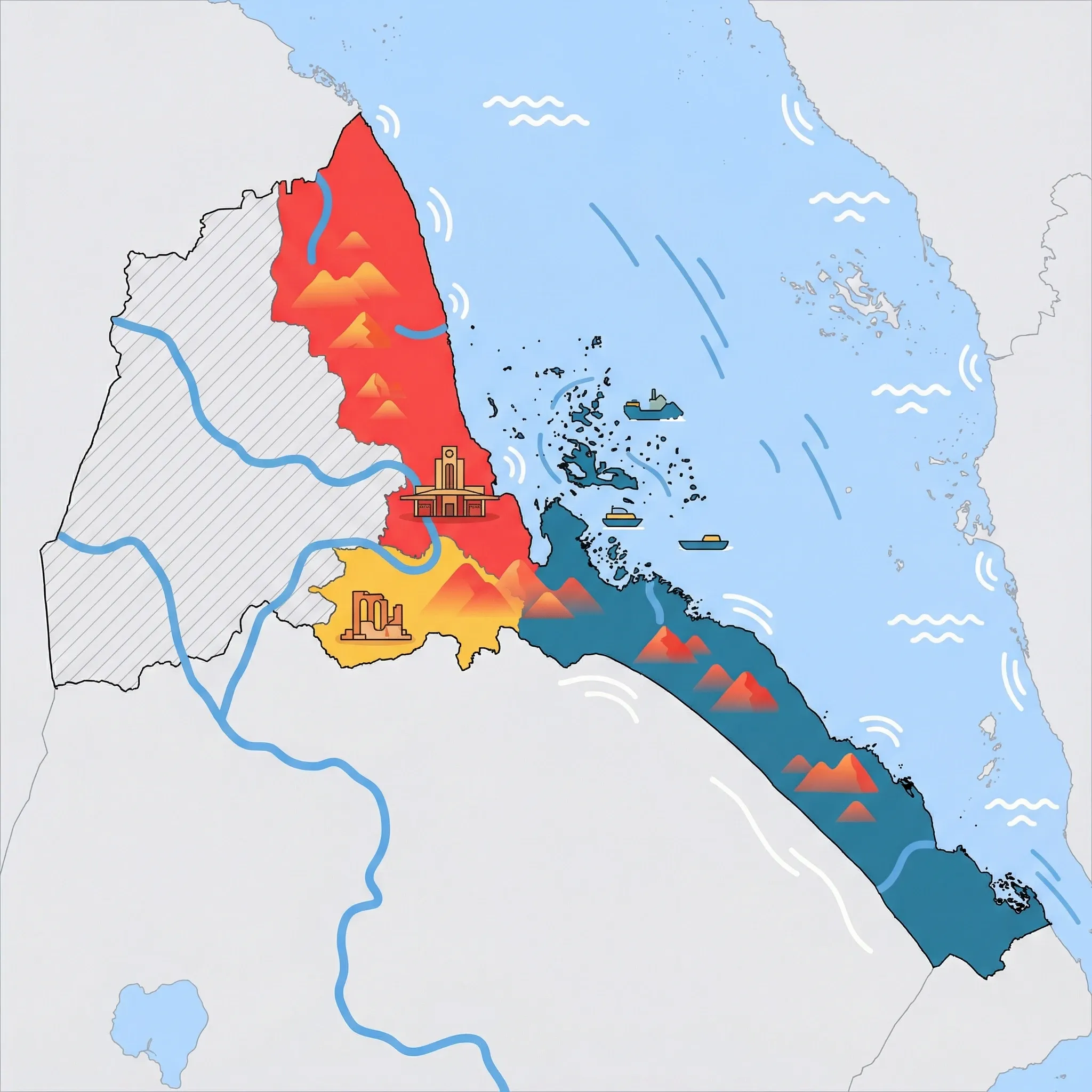
Click a region to explore
⚠️ SAFETY WARNING: Due to the risk of armed banditry, lack of infrastructure, and proximity to volatile borders, government agencies (including the UK, AU, and NZ) advise travelers to reconsider travel to the coastal regions. The border area with Sudan is strictly off-limits. Emergency medical care is extremely limited. Families must consult their own government's official travel advisory and ensure they have the mandatory travel permits before leaving Asmara.
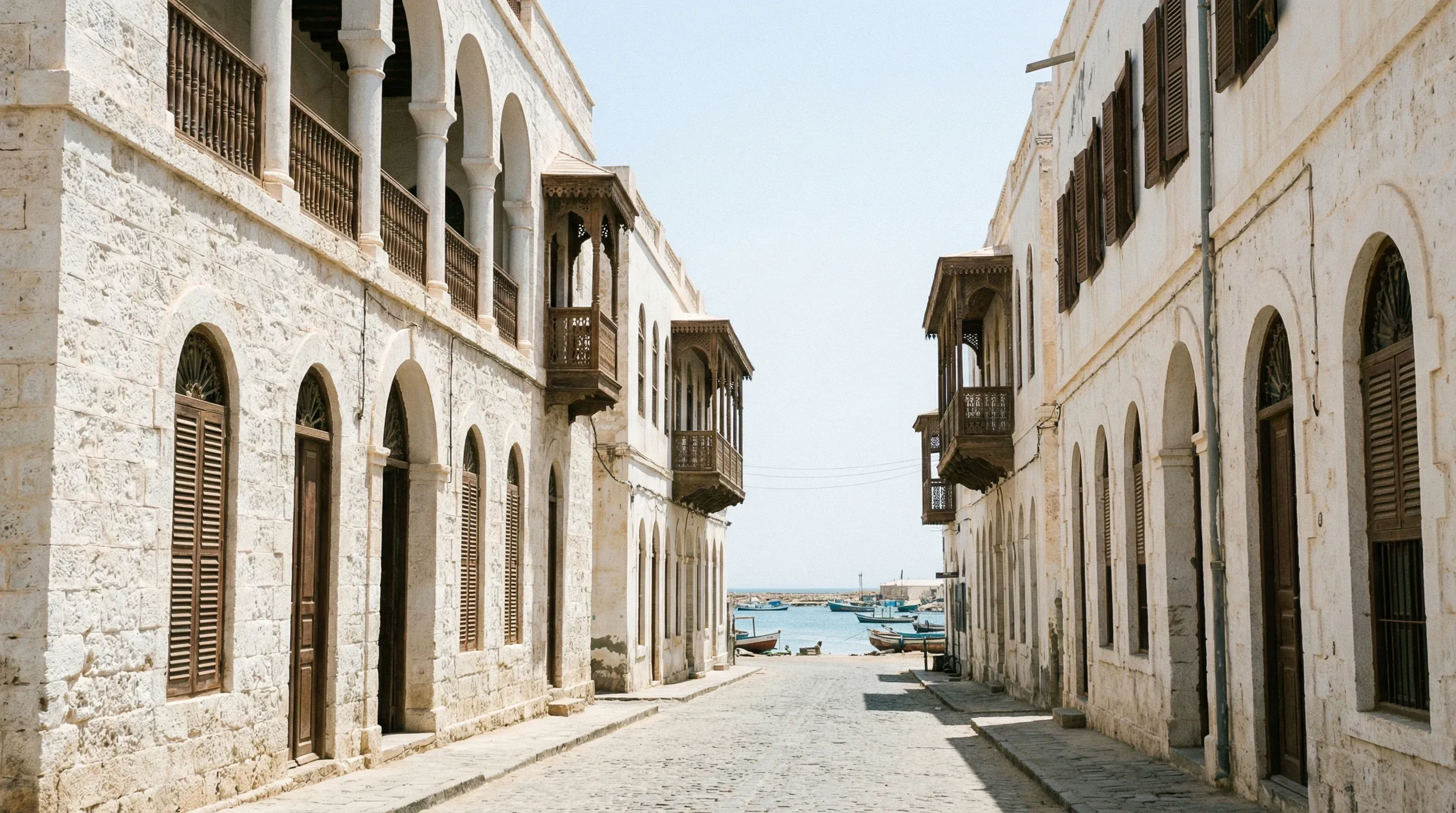
Descending from the cool highlands of Asmara to the port of Massawa is like entering a different world. The temperature rises dramatically, and the culture shifts from the Italianate highlands to a humid, relaxed Arab-African coastal vibe. For adventurous families, Massawa offers a raw, unfiltered look at history. The city was once the "Pearl of the Red Sea," and despite heavy damage from the war of independence, the Old Town on Massawa Island remains hauntingly beautiful. Buildings made of coral stone feature Ottoman wooden lattices (mashrabiya), and narrow alleyways open up to squares where cats nap in the shade. It is a place for imagination, where children can picture the bustling trade of centuries past.
The coast is not a typical resort destination—there are no luxury hotels with kids' clubs here. Instead, it offers genuine exploration. The Red Sea waters are warm and teeming with life. A short boat ride takes you to Green Island (Sheikh Said Island), where families can picnic on the sand and snorkel in shallow waters filled with colorful fish and turtles. It is one of the most accessible spots for children to experience the Red Sea's biodiversity without the need for deep-sea diving gear. The pace of life in Massawa is dictated by the heat; activity stops in the afternoon and picks up late into the evening when the streets come alive with tea stalls and fish barbecues.
Key Attractions
The primary attraction is the atmosphere of Massawa's Old Town, but for a specific historical excursion, the Adulis Archaeological Site is a significant highlight located south of the city. Once a major Aksumite port trading with Rome, India, and Byzantium, Adulis is an active archaeological zone. While it requires imagination as many ruins are still buried or foundational, standing in the place where elephants were once exported to the Roman Empire is a powerful history lesson for older children.
Green Island is the most family-friendly day trip. Accessible by a short boat ride from Massawa, it offers mangroves, birdwatching, and safe swimming beaches. For families with older teenagers and a higher budget, a chartered trip to the Dahlak Archipelago reveals untouched coral reefs and uninhabited islands, though this requires complex permits and logistics.
Practical Advice
Best time to visit: strictly November to February. The summer months (May–September) see temperatures exceeding 40°C (104°F) with extreme humidity, which is dangerous for children.
Health: This is a malarial zone. Prophylaxis and mosquito nets are essential.
Food & Drink
Typical meal times: Lunch is 1:00 pm to 3:00 pm, but dinner is late, often starting after 8:00 pm when the air cools down.
Typical meal costs: Seafood is the staple here and is relatively affordable. A fresh fish dinner for a family costs roughly 600–1,000 ERN (approx. $40–65 USD / €37–60 EUR).
Dietary requirements: Vegetarians may find fewer options than in the highlands, as the coastal diet is fish-heavy. However, pasta and bread are always available.
Signature dishes:
- Tsebhi Asa – A spicy fish stew cooked with berbere and tomatoes, a coastal variation of the highland meat stews.
- Grilled Red Snapper – Freshly caught fish cooked over charcoal in clay ovens (tannour), served simply with lime and bread.
- Jebena Coffee – While popular everywhere, the coffee ceremony in Massawa often includes ginger (djenjebel) to cope with the humidity.
Why this score?
Visiting this region involves navigating extreme coastal heat and the challenging logistics of arranging boat transport to uninhabited islands with no facilities. The combination of decaying Ottoman ruins and remote marine environments provides a significant sense of off-the-beaten-path exploration.
Why this score?
Medical services in Massawa are very limited and primarily focus on basic local needs with minimal provision for foreign visitors. For any serious medical emergency, patients would require a difficult three-hour road transfer up the escarpment to the capital's hospitals.
Why this score?
While it serves as the main access point for the Red Sea and the Dahlak Archipelago, the city's tourism is hampered by significant war damage and a lack of modern resort infrastructure. It remains a destination primarily for intrepid travelers and members of the Eritrean diaspora rather than mainstream international tourists.

Accommodation in Massawa is more basic than Asmara but prices are similar due to scarcity. A hotel with functioning air conditioning (essential) costs 900–1,800 ERN (approx. $60–120 USD / €55–110 EUR). Boat rental for Green Island is roughly 750–1,500 ERN (approx. $50–100 USD / €45–90 EUR) depending on the group size. Seafood meals are excellent value, often costing 200–300 ERN (approx. $13–20 USD / €12–18 EUR) per person.

Getting Here & Around
Getting Here
- Driving – The primary route is the winding road from Asmara, descending 2,300 meters over 100km. The journey takes 3–4 hours and offers spectacular views.
- Bus – Local buses connect Asmara to Massawa, but they are often overcrowded and hot. Private hire transport is strongly recommended for families.
- Permits – You cannot enter this region without a travel permit issued in Asmara. Checkpoints are strictly enforced.
Getting Around
- Walking – Massawa Island (Old Town) and Taulud Island are connected by a causeway and are best explored on foot, though the heat can be intense.
- Boat – Essential for visiting Green Island or the Dahlak Archipelago. Boats must be arranged through the Maritime Transport Authority or local hotels.
- Taxi – Minibuses and taxis run between the mainland residential areas and the islands.
No airports in this region. See the country flight map for nearby connections.

Packing List
Beaches on Green Island and the coast can be rocky with sharp coral fragments.
The humidity is extreme; children dehydrate very quickly even in winter.
Mosquitoes are prevalent in the coastal lowlands (unlike the malaria-free highlands).
Cultural norms are conservative; rash guards and board shorts are preferred over skimpy bikinis.
Power cuts are frequent and street lighting is dim or non-existent in many areas.
ATMs do not exist. Bring more cash than you need; notes must be post-2009 and pristine.
Internet is virtually non-existent (no mobile data), so Google Maps will not work.
To keep devices charged during long blackouts or travel days.
With no Wi-Fi or streaming, bring downloaded movies, books, and games for kids.
Diapers, wipes, and feminine hygiene products are expensive and hard to find.

Activities & Best Times

Hiking, wildlife, outdoor exploration, ecotourism
Features the diverse ecosystems of the Dahlak Marine National Park and the lush 'Green Belt' of Semienawi Bahri. These wilderness areas are best explored during the cooler winter months when wildlife visibility is high and trekking conditions are safe.

Beach resorts, marine activities: diving, snorkelling, kite surfing, wind surfing, sailing
Home to the pristine Dahlak Archipelago, offering exceptional snorkeling in untouched coral reefs and quiet beaches at Gurgusum. International travelers visit from November to March to enjoy the marine life while avoiding the extreme 40°C+ heat of the Red Sea summer.

Urban tourism, museums, historical sites, architecture
Massawa's Coral City offers a unique blend of Ottoman and Italian colonial architecture, alongside the significant archaeological site of Adulis. The intense humidity and heat of the summer months make cultural walking tours unsuitable outside the winter window.

Learning experiences, scientific sites, historical education
The Northern Red Sea Regional Museum preserves the region's revolutionary and maritime heritage, offering significant learning opportunities. Visits are seasonally dictated by the region's overall accessibility during the milder winter months.

Spa retreats, wellness centers, peaceful getaways
The Akwar Hot Springs (Mai Wu'ui) provide a traditional thermal bathing experience used for centuries for its medicinal properties. The experience is most restorative during the winter when the air temperature is cooler than the thermal waters.

Scenic drives, countryside tours, route-based travel
The Asmara-Massawa road is attributed to both Asmara and Massawa regions. Road trip classifications should be assigned to one primary region. Since Asmara is the origin point, Massawa should have 'marginal' rating (destination of the route, not the route itself).

Sport tourism, fitness activities, active recreation
The road cycling route between Asmara and Massawa is internationally recognized among enthusiasts for its extreme elevation change. Due to the high physical exertion required, this route is only recommended for international visitors during the peak cool season.




Public Holidays & Calendar Next 12 months
Public holidays, festivals, cultural celebrations, and seasonal natural phenomena coming up in Massawa & Coast over the next 12 months.
Loading holidays and events...

Travel Advisory
A majority of international agencies advise avoiding non-essential travel to Eritrea due to unstable regional security, the risk of arbitrary detention, mandatory internal travel permits, and significant landmine hazards in border regions.
Safety Topics
Traveller Advice (3 groups)

Same-sex sexual activity is illegal and generally not accepted in society; travellers should exercise extreme discretion.

Female travellers are encouraged to dress conservatively and remain aware of local cultural sensitivities, especially when visiting rural or religious sites.

Travellers should always carry copies of their passport and visa, as original documents should be kept secure. Dual nationals should be aware that they are treated as local citizens by authorities and may be subject to national service obligations.
Agency Summaries
Travellers are advised to avoid non-essential travel to the country due to ongoing regional tensions and the risk of conflict with neighbouring nations. Extreme caution is urged near all border regions where a total travel ban is in effect.
The government warns against all travel to areas within 25km of any land border due to high tensions with Ethiopia. Consular support is severely restricted throughout the country, and travel permits are mandatory for movement outside Asmara.
Increased vigilance is necessary due to the threat of wrongful detention, the presence of unmarked minefields, and the extremely limited ability of the government to provide emergency assistance to citizens outside the capital.
The security environment is unpredictable and can deteriorate rapidly. Travellers should avoid non-essential trips and be aware of high risks involving landmines and armed banditry in rural and coastal areas.
The general recommendation is to reconsider the necessity of travel because of the risk of violent crime and potential armed conflict. A 'Do Not Travel' warning is in place for all border zones.
Serious and life-threatening risks, including extensive landmines and limited consular assistance, warrant avoiding non-essential visits. Travel within 25km of borders is strictly advised against.
Information is provided for general guidance only and does not constitute travel, safety, medical, or legal advice. Conditions may change. Users are responsible for independently verifying information before travel.