
Southern Highlands
Canyons, ancient pillars, and the roots of civilization 🏛️⛰️
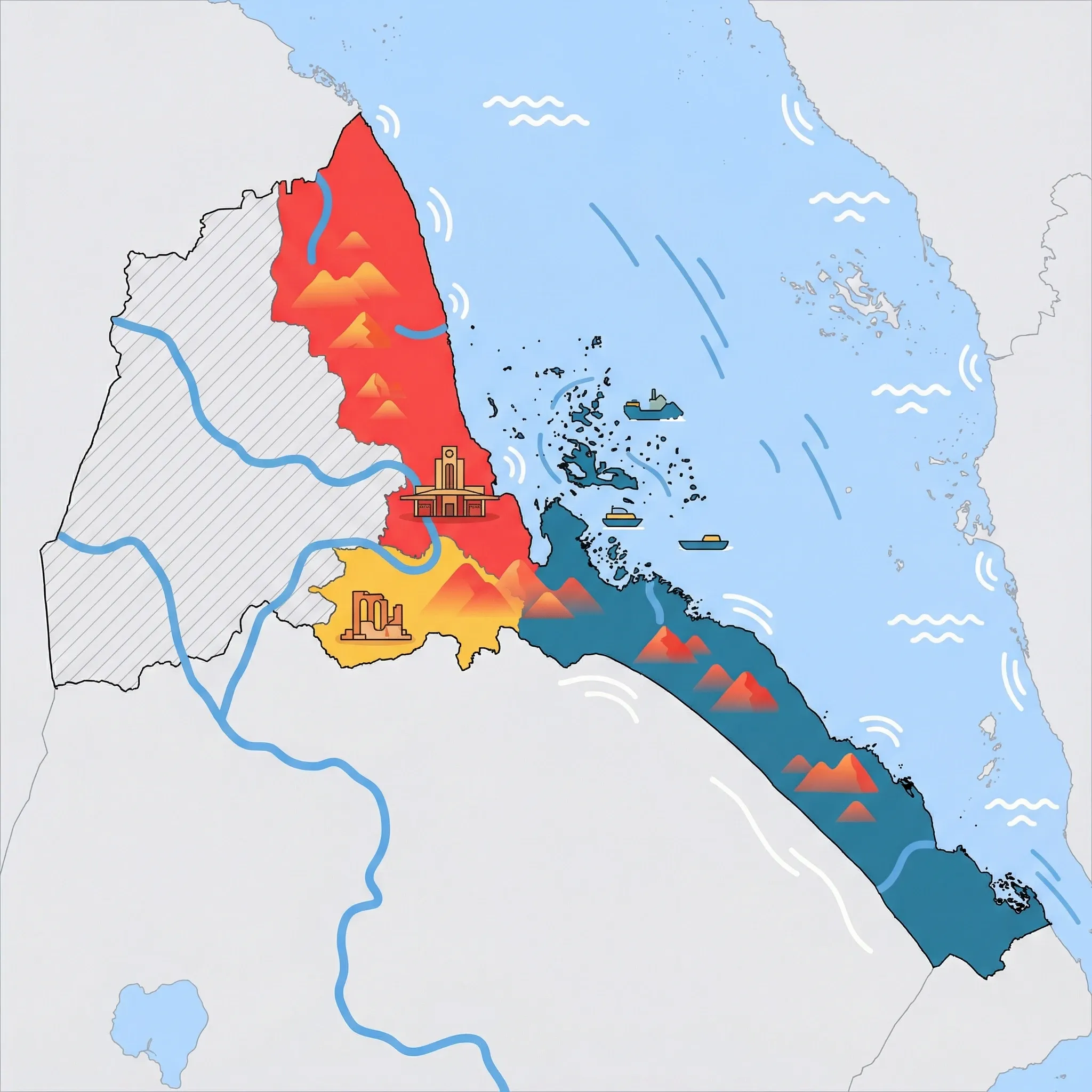
Click a region to explore
⚠️ SAFETY WARNING: DO NOT TRAVEL to areas within 25km of the Ethiopian border. Government agencies (including the UK, USA, Canada, and Ireland) advise against all travel to this specific border zone due to the risk of landmines from past conflicts and military volatility. The archaeological sites of Senafe and Qohaito lie very close to this zone. Families should only consider this region if the security situation allows, and strictly with official guides and permits. Consult your government's advice immediately before departure.
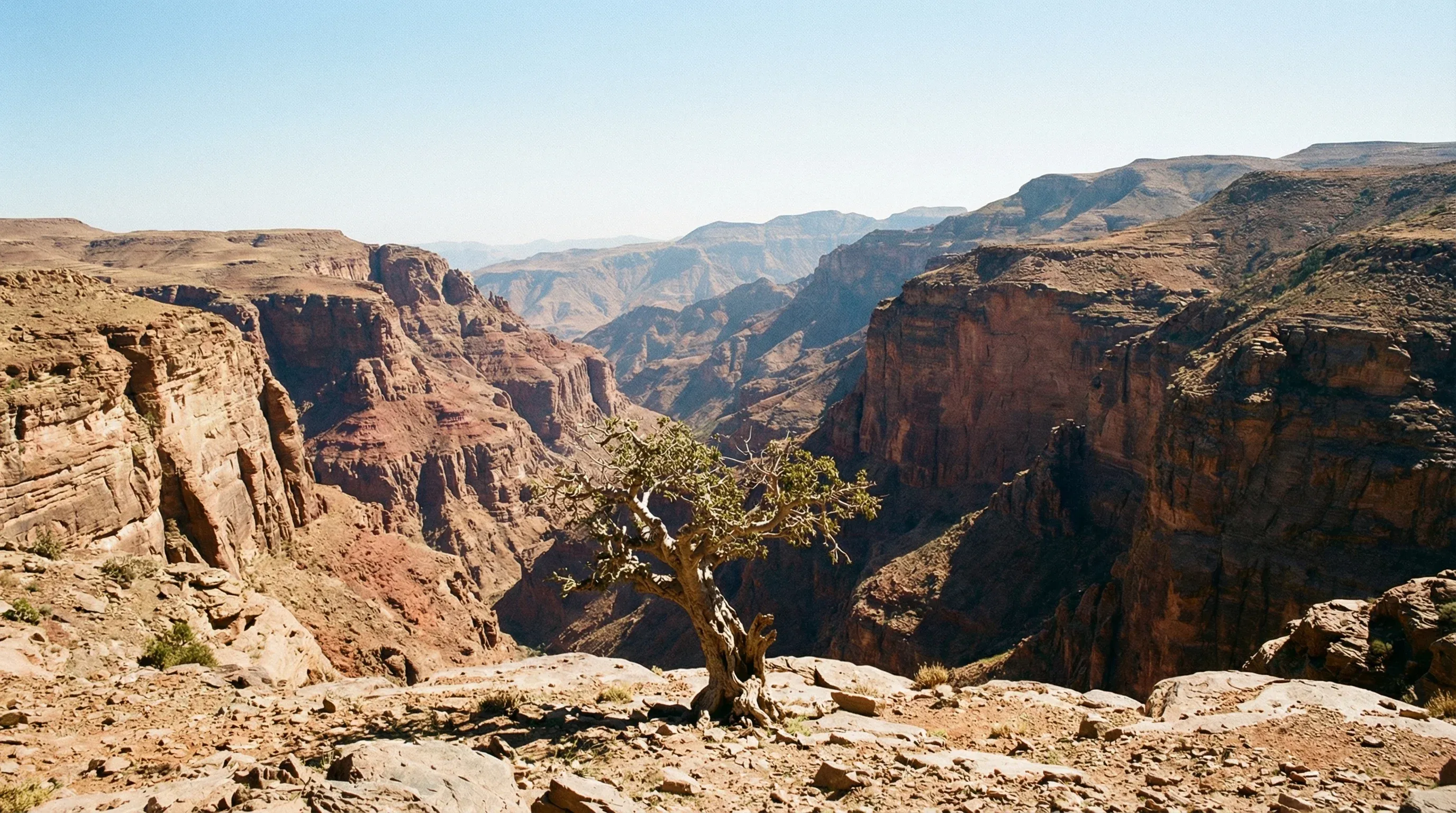
For families who are able to visit safely, the Southern Highlands (Debub Region) offer a landscape that rivals the Grand Canyon in drama, combined with history that dates back thousands of years. This is the heartland of the ancient D'mt and Aksumite civilizations. The air here is thin and cool, and the terrain is dominated by flat-topped mountains (ambas) and deep, terrifyingly steep gorges. It is a destination for families who love hiking, geology, and "Indiana Jones" style exploration. The vibe is quiet, rural, and deeply traditional. You will pass villagers plowing fields with oxen exactly as they have for centuries.
The journey itself is a highlight, passing through the town of Dekemhare, known for its Italian colonial architecture and vineyards. However, the real draw is the archaeology. Unlike museums where artifacts are behind glass, here history is underfoot. At Qohaito, you can walk right up to ancient rock art and standing pillars. It is a vast open-air classroom. Because of the safety restrictions and the remote nature of the sites, a trip here is an organized expedition rather than a casual drive. It requires a driver, a permit, and a local guide—but this structure often makes it easier for parents, as the logistics are handled by professionals.
Key Attractions
The crown jewel of the south is the Qohaito Archaeological Site. Located on a plateau 2,600 meters above sea level, it features the remains of the Temple of Mariam Wakiro and the "Egyptian Tomb." The site is massive, and kids will enjoy the freedom to roam the flat plateau. The most breathtaking feature at Qohaito is the edge of the canyon, offering vertigo-inducing views down towards the coastal plains—a geography lesson in itself.
Further south (and requiring strict safety checks) is Metera, home to a famous 3rd-century stele (obelisk) and the remains of an ancient palace. Nearby, the majestic Sycamore Valley features giant, ancient sycamore trees that are culturally significant meeting places for local communities, offering a shady spot for a family picnic amidst the history.
Practical Advice
Best time to visit: September to April. The landscape is greenest immediately after the rains (September/October).
Safety Basics: Never stray from marked paths. The risk of unexploded ordnance (landmines) in the wider countryside is real. Always stick to the guide.
Food & Drink
Typical meal times: Lunch is 12:00 pm to 2:00 pm. Roadside stops are common for breaks.
Typical meal costs: Dining is limited to small local towns like Adi Keyh. Costs are low, around 150–300 ERN (approx. $10–20 USD / €9–18 EUR) for a hearty meal.
Dietary requirements: Simple, local fare dominates. Shiro (chickpea stew) and Injera are the staples and are naturally vegan.
Signature dishes:
- Tigrinya Honey – The region is famous for its white honey, often sold in recycled wine bottles on the roadside; safe and delicious for kids.
- Kolo – Roasted barley and chickpeas, a crunchy travel snack found in every market.
- Suwa – A home-brewed sorghum beer (for parents), often served in rural homes if you are invited in as a guest.
Why this score?
The region features rugged high-altitude terrain, deep canyons, and archaeological sites that often require trekking or 4x4 vehicles to reach. Its location near the sensitive border with Ethiopia and the lack of basic infrastructure make it a demanding destination for most families.
Why this score?
Healthcare infrastructure in this rural highland area consists of very basic clinics that are ill-equipped to treat foreigners for anything beyond minor ailments. The remote location and mountainous roads ensure that emergency medical evacuation to Asmara is a slow and difficult process.
Why this score?
This region is an emerging destination for archaeology enthusiasts interested in the ancient Aksumite ruins of Qohaito, but it remains largely unknown to the general public. Tight travel permit requirements and a near-total absence of tourist-standard hotels keep international visitor numbers at a minimum.

While the region is rural and cheap, the cost of accessing it is mid-range due to logistics. You must hire a private vehicle (approx. 2,250–3,750 ERN / $150–250 USD / €140–230 EUR per day). Entrance fees to Qohaito are roughly 150–300 ERN (approx. $10–20 USD / €9–18 EUR). Accommodation in Adi Keyh is basic and cheap, around 450–750 ERN (approx. $30–50 USD / €28–46 EUR) per night.

Getting Here & Around
Getting Here
- Driving – Access is via the asphalt road south from Asmara to Senafe (approx. 135km). The road is generally good but winding.
- Transport – You must hire a 4x4 with a driver from Asmara. Public buses do not go to the archaeological sites, only to the town centers.
- Permits – A specific permit for the Debub region (Southern Region) is mandatory and will be checked at multiple roadblocks.
Getting Around
- Car – The only viable way to move between the towns and the archaeological sites like Qohaito Archaeological Site.
- Walking – Once at the sites, travel is on foot over uneven, rocky ground.
- Guide – A local guide is often mandatory to enter the archaeological zones and is essential for safety to ensure you stay on cleared paths.
No airports in this region. See the country flight map for nearby connections.

Packing List
The archaeological sites are rough, rocky terrain with no paved paths; sneakers are insufficient.
To view the rock art details and the wildlife (baboons, eagles) in the deep canyons.
You will pass multiple checkpoints; having multiple copies speeds up the process significantly.
The road to the Qohaito plateau can be extremely dusty in the dry season.
Power cuts are frequent and street lighting is dim or non-existent in many areas.
ATMs do not exist. Bring more cash than you need; notes must be post-2009 and pristine.
Internet is virtually non-existent (no mobile data), so Google Maps will not work.
To keep devices charged during long blackouts or travel days.
With no Wi-Fi or streaming, bring downloaded movies, books, and games for kids.
Diapers, wipes, and feminine hygiene products are expensive and hard to find.

Activities & Best Times

Hiking, wildlife, outdoor exploration, ecotourism
The Qohaito Plateau and Mount Soira offer dramatic escarpment views and unique high-altitude rift landscapes that are highly authentic and uncommercialized. Peak visitation follows the rains from September when the landscape is lush and visibility for the 'Grand Canyon' vistas is at its best.

Sport tourism, fitness activities, active recreation
The region is an exceptional destination for high-altitude cycling and trekking, with the Adi Keyh to Senafe route being particularly notable for experienced riders. The winter months provide the most stable, cool temperatures necessary for strenuous physical activity at elevations exceeding 2,400 meters.

Urban tourism, museums, historical sites, architecture
The region features significant Aksumite archaeological sites at Qohaito and Metera, providing a deep sense of ancient history. These open-air sites are best explored during the dry season when dirt access roads are stable and the highland sun is tempered by cool breezes.

Scenic drives, countryside tours, route-based travel
The scenic highway from Asmara to Senafe is a masterpiece of engineering offering spectacular mountain views, though tourism infrastructure remains basic. Driving is safest and most visually rewarding in the dry months to avoid potential landslides and heavy mountain mists during the July-August rains.

Attractions (2 total)



Public Holidays & Calendar Next 12 months
Public holidays, festivals, cultural celebrations, and seasonal natural phenomena coming up in Southern Highlands over the next 12 months.
Loading holidays and events...

Travel Advisory
A majority of international agencies advise avoiding non-essential travel to Eritrea due to unstable regional security, the risk of arbitrary detention, mandatory internal travel permits, and significant landmine hazards in border regions.
Safety Topics
Traveller Advice (3 groups)

Same-sex sexual activity is illegal and generally not accepted in society; travellers should exercise extreme discretion.

Female travellers are encouraged to dress conservatively and remain aware of local cultural sensitivities, especially when visiting rural or religious sites.

Travellers should always carry copies of their passport and visa, as original documents should be kept secure. Dual nationals should be aware that they are treated as local citizens by authorities and may be subject to national service obligations.
Agency Summaries
Travellers are advised to avoid non-essential travel to the country due to ongoing regional tensions and the risk of conflict with neighbouring nations. Extreme caution is urged near all border regions where a total travel ban is in effect.
The government warns against all travel to areas within 25km of any land border due to high tensions with Ethiopia. Consular support is severely restricted throughout the country, and travel permits are mandatory for movement outside Asmara.
Increased vigilance is necessary due to the threat of wrongful detention, the presence of unmarked minefields, and the extremely limited ability of the government to provide emergency assistance to citizens outside the capital.
The security environment is unpredictable and can deteriorate rapidly. Travellers should avoid non-essential trips and be aware of high risks involving landmines and armed banditry in rural and coastal areas.
The general recommendation is to reconsider the necessity of travel because of the risk of violent crime and potential armed conflict. A 'Do Not Travel' warning is in place for all border zones.
Serious and life-threatening risks, including extensive landmines and limited consular assistance, warrant avoiding non-essential visits. Travel within 25km of borders is strictly advised against.
Information is provided for general guidance only and does not constitute travel, safety, medical, or legal advice. Conditions may change. Users are responsible for independently verifying information before travel.