
Interior Rainforest
Deep jungle, mighty rivers, and living history 🌳
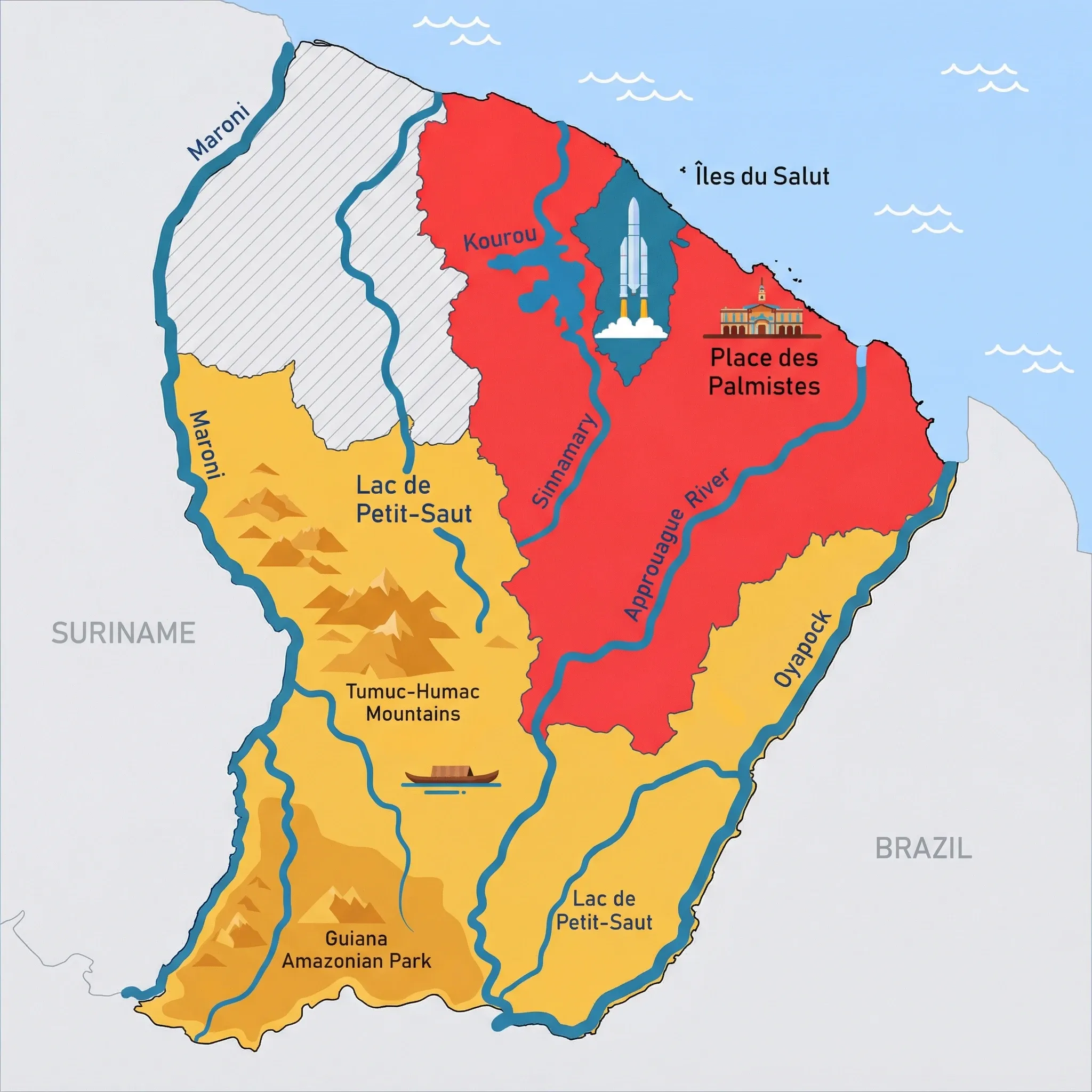
Click a region to explore
Overview
Important Safety Note: While the deep rainforest is generally safe from crime, the border areas along the river (and parts of Saint-Laurent-du-Maroni) can be unpredictable. Always use reputable guides for river crossings and excursions. Mosquito-borne diseases are a risk; consultation with a travel doctor for malaria prophylaxis and yellow fever vaccination (mandatory for entry) is essential.
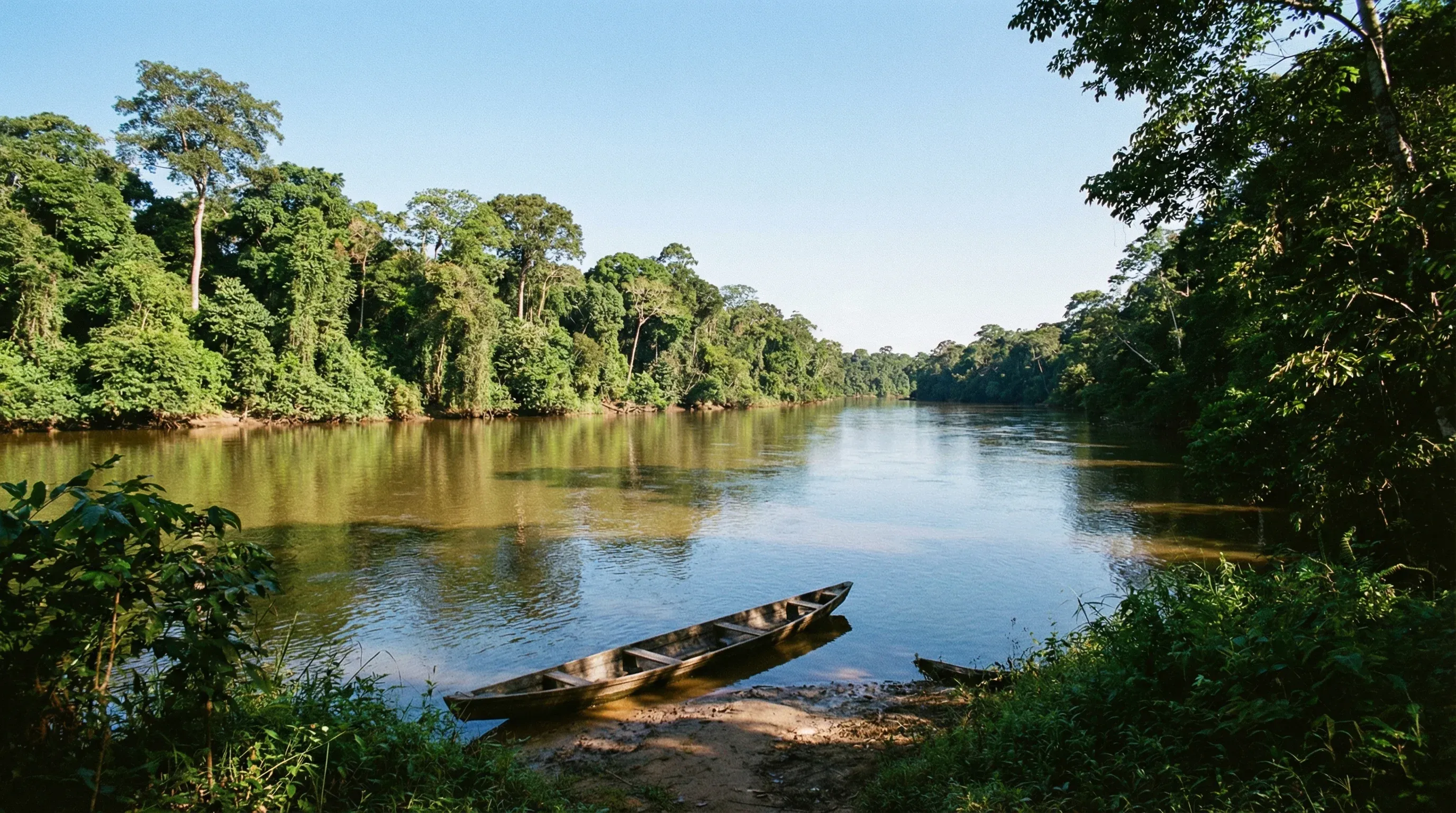
The Interior Rainforest is the beating heart of French Guiana—a vast emerald expanse that accounts for most of the territory. For families, this is not a polished resort destination but an exhilarating classroom of nature and history. The region encompasses the accessible "edges" like the wetlands of Kaw, the historic border town of Saint-Laurent-du-Maroni, and the remote, fly-in-only village of Saül. It is a place where you wake up to the roar of howler monkeys and travel by traditional dugout canoe (pirogue).
In Saint-Laurent-du-Maroni, on the banks of the Maroni River, the atmosphere is totally different from Cayenne—more relaxed, with a unique colonial architecture and a strong connection to the river peoples (Bushinengue and Amerindian communities). Further inland, the village of Cacao offers a slice of Hmong culture with a vibrant Sunday market that is a favorite for families. For the truly adventurous, a flight to Saül drops you in the center of the primary forest with clearly marked trails safe for children.
Key Attractions
The Camp de la Transportation in Saint-Laurent is a haunting but essential stop. It was the processing center for prisoners sent to the penal colonies (including "Papillon"). Guided tours are excellent and handle the dark history in a way that is educational rather than terrifying for older children. It provides a tangible link to the past that textbooks cannot match.
For wildlife enthusiasts, the Kaw-Roura Marshland Nature Reserve is world-class. Accessible by boat, these vast wetlands are teeming with birdlife and, most famously, caimans. Night tours on flat-bottomed boats allow kids to see the glowing red eyes of caimans in the torchlight—a thrill they will never forget. Further west, the Maroni River itself is an attraction; taking a pirogue ride here offers a glimpse into the daily life of river communities.
If you fly to Saül, the Parc Amazonien de Guyane - Saül Sector offers some of the best-maintained hiking trails in the Amazon. The Molokoï Trail is a longer trek, but there are shorter loops specifically designed for discovering huge trees and morpho butterflies without exhausting little legs.
Practical Advice
Travel here requires planning. Trips to Saül require booking flights well in advance. Visits to Cacao are best on Sundays for the market. Always carry plenty of water and sun protection.
Food & Drink
Typical meal times: Early lunch (12:00 pm) and early dinner (7:00 pm) are standard. In remote lodges (carbets), meals are often set-menu and served at a fixed communal time.
Typical meal costs: Prices vary wildly. A simple meal in a market might be €12–15 (approx. $13–16 USD / £10–13 GBP), while full board in a jungle lodge can add €50–80 (approx. $55–85 USD / £42–68 GBP) per person per day.
Dietary requirements: Challenging in remote areas. River fish and chicken are staples. Vegetarians may rely heavily on rice, manioc, and fruit. Bring your own snacks for kids.
Signature dishes:
- Jamais-goûté – A local river fish (literally "never tasted") famous for its fine texture, usually grilled or cooked in broth.
- Fricassée de gibier – Game stews (peccary or agouti) are traditional but ethical considerations and regulations vary; families often stick to chicken or fish.
- Soup Hmong – Found in Cacao, this noodle soup with herbs, meat, and meatballs is mild, comforting, and very popular with children.
Why this score?
The interior offers a high level of adventure, featuring dense Amazonian jungle, travel by traditional pirogue, and remote settlements like Saül that are only accessible by light aircraft. Families must contend with humid conditions, limited communications, and the physical demands of jungle trekking. It is a rugged environment where nature dominates, requiring significant planning and a high tolerance for isolation.
Why this score?
Medical facilities in the interior are extremely limited, consisting mostly of small clinics or basic dispensaries in villages like Cacao or Saül. Serious injuries or illnesses require expensive and time-consuming medical evacuation by helicopter or boat to Cayenne. This region is not recommended for travelers with pre-existing conditions requiring regular monitoring or immediate emergency access.
Why this score?
This vast region sees very few international tourists due to its extreme remoteness and the high cost of logistics. Most visitors are limited to small groups of specialized birdwatchers, researchers, or eco-adventurers visiting the Kaw Marshes or the village of Saül. Infrastructure is minimal, and the region is virtually unknown to the general global traveling public.

The interior is not a budget destination due to logistics. Guided excursions (essential for safety and access) are expensive. A day trip to the Kaw marshes costs around €80–120 (approx. $85–130 USD / £68–100 GBP) per person. Accommodation in 'carbets' (hammock camps) is cheaper, around €15–25 (approx. $16–27 USD / £13–21 GBP) per night for a hammock spot, but requires bringing your own gear. Lodges with beds cost significantly more.
Family Travel Notice
Parents traveling with minors should be aware of specific legal protocols regarding child custody and may need to consult legal counsel for property or residency-related stays.

Getting Here & Around
Getting Here
- Driving – The RN1 connects Cayenne to Saint-Laurent-du-Maroni (approx. 3.5 hours). The road is paved and generally good. Cacao is accessible via a winding road off the RN2.
- Air – The only way to reach Saül and the Parc Amazonien de Guyane - Saül Sector is by domestic flight from Cayenne. Flights are small and weather-dependent.
Getting Around
- Boat (Pirogue) – The primary transport for the Maroni River and accessing lodges in the Kaw-Roura Marshland Nature Reserve. Life jackets are mandatory and usually provided.
- Walking – In places like Saül or Cacao, walking is the only way to get around the village.
- Car – Essential for reaching the departure points (Saint-Laurent, Kaw dock, Cacao) from the capital.
No airports in this region. See the country flight map for nearby connections.
Official Links

Packing List
Many budget accommodations (carbets) only provide hooks; sleeping in a hammock is a quintessential local experience.
Electricity is rare in jungle lodges after 9:00 pm; red light prevents attracting insects to your face.
Essential for pirogue (canoe) trips where luggage sits on the wet floor or gets splashed.
Showers in remote areas often drain directly into the soil or river system.
Absolutely mandatory for entry. You will be denied boarding or entry without the original physical booklet.
Amazonian rain is intense and soaks through standard light jackets instantly; a full poncho covers your backpack too.
Humidity is very high, so regular cotton towels never dry. Quick-dry antibacterial towels are essential.

Activities & Best Times

Hiking, wildlife, outdoor exploration, ecotourism
Offers exceptional immersion in primary Amazonian rainforest, particularly in the remote Saül sector and the Kaw-Roura marshes, which provide world-class birdwatching and caiman spotting. The peak dry season from August to November is essential for navigating jungle trails and accessing remote eco-lodges safely.

Sport tourism, fitness activities, active recreation
Provides high-quality active experiences including the multi-day Molokoï trekking trail and world-class canopy adventures at Camp Canopée. These activities require stable weather for safety and comfort, making the drier second half of the year the only recommended time for active families.

Urban tourism, museums, historical sites, architecture
This is a rainforest region, not a city destination. Camp de la Transportation is a remote historic penal colony site, not an urban cultural experience. The 'good' rating misapplies the city_cultural category to wilderness heritage sites. Should be 'marginal' at best.

Learning experiences, scientific sites, historical education
Home to specialized facilities like the Le Planeur Bleu insect museum, which provides niche scientific engagement for families interested in tropical biology. While authentic, these educational stops are typically secondary to nature-based exploration.

Scenic drives, countryside tours, route-based travel
While RN1/RN2 routes exist, calling rainforest corridors 'good' road trip destinations overstates accessibility and road conditions. These are functional transport routes through jungle, not scenic leisure drives with amenities.




Public Holidays & Calendar Next 12 months
Public holidays, festivals, cultural celebrations, and seasonal natural phenomena coming up in Interior Rainforest over the next 12 months.
Loading holidays and events...

Travel Advisory
All six major agencies agree that French Guiana is a low-risk destination where standard safety precautions are sufficient. No significant security threats or travel restrictions are currently reported.
Safety Topics
Traveller Advice (5 groups)

Parents traveling with minors should be aware of specific legal protocols regarding child custody and may need to consult legal counsel for property or residency-related stays.
Travelers requiring specific accessibility infrastructure should research facilities in advance, as conditions in the territory may differ from mainland France.

Solo female travelers should be cautious after dark and are advised against walking alone in isolated or poorly lit areas to minimize the risk of harassment or petty crime.

Those exploring the Amazon interior or engaging in diving should use well-established tour operators and verify safety equipment, such as oxygen availability and access to hyperbaric chambers.

While French laws apply, travelers should review general safety guidance for sexual and gender minorities before visiting.
Agency Summaries
New Zealand does not maintain a specific warning for French Guiana but emphasizes the necessity of comprehensive travel and medical insurance, including provisions for emergency air evacuation.
The UK provides standard safety guidance for French Guiana, noting low overall crime but highlighting specific robbery risks in parts of Cayenne after dark. Driving follows French laws, and medical preparations are essential.
The U.S. Department of State classifies French Guiana at the lowest risk level. Travelers are encouraged to maintain standard safety awareness, particularly in urban centers and when exploring remote jungle areas.
As an overseas department of France, French Guiana is part of the EU, and Irish citizens enjoy visa-free entry. Travelers should follow local authority guidance and stay informed via local news.
Australia advises travelers to use standard safety measures. Guidance focuses on administrative requirements and the lack of a resident embassy, with consular services provided via the High Commission in Trinidad and Tobago.
French Guiana is generally considered safe, with risk levels comparable to Canada. Visitors should remain vigilant against petty crime in cities and exercise caution regarding property investments and legal disputes.
Information is provided for general guidance only and does not constitute travel, safety, medical, or legal advice. Conditions may change. Users are responsible for independently verifying information before travel.