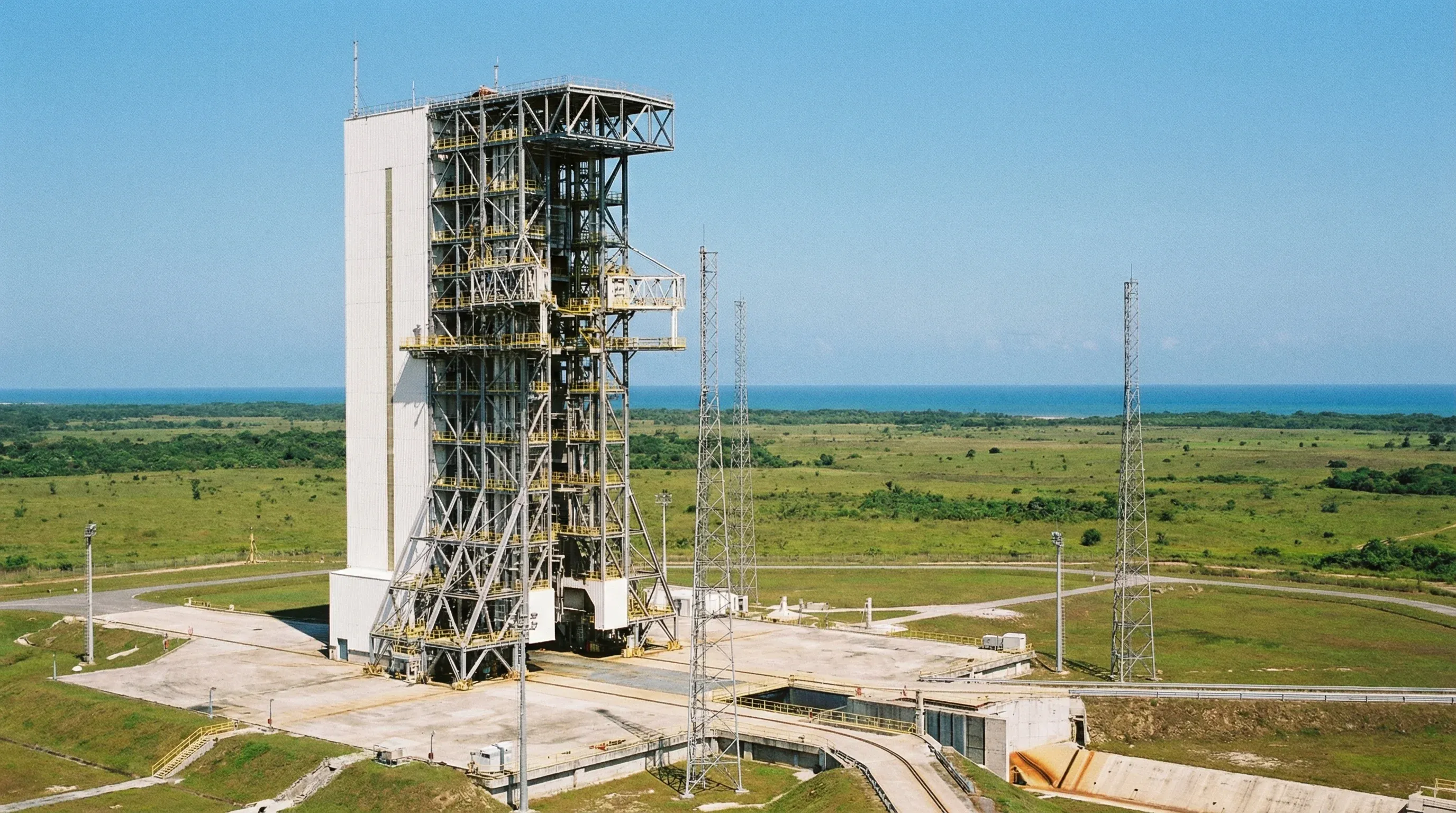

Kourou (Space Centre)
Where rockets launch from the rainforest edge 🛰️
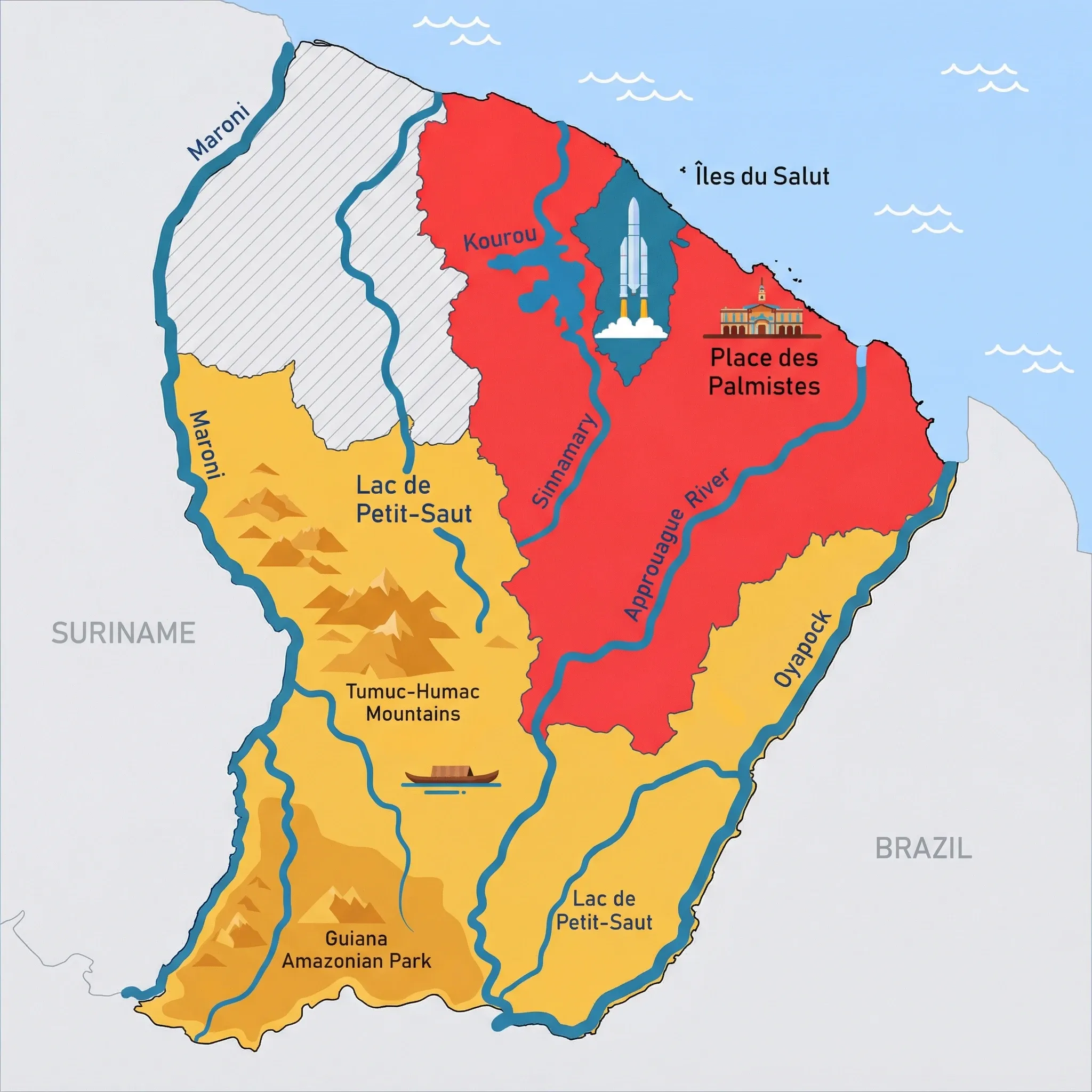
Click a region to explore
Overview
Kourou is a town of contrasts. On one hand, it is a modern, engineer-filled town built to support the European Space Agency's operations; on the other, it is the gateway to one of the most infamous historical sites in the world, Devil's Island. For families, Kourou is arguably the most exciting part of French Guiana because it delivers the region's biggest "wow" moments. The town itself is spaced out and greener than Cayenne, with man-made lakes and parks that feel very suburban.
The absolute highlight is the spaceport. Watching a rocket launch (if you are lucky enough to time your visit) is a life-changing experience, but even on non-launch days, the sheer scale of the technology hidden in the jungle is mind-blowing for children interested in science. Just off the coast lie the Îles du Salut (Salvation Islands). These former penal colony islands are now a paradise of coconut palms, monkeys, and agoutis, with the ruins of the prison cells slowly being reclaimed by nature. It’s a perfect day trip combining history with swimming in shark-free waters.
Key Attractions
The Guiana Space Centre (CSG) is the star attraction. Free guided tours take you by bus to the launch pads (Ariane, Vega, Soyuz sites) and the control center. Note: You must book weeks in advance and provide passport details. The tour includes the Jupiter Control Centre where kids can see the countdown screens. It is a professionally run, world-class tour that makes space exploration feel tangible.
While not having a separate ID in our list, the boat trip to the Îles du Salut is the other essential activity. Families usually dock at Île Royale, where children can spot sea turtles in the clear water below the jetty and monkeys playing in the old prison hospital ruins. It’s a haunting but beautiful place that serves as a living history lesson.
Practical Advice
Accommodation in Kourou fills up fast around launch dates—book months ahead if a launch is scheduled. The space centre tours are strictly 8+ years old for safety/security reasons (check current age rules as they can fluctuate). Younger kids can visit the space museum instead.
Food & Drink
Typical meal times: Restaurants open for lunch 12:00 pm to 2:00 pm and dinner 7:00 pm to 10:00 pm. Reservations are recommended on launch days.
Typical meal costs: Slightly higher than Cayenne due to the expat engineer population. Main courses cost €20–35 (approx. $21–38 USD / £17–30 GBP). A family pizza dinner might cost €60–80 (approx. $65–85 USD / £50–70 GBP).
Dietary requirements: Good. Due to the international workforce at the space center, you can find more varied options here, including salads and continental dishes.
Signature dishes:
- Grilled Red Snapper – Freshly caught off the coast, usually served simply with lime and Creole sauce (dog sauce).
- Blaff – A spicy, aromatic broth usually made with fish, marinated in lime and garlic before quick poaching.
- Ti' Punch – (For parents) The local institution: agricultural rum, lime, and sugar cane syrup.
Why this score?
Adventure here is moderate and well-regulated, such as catamaran trips to the offshore islands or hiking the well-marked Montagne des Singes trail. The Space Centre tours are highly organized and conducted via air-conditioned buses, making them very accessible for families. It offers a taste of the tropics and history without the intense physical challenges of the deep interior.
Why this score?
Kourou has decent medical infrastructure, including its own hospital and private clinics that support the aerospace community and the French Foreign Legion. While not as comprehensive as Cayenne, it can handle most standard emergencies and provides a higher level of care than typical rural South American towns. French healthcare protocols ensure a basic level of safety and quality for traveling families.
Why this score?
Kourou is the most famous site in the country due to the Guiana Space Centre and the historic Salvation Islands, but it still caters to a very small international audience. Most visitors are tied to the aerospace industry or are French tourists exploring the colonial history of Devil's Island. While it has a more defined tourist circuit than Cayenne, the total visitor numbers remain low by global standards.

Kourou is an enclave of European salaries in South America. Hotel prices surge during launch windows, often exceeding €150–200 (approx. $160–215 USD / £125–170 GBP) per night. Boat trips to the islands cost approx. €45–55 (approx. $48–60 USD / £38–47 GBP) per adult, with reduced rates for children. Supermarkets are well-stocked with French brands but at premium import prices.
Family Travel Notice
Parents traveling with minors should be aware of specific legal protocols regarding child custody and may need to consult legal counsel for property or residency-related stays.

Getting Here & Around
Getting Here
- Driving – Kourou is a straightforward 60 km (1 hour) drive from Cayenne along the RN1. The road is double-lane in parts and in good condition.
- Bus – Shared minibuses (taxi-co) run between Cayenne and Kourou, but they are cramped and irregular. A rental car is far superior for families.
Getting Around
- Car – Essential. The town is spread out, the port for the islands is outside the center, and the Guiana Space Centre (CSG) museum is not walkable from hotels.
- Ferry – Catamarans and ferries run daily to the Îles du Salut. The crossing takes about an hour. Seas can be choppy.
No airports in this region. See the country flight map for nearby connections.

Packing List
MANDATORY for entry to the Space Centre and often requested at police checkpoints on the RN1.
Great for watching rocket launches from the beach or spotting wildlife on the Îles du Salut.
The catamaran crossing to the islands faces Atlantic swells and can be surprisingly rough for kids.
Required for the Space Centre technical tours; sandals are often not permitted in operational areas.
Absolutely mandatory for entry. You will be denied boarding or entry without the original physical booklet.
Essential for keeping cameras and spare clothes dry during pirogue (canoe) trips and sudden tropical downpours.
Useful for night walks to spot caimans or turtles, and for navigating eco-lodges or carbets which often have limited electricity.
Amazonian rain is intense and soaks through standard light jackets instantly; a full poncho covers your backpack too.
Humidity is very high, so regular cotton towels never dry. Quick-dry antibacterial towels are essential.

Activities & Best Times

Learning experiences, scientific sites, historical education
The Guiana Space Centre is one of only a handful of operational spaceports globally and Europe's primary launch facility. This is a world-class, internationally unique educational attraction that warrants the highest rating. Families can witness actual rocket launches - this is an exceptional educational destination by any global standard.

Hiking, wildlife, outdoor exploration, ecotourism
Features exceptional Amazonian biodiversity and unique hiking trails like the Montagne des Singes and island loops. Visitation is best during the dry season (August to November) to avoid extremely muddy trails and heavy tropical downpours that can impact forest accessibility.

Urban tourism, museums, historical sites, architecture
A compelling mix of dark tourism history at the Devil's Island penal colony and living indigenous culture at Saramaca Village. The drier months of August through November offer the most comfortable conditions for exploring these heritage sites on foot.

Sport tourism, fitness activities, active recreation
Dedicated outdoor infrastructure like the Camp Canopée adventure center and established trekking routes provide quality active experiences. Peak activity is centered in the dry season when humidity is slightly lower and terrain is stable for climbing and hiking.

Beach resorts, marine activities: diving, snorkelling, kite surfing, wind surfing, sailing
While the Îles du Salut offer coastal access, they are primarily rocky historic sites (former penal colony) rather than beach resort islands. The 'good' rating overstates the beach quality compared to Caribbean standards. Atlantic waters here are not ideal for swimming.

Scenic drives, countryside tours, route-based travel
The Route de l'Espace offers a distinctive scenic drive through the tropical landscape surrounding the spaceport. Driving conditions and visibility are significantly better during the drier months from August to November.




Public Holidays & Calendar Next 12 months
Public holidays, festivals, cultural celebrations, and seasonal natural phenomena coming up in Kourou (Space Centre) over the next 12 months.
Loading holidays and events...

Travel Advisory
All six major agencies agree that French Guiana is a low-risk destination where standard safety precautions are sufficient. No significant security threats or travel restrictions are currently reported.
Safety Topics
Traveller Advice (5 groups)

Parents traveling with minors should be aware of specific legal protocols regarding child custody and may need to consult legal counsel for property or residency-related stays.

Travelers requiring specific accessibility infrastructure should research facilities in advance, as conditions in the territory may differ from mainland France.

Solo female travelers should be cautious after dark and are advised against walking alone in isolated or poorly lit areas to minimize the risk of harassment or petty crime.

Those exploring the Amazon interior or engaging in diving should use well-established tour operators and verify safety equipment, such as oxygen availability and access to hyperbaric chambers.

While French laws apply, travelers should review general safety guidance for sexual and gender minorities before visiting.
Agency Summaries
New Zealand does not maintain a specific warning for French Guiana but emphasizes the necessity of comprehensive travel and medical insurance, including provisions for emergency air evacuation.
The UK provides standard safety guidance for French Guiana, noting low overall crime but highlighting specific robbery risks in parts of Cayenne after dark. Driving follows French laws, and medical preparations are essential.
The U.S. Department of State classifies French Guiana at the lowest risk level. Travelers are encouraged to maintain standard safety awareness, particularly in urban centers and when exploring remote jungle areas.
As an overseas department of France, French Guiana is part of the EU, and Irish citizens enjoy visa-free entry. Travelers should follow local authority guidance and stay informed via local news.
Australia advises travelers to use standard safety measures. Guidance focuses on administrative requirements and the lack of a resident embassy, with consular services provided via the High Commission in Trinidad and Tobago.
French Guiana is generally considered safe, with risk levels comparable to Canada. Visitors should remain vigilant against petty crime in cities and exercise caution regarding property investments and legal disputes.
Information is provided for general guidance only and does not constitute travel, safety, medical, or legal advice. Conditions may change. Users are responsible for independently verifying information before travel.