
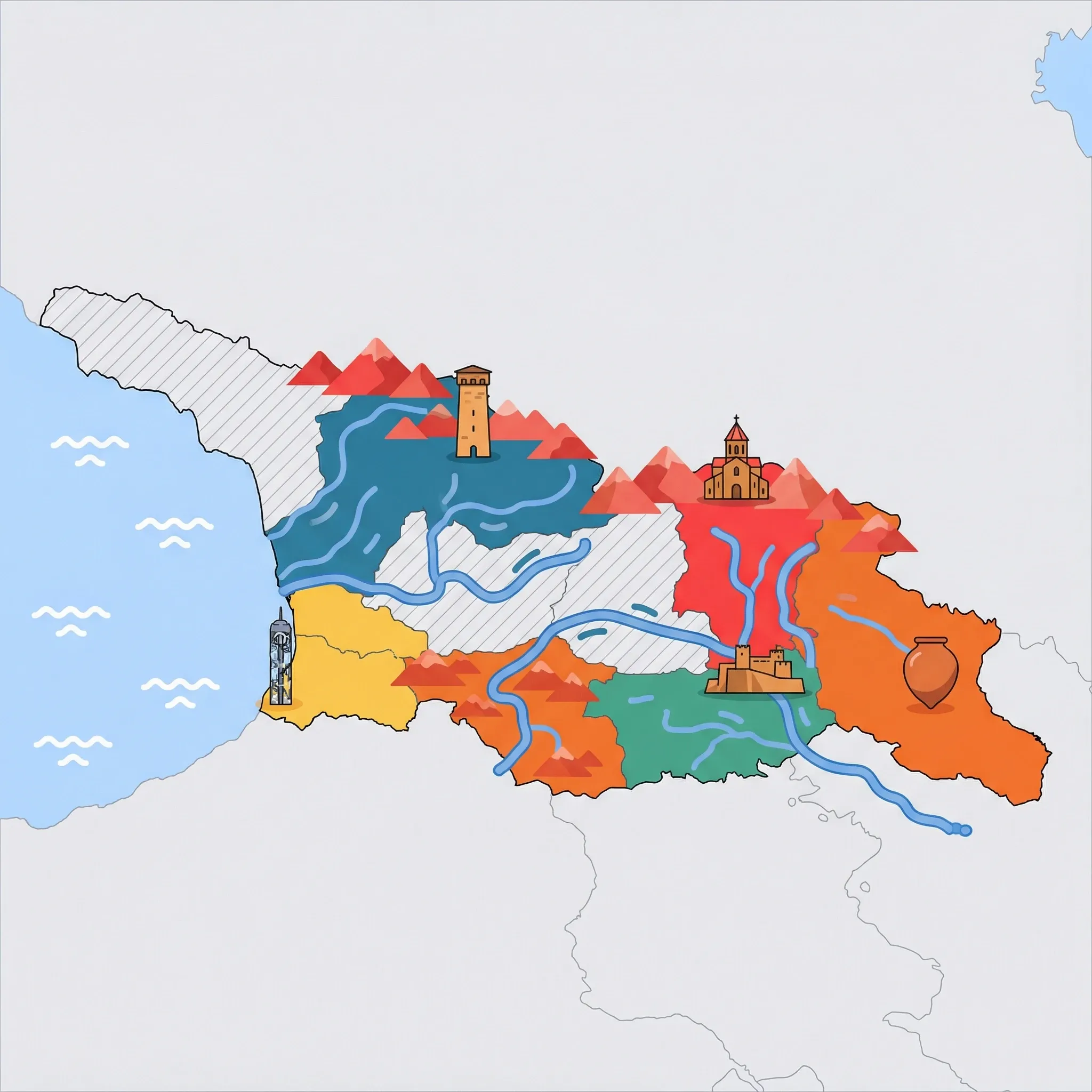
Click a region to explore
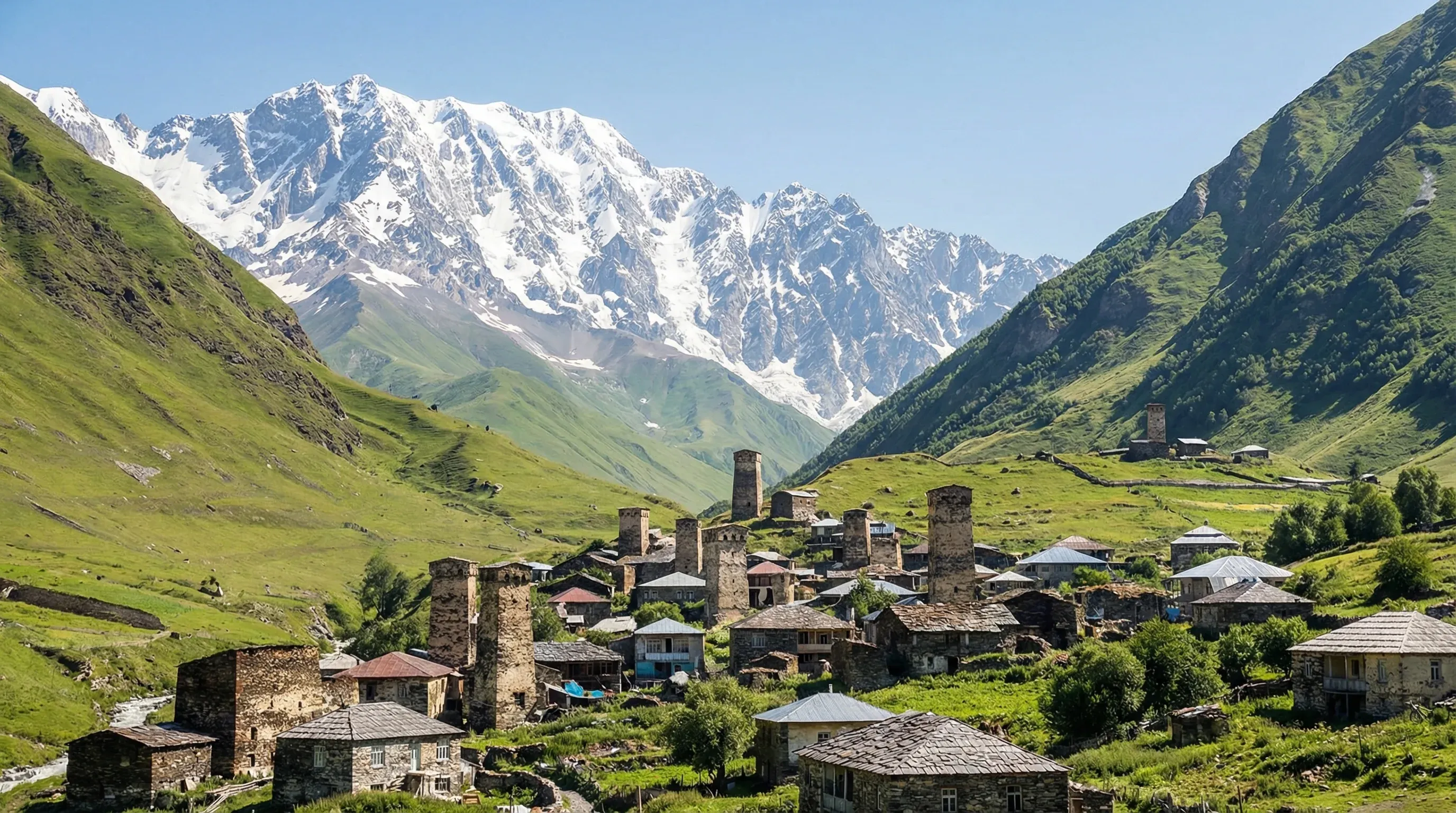
Svaneti is the "edge of the world" for many travelers. Tucked away in the high Caucasus of northwest Georgia, it was historically so isolated that it developed its own language, culture, and architecture that exist nowhere else. The defining feature of the landscape is the Koshki—medieval defensive stone towers that rise from almost every backyard in the villages. For children, Svaneti feels like a fantasy novel brought to life. It is a place of giants: giant mountains, giant dams, and giant history. While getting here requires effort, the reward is an untouched, pristine alpine environment that makes the Alps look crowded.
The region is centered around the town of Mestia, which has modernized significantly and serves as a comfortable base with cafes and museums. However, the real magic lies in the villages further up the valley. The Svans are a proud, fierce, and hospitable people. Their history of blood feuds (which necessitated the towers) fascinates older children, while the sheer freedom of the meadows and safe, small villages is perfect for younger ones. This is a region for active families who enjoy hiking, fresh air, and simple living. It is wilder than Kazbegi and requires more time to appreciate, but the connection with nature here is profound.
Key Attractions
The journey into Svaneti usually passes the Inguri Dam, the world's second-highest concrete arch dam. It is a staggering engineering marvel that provides a great educational stop. Once in Mestia, the Ushguli Historic Village is the ultimate day trip. Located at 2,100 meters, it claims to be one of the highest continuously inhabited settlements in Europe. The village is a UNESCO World Heritage site, a cluster of ancient towers set against the backdrop of Shkhara Glacier, Georgia's highest peak. Kids can ride horses here, and the walk towards the glacier is relatively flat and safe.
In Mestia, the Hatsvali cable car takes you up to a ridge with panoramic views of Mount Ushba, the "Matterhorn of the Caucasus." The Svaneti Museum of History and Ethnography is surprisingly modern and world-class, housing treasures that were hidden in these mountains for centuries to keep them safe from invaders—it's a great spot to learn why this region is so unique.
Practical Advice
Svaneti is a summer destination for most families (June to September). Winter offers skiing, but roads can be blocked by snow. The road to Mestia is good, but the road to Ushguli is rough and requires a 4x4. Allow at least 3-4 days here; it takes too long to reach for a quick weekend.
Food & Drink
Typical meal times: Lunch 1:00 pm to 2:00 pm. Dinner 7:30 pm to 9:00 pm.
Typical meal costs: Food is slightly more expensive due to remoteness. A family meal costs 90–140 GEL (approx. $33–52 USD / €30–48 EUR).
Dietary requirements: Svan cuisine is simple, hardy, and dairy-heavy. Very few vegan options exist beyond basic salads and bread. Svan salt (a spiced salt) is used in everything.
Signature dishes:
- Kubdari – The King of Svan food. A round meat pie filled with chopped beef/pork and spicy Svan salt. It’s hearty fuel for hikers.
- Tashmijabi – Mashed potatoes mixed with incredible amounts of fresh cheese until it becomes a stretchy, gooey fondue-like consistency. Kids absolutely love it.
- Fetvraal – A khachapuri variant featuring millet flour mixed with the cheese, giving it a unique texture.
Why this score?
Svaneti is one of the most rugged and remote inhabited regions in Europe, featuring the highest peaks of the Caucasus and villages like Ushguli that are isolated by snow for months. Travel often involves unpaved roads, significant elevation gains, and self-sufficient trekking through wild mountain terrain.
Why this score?
Medical infrastructure is minimal; while Mestia has a small modern hospital, it is not equipped for complex surgeries or major trauma. The geographical isolation means that emergency medical evacuations frequently depend on weather-dependent helicopter flights to Kutaisi or Tbilisi.
Why this score?
Svaneti is a bucket-list destination for its UNESCO-listed tower houses, yet its remote location in the northwest keeps mass tourism at bay. It is primarily visited by international adventure seekers and hikers rather than general family tourists, resulting in lower overall visitor counts.

While guesthouses are cheap (60–100 GEL / $22–37 USD), transport adds up. Hiring a private 4WD driver for the day trip to Ushguli costs 200–250 GEL (approx. $75–92 USD / €68–85 EUR) per vehicle. Food prices are similar to Tbilisi due to transport costs.

Getting Here & Around
Getting Here
- Air – Vanilla Sky flies small planes from Natakhtari (near Tbilisi) to Mestia. It takes 45 minutes and is spectacular, but tickets sell out months in advance and flights are weather-dependent.
- Driving – A long 8–9 hour drive from Tbilisi. The road from Zugdidi up to Mestia is paved but winding.
- Train + Drive – Take the night train or day train to Zugdidi, then a 3-hour marshrutka or taxi ride up the mountain past the Inguri Dam.
Getting Around
- Delica (4WD Minivan) – The standard transport for getting to Ushguli Historic Village. You can hire these in the center of Mestia with a driver.
- Walking – Mestia is small. Hiking trails are well-marked with paint on rocks.
No airports in this region. See the country flight map for nearby connections.

Packing List
Very helpful for stability on uneven trails, even for shorter family walks.
ATMs are only available in Mestia. In Ushguli and smaller villages, you must have cash.
Long days out in the mountains and cold batteries mean phones die fast.
Water pressure/heating in remote guesthouses can be unreliable; good for backup.
Women must cover their heads to enter Orthodox churches; useful to keep one in your bag.
Essential for cleaning sticky hands after eating Khinkali (dumplings) the traditional way.
Even 'light' walks in Kazbegi or paved streets in Old Tbilisi can be steep, uneven, or muddy.
Street lighting in rural guesthouses and some historic city streets can be dim or inconsistent.
Some stricter monasteries require women to wear skirts (not trousers); wraps are often provided but own is better.
The local diet is very heavy on dough, cheese, and meat, which can be tough on sensitive stomachs.

Activities & Best Times

Hiking, wildlife, outdoor exploration, ecotourism
Offers world-class alpine wilderness and authentic immersion in the Greater Caucasus, featuring iconic multi-day treks between UNESCO-listed medieval villages. Peak conditions occur in high summer when high mountain passes are clear of snow and wildflowers are in full bloom.

Urban tourism, museums, historical sites, architecture
The unique Svan architecture and defensive towers of Ushguli and Mestia provide an authentic encounter with a living medieval culture and ancient traditions. Summer months ensure access to the most remote heritage sites that are frequently isolated by heavy winter snowfall.

Sport tourism, fitness activities, active recreation
Features internationally recognized trekking routes like the path to Ushguli and technical mountain infrastructure at Hatsvali. Peak season aligns with the summer window when trails are dry and safe for experienced hikers and mountain bikers seeking vertical challenges.

Scenic drives, countryside tours, route-based travel
The drive from Zugdidi into Upper Svaneti follows the dramatic Enguri Gorge and is one of the world's most scenic mountain ascents. Optimal road safety and visibility for navigating high-altitude dirt roads are found in late summer, while winter brings significant risks of ice and landslides.

Learning experiences, scientific sites, historical education
The Enguri Discovery Centre provides a focused look at massive Soviet-era hydroelectric engineering amidst the region's natural splendor. It is a niche attraction best visited during the main summer tourist season as a transit stop into the high mountains.




Public Holidays & Calendar Next 12 months
Public holidays, festivals, cultural celebrations, and seasonal natural phenomena coming up in Svaneti over the next 12 months.
Loading holidays and events...

Travel Advisory
Five out of six major agencies classify Georgia's overall risk as the lowest level, recommending standard safety awareness. While serious regional warnings exist for the breakaway territories of Abkhazia and South Ossetia, the country is generally considered stable for tourism.
Safety Topics
Traveller Advice (3 groups)

While same-sex acts are legal, social attitudes can be conservative. Members of the LGBTQ+ community may face discrimination or harassment in public settings.

As of early 2026, all visitors are required to have valid health and accident insurance with a minimum coverage of 33,000 GEL. Proof of insurance may be requested upon entry.

Female visitors should exercise caution, particularly when traveling alone at night. Instances of harassment and sexual assault have been reported; avoid isolated areas and use reputable taxi applications instead of hailing cabs on the street.
Agency Summaries
Most of Georgia is safe for travel with standard vigilance. Australian travelers are advised to completely avoid South Ossetia and Abkhazia because of high risks involving terrorism and unexploded ordnance.
While general travel is permitted, the authorities warn against visiting breakaway regions and areas near their administrative boundaries. Travelers are alerted to potential drink spiking in bars and the ongoing risk of political protests in the capital.
Standard safety measures are recommended for the majority of the country. A strict 'Do Not Travel' advisory is in effect for South Ossetia and Abkhazia due to the presence of Russian troops, landmines, and a lack of available emergency services.
Heightened vigilance is advised across the country due to civil unrest and the potential for crime targeting foreigners. Extreme danger exists in the separatist regions where the government has no control.
Visitors should maintain standard safety awareness throughout the country. However, travel is strongly discouraged to regions bordering Russia and the separatist territories of Abkhazia and South Ossetia due to military activity, landmines, and the risk of detention.
Travelers should observe standard safety protocols. It is important to avoid the occupied territories and be mindful of new mandatory health insurance requirements that came into effect recently.
Information is provided for general guidance only and does not constitute travel, safety, medical, or legal advice. Conditions may change. Users are responsible for independently verifying information before travel.